

Piotr Beczała is one of the most sought-after tenors of our time. Since his debut at the Met in 2006 as the Duke ("Rigoletto"), he has also sung there the roles of Lenski ("Eugene Onegin"), the Prince ("Rusalka"), Edgardo, Rodolfo, Vaudémont ("Iolanta"), Riccardo, Gounod’s Roméo, Faust, Maurizio ("Adriana Lecouvreur"), Werther, and Des Grieux ("Manon"). His interpretation of the Duke earned him the Echo Klassik Award for Singer of the Year in 2014. At La Scala in Milan, he has sung the Duke, Rodolfo, and Alfredo ("La traviata"). At the Salzburg Festival, where he made his debut in 1997 as Tamino, he has celebrated major successes as Roméo, the Prince, Rodolfo, Faust, and in concert performances of "Iolanta" and "Werther". He is also in demand worldwide as a concert and recital singer. Piotr Beczała, who comes from Poland and has been a Swiss citizen since 2012, studied at the Academy of Music in Katowice. He was a long-standing ensemble member at the Zurich Opera House. In addition to a number of DVDs, including from the Zurich Opera House, his discography includes solo albums such as "Heart’s Delight: The Songs of Richard Tauber", "The French Collection", "Salut", "Verdi", and "Slavic Opera Arias". At the International Opera Awards 2018, he was named Singer of the Year. In 2016, he made his debut as Lohengrin alongside Anna Netrebko at the Semperoper Dresden and has since sung the role again in Zurich (2017), at the Bayreuth Festival (2018), at the Vienna State Opera (2020), and in Baden-Baden (2026). In Zurich, he was most recently seen as Prince Sou-Chong in "Das Land des Lächelns", as Werther, as Chevalier des Grieux in "Manon", in a song recital, in an operetta gala, and as Calàf in "Turandot". In the current season, he has appeared as Andrea Chénier at the Met, as Radamès in "Aida" in Paris, as the Prince in "Rusalka", and as Don José in "Carmen" at the Vienna State Opera. At the Bavarian State Opera, he has sung Manrico in "Il trovatore" and Faust this season.
11. January 2018
At the end of last season, Piotr Beczala astonished the audience as Prince SouChong in Franz Lehár's operetta Das Land des Lächelns. Before he can be experienced as Werther in the same named opera by Jules Massenet in May 2018, he will first return to the Zurich Opera House with a song recital.
Accompanied by Sarah Tysman on the piano, he will not only interpret songs by Ottorino Respighi, Ermanno Wolf-Ferrari and Francesco Paolo Tosti, but also rarities by the two Polish composers Stanislaw Moniuszko and Karol Szymanowski.
Program
STEFANO DONAUDY (1879 – 1925)
Vagissima sembianza (Alberto Donaudy)
Freschi luoghi, prati aulenti (Alberto Donaudy)
O del mio amato ben perduto incanto! (Alberto Donaudy)
ERMANNO WOLF-FERRARI (1876 – 1948)
Quando ti vidi (Volkslied), op. 12/1
Io del saluti ve ne mando mille (Volkslied), op. 11/2
E tanto c’è pericol (Volkslied), op. 11/3
O sì che non sapevo (Volkslied), op. 11/4
OTTORINO RESPIGHI (1879 – 1936)
Lagrime (Dichter unbekannt)
Scherzo (Zangarini)
Stornellatrice (Zangarini/Donini)
Nevicata (Negri)
Pioggia (Aganoor Pompilj)
Nebbie (Negri)
FRANCESCO PAOLO TOSTI (1846 – 1916)
L’ultima canzone (Cimmino)
Chi sei tu che mi parli (D’Annunzio)
Ideale (Errico)
KAROL SZYMANOWSKI (1882 – 1937)
Sechs Lieder nach Gedichten von Kazimierz Przerwa-Tetmajer, op. 2
Nun bin ich alle Welten los
Du bist nicht tot
Vom Felsen ab herniederquellt
Öfters wie betrunken
Deiner Stimme Klang
Wohin ich lenk’ mein’ Schritt
MIECZYSLAW KARLOWICZ (1876 – 1909)
Öfters wie betrunken (Przerwa-Tetmajer)
Auf der ruhigen, dunklen See (Przerwa-Tetmajer), op. 3/3
Herbstblätter (Przerwa-Tetmajer)
In der Abendstille (Przerwa-Tetmajer), op. 3/8
Für die Traurige (Gliński), op. 1/1
Vor der ewigen Nacht (Krasiński), op. 3/6
Die verzauberte Prinzessin (Asnyk), op. 3/10
STANISLAW MONIUSZKO (1819 – 1872)
Zwei Morgenröten (Lenartowicz)
Die Spinnerin (Czeczot)
Heidenröslein (Grajnert)
Froh und glücklich (Wasilewski)

Cast
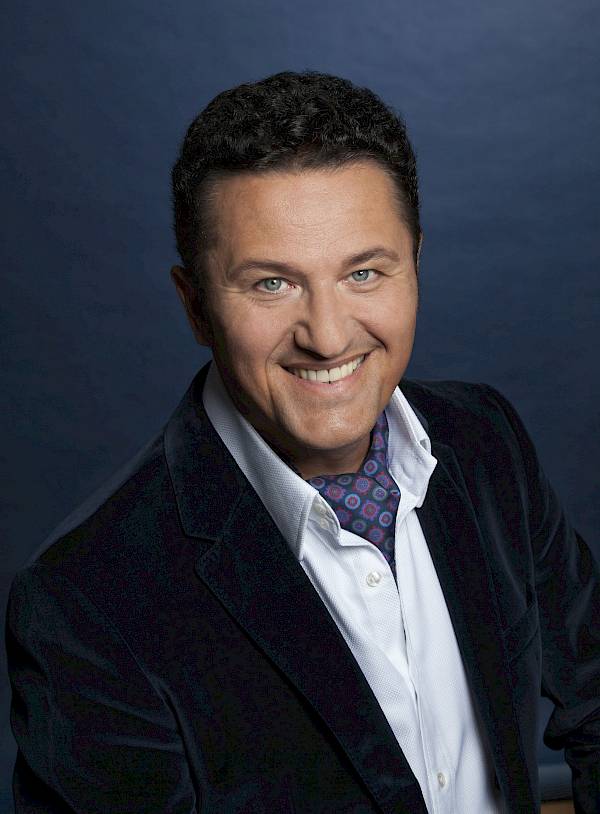
Piotr Beczała
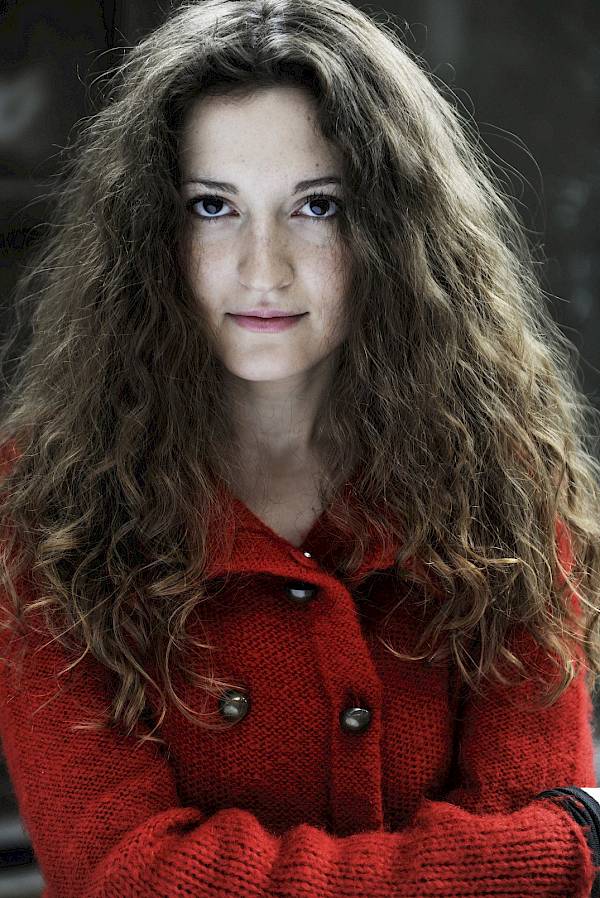
Sarah Tysman
Sarah Tysman comes from France. Alongside her work as a soloist, chamber musician, and song accompanist, she is Professor of Vocal Repertoire and French Song at the Berlin University of the Arts. She gave her first solo performances at the age of 11, including at the Salle Gaveau in Paris. She studied piano, chamber music, and song accompaniment at the Conservatoire National Supérieur de Musique de Paris with Henri Barda, Pierre-Laurent Aimard, and Anne Grappotte, as well as song accompaniment with Hartmut Höll in Karlsruhe and Grigory Gruzman in Hamburg. Masterclasses with Dietrich Fischer-Dieskau, Lazar Berman, György Kurtág, and Elisabeth Leonskaja completed her training. As a répétiteur and musical assistant, she has worked at institutions including the Berlin State Opera, the Komische Oper Berlin, Theater an der Wien, the Zurich Opera House, the Opéra National de Paris, the Bayreuth Festival, and as Head of Music Staff at the Salzburg Festival. As a song accompanist and chamber music partner, she has appeared at La Scala in Milan, the Zurich Opera House, the Konzerthaus Dortmund, the Berlin Philharmonie, the Bregenz Festival, the Verbier Festival, the Kumo Festival Finland, the Prussia Cove Chamber Music Festival, Wigmore Hall, and the Tonhalle Zurich. As a soloist, she has performed under Kirill Petrenko, including Grieg’s Piano Concerto and Scriabin’s "Prometheus" in Berlin. She regularly collaborates with artists such as Maria Bengtsson, Angelika Kirchschlager, Wiebke Lehmkuhl, Anna Prohaska, Piotr Beczała, Laurent Naouri, Rolando Villazón, and Rufus Wainwright. She is a prizewinner of the Newport International Competition for Young Pianists, the Elise Meyer Foundation Competition in Hamburg, the International Maj Lind Piano Competition, and the San Sebastian International Piano Competition, and has been a scholarship holder of the DAAD as well as the Fondation Natexis, groupement des banques populaires.