

Beethoven / Debussy / Ravel

4th Philharmonic Concert

23. February 2020

Ludwig van Beethoven
Piano Concerto No. 4 in G major op. 58

Claude Debussy
«La Mer»

Maurice Ravel
«La Valse»

  • Duration :
    approx. 1 H. 55 Min. Inkl. Pause after approx. 45 Min.
  • More information:
    Introduction 45 min before the performance.

Musical Director:
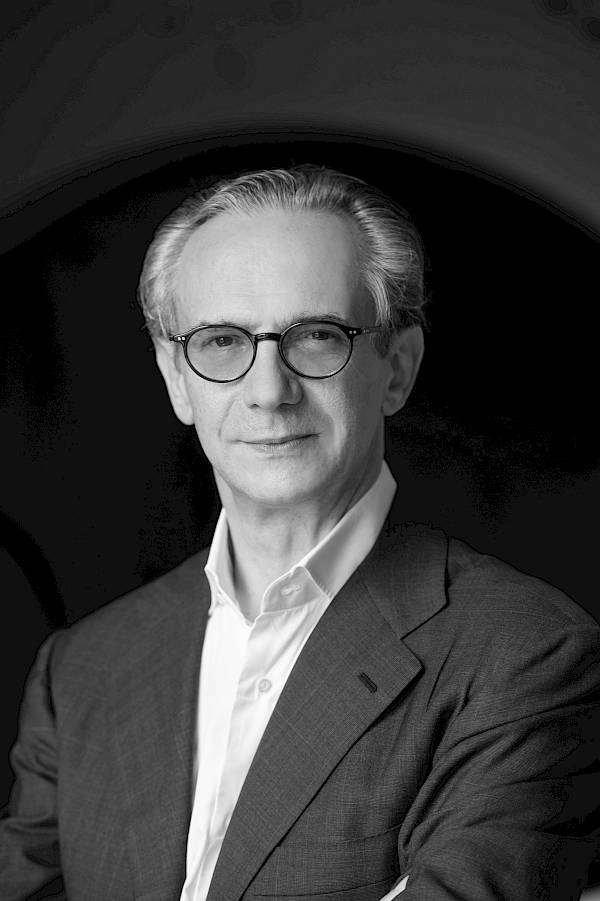
Fabio Luisi

Fabio Luisi

Fabio Luisi comes from Genoa. The former General Music Director of the Zurich Opera House (2012–2021) is Music Director of the Dallas Symphony Orchestra, Chief Conductor of the Danish National Symphony Orchestra, and Chief Conductor of the NHK Orchestra in Tokyo. He is also Music Director of the Valle d'Itria Festival in Apulia and Honorary Conductor of the RAI National Symphony Orchestra in Turin. Previously, he held important positions at orchestras and opera houses, including the Dresden Staatskapelle, the Vienna Symphony Orchestra, and the Metropolitan Opera in New York. He regularly appears as a guest conductor with, among others, the Bavarian Radio Symphony Orchestra, the Berlin Philharmonic, the Boston Symphony Orchestra, the Chicago Symphony Orchestra, the Cleveland Orchestra, the Czech Philharmonic, the Orchestra of La Scala in Milan, the London Symphony Orchestra, the Munich Philharmonic, the Orchestre de Paris, the Philadelphia Orchestra, the Royal Concertgebouw Orchestra, the San Francisco Symphony Orchestra, and the Vienna Philharmonic, and leads productions at the Bavarian State Opera, the Berlin State Opera, La Scala in Milan, the Salzburg Festival, and the Vienna State Opera, among others. At the Zurich Opera House, he conducted, among others, the new productions of three Bellini operas as well as "Rigoletto," "Fidelio," "Wozzeck," "The Land of Smiles," and Verdi's "Requiem Mass." An extensive discography complements his artistic work. At the Zurich Opera House, he founded the label "Philharmonia Records" of the Philharmonia Zurich (Orchestra of the Zurich Opera). Fabio Luisi, who comes from Genoa, studied at the Conservatorio Niccolò Paganini in his hometown and at the University of Music and Performing Arts in Graz, Austria. His awards include the Austrian Cross of Honour for Science and Art, the Italian Cavaliere della Repubblica Italiana, the Commendatore della Stella d’Italia, the Grifo d’Oro of Genoa, the Danish Order of the Dannebrog, and an honorary doctorate from St. Bonaventure University in New York. Off the podium, he is also a composer and perfumer, producing his creations for his own company, flparfums.com.

Cardillac15 / 18 / 21 / 25 Feb / 1 / 6 / 10 Mar 2026

Cast


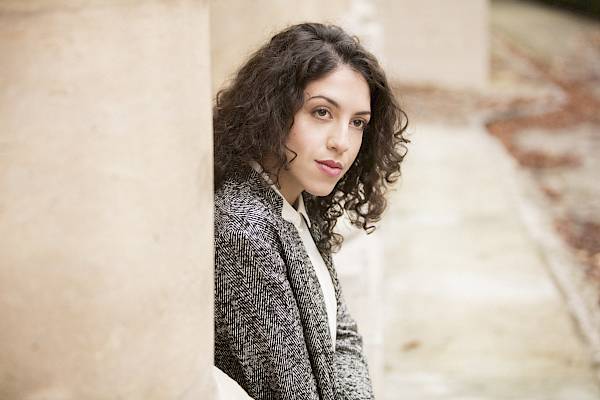
piano Beatrice Rana

Beatrice Rana

Beatrice Rana wurde in Italien geboren und studierte bei Benedetto Lupo in Monopoli sowie an der Accademia Nazionale di Santa Cecilia in Rom. Sie ist Preisträgerin zahlreicher internationaler Klavierwettbewerbe, darunter 2013 die Silbermedaille und den Publikumspreis beim renommierten «Van Cliburn International Piano Competition». 2011 gewann sie ausserdem den Ersten Preis und sämtliche Sonderpreise der Montreal International Competition. Als Solistin gastierte Beatrice Rana u.a. bereits in der Tonhalle Zürich, dem Wiener Musikverein, der Berliner Philharmonie, im Amsterdamer Concertgebouw, in der Carnegie Hall, der Londoner Wigmore Hall sowie beim Verbier Festival. Als Gast verschiedener internationaler Orchester konzertierte sie u.a. mit dem London Philharmonic, dem Philadelphia Orchestra, dem Chicago Symphony Orchestra, der Los Angeles Philharmonic, der Detroit Symphony, der NHK Symphony, dem Orchestra dell’Accademia Nazionale di Santa Cecilia, der Filarmonica della Scala, dem Royal Concertgebouw Orchestra sowie dem Sinfonieorchester des Bayerischen Rundfunks und arbeitete dabei mit Dirigenten wie Riccardo Chailly, Gustavo Dudamel, Antonio Pappano, Yannick Nézet-Séguin, Fabio Luisi, Yuri Temirkanov, Gianandrea Noseda, Andrés Orozco-Estrada, Kent Nagano, Zubin Mehta und Vladimir Jurowski. Beatrice Rana ist Exklusivkünstlerin bei Warner Classics und hat für ihr Debütalbum Prokofjews Klavierkonzert Nr. 2 und Tschaikowskis Klavierkonzert Nr. 1 eingespielt, begleitet vom Orchestra dell’Accademia Nazionale di Santa Cecilia unter der Leitung von Antonio Pappano. Für ihr zweites Album hat sie Bachs Goldberg-Variationen aufgenommen, mit welchem sie einen Gramophone Award als «Young Artist of the Year» gewann. Im Oktober 2019 erschien ihr drittes Album mit Werken von Strawinsky und Ravel.

Show full cast Show less

Philharmonia Zürich

1985 entstand in Folge der Trennung des traditionsreichen Tonhalle- und Theaterorchesters das Orchester der Oper Zürich. 2012, mit Beginn der Intendanz von Andreas Homoki und dem Amtsantritt des neuen Generalmusikdirektors Fabio Luisi, wird das Orchester der Oper Zürich zur Philharmonia Zürich. Pro Saison ist das Orchester in rund 250 Opern- und Ballettvorstellungen des Opernhauses Zürich zu hören. Als Podium für das Konzertrepertoire werden zusätzlich die Philharmonischen Konzerte veranstaltet. Soiréen und Kammermusikmatinéen ergänzen das künstlerische Spektrum des Orchesters. Bevor Fabio Luisi mit der Saison 2012/13 als Generalmusikdirektor die künstlerische Leitung des Orchesters übernommen hat, haben u. a. Franz Welser-Möst (1995-2008, ab 2005 als Generalmusikdirektor) und zuletzt Daniele Gatti als Chefdirigent (2009-2012) das Orchester geleitet. 2000/01 fanden die Beständigkeit der Leistungen des Orchesters der Oper Zürich und die Breite seines Könnens mit der Wahl zum «Orchester des Jahres» in der Umfrage der Zeitschrift «Opernwelt» weit verbreitete internationale Anerkennung.

Mehr Informationen zur Philharmonia Zürich finden Sie hier


Abstract

General music director Fabio Luisi and pianist Beatrice Rana continue their successful collaboration this February with the performance of a piano concerto by Ludwig van Beethoven, whose 200th birth anniversary is celebrated this year. His Fourth Piano Concerto in G Major is one of the giants of the genre: Written in 1805, the same year he wrote his Fifth Symphony and Sixth Symphony, the piano concerto is heavily suffused with symphonic gesture. The Allgemeine Musikalische Zeitung in Leipzig wrote at the time that it was the «wunderbarste, eigentümlichste und schwierigste» («most wonderful, most idiosyncratic, and most difficult ») of Beethoven’s piano concerti. The second half of the program, following the intermission, features two major works of the 20th century. Claude Debussy started composing La Mer (1905), one of his most popular works, not at the seaside, but rather in the vineyards of Burgundy, where he relied heavily on «countless memories» of water. La Mer is far removed from program music. It is instead an ode to nature, in which humankind plays no role. Wave forms resound, at turns jagged, smooth, or crinkled; a foaming wave appears only to disappear in the next moment. Debussy’s ebbing and flowing lead us to swaying of another kind: the lilting rhythm of the waltz. La Valse was written by Maurice Ravel in 1919 for a commission by Sergei Diaghilev, then the director of the «Ballets russes». The theme was meant to be «Vienna and its waltzes», but Ravel, still reeling from the horrors of World War I, didn’t write a sentimental waltz. His rendering of the three-four time dance incessantly falls out of step, growing ever more distorted before it ultimately falls apart.

Read more Show less