




Die Odyssee

Leonard Evers (*1985)
Family opera for children from 7 years of age
Libretto by Pamela Dürr after Homer’s «Odyssey»
Commissioned by the Opernhaus Zürich
World premiere

From 13. November 2021 until 16. January 2022

  • Duration :
    approx. 2 H. Inkl. Pause after approx. 1 H.
  • Language:
    In German with German surtitles.
  • More information:
    From 7 years of age.

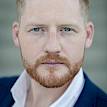
Musical Director:
Eduardo Strausser,

Eduardo Strausser

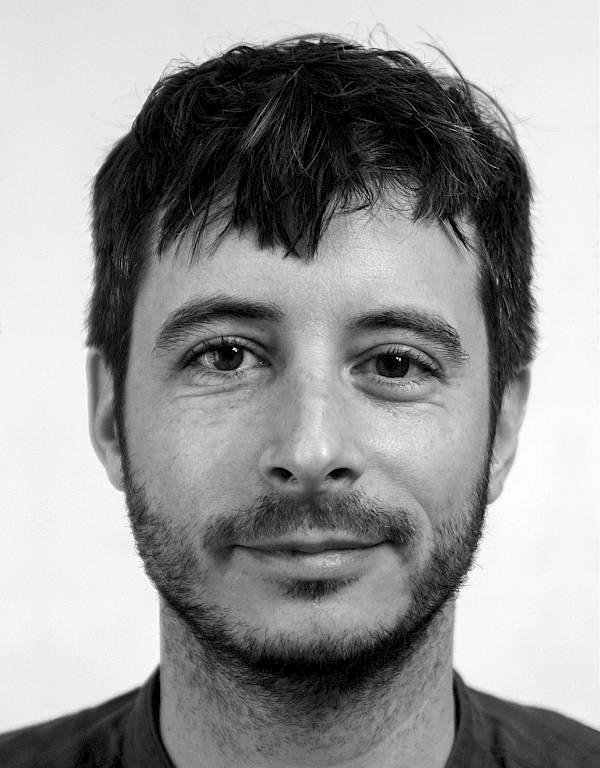
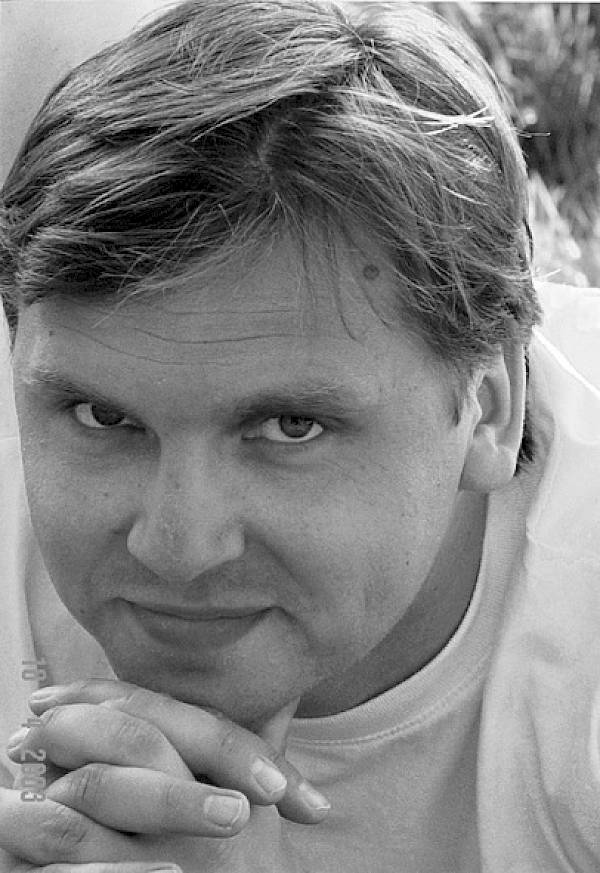
Eduardo Strausser wurde 1985 in São Paulo geboren und studierte an die Zürcher Hochschule der Künste Dirigieren. 2008 nahm er am Internationalen Forum für Dirigenten bei den Darmstädter Ferienkursen für Neue Musik teil, wo er die Möglichkeit hatte, mit György Kurtág und Brian Ferneyhough zu arbeiten. Darüber hinaus nahm er an Meisterkursen mit Bernard Haitink, David Zinman und Kurt Masur teil. Erste Engagements führten ihn u.a. zu der Südwestdeutschen Philharmonie Konstanz, zum Kammerorchester Festival Strings Lucerne, dem Kurpfälzischen Kammerorchesters Mannheim, dem Berner Symphonieorchesters, der Berliner Camerata und dem Philharmonischen Orchester Luxemburg. Es folgten Konzerte mit dem Deutschen Symphonie-Orchester Berlin, dem Orchestre de Chambre de Lausanne und dem Prager Rundfunk-Sinfonieorchester. Von 2014 bis 2016 war er Gastdirigent am Theatro Municipal de São Paulo, wo er Lohengrin, Elektra, Gomes’ Fosca, das Ballett Der Nussknacker sowie verschiedene Sinfoniekonzerte dirigierte. 2016 leitete er La bohème am Theatro Municipal in Rio de Janeiro, wenig später war er am Pult des Teatro La Fenice in Venedig zu erleben sowie am Teatro Verdi di Padova für La bohème. 2019/20 leitete er am Staatstheater Hannover Tosca, Die Zauberflöte, Hänsel und Gretel und Il barbiere di Siviglia. In der Saison 2020/21 debütierte er mit dem Royal Philharmonic Orchestra und kehrte zum Antwerp Symphony Orchester zurück, welches er 2019 zum ersten Mal dirigierte. Ausserdem gab er für Live-Streams Konzerte mit dem Detroit Symphony Orchestra und Collegium Musicum Basel.

Ann-Katrin Stöcker

Ann-Katrin Stöcker

Ann-Katrin Stöcker studied piano, vocal coaching, and conducting in Frankfurt am Main and furthered her education with studies in vocal coaching, song accompaniment, and chamber music at the Conservatorio di Santa Cecilia in Rome. Alongside an active concert career as a soloist and chamber music partner, she was already engaged during her studies as a vocal coach at the Augsburg Theatre, the Staatstheater Braunschweig, and the Frankfurt Opera. From 2012 to 2014, she worked at the Staatstheater Braunschweig as assistant to General Music Director Alexander Joel. She made her conducting debut in 2013 with Mozart’s "The Magic Flute" at the Staatstheater Braunschweig. Since 2014, she has been affiliated with the Zurich Opera House as a vocal coach and deputy head of music studies. There, she has conducted in recent seasons, among others, "Gold!", "Konrad", "Coraline", "Odyssey", "Jim Knopf", "Das Land des Lächelns", and "The Merry Widow". Ann-Katrin Stöcker has been engaged at the Bayreuth Festival, the Orchestre de Paris, the Orchestre de chambre de Lausanne, the Jerusalem Lyric Opera Festival, and the Gstaad Festival. In the upcoming 2025/2026 season, she will conduct "Hansel and Gretel" at the Zurich Opera House and "Ariadne auf Naxos" in San Francisco.

Hänsel und Gretel20 Nov / 2 / 4 / 16 / 18 Dec 2025 / 31 Jan 2026 Concert Kinderopernorchester1 / 13 / 18 Jun 2026
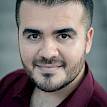
Production:
Rainer Holzapfel

Rainer Holzapfel

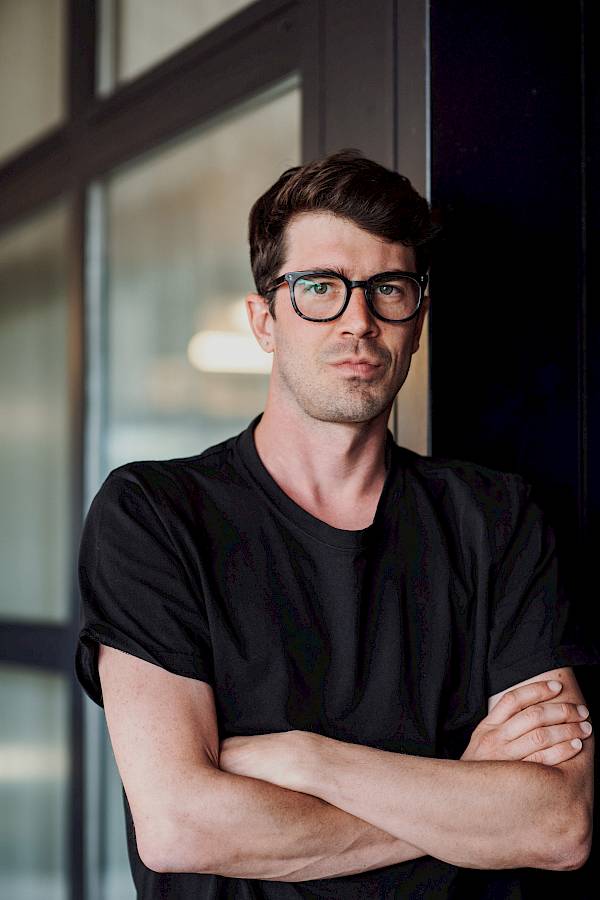
Rainer Holzapfel studierte Musiktheater-Regie an der Hochschule für Musik und darstellende Kunst Hamburg. Neben Arbeiten des bekannten Opern- und Operettenrepertoires (Le nozze di Figaro, Carmen, Rigoletto, La traviata, Die Perlenfischer, La bohème, Der Vogelhändler, Die lustige Witwe u.a.) bildet ein Schwerpunkt seiner Arbeit die Auseinandersetzung mit zeitgenössischen und unbekannten Werken, z.B. Fräulein Julie von Antonio Bibalo und Der mündliche Verrat von Maurizio Kagel (beides am Theater Bremen), die Uraufführung von vier Kurzopern am Europäischen Zentrum der Künste Dresden-Hellerau sowie die Schweizer Erstaufführungen von Jakob von Gunten (Schweitzer) und Antigona (Traetta) am Theater Biel Solothurn. Er leitete die interdisziplinären Projekte La Rappresentatione di Anima e di Corpo (Pocket Opera Nürnberg), Four Walls Don’t Stop (HAU Berlin), Wie Europa gelingt – eine Familienaufstellung (Deutsches Schauspielhaus Hamburg), Der Untergang des Hauses Usher (Theater Naumburg) und schrieb Pasticcii für das Musiktheater: Killing Orpheus (Theater Neustrelitz), La Signoria Doria (Volkstheater Rostock) und Ein Zug wird kommen (Theater Oberhausen). Im Bereich des Kinder- und Jugendtheaters inszenierte er Stücke mit Kindern (Vom Teufel mit den drei goldenen Haaren / Folkwang Hochschule), für Kinder (Prinzessin Anna / Theater Vorpommern) und für die ganze Familie (Tom Sawyer und Huckleberry Finn / Landestheater Detmold). Mit dem Kinderstück Lotte und Luis (Hensel nach Kästner) am Jungen Schauspielhaus Düsseldorf wurde er für den FAUST Theaterpreis 2009 vorgeschlagen. Lehraufträge für Szenische Arbeit führten ihn an die Folkwang Hochschule Essen und an die Hochschule für Künste Bremen. Seit August 2020 ist er Hausregisseur und Mitglied der künstlerischen Leitung am Volkstheater Rostock. 2021 inszenierte er am Opernhaus Zürich Die Odyssee.

Set Design:
David Hohmann

David Hohmann

David Hohmann studierte Bühnenbild an der Hochschule für bildende Künste in Hamburg und ist seit 2004 als freischaffender Bühnenbildner für Schauspiel- und Opernproduktionen tätig. Engagements führten ihn u.a. ans Theater Bochum, Theater Bremen, Staatstheater Hannover, Staatstheater Nürnberg, Junges Schauspielhaus Hamburg, Theater Bonn, Staatsschauspiel Dresden und an die Ruhrtriennale. Dabei arbeitet er mit RegisseurInnen wie Alexander Riemenschneider, Boris Nikitin, Cesare Lievi, Grete Pagan, Clara Weyde und Philipp Himmelmann. Für die Oper entwarf er die Bühnenbilder für Katja Kabanowa an der Opéra national de Lorraine, für Alcina an der Theaterakademie Hamburg und für Elektra am Stadttheater Klagenfurt. Für das Bühnenbild von Draussen vor der Tür am Theater Münster wurde er 2016 für den FAUST-Preis nominiert.

Costumes:
Lisa Brzonkalla

Lisa Brzonkalla

Lisa Brzonkalla studierte Kostümgestaltung an der Hochschule für Bildende Künste Dresden. Engagements führten sie an die Australian Opera Sydney, zu den Bayreuther Festspielen, ans Berliner Ensemble und an die Schaubühne am Lehniner Platz. Als Kostümassistentin und Kostümbildnerin arbeitete sie zwei Jahre an den Städtischen Bühnen Freiburg. Von 1999 bis 2009 war sie freischaffend tätig, u.a. am Theater Biel Solothurn, am Saarländischen Staatstheater Saarbrücken, am Deutschen Nationaltheater Weimar, an der Neuköllner Oper Berlin und am Theater Regensburg. Dabei hat sie für Oper, Ballett, Schauspiel sowie Film und Fernsehen gearbeitet. Von 2009 bis 2020 hat sie als Head of Costume Design die Kostümabteilung von TUI Cruises GmbH aufgebaut. Seit Januar 2020 ist sie wieder als freie Bühnen- und Kostümbildnerin tätig. Zuletzt entwarf sie die Kostüme für Die lustige Witwe und für Le nozze di Figaro, beides in der Regie von Rainer Holzapfel am Volkstheater Rostock.

Lighting Design:
Franck Evin

Franck Evin

Franck Evin, born in Nantes, moved to Paris at the age of 19 to study piano. At night he accompanied singers at the café théâtre Le Connétable and also began to take an interest in lighting. He eventually decided on a combination of music and technology. Thanks to a scholarship from the French Ministry of Culture, he became assistant to the head of lighting at the Opéra de Lyon in 1983. There he worked, among others, with Ken Russell and Robert Wilson. In 1986 he began working as a freelance lighting designer at the Düsseldorfer Schauspielhaus and passed the master lighting designer examination in 1993. Particularly close during this period was his collaboration with Werner Schröter and with the conductor Eberhard Kloke. This was followed by productions in, among other places, Nantes, Strasbourg, Paris, Lyon, Vienna, Bonn, Brussels and Los Angeles. From 1995 to 2012 he was artistic director of the lighting department at the Komische Oper Berlin and was responsible there for all new productions. During this time, Andreas Homoki, Barrie Kosky, Calixto Bieito and Hans Neuenfels became especially important collaborators for him. In 2006 Franck Evin was awarded the "OPUS" in the category of lighting design. From the 2012/13 season to 2024/25 he worked as artistic director of the lighting department at Zurich Opera House. In addition to his work in Zurich, he continued to be involved as a guest in international productions, for example at the opera houses in Oslo, Stockholm, Tokyo, Amsterdam, Munich and Graz, as well as at the Opéra Bastille, La Scala in Milan, Teatro La Fenice, Vlaamse Opera and the Bayreuth Festival.

Carmen18 / 21 / 23 / 27 / 31 Jan 2026 Madama Butterfly30 Dec 2025 / 3 / 9 / 11 / 13 / 16 Jan 2026 Un ballo in Maschera22 / 28 / 31 May / 7 / 13 Jun 2026 Fidelio3 / 6 / 10 / 14 / 16 May 2026 Così fan tutte3 / 7 / 9 / 12 Jul 2026
Video:
Tieni Burkhalter

Tieni Burkhalter

Tieni Burkhalter studied Fine Arts at the Zurich University of the Arts (ZHdK), where he specialized in video and video installation. After his works were mainly shown in galleries and at experimental film festivals, he has been working for the stage since 2009. As a video producer, he is closely associated with the Zurich Opera House. His stage work has also taken him to theaters in Berlin, Hamburg, Paris, Moscow, Oslo, and Savonlinna. At the Zurich Opera House, he worked with Andreas Homoki ("Der fliegende Holländer", "Das Land des Lächelns", "Das Rheingold", "Siegfried" and "Die Walküre"), Evgeny Titov ("Lessons in Love and Violence" and "L’Orfeo"), Jan Philipp Gloger ("Die Csárdásfürstin" and "Le nozze di Figaro"), Adele Thomas ("Il trovatore"), Rainer Holzapfel ("Die Odyssee"), Nina Russi ("Coraline") and Kai Anne Schuhmacher ("Jim Knopf und Lukas der Lokomotivführer"). For Ballet Zurich, he produced videos for Christian Spuck ("Anna Karenina" and "Das Mädchen mit den Schwefelhölzern"), Marcos Morau ("Nachtträume"), Edward Clug ("Faust") and Douglas Lee ("A-Life"). He was also involved at the Savonlinna Opera Festival with Philipp Himmelmann for "Aida", in Berlin with Christian Spuck for "Madame Bovary", and has been collaborating for many years on Dmitri Tcherniakov’s productions: "Pelléas et Mélisande" and "Die Sache Makropulos" at the Zurich Opera House, "Senza Sangue/Herzog Blaubarts Burg", "Elektra" and "Salome" at the Hamburg State Opera, "La Fille de Neige" and "Les Troyens" at the Opéra National de Paris, and "Tristan und Isolde" at the Staatsoper Unter den Linden in Berlin.

Hänsel und Gretel16 / 20 / 23 / 28 / 30 Nov / 2 / 4 / 11 / 16 / 18 / 21 Dec 2025 / 2 / 24 / 25 / 31 Jan 2026 Un ballo in Maschera22 / 28 / 31 May / 7 / 13 Jun 2026 Le nozze di Figaro24 / 29 Jan / 1 / 5 / 7 / 10 / 14 Feb 2026 Nachtträume20 / 25 / 28 / 30 Jun / 4 Jul 2026
Dramaturgy:
Fabio Dietsche

Fabio Dietsche

Fabio Dietsche studied dramaturgy at the Zurich University of the Arts as well as cross flute with Maria Goldschmidt in Zurich and with Karl-Heinz Schütz in Vienna. He gained his first experience as a dramaturge in 2012/13 with Xavier Zuber at Konzert Theater Bern, where he accompanied, among others, Matthias Rebstock’s production of "neither" (Beckett/Feldman) at the Berner Reithalle. Since 2013, he has been a dramaturge at the Zurich Opera House, where he completed his studies with the production dramaturgy of Puccini’s "La bohème." There, he has been involved, among others, in the world premieres of Stefan Wirth’s "Girl with a Pearl Earring" and Leonard Evers’ "Odyssee," the chamber opera "Jakob Lenz" by Wolfgang Rihm, and the Swiss premiere of Manfred Trojahn’s "Orest." He has worked with, among others, Robert Carsen, Tatjana Gürbaca, Rainer Holzapfel, Andreas Homoki, Ted Huffman, Mélanie Huber, Barrie Kosky, Hans Neuenfels, and Kai Anne Schuhmacher. He is currently studying cultural management on a part-time basis at the University of Zurich.

Madama Butterfly30 Dec 2025 / 3 / 9 / 11 / 13 / 16 Jan 2026 Un ballo in Maschera22 / 28 / 31 May / 7 / 13 Jun 2026 La forza del destino2 / 7 / 12 / 15 / 18 / 21 / 26 / 29 Nov / 17 / 21 Dec 2025 Monster's Paradise8 / 14 / 18 Mar / 10 / 12 Apr 2026 Gianni Schicchi2 / 6 / 8 / 10 / 13 May 2026

Cast


Odysseus Ruben Drole 13 Nov / 07, 16, 26 Dec / 16 Jan


Odysseus Andrew Moore 21, 28 Nov / 04, 11, 15 Dec / 08 Jan


Penélope Siena Licht Miller 13, 21, 28 Nov / 04, 11 Dec / 08 Jan


Penélope Freya Apffelstaedt 07, 15, 16, 26 Dec / 16 Jan


Telémachos Andrew Owens 13, 28 Nov / 15, 16 Dec


Telémachos Nathan Haller 21 Nov / 04, 07, 11, 26 Dec / 08, 16 Jan


Eurykleia Irène Friedli 13 Nov / 04, 07, 11, 16 Dec / 16 Jan


Eurykleia Liliana Nikiteanu 21, 28 Nov / 15, 26 Dec / 08 Jan


Athene Ziyi Dai 13, 21 Nov / 15, 16, 26 Dec


Athene Tatjana Schneider 28 Nov / 04, 07, 11 Dec / 08, 16 Jan


Poseidon Barnaby Rea 13, 28 Nov / 07, 16 Dec / 08 Jan


Poseidon Alexander Fritze 21 Nov / 04, 11, 15, 26 Dec / 16 Jan


Elpénor Thomas Erlank 13, 28 Nov / 07, 11, 15, 26 Dec


Elpénor Alejandro Del Angel 21 Nov / 04, 16 Dec / 08, 16 Jan


Eurylochos Valeriy Murga 13, 28 Nov / 07, 15, 26 Dec / 16 Jan


Eurylochos Cheyne Davidson 21 Nov / 04, 11, 16 Dec / 08 Jan


Polyphem/Achilles Unnsteinn Árnason 13 Nov / 15, 16, 26 Dec / 08, 16 Jan


Polyphem/Achilles Oleg Davydov 21, 28 Nov / 04, 07, 11 Dec


Kirke/Kalypso Chelsea Zurflüh

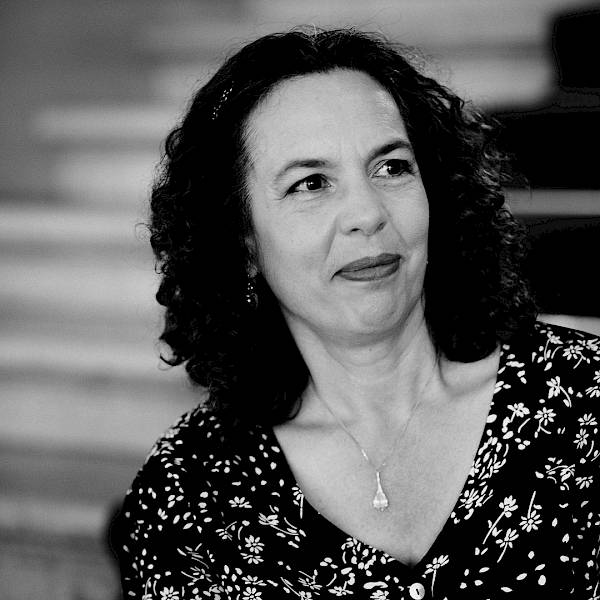
Ruben Drole

Ruben Drole, bass-baritone, is a native of Winterthur and studied at the Zurich University of Music. In 2004 he joined the International Opera Studio, and in 2005 he became a member of the ensemble of the Zurich Opera House, where he appeared, among others, as Lucio Cinna (J. C. Bach’s "Lucio Silla"), Haly ("L’italiana in Algeri"), Argante ("Rinaldo"), Wurm ("Luisa Miller"), and as Papageno in "Die Zauberflöte" conducted by Nikolaus Harnoncourt. He also made his debut as Papageno at the Semperoper Dresden in 2015. Further projects with Harnoncourt included Kezal ("Die verkaufte Braut") and Haydn’s "Schöpfung" at the Styriarte Graz, Beethoven’s "Christus am Ölberge" in Vienna and Lucerne, a Japan tour (Mozart’s "Requiem" and Handel’s "Messiah"), as well as Leporello ("Don Giovanni") at the Theater an der Wien. In the Zurich cycle of the Mozart/Da Ponte operas staged by Sven-Eric Bechtolf and conducted by Franz Welser-Möst, he performed as Guglielmo ("Così fan tutte"), Figaro ("Le nozze di Figaro"), and Leporello. He sang the same roles under Welser-Möst with the Cleveland Orchestra. At the Salzburg Festival in 2012 he appeared as Achilla ("Giulio Cesare") and returned in 2013 for Haydn’s "Il ritorno di Tobia" and Walter Braunfels’ "Scenes from the Life of Joan of Arc". In Zurich he has sung, among others, Papageno ("Die Zauberflöte"), Alaskawolfjoe ("Rise and Fall of the City of Mahagonny"), the Soldier ("The Soldier’s Tale"), Odysseus ("The Odyssey"), Antonio ("Le nozze di Figaro"), as well as Duchess/Caterpillar in "Alice in Wonderland". He was also recently seen in "Amerika" and in the ballet evening "Nachtträume".

Die Fledermaus7 / 10 / 12 / 14 / 18 / 26 / 28 / 31 Dec 2025 / 2 / 4 / 6 / 10 Jan 2026 Monster's Paradise8 / 14 / 18 Mar / 10 / 12 Apr 2026 Nachtträume20 / 25 / 28 / 30 Jun / 4 Jul 2026

Andrew Moore

Andrew Moore, bass-baritone, comes from New Jersey. He studied at Rutgers University and the Curtis Institute of Music in Philadelphia. In 2017, he was a finalist in the New Jersey State Opera Alfredo Silipigni Competition and sang the baritone part in Fauré’s Requiem that same year with the New Jersey Chamber Singers. In 2018, he participated in the Merola Opera Program in San Francisco, where he performed in the Schwabacher Summer Concert and in "The Rake’s Progress." In 2019, he took part in the Metropolitan Opera National Council Auditions, reaching the New England Regional Finals, where he was awarded the Susan Eastman Encouragement Award. That same year, he sang at the Santa Fe Opera in the productions "La Bohème," "Così fan tutte," and "Jenůfa." Further appearances included Vicar ("Albert Herring"), Fiorello ("Il barbiere di Siviglia"), Talpa ("Il tabarro"), Figaro ("Le nozze di Figaro"), Guglielmo ("Così fan tutte"), Rocco ("Fidelio"), L’Arbre ("L’Enfant et les sortilèges"), and Adonis ("Venus and Adonis"). From 2020 to 2022, he was a member of the International Opera Studio, where he sang roles such as Mamma Agata in "Viva la mamma", Gouverneur ("Le Comte Ory"), Masetto in "Don Giovanni", and the title role in "Die Odyssee." Since the 2022/23 season, Andrew Moore has been part of the ensemble at the Zurich Opera House. More recently, he has performed roles there including Péricheaud ("La rondine"), Lukas ("Jim Knopf"), Johann ("Werther"), Pritschitsch ("Die lustige Witwe"), Marchese d’Obigny ("La traviata"), Paris ("Roméo et Juliette"), Paolo Albiani ("Simon Boccanegra"), Fix ("In 80 Tagen um die Welt"), Don Fernando ("Fidelio"), Paqui ("Das grosse Feuer"), Marullo ("Rigoletto"), and De Brétigny ("Manon").

Manon24 / 27 Sept / 3 / 7 / 10 Oct 2025 La clemenza di Tito26 / 29 Apr / 3 / 8 / 15 / 17 / 20 / 25 May 2026 Tannhäuser21 / 24 / 27 Jun / 2 / 5 / 8 / 11 Jul 2026 Le nozze di Figaro24 / 29 Jan / 1 / 5 / 7 / 10 / 14 Feb 2026

Siena Licht Miller

Siena Licht Miller, a German-American mezzo-soprano, studied voice at the Curtis Institute of Music and the Oberlin Conservatory of Music. She completed her training with courses at Opera Philadelphia, the Santa Fe Opera, the Opera Theatre of St. Louis, and the Aspen Music Festival. She is a fellow of the Bagby Foundation and a prizewinner of the Metropolitan Opera National Council Auditions, the Marilyn Horne Rubin Foundation, and the Gerda Lissner Foundation. Highlights of her career so far include role debuts as Hermia in “A Midsummer Night’s Dream,” Second Lady in “Die Zauberflöte,” and one of the two solo parts in the world premiere of Philip Venables’ “Denis and Katya” at Opera Philadelphia. At the Aspen Opera Center, she sang the title role in Ravel’s “L’Enfant et les sortilèges” under the direction of Robert Spano. She regularly devotes herself to art song, performing in the “The Song Continues” series at Carnegie Hall in honor of her mentor Marilyn Horne and touring the U.S. with a recital alongside pianist Kevin Murphy. In the 2020/21 season, she was a member of the International Opera Studio at the Zurich Opera House, performing in productions such as “Maria Stuarda,” “Simon Boccanegra,” “Viva la mamma,” “Salome,” “Odyssey,” the ballet “Monteverdi,” “L’italiana in Algeri,” and as Flosshilde in “Das Rheingold.” Since the 2022/23 season, she has been a member of the Zurich Opera House ensemble and has recently appeared in “Barkouf,” “Salome,” “Anna Karenina,” “Lakmé,” “La rondine,” “Die Walküre,” and “Götterdämmerung,” as well as in the title role of Handel’s “Serse” at Theater Winterthur.

La scala di seta25 / 28 Sept / 19 / 24 Oct 2025 La clemenza di Tito26 / 29 Apr / 3 / 8 / 15 / 17 / 20 / 25 May 2026 Carmen18 / 21 / 23 / 27 / 31 Jan 2026 Madama Butterfly30 Dec 2025 / 3 / 9 / 11 / 13 / 16 Jan 2026 Così fan tutte3 / 7 / 9 / 12 Jul 2026 Hänsel und Gretel20 / 23 Nov / 2 / 16 / 18 Dec 2025 / 2 / 24 / 25 / 31 Jan 2026

Freya Apffelstaedt

Freya Apffelstaedt, Mezzosopran, wurde in Südafrika geboren. Sie schloss 2021 ihr Masterstudium an der Hochschule für Musik und Theater München ab und gewann 2020 den zweiten Preis beim Hochschulwettbewerb Felix Mendelssohn Bartholdy, einen Sonderpreis beim Internationalen Klassik-Gesangswettbewerb «DEBUT» und den dritten Preis beim Bundeswettbewerb Gesang. 2023 war sie Finalistin des «Tenor-Viñas»-Wettbewerbs in Barcelona. Ausserdem ist sie Empfängerin des Deutschlandstipendiums und war Stipendiatin des Richard-Wagner-Verbandes Bayreuth. Als Konzertsängerin umfasst ihr Repertoire nahezu alle gängigen Oratorien von Monteverdi, Schütz, Bach, Händel und Mozart bis hin zu Werken des 20. Jahrhunderts. Im Rahmen ihres Studiums trat sie in der Uraufführung der Oper liminal space auf, einer Kooperation der HfMT München mit der Münchener Biennale für Neues Musiktheater. Weitere Engagements umfassen die Rolle der Hippolyta in Brittens A Midsummer Night’s Dream an der Bayerischen Theaterakademie August Everding sowie Auftritte mit den Münchner Symphonikern und mit dem Konzerthausorchester Berlin. Im Sommer 2021 nahm sie am «Young Singers Project» der Salzburger Festspiele teil. Als Mitglied des Internationalen Opernstudios Zürich in den Spielzeiten 2021/22 und 2022/23 sang sie hier u.a. Penélope (Die Odyssee), Sœur Mathilde (Dialogues des Carmélites), Lisetta (Il mondo della luna), Gimgerde (Die Walküre) und Amastre (Serse).

Andrew Owens

Andrew Owens, tenor, was born in Philadelphia and studied voice at the Oberlin Conservatory. He is the winner of several competitions, including the Zarzuela Prize at the Francisco Viñas Competition. He took part in the Young Singers Project of the Salzburg Festival and was a member of the Opera Studio of the Bavarian State Opera in Munich. From 2012 to 2014 he was a member of the Young Ensemble of the Theater an der Wien, where he appeared at the Kammeroper in "La bohème", "La Cenerentola", "Fidelio", "Attila", "Mathis der Maler" and "La clemenza di Tito". Since then he has returned to the Theater an der Wien as Mads in Werner Egk's "Peer Gynt", as Snout in "A Midsummer Night’s Dream", as the 4th Jew in "Salome", and most recently in 2021 as Jacob Glock in "Der feurige Engel", and he appeared as a guest in the title role of "Don Carlos" at the Kammeroper Wien. Most recently he has also appeared as Arturo in "Lucia di Lammermoor" at Opera Philadelphia, as Don Ramiro in "La Cenerentola" at Irish National Opera, in Schumann’s "Scenes from Goethe’s Faust" with the Cleveland Orchestra, as Lukas in Haydn’s "The Seasons", in a concert performance of "Le Rossignol" at the Salzburg Festival, and as Aménophis in "Moïse et Pharaon" at the Rossini Opera Festival. Since 2021 Andrew Owens has been a member of the ensemble of Zurich Opera House and has sung here the 4th Jew, Telemachus ("Die Odyssee"), Peppe ("Pagliacci"), Van Ruijven ("Girl with a Pearl Earring"), Lord Arturo Bucklaw ("Lucia di Lammermoor"), Gualtiero ("Il pirata"), Xaïloum ("Barkouf"), Lord Cecil ("Roberto Devereux"), as well as Guglielmo Antolstoinoloff ("Viva La Mamma") and Pylades ("Iphigénie en Tauride").

Fidelio3 / 6 / 10 / 14 / 16 May 2026 Die Fledermaus7 / 10 / 12 / 14 / 18 / 26 / 28 / 31 Dec 2025 / 2 / 4 / 6 / 10 Jan 2026

Nathan Haller

Nathan Haller comes from Canada and studied voice at the Juilliard School in New York. In 2013, he participated in the International Meistersinger Academy in Neumarkt. From 2015 to 2017, he was a member of the OperAvenir Studio at Theater Basel, where he performed roles including Tamino ("Die Zauberflöte"), Romeo in Blacher’s "Romeo und Julia," and Oronte in "Alcina." In 2016, he appeared as Belmonte ("Die Entführung aus dem Serail") at the Akko Opera Festival in Israel, in 2017/18 as François in Leonard Bernstein’s "A Quiet Place" at the Neue Oper Wien, and in 2018/19 as Count Albert ("Die tote Stadt") with the Nederlandse Reisopera. Further engagements took him to the Bavarian State Opera in Munich, Teatro Massimo di Palermo, the Vienna Volksoper, the Opera in Malmö, and the Deutsche Oper am Rhein. On the concert stage, he has performed at the New York Festival of Song in Carnegie Hall and in Handel’s "La Resurrezione" with William Christie. He made his debut at the Zurich Opera House in 2018 in Schreker’s "Die Gezeichneten" and returned the following year as Albazar ("Il turco in Italia") and later in the title role of Mitterer’s "Tapferen Schneiderlein." Since the 2021/22 season, Nathan Haller has been a member of the Zurich Opera House ensemble. More recently, he has performed roles there including Mercure in Rameau’s "Platée," Gobin/Un giovane/Adolfo in Puccini’s "La Rondine," Andrès in "Les Contes d’Hoffmann," First Jew ("Salome"), Victorin ("Die tote Stadt"), Raoul de St. Brioche ("Die lustige Witwe"), Goro ("Madama Butterfly"), Valzacchi ("Der Rosenkavalier"), and Dr. Blind ("Die Fledermaus").

Der Rosenkavalier21 / 26 Sept / 1 / 5 / 14 / 17 / 21 / 26 Oct 2025 Tannhäuser21 / 24 / 27 Jun / 2 / 5 / 8 / 11 Jul 2026 Le nozze di Figaro24 / 29 Jan / 1 / 5 / 7 / 10 / 14 Feb 2026 Die Fledermaus7 / 10 / 12 / 14 / 18 / 26 / 28 / 31 Dec 2025 / 2 / 4 / 6 / 10 Jan 2026

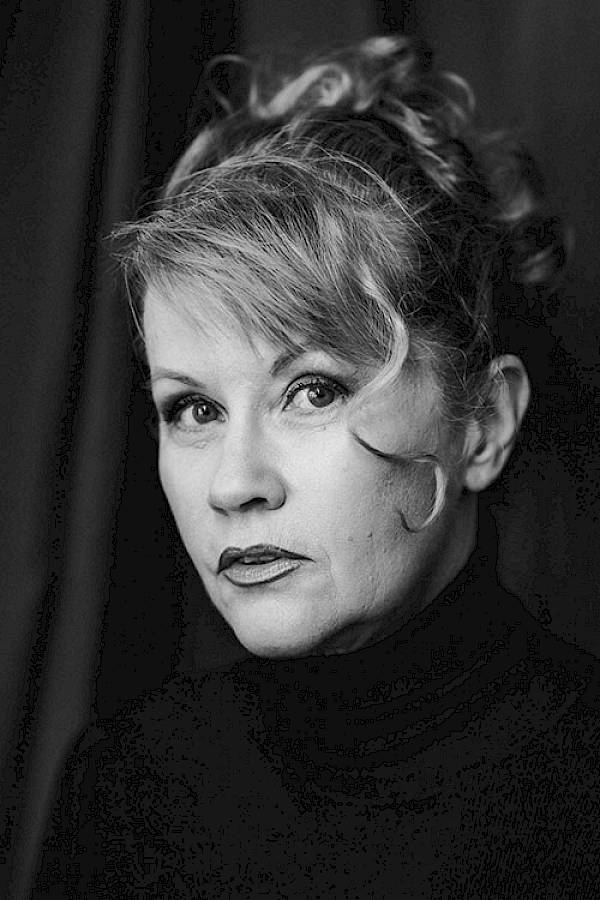
Irène Friedli

Irène Friedli grew up in Räuchlisberg, Switzerland, and graduated from the Basel Music Academy with a soloist diploma. The mezzo-soprano furthered her studies in Dietrich Fischer-Dieskau’s interpretation class in Berlin, attended masterclasses with Brigitte Fassbaender, and continued her training with Helen Keller. She has won numerous prizes at international lieder competitions. Since the 1994/95 season, she has been a member of the Zurich Opera House ensemble, where she has performed roles such as Second and Third Lady (“Die Zauberflöte”), Mercédès (“Carmen”), the title role in Ravel’s “L’Enfant et les sortilèges,” Elsbeth (“Schlafes Bruder”), Lily (“Harley”), Annina and Flora (“La traviata”), Flosshilde (“Das Rheingold,” “Götterdämmerung”), Marcellina (“Le nozze di Figaro”), Emilia (“Otello”), Lucia (“Cavalleria rusticana”), Olga in Peter Eötvös’ “Drei Schwestern,” Marthe in Gounod’s “Faust,” Margret (“Wozzeck”), Lovis in Jörn Arnecke’s “Ronja Räubertochter,” Flower Maiden and Voice from Above (“Parsifal”), Gertrud/Knusperhexe (“Hänsel und Gretel”), Clotilde (“Norma”), Mother/Other Mother (“Coraline”), Card Dealer (“Arabella”), and Nurse (“Boris Godunow”). In the world premiere of the family opera “Odyssee,” she played Eurykleia/Mother, and in “Girl with a Pearl Earring,” she performed Tanneke. In 2012, she appeared at the Opéra Bastille in Paris. Most recently in Zurich, she has sung roles such as the Queen of Hearts (“Alice in Wonderland”), Filipjewna (“Jewgeni Onegin”), Tisbe (“La Cenerentola”), Miss Bentson (“Lakmé”), Frau Waas/Frau Mahlzahn (“Jim Knopf”), Head Cook (“Amerika”), and Ninetta (“I vespri siciliani”).

Der Rosenkavalier21 / 26 Sept / 1 / 5 / 14 / 17 / 21 / 26 Oct 2025 Hänsel und Gretel20 / 23 Nov / 2 / 4 / 16 / 18 Dec 2025 / 2 / 24 / 25 / 31 Jan 2026 Arabella14 / 18 / 22 / 25 / 28 Apr 2026

Liliana Nikiteanu

Liliana Nikiteanu studied at the Conservatory in Bucharest. She received her first permanent engagement in 1986 at the Musiktheater Galati. She has won numerous awards, and in 2000, Opernwelt named her "Best Young Singer of the Year." Her repertoire includes over 80 roles, which she has performed in Zurich, where she has been an ensemble member since 1991, as well as in other opera houses, including Octavian ("Der Rosenkavalier") at the Bastille, the Vienna and Hamburg State Operas, Ježibaba ("Rusalka") in Montreal, Sesto ("La clemenza di Tito") in Dresden, Rosina ("Il barbiere di Siviglia") in Vienna and Munich, Dorabella ("Così fan tutte") in Dresden, Munich, Salzburg, and Aix-en-Provence, Fjodor ("Boris Godunow") in Salzburg, Margarethe ("La damnation de Faust") in Brussels, and Dulcinée ("Don Quichotte") at Theater an der Wien. In Zurich, she has performed all Mozart roles of her fach as well as roles such as Ljubascha ("Die Zarenbraut"), Nurse (Dukas’ "Ariane et Barbe-Bleue"), and Fricka ("Das Rheingold"). As a concert singer, her repertoire ranges from Bach to Berio. In Bamberg, she sang Berenice by Haydn under Adam Fischer, in Paris Berlioz’ "Les nuits d’été" under Heinz Holliger, in Copenhagen Verdi’s Requiem, and in Tel Aviv and Haifa Bruckner’s Te Deum under Zubin Mehta. Conductors who have shaped her include Nikolaus Harnoncourt, Claudio Abbado, Fabio Luisi, Franz Welser-Möst, John Eliot Gardiner, René Jacobs, and Philippe Jordan. Most recently, in Zurich, she has performed roles including Tisbe ("La Cenerentola"), Praškowia ("Die lustige Witwe"), Mama ("Wir pfeifen auf den Gurkenkönig"), Sir Pumpkin ("In 80 Tagen um die Welt"), as well as in the music-theater evening created for her, "Wie du warst! Wie du bist!"

Le nozze di Figaro24 / 29 Jan / 1 / 5 / 7 / 10 / 14 Feb 2026 Wie du warst! Wie du bist!20 / 21 / 25 Sept / 2 / 3 Oct 2025 / 4 / 5 / 10 / 11 Jul 2026

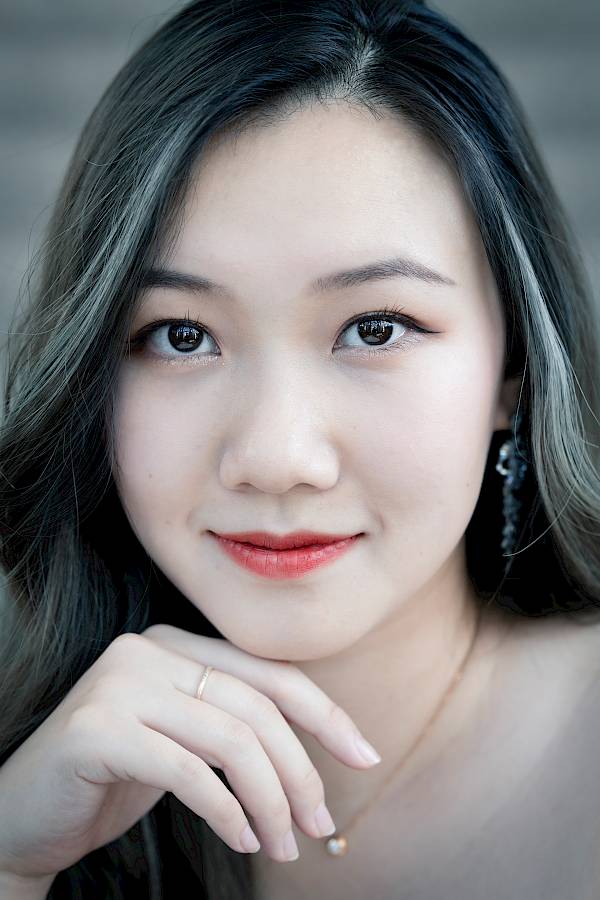
Ziyi Dai

Ziyi Dai, Sopran, stammt aus China und studierte am China Conservatory of Music in Peking, sowie an der Manhattan School of Music und am Curtis Institute of Music in New York. Meisterkurse besuchte sie u.a. bei Javier Camarena, Enza Ferrari, Eric Owens und Ferruccio Furlanetto. Sie war Preisträgerin beim Huang Long Music Festival, beim Premiere Opera Foundation Gesangswettbewerb und beim Daniel Biaggi Palm Beach Opera Preis. Im Rahmen des Curtis Institute of Music sang sie Zerlina in Don Giovanni, Belinda in Dido and Aeneas und Miss Wordworth in Albert Herring. Zusammen mit ihrem Vater, dem Opernsänger Dai Yuqiang, sang sie in der Carnegie Hall in New York und am Kimmel Center for the Performing Arts Konzerte mit Arien von Verdi, Puccini und Lehár sowie mit bekannten Chinesischen Volksliedern. Von 2019 bis 2022 war sie Mitglied des Internationalen Opernstudios und hier u.a. als Comtesse Adèle in Le Comte Ory, Marmeladenverkäuferin/Königstochter in Das tapfere Schneiderlein, als Athene in Die Odyssee, als Flaminia (Il mondo della luna) und als Barbarina in Le nozze di Figaro zu erleben. 2022/23 sang sie am Opernhaus Zürich Papagena in Die Zauberflöte und beim Buxton International Festival Amina in La sonnambula.

Tatjana Schneider

Tatjana Schneider, Sopran, kommt aus Omsk/Russland und studierte Gesang an der Universität der Künste in Omsk und an der Musikhochschule Hanns Eisler in Berlin. Nebenbei besuchte sie Meisterkurse bei Francisco Poyato und Robert Dean Smith. Sie ist Preisträgerin des Marie-Bieshu-Wettbewerbs in Moldawien, war Semifinalistin beim Voci Verdiani-Wettbewerb in Busseto und beim Riccardo Zandonai-Wettbewerb in Riva del Garda. Seit der Spielzeit 2016/17 ist sie Ensemblemitglied am Theater St.Gallen, wo sie u.a. als Susanna (Le nozze di Figaro), Euridice (Orfeo ed Euridice), Marzelline (Fidelio), Adina (L’elisir d’amore), Marguerite (Faust), Parthénis (La Belle Hélène), Marie (Cendrillon), Cleopatra (Giulio Cesare in Egitto) und Rosalba (Florencia en el Amazonas von Catán) zu erleben war.

Barnaby Rea

Barnaby Rea, Bass, stammt aus Grossbritannien und studierte an der Guildhall School of Music and Drama. Er war von 2013 bis 2016 Mitglied des English National Opera Studios und wurde anschliessend Ensemblemitglied an der Oper Frankfurt. Dort sang er Rollen wie Pistola (Falstaff), Johann (Werther), Bosun (Billy Budd), Soljony (Drei Schwestern), Baron Zeta (Die lustige Witwe) und Lord Tristan Mickleford (Martha von Flotow). An der English National Opera war er als Sparafucile (Rigoletto), Basilio (Il barbiere di Siviglia), Colline (La bohème), Nourabad (Les Pêcheures de perles) und Lodovico (Otello) zu erleben. Weitere Gastengagements führten ihn an die Opera North, an die Scottish Opera, an die Opera Holland Park und zum Bergen International Festival Festival. In Mozarts Requiem ist er in der Royal Festival Hall in London aufgetreten, in Verdis Requiem in der Adrian Boult Hall Birmingham und in Bernsteins On the Town bei den BBC Proms in der Royal Albert Hall. 2021 war er als Truffaldin in Ariadne auf Naxos beim Edinburgh International Festival und als Hobson in Peter Grimes am Teatro Real de Madrid zu erleben.

Alexander Fritze

Alexander Fritze studierte Schlagwerk und Gesang an der Hochschule für Musik Saarbrücken. Er war in zahlreichen Hochschulproduktionen, in einer Aufführung von Bachs Matthäuspassion (Jesus) und bei diversen Liederabenden als Sänger auf der Bühne zu erleben. Sein professionelles Debüt gab er 2017 in der Rolle des 2. Geharnischten in einer Produktion von Die Zauberflöte an der Longborough Festival Opera in Gloucestershire. Im selben Jahr wechselte er in die Klasse von Prof. Rudolf Piernay an der Guildhall School of Music and Drama in London. Zudem besuchte er Meisterkurse bei Prof. Edith Wiens (Juilliard School New York) und Elizabeth McDonald (University of Toronto). Seit der Spielzeit 2021/22 ist er Mitglied des Internationalen Opernstudios Zürich und war hier bisher in Salome, Die Odyssee, Dialogues des Carmélites und Macbeth zu erleben.

Thomas Erlank

Thomas Erlank stammt aus Südafrika. Er studierte Musik an der Universität von Stellenbosch (Südafrika) und Gesang am Royal College of Music in London bei Patricia Bardon. 2011 gab er sein Debüt als Solist in Steve van der Merwes Eleven – A Requiem for a Parent in der St. George’s Cathedral in Kapstadt. Zu seinem Repertoire gehören u.a. Rollen wie Aeneas (Dido und Aeneas), Dr. Blind (Die Fledermaus), Acis (Acis und Galatea) und Il Podestà (La finta giardiniera). Beim Händel Festival in London sang er Lurcanio in Händels Ariodante. 2015 wirkte er in David Morins Dokumentarfilm Finding Messiah mit. Mit Werken von Mozart, Haydn und Händel war er u.a. in St. Martin-in-the-Fields, in der Cadogan Hall und beim Brighton Fringe Festival zu erleben. Von 2018 bis 2020 war er Mitglied des Internationalen Opernstudios und sang hier 2018/19 den Tenorpart in der Ballettproduktion Winterreise von Christian Spuck, Borsa in Rigoletto, Ambrogio in der IOS-Produktion Il barbiere di Siviglia am Theater Winterthur sowie den Conférencier in der Uraufführung Last Call von Michael Pelzel. In der Spielzeit 2019/2020 war er in Belshazzar, in der Zauberflöte und in Fidelio zu hören. Seit der Spielzeit 2020/21 gehört er zum Ensemble des Opernhauses Zürich und sang jüngst in Idomeneo, L’incoronazione di Poppea, Die Odyssee, Dialogues des Carmélites, L’Olimpiade, Tristan und Isolde sowie in La traviata und Salome. Ausserdem gastierte er im März 2023 als Solist in Mozarts Requiem in der Gulbenkian Foundation Lissabon zusammen mit dem Gulbenkian Orchestra.

Alejandro Del Angel

Alejandro Del Angel, Tenor, stammt aus Mexiko und studierte Gesang am staatlichen Konservatorium und an der Universidad Nacional Autónoma in Mexiko-Stadt. Anschliessend war er Mitglied des Opernstudios Bellas Artes der Nationalen Opernkompanie Mexiko. Er gewann zahlreiche Preise bei Gesangswettbewerben, u.a. den ersten Preis beim Sinaloa Wettbewerb, und war Halbfinalist bei der Competizione dell’Opera Sochi 2019, Viertelfinalist bei Plácido Domingos Operalia in Lissabon 2018 sowie beim Tenor Viñas Wettbewerb 2020. Ausserdem ist er District winner der Kansas Metropolitan Opera Council Auditions 2021. Als Solist ist er bisher bei diversen Konzerten, Festivals, Opernproduktionen und Galas in Mexiko, den USA, Kolumbien und Spanien aufgetreten. Seit der Spielzeit 2021/22 ist er Mitglied des Internationalen Opernstudios Zürich und war hier bisher in Salome, Die Odyssee, Le Comte Ory, Macbeth, Arabella, Nabucco und in Rigoletto zu erleben. Ausserdem gastierte er im März 2023 als Gastone in La traviata an der Opéra de Monte-Carlo.

Valeriy Murga

Bass Valeriy Murga studied at the National Music Academy of Ukraine in Kyiv. He was a finalist at both the 41st International Singing Competition in Toulouse (1996) and the 7th Julian Gayarre Competition in Pamplona (1998). In 1997, he won second prize at the Maria Callas Grand Prix in Athens and participated in the Cardiff Singer of the World competition in 1999. From 1997 to 1999, he was a soloist at the Ukrainian National Opera in Kyiv, where he performed roles including Figaro (“Le nozze di Figaro”), Escamillo (“Carmen”), Schaunard (“La bohème”), and the title roles in “Eugene Onegin,” “Don Giovanni,” and “Prince Igor.” His repertoire also includes the roles of Marchese di Posa (“Don Carlo”) and Shaklovity (“Khovanshchina”). At the Zürich Opera House, Valeriy Murga was initially a member of the International Opera Studio and during this time performed, among others, Sciarrone and the Jailor (“Tosca”) as well as Monterone (“Rigoletto”). Since the 2000/01 season, he has been a permanent ensemble member at the Zürich Opera House, where he has performed roles such as Prince Yeletsky (“The Queen of Spades”), Moralès (“Carmen”), Second Soldier (“Salome”), Alessio (“La sonnambula”), Ali (“L’italiana in Algeri”), Wagner (“Faust”), Sacristan (“Tosca”), Butler (“La rondine”), and Bogdanovich (“The Merry Widow”), as well as in family operas including “The Canterville Ghost,” “Robin Hood,” “The Enchanted Pig,” “Jim Knopf,” and “Wir pfeiffen auf den Gurkenkönig” He has also appeared as a guest in Eugen d’Albert’s “Tiefland” at the Liceu in Barcelona and in “L’italiana in Algeri” at the Staatsoper Unter den Linden in Berlin.

Manon24 / 27 Sept / 3 / 7 / 10 Oct 2025 Tosca28 Sept / 2 / 8 / 11 / 15 / 19 Oct 2025 Werther14 / 19 Jun / 1 / 4 / 10 Jul 2026 Hänsel und Gretel20 / 23 Nov / 2 / 16 / 18 Dec 2025 / 2 / 24 / 25 / 31 Jan 2026

Cheyne Davidson

Cheyne Davidson erhielt seine musikalische Ausbildung an der Case Western Reserve University, dem Cleveland Institute of Music und der Manhattan School of Music. Unmittelbar nach seinem Studium wurde er eingeladen, als Escamillo mit Peter Brooks Tragédie de Carmen auf Europa-, Japan- und Israel-Tournee zu gehen. Nach Auftritten in den USA und Europa war er ein Jahr lang Mitglied des IOS. Seit 1992/93 gehört er zum Ensemble des Opernhauses Zürich, wo er u.a. als Marcello, Schaunard und Benoît (La bohème), Escamillo (Carmen), Silvio (Pagliacci), Amfortas (Parsifal), Paolo Albiani (Simon Boccanegra), Donner und Gunther (Der Ring des Nibelungen), Alfio (Cavalleria rusticana), Faninal (Rosenkavalier), Lescaut (Manon Lescaut), Marco (Gianni Schicchi), Barone Douphol (La traviata), Enrico (Lucia di Lammermoor), Werschinski (Drei Schwestern), Eisenhardt (Die Soldaten), Chang (Das Land des Lächelns), als Le Bailli in Massenets Werther, Bill (Aufstieg und Fall der Stadt Mahagonny), Jonas Fogg (Sweeney Todd), Eurylochos (Die Odyssee) und als Benoît (La bohème) auftrat. Gastverträge führten ihn u.a. an die Opernhäuser Stuttgart, Köln und Hamburg, nach Basel und Luzern, an das Théâtre du Châtelet in Paris, die Oper Nancy, zur Hamburger Opernwoche, nach Belgrad und Budapest, zu den Bregenzer Festspielen und zum Classic Open Air Solothurn. Bei der ZKO Opera Box war er in Die schöne Galathée, in Il campanello di notte sowie in Il signor Bruschino zu erleben. Sein Salzburger Festspieldebüt gab er zu Pfingsten 2016 als Doc in der West Side Story; im Sommer 2016 war er ebenfalls in Salzburg in der Uraufführung von Thomas Adès’ Oper The Exterminating Angel zu erleben.

Unnsteinn Árnason

Unnsteinn Árnason studierte an der Reykjavik Academy sowie an der Universität für Musik und darstellende Kunst in Wien. Sein Bühnendebüt gab er als Don Alfonso (Così fan tutte) im Schlosstheater Schönbrunn und sang dort seither Bartolo in Le nozze di Figaro, Simone in Gianni Schicchi und Dr. Frank in Die Fledermaus. Im Frühjahr 2016 debütierte er am Tiroler Landestheater in Innsbruck als Reinmar von Zweter in Tannhäuser und war dort anschliessend von 2017 bis 2021 Ensemblemitglied. In Innsbruck sang er Rollen wie Sparafucile in Rigoletto, den Eremiten im Freischütz, Kuligin in Katja Kabanowa, Luther und Crespel in Hoffmanns Erzählungen, Zuane in La Gioconda, Lord Tristan in Martha, Mr. Kofner in Menottis Der Konsul, Zuniga in Carmen, Pietro in Simone Boccanegra, Lotario in Manon und Masetto in Don Giovanni. Für seine Interpretation des Dr. Kofner in Der Konsul erhielt er 2019 den Österreichischen Musiktheaterpreis in der Kategorie Bester Männlicher Nachwuchssänger. Als Teilnehmer des Young Singers Project bei den Salzburger Festspielen sang er 2016 den Techniker Niklas Zettel in der Feenkönigin für Kinder sowie an der Wiener Kammeroper in Viktor Ullmanns Kaiser von Atlantis.

Oleg Davydov

Oleg Davydov studierte Gesang in Moskau und St. Petersburg. Am Konservatorium in St. Petersburg debütierte er 2016 als Fürst Gremin in Eugen Onegin. Er gewann diverse Preise und Auszeichnungen, darunter den zweiten Platz bei der 7. International Opera Competition in St. Petersburg 2015 und den Sonderpreis beim Galina-Wischnewskaja-Gesangswettbewerb in Moskau 2016. In den Spielzeiten 2017/18 und 2018/19 war er Mitglied des Opernstudios der Bayerischen Staatsoper, wo er u.a. die Rollen Usciere in Rigoletto, einen Hauptmann in Eugen Onegin, den 2. Gefangenen in Fidelio, Billy Jackrabbit in La fanciulla del West, Bertrand in Iolanta und Yakusidé in Madama Butterfly interpretierte. Seit der Spielzeit 2019/20 ist Oleg Davydov Mitglied des Internationalen Opernstudios Zürich und war hier in Belshazzar, Die Zauberflöte, Fidelio, Les Contes d’Hoffmann, Salome und Die Odyssee zu erleben.

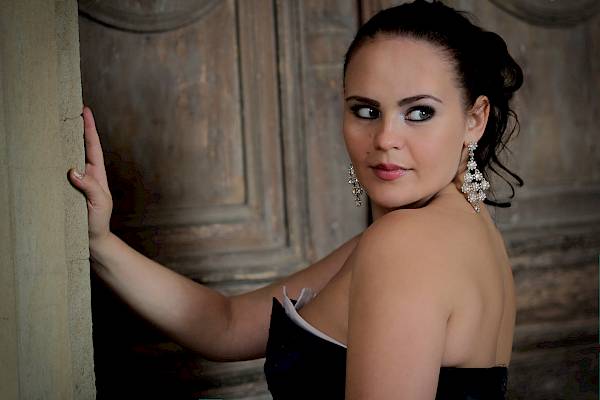
Chelsea Zurflüh

Chelsea Zurflüh, soprano, studied voice at the Lucerne School of Music, the Bern University of the Arts, and the Swiss Opera Studio in Biel. She is a prizewinner of the Marianne & Curt Dienemann Foundation music competition and the Kiefer Hablitzel/Göhner music competition, a scholarship recipient of the Migros Culture Percentage singing competition, and winner of the Elvirissima vocal competition. In December 2019, she sang the national anthem at the Swiss Federal Palace in Bern on the occasion of the swearing-in of the Council of States. Although her repertoire also includes music styles such as soul and rock, her main focus lies in the classical field. In the 2020/21 season, she made her debut at Theater Biel-Solothurn in Burkhard’s Casanova in der Schweiz and at Konzert Theater Bern as Adele in Die Fledermaus. Since the 2021/22 season, she has been a member of the International Opera Studio in Zurich, where she has appeared as Circe and Calypso in Die Odyssee, as Alice in Le Comte Ory, as Zaida in Il turco in Italia, as Clarice in Il mondo della luna, as Barbarina in Le nozze di Figaro, and in Jakob Lenz.

Werther14 / 19 Jun / 1 / 4 / 10 Jul 2026
Show full cast Show less

Philharmonia Zürich

1985 entstand in Folge der Trennung des traditionsreichen Tonhalle- und Theaterorchesters das Orchester der Oper Zürich. 2012, mit Beginn der Intendanz von Andreas Homoki und dem Amtsantritt des neuen Generalmusikdirektors Fabio Luisi, wird das Orchester der Oper Zürich zur Philharmonia Zürich. Pro Saison ist das Orchester in rund 250 Opern- und Ballettvorstellungen des Opernhauses Zürich zu hören. Als Podium für das Konzertrepertoire werden zusätzlich die Philharmonischen Konzerte veranstaltet. Soiréen und Kammermusikmatinéen ergänzen das künstlerische Spektrum des Orchesters. Bevor Fabio Luisi mit der Saison 2012/13 als Generalmusikdirektor die künstlerische Leitung des Orchesters übernommen hat, haben u. a. Franz Welser-Möst (1995-2008, ab 2005 als Generalmusikdirektor) und zuletzt Daniele Gatti als Chefdirigent (2009-2012) das Orchester geleitet. 2000/01 fanden die Beständigkeit der Leistungen des Orchesters der Oper Zürich und die Breite seines Könnens mit der Wahl zum «Orchester des Jahres» in der Umfrage der Zeitschrift «Opernwelt» weit verbreitete internationale Anerkennung.

Mehr Informationen zur Philharmonia Zürich finden Sie hier

Statistenverein am Opernhaus Zürich

Der Statistenverein am Opernhaus Zürich wurde im Jahr 1900 gegründet und dürfte damit einer der traditionsreichsten Vereine auf dem Kulturplatz Zürich sein. Rund hundert Frauen und Männer im Alter von 16 bis 70 Jahren bereichern das Bühnengeschehen in zahlreichen Inszenierungen.Statisten, früher auch als Figuranten bezeichnet, haben generell nicht sprechende Rollen. Ihre Einsätze am Opernhaus Zürich fallen je nach Inszenierung unterschiedlich umfangreich aus. Während früher Massenszenen im Vordergrund standen, sind die Statistinnen und Statisten seit der Ära Pereira und der Intendanz von Andreas Homoki zunehmend auch für aufwändigere Einzelauftritte sowie für anspruchsvolle technische Einsätze gefragt. Die Mitglieder des Statistenvereins üben ihre Einsätze in der Freizeit und ohne finanzielle Interessen aus. Sie bringen Begeisterung für Musik und Theater mit.

Manon24 / 27 Sept / 3 / 7 / 10 Oct 2025 La scala di seta25 / 28 Sept / 19 / 24 Oct 2025 Tosca28 Sept / 2 / 8 / 11 / 15 / 19 Oct 2025 Madama Butterfly30 Dec 2025 / 3 / 9 / 11 / 13 / 16 Jan 2026 Rigoletto20 / 23 / 27 Dec 2025 / 1 / 4 Jan 2026 Le nozze di Figaro24 / 29 Jan / 1 / 5 / 7 / 10 / 14 Feb 2026 Werther14 / 19 Jun / 1 / 4 / 10 Jul 2026 Così fan tutte3 / 7 / 9 / 12 Jul 2026 Macbeth8 / 11 / 14 / 19 / 22 / 30 Nov 2025 Arabella14 / 18 / 22 / 25 / 28 Apr 2026 Der Rosenkavalier21 / 26 Sept / 1 / 5 / 14 / 17 / 21 / 26 Oct 2025 La clemenza di Tito26 / 29 Apr / 3 / 8 / 15 / 17 / 20 / 25 May 2026 Cardillac15 / 18 / 21 / 25 Feb / 1 / 6 / 10 Mar 2026 Hänsel und Gretel16 / 20 / 23 / 28 / 30 Nov / 2 / 4 / 11 / 16 / 18 / 21 Dec 2025 / 2 / 24 / 25 / 31 Jan 2026 Carmen18 / 21 / 23 / 27 / 31 Jan 2026 Un ballo in Maschera22 / 28 / 31 May / 7 / 13 Jun 2026 Die Fledermaus7 / 10 / 12 / 14 / 18 / 26 / 28 / 31 Dec 2025 / 2 / 4 / 6 / 10 Jan 2026 Giulio Cesare in Egitto11 / 13 / 15 / 17 / 21 / 25 / 28 Mar 2026 Scylla et Glaucus27 / 29 / 31 Mar / 2 / 6 / 30 Apr / 2 May 2026 La forza del destino2 / 7 / 12 / 15 / 18 / 21 / 26 / 29 Nov / 17 / 21 Dec 2025 Sillons de Mémoires5 / 6 / 7 Feb 2026 Gianni Schicchi2 / 6 / 8 / 10 / 13 May 2026 Monster's Paradise8 / 14 / 18 Mar / 10 / 12 Apr 2026

Abstract

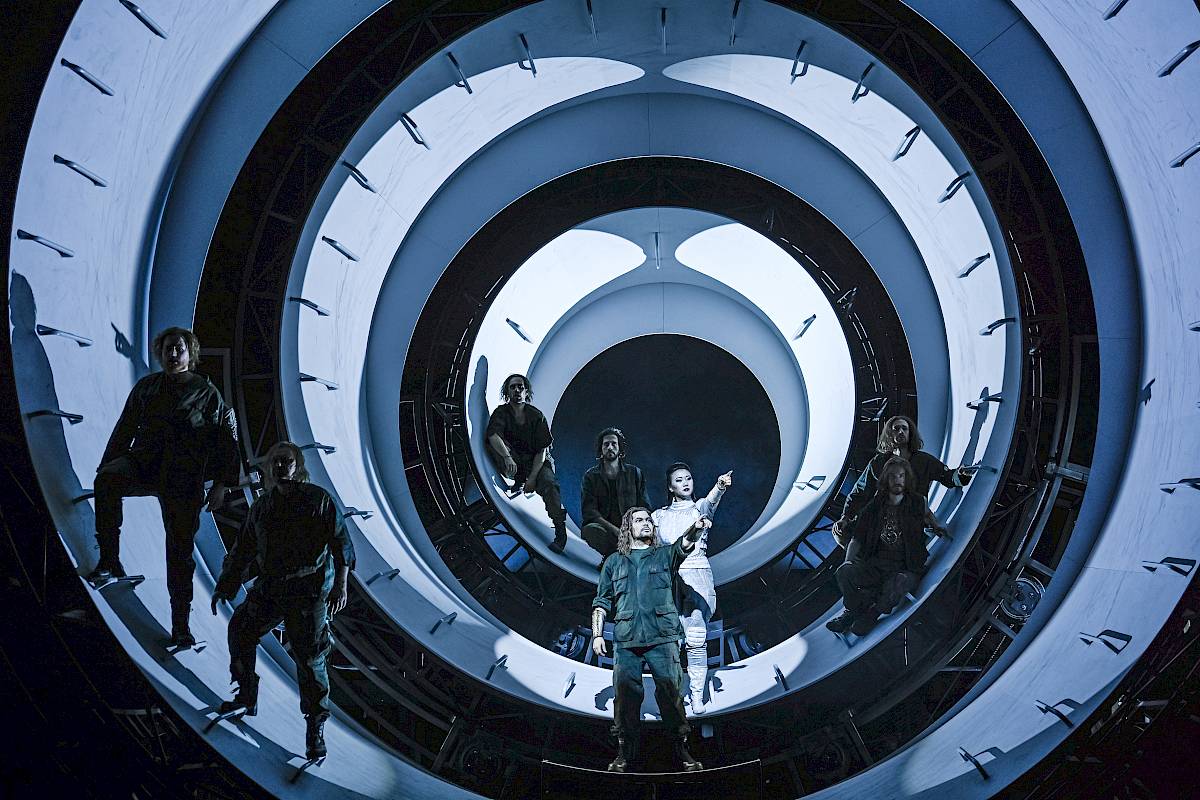
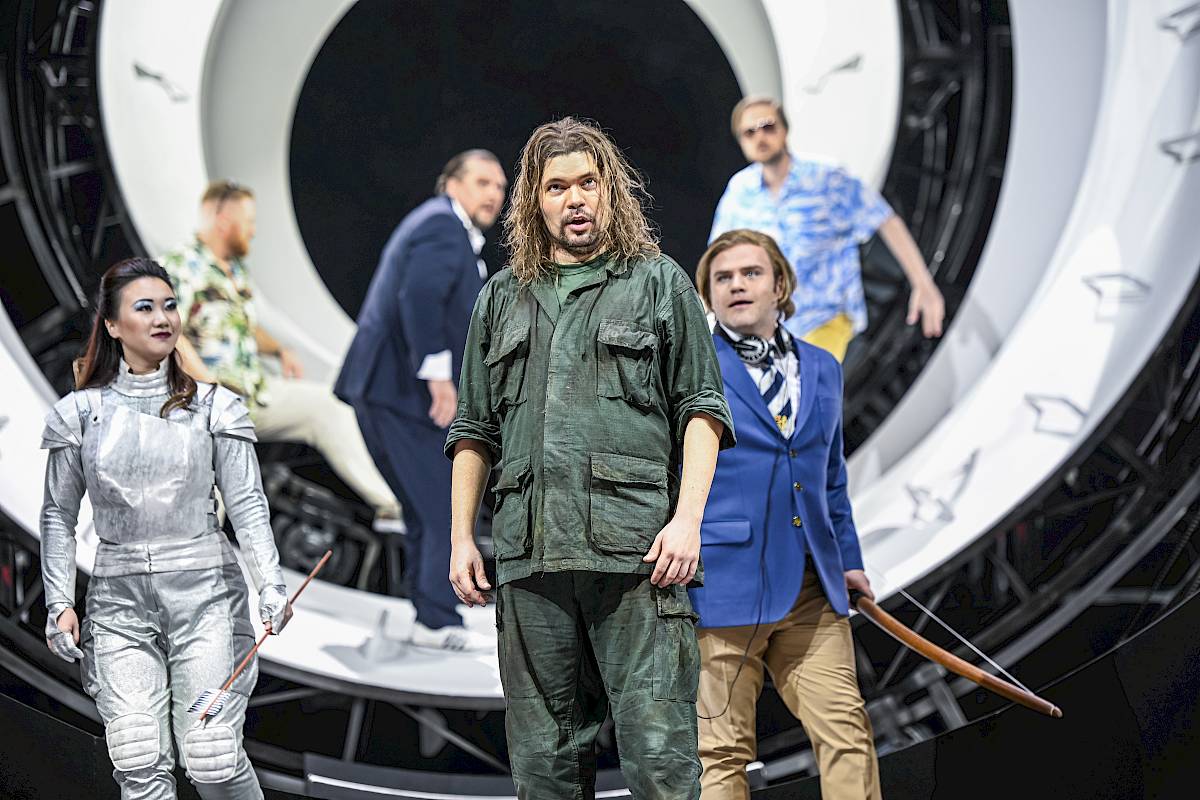
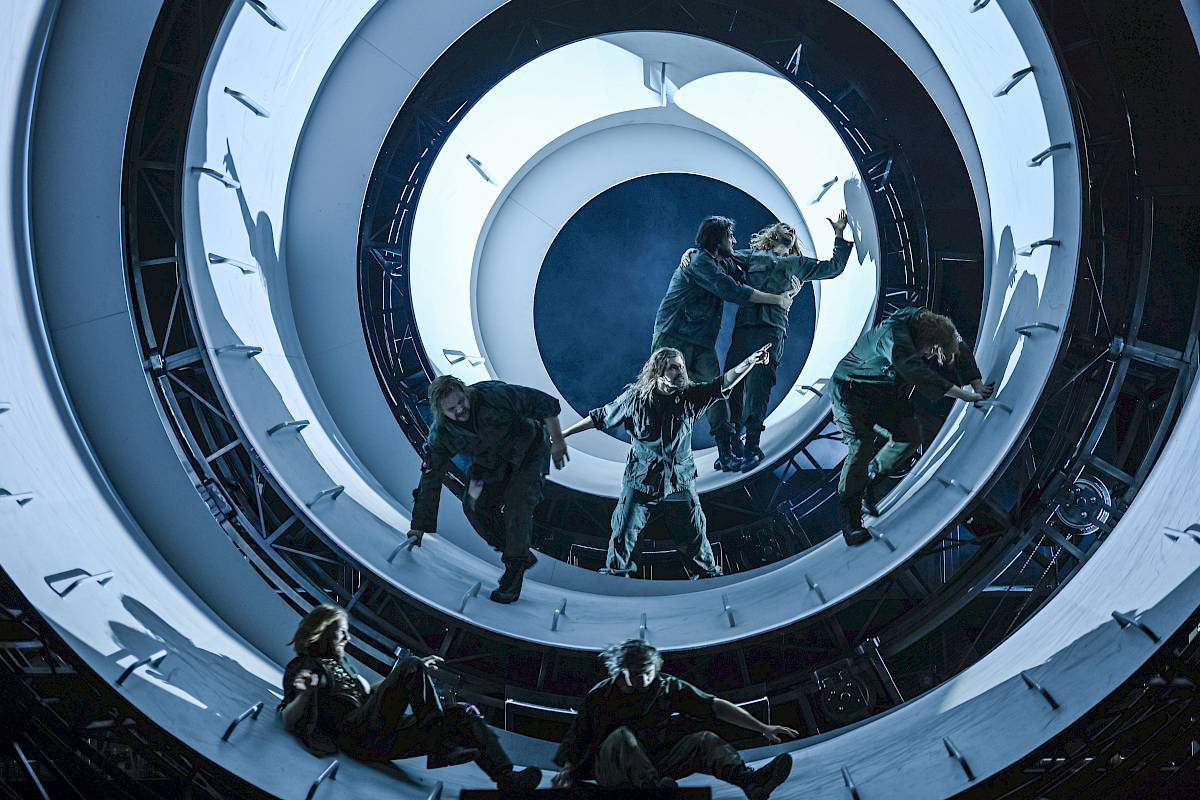
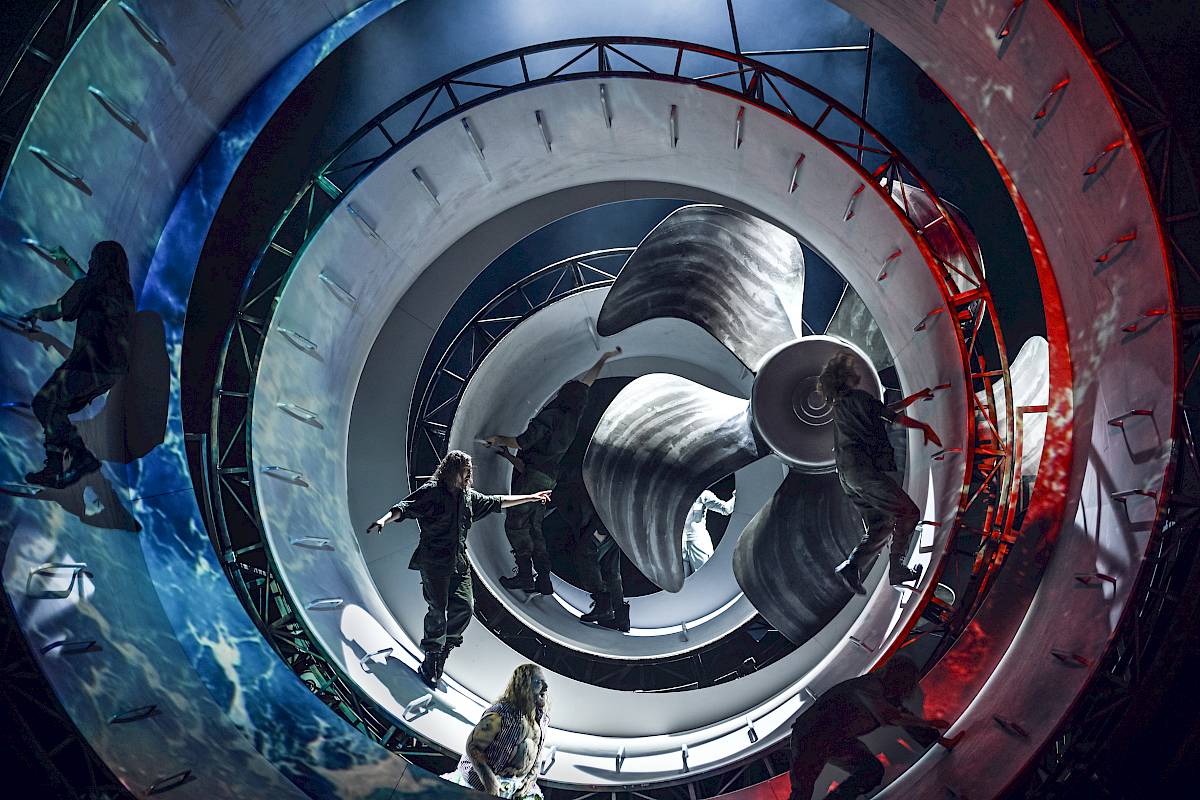
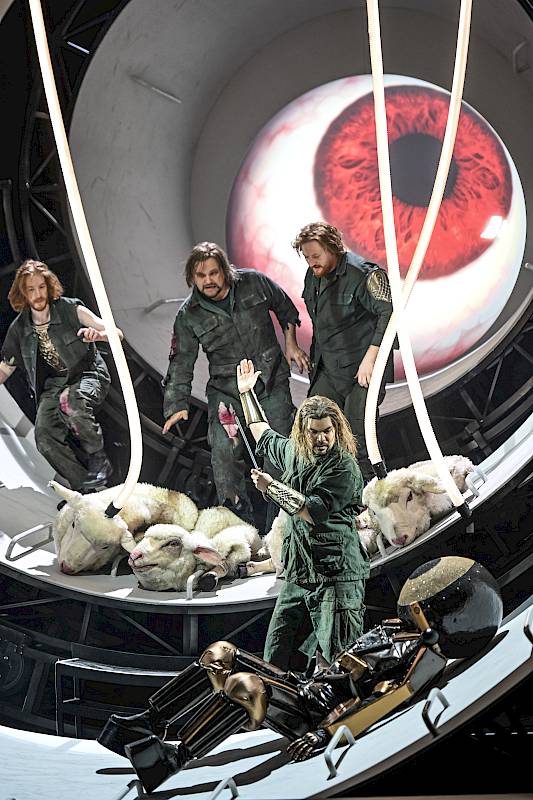
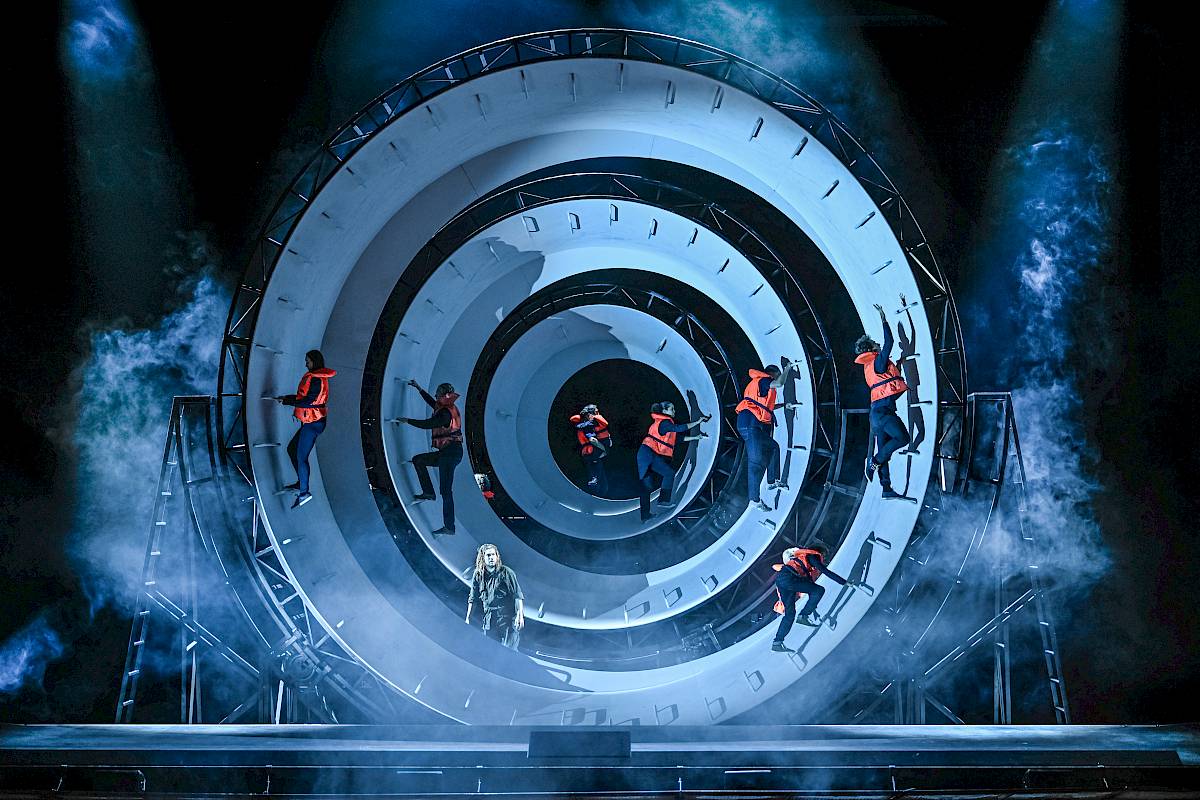
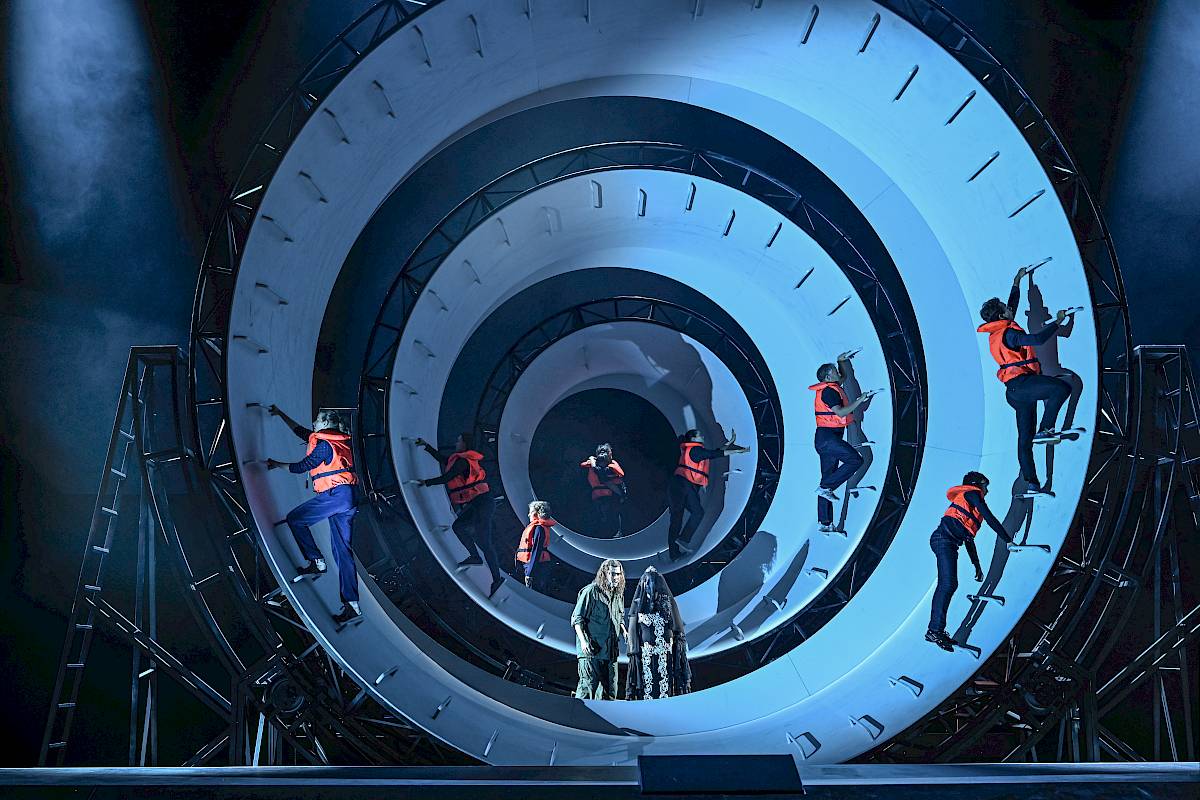
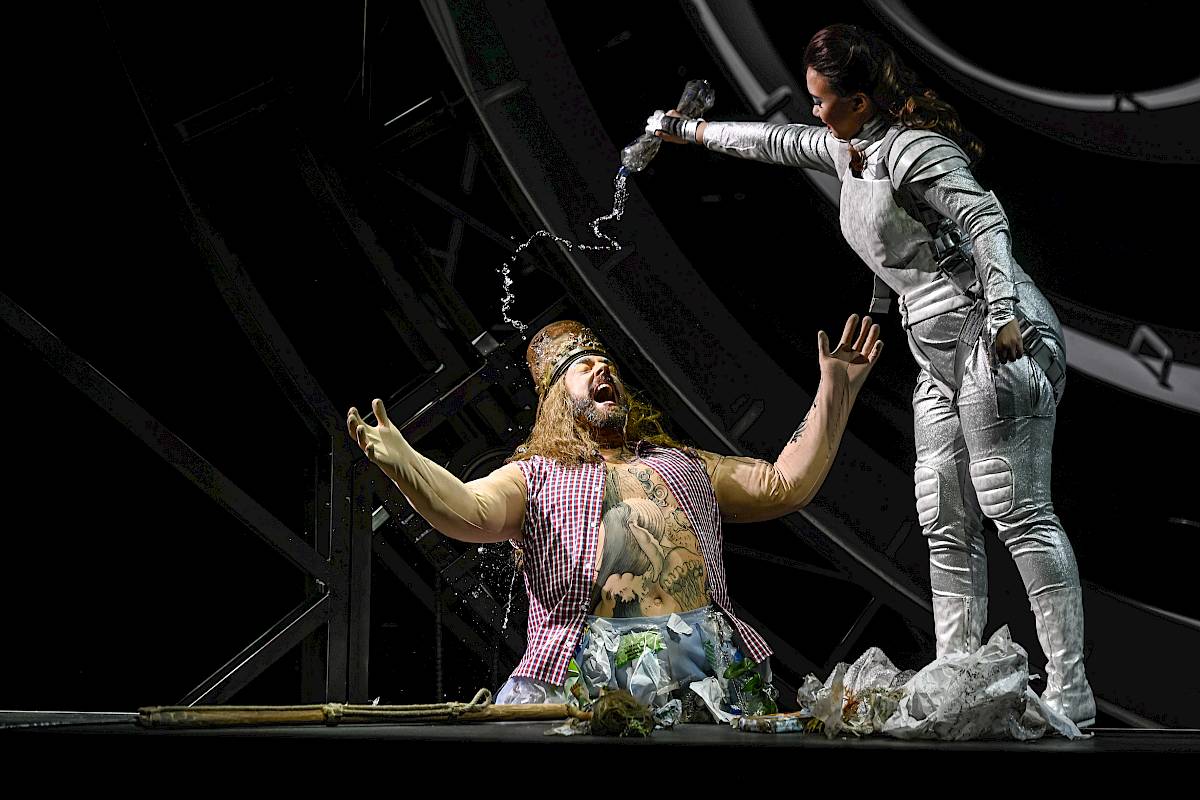
After the end of the Trojan War, Odysseus makes his way homewards to Ithaca. The goddess Athena bids the victorious hero a speedy voyage. But Poseidon, the god of the seas, doesn’t want to see Odysseus and his companions make the trip so quickly – and sends them on a journey brimming with adventure. It ends up taking Odysseus ten whole years to finally make his way back to his wife Penelope and son Telemachus. On his odyssey across the Mediterranean, his ship is tossed and turned by wind and waves, and he lands repeatedly on unknown shores. Untold dangers and temptations – among them the enchantingly beautiful shores of the land of the Lotus Eaters – await the voyagers on their journey home. They must outwit the giant cyclops Polyphemus and the powerful sorceress Circe, who changes Odysseus’ companions into pigs and shows him the way to the Underworld, where his dead mother awaits him. Temptations and storms also await on the seas: the sirens try to lure Odysseus with their seductive song, hoping to destroy his ship. And the crew faces near-certain death between the twin horrors of Scylla and Charybdis. When the hungry crew members feast on a herd of cattle that belongs to Helios, the sun god, the angry deities prolong their journey once again. Stranded on Calypso’s paradisical island, Odysseus nearly forgets that he’s trying to find his way home.
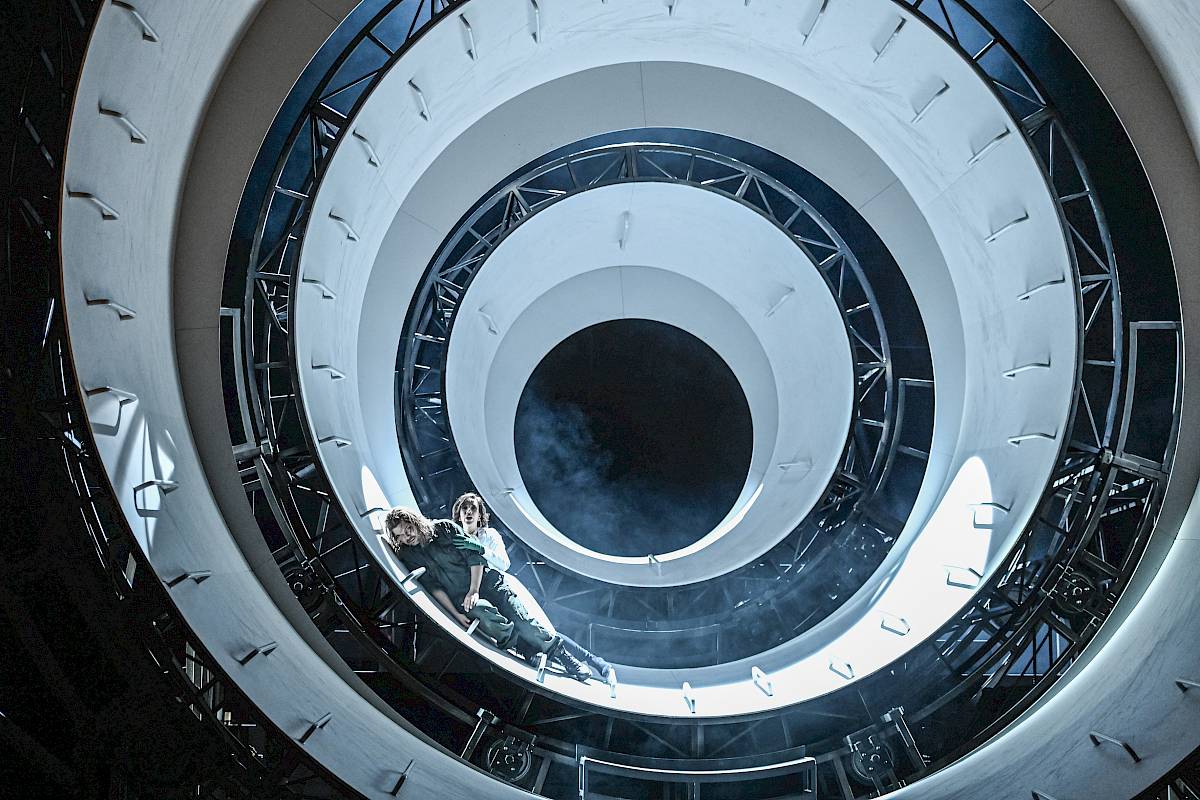
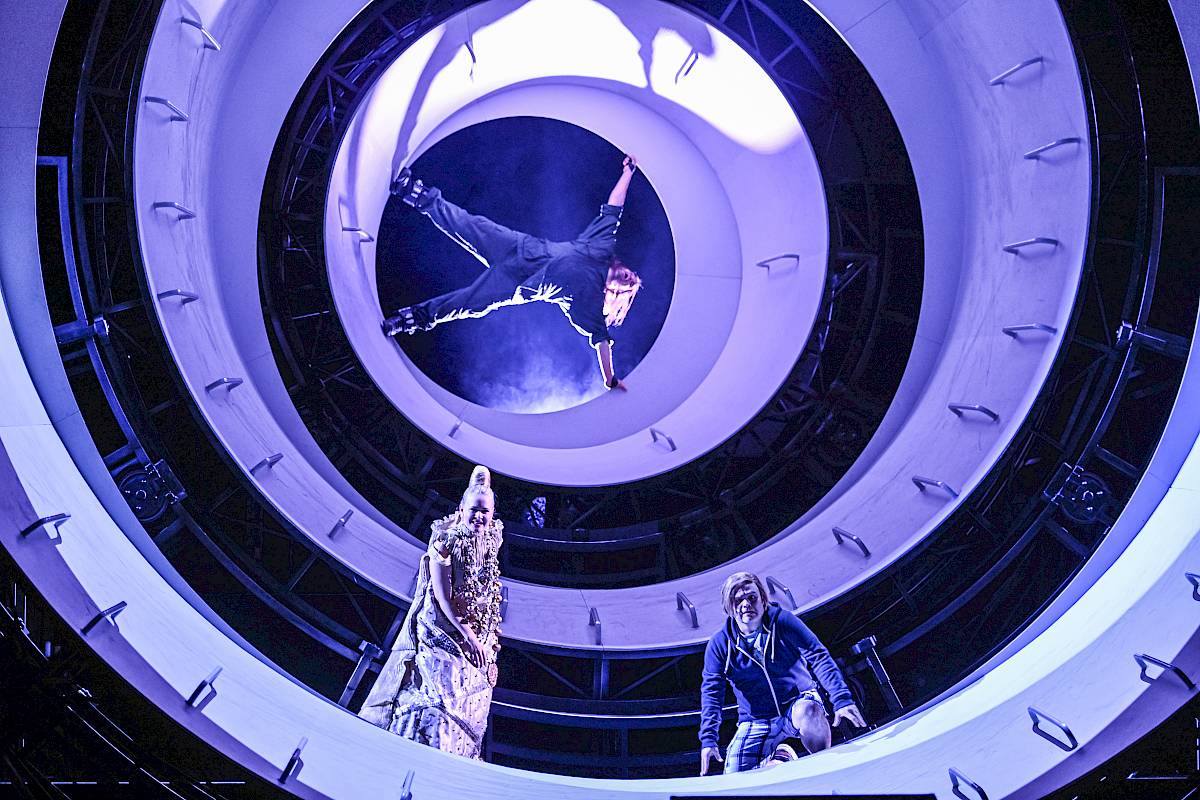
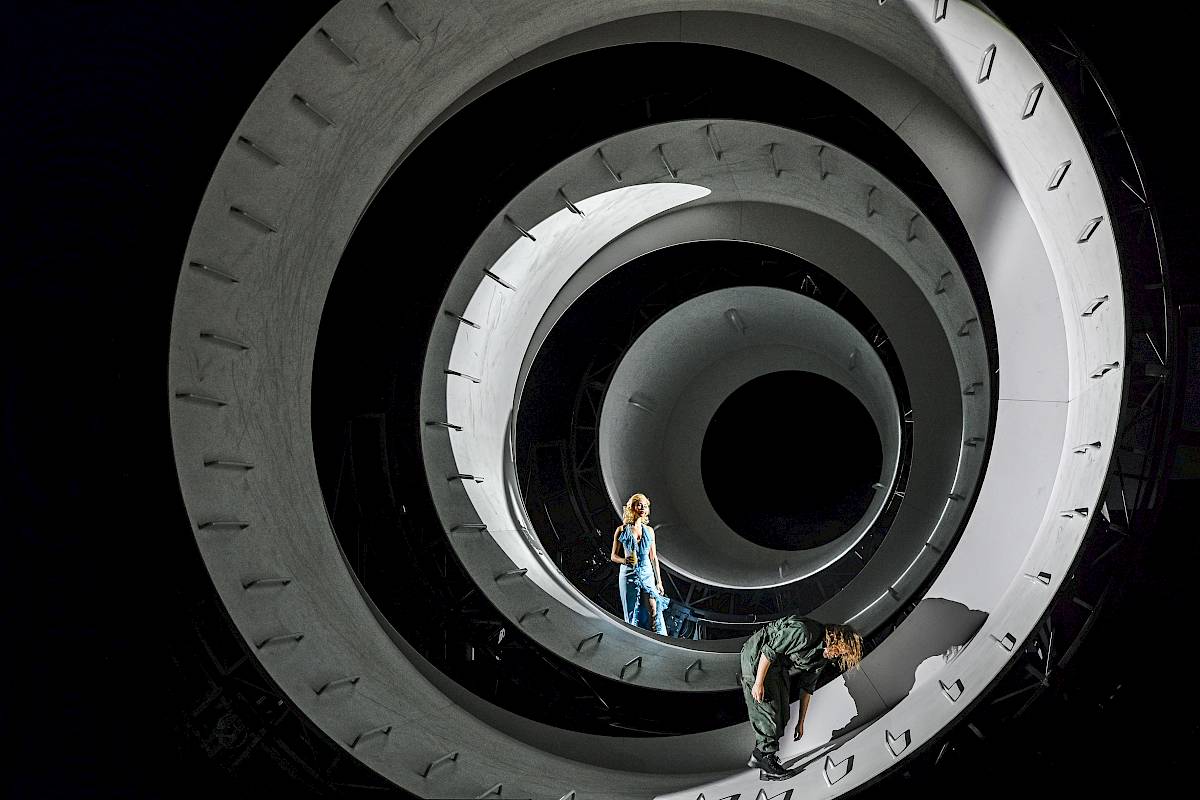
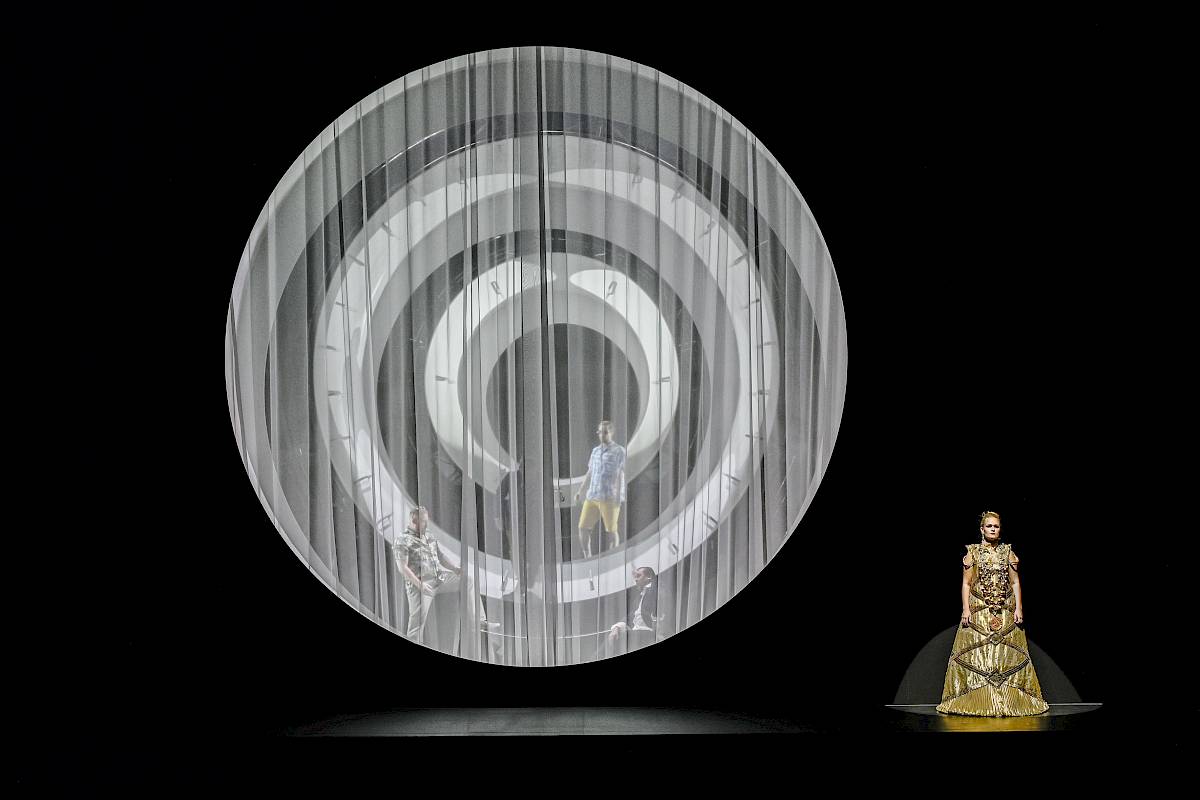
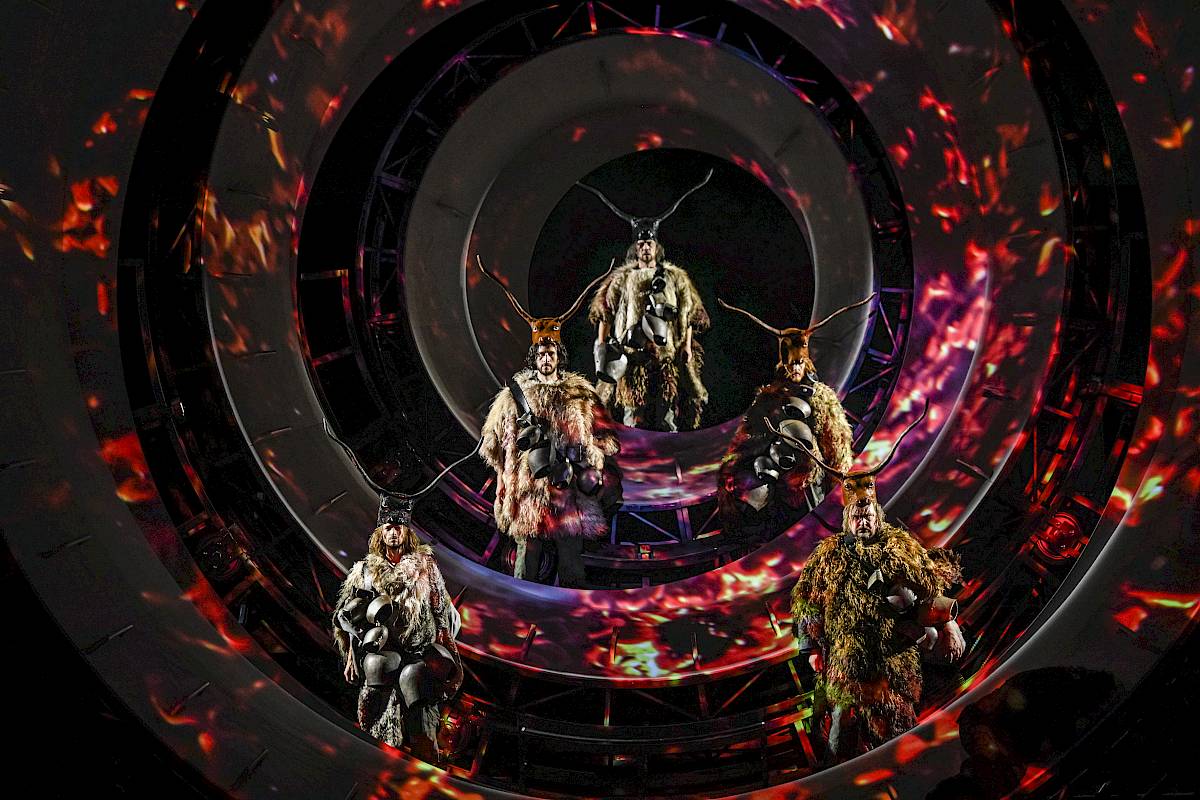
Homer’s Odyssey is one of our oldest stories, captivating young and old alike for millennia. Which is why we commissioned an opera, complete with a brand new libretto, that’s designed for the whole family. The music is by the young Dutch composer Leonard Evers, whose chamber opera Gold! has already found success with young audiences. German stage director Rainer Holzapfel makes his debut at the Opernhaus Zürich, taking on the challenge of turning the Opernhaus stage into the scene of a stormy odyssey.
Read more Show less


Good to know

Audio-Einführung für Kinder

Synopsis

Act 1
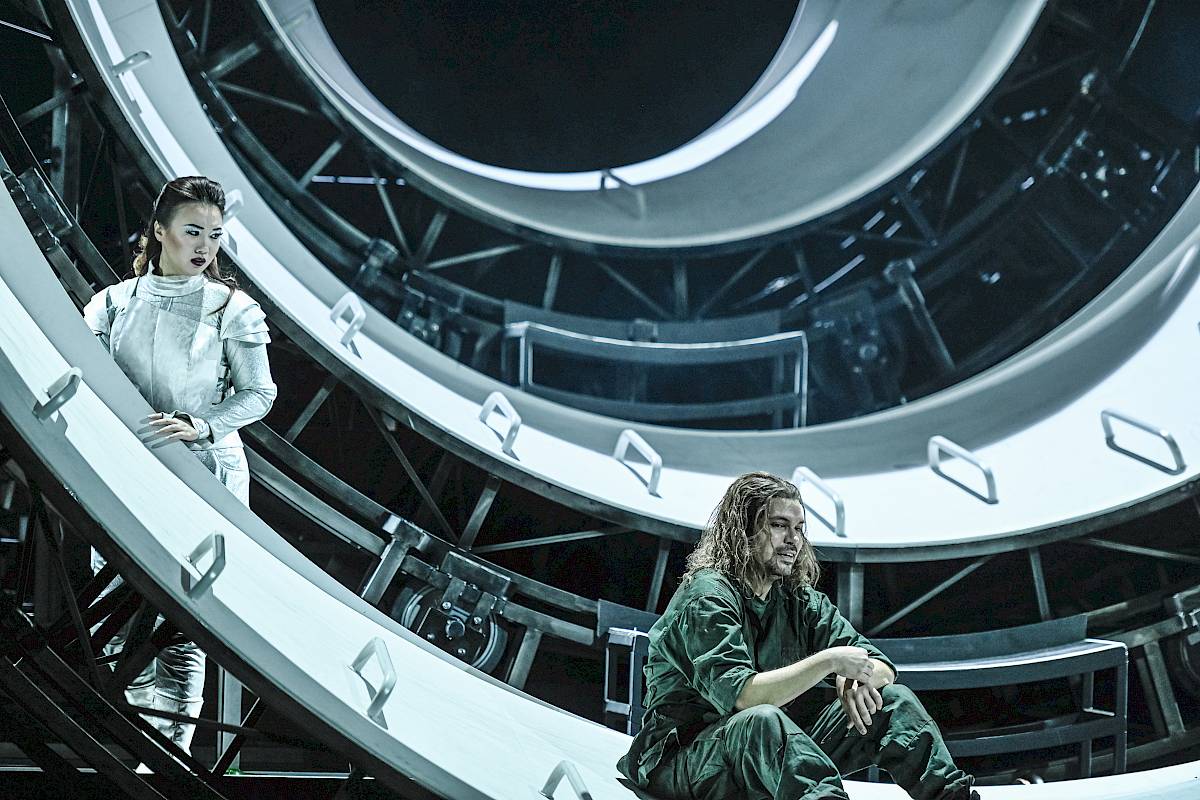
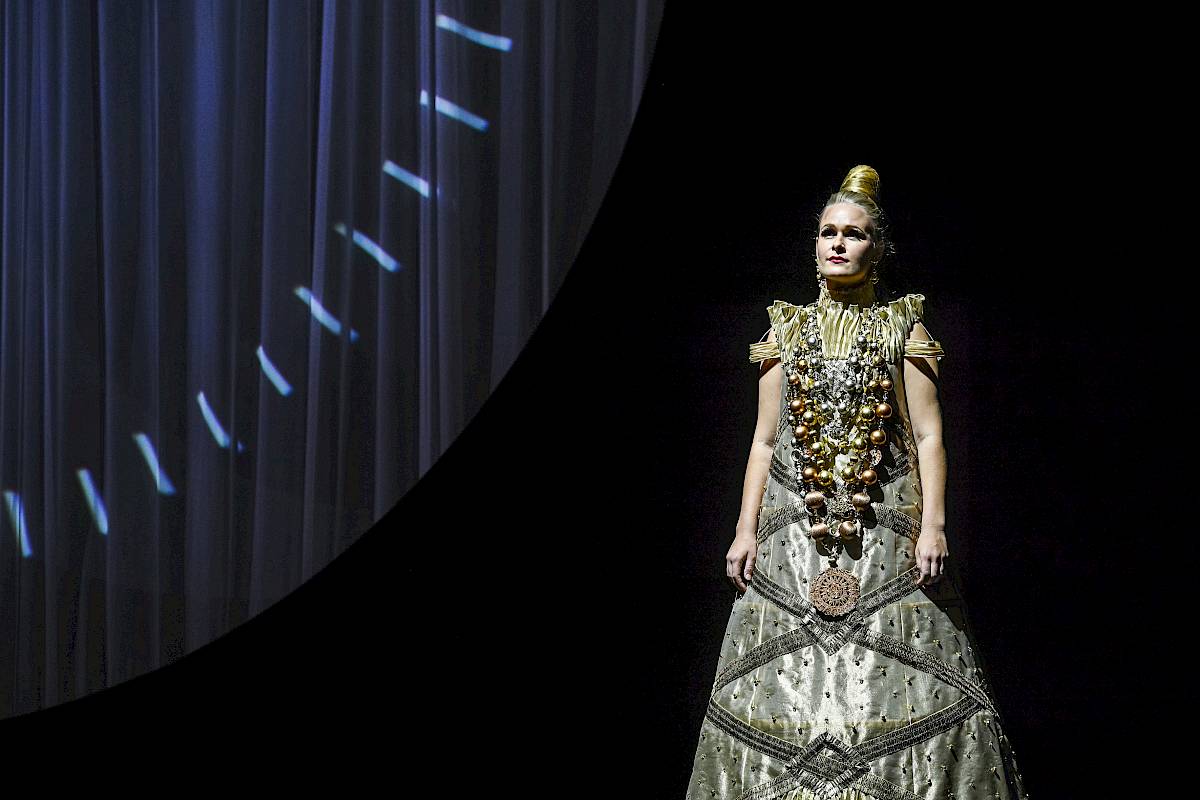
For many years, Penelope has been waiting in Ithaca for her husband Odysseus, who has gone to the Trojan War, to return home. She is beleaguered by foreign men paying court to her and indulging in revelry in the royal palace. Her son Telemachus, who has now grown into a young man, has had enough of the disturbance and wants to have his mother’s suitors expelled. His mother and Eurycleia, his nurse, try to reassure him, as they are firmly convinced that Odysseus will return.
The goddess Athene asks Poseidon to ensure that Odysseus returns home soon. However, the ruler of the seas does not allow the hero and his comrades to arrive so promptly.
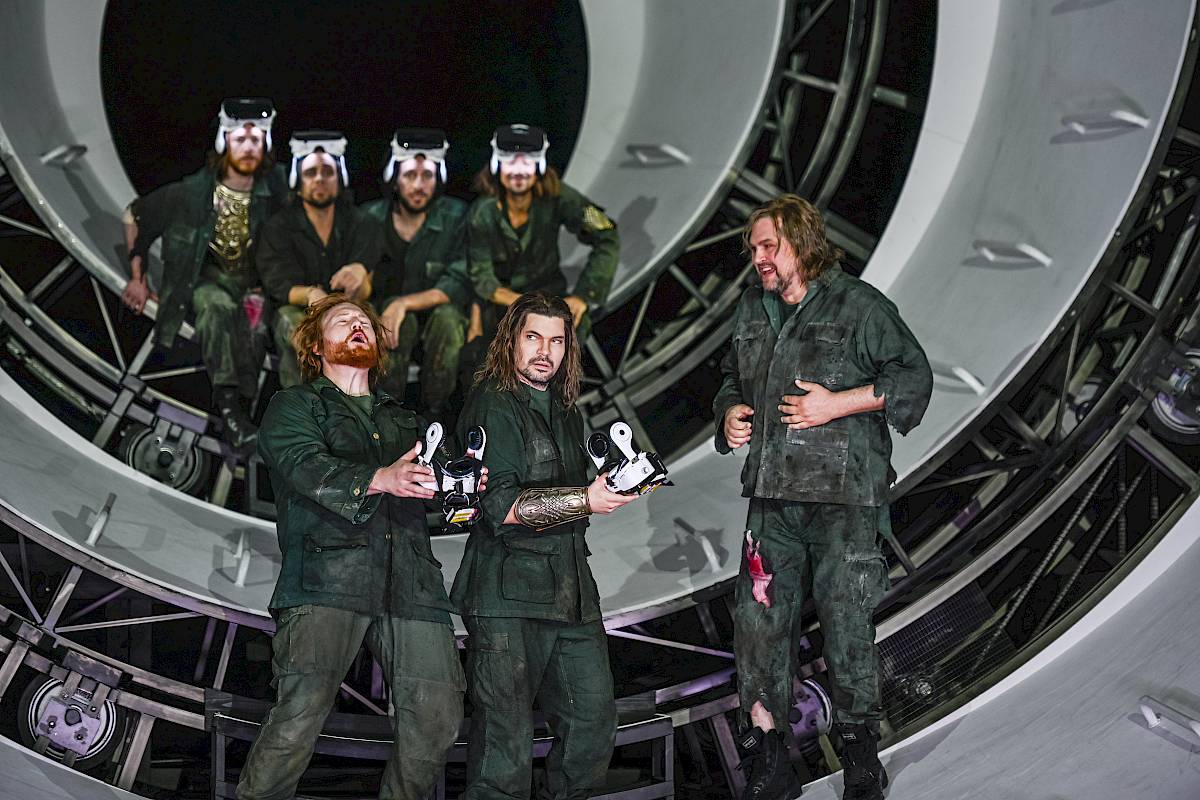
Odysseus and his companions are stranded in the land of the peaceful lotus eaters. In their happy and relaxed state, the men forget that they actually intend to go home. Odysseus has to drive them back on board by force.
The comrades hope to find a hospitable reception on the island of the Cyclops. However, they end up in the cave of the one-eyed shepherd Polyphemus, who turns out to be a ravenous monster. The cunning Odysseus manages to get Polyphemus drunk. Together, the comrades cut out the giant’s single eye. They then conceal themselves beneath the fleeces of Polyphemus’s sheep, thus escaping the cave unnoticed. In retribution, Polyphemus’s father Poseidon unleashes a severe storm.
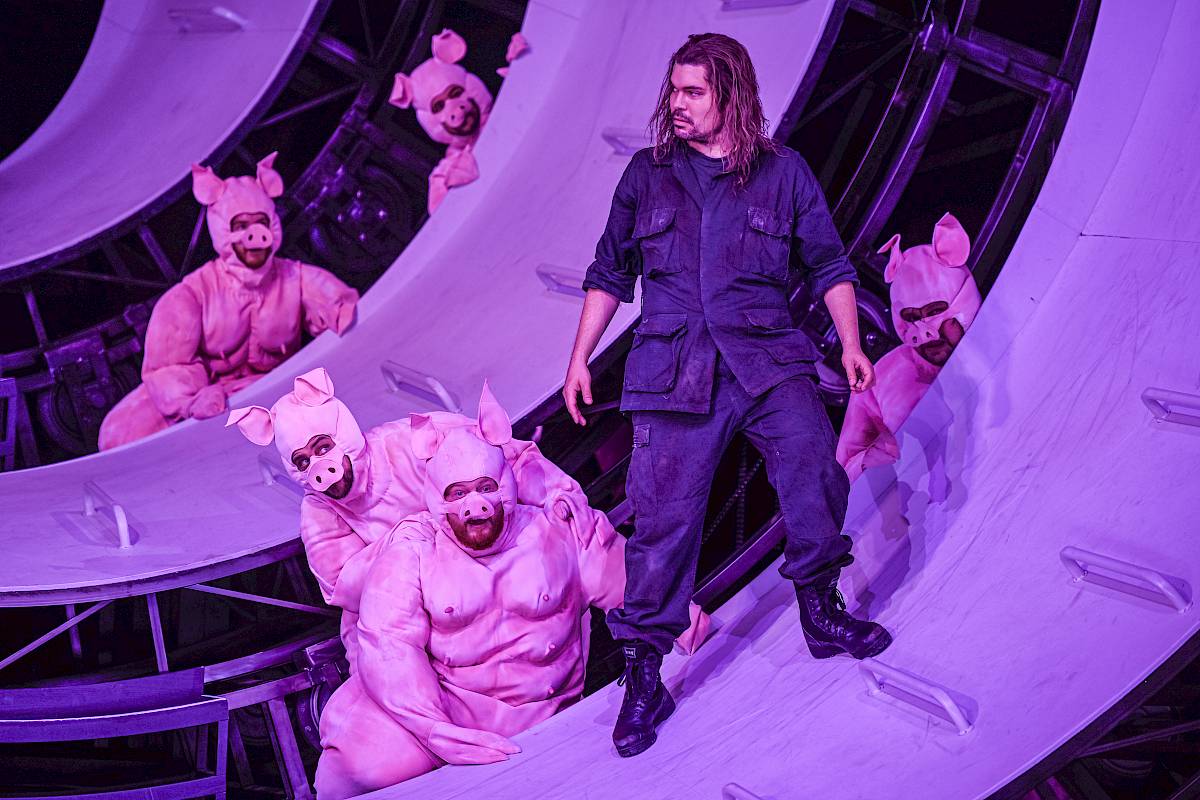
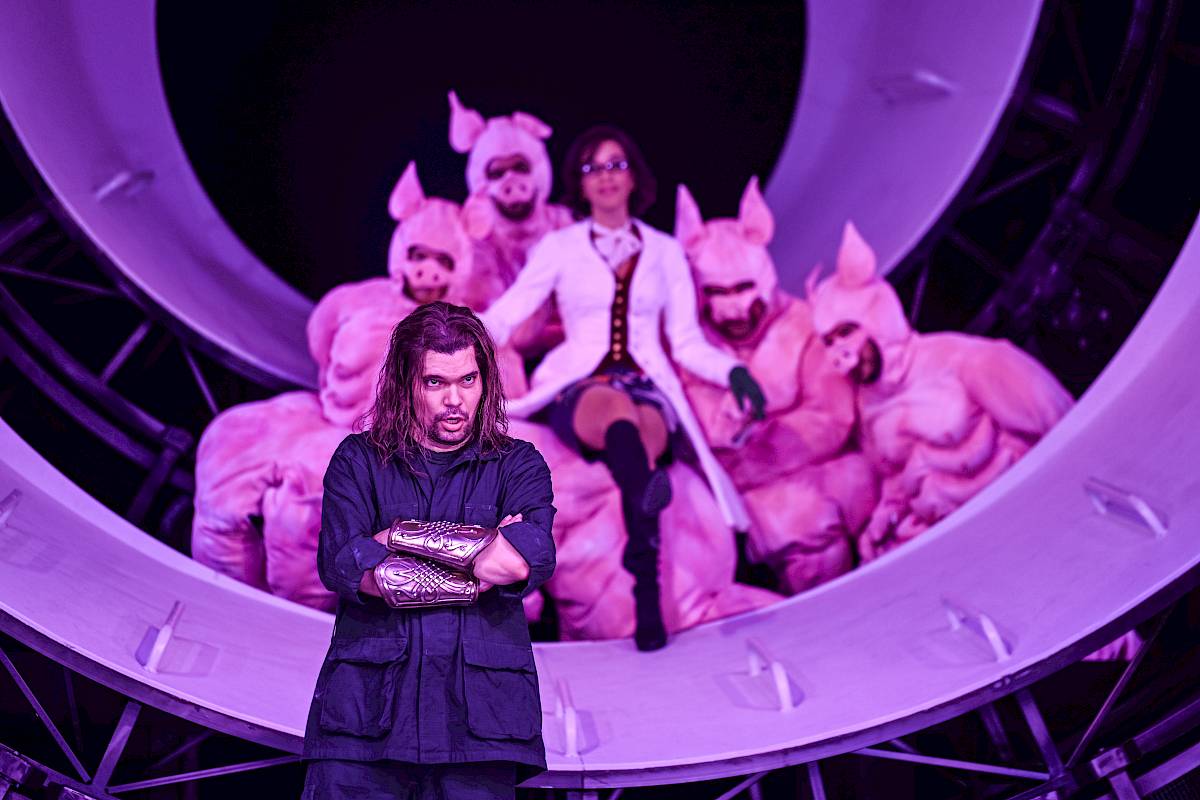
Back on land, Odysseus finds that his companions have been transformed into swine. Circe, the ruler of the island, also wants to cast a spell over Odysseus, but Athene protects him. Circe allows herself to be persuaded and returns Odysseus’s companions to their original form. She advises Odysseus to descend into the Underworld.
In the realm of the dead, Odysseus sees his mother once more. She tells him that Penelope and Telemachus are still alive. Both Achilles, the hero who fell in Troy, and the dead warn Odysseus to leave the cattle of Helios in peace. Full of hope, Odysseus returns to his companions.

Act 2
The comrades sail past the sirens, who appear to Odysseus as Penelope and Telemachus. To ensure that he is not drawn down into the depths by their alluring song, Odysseus has himself put in chains.
Between the sea monsters Scylla and Charybdis, Poseidon and Athene fight a fierce battle of the gods. Elpenor, the youngest of Odysseus’s companions, loses his life in the process.
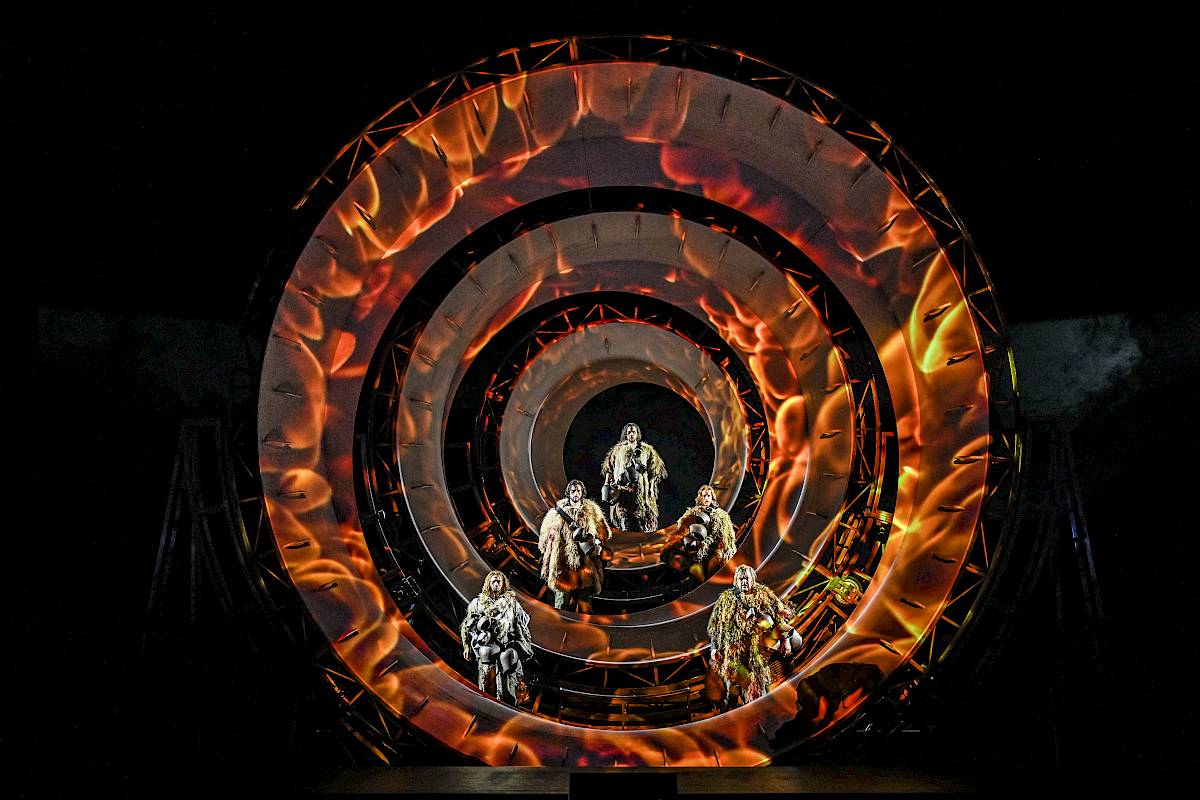
Having arrived in Thrinacia, the exhausted Odysseus falls asleep. In the meantime, his hungry comrades slaughter the cattle of the sun god, Helios. As a punishment, the gods unleash a scorching firestorm, of which Odysseus is the only survivor.
Odysseus recovers with the beautiful Calypso, where he stays for seven years. However, he grows increasingly homesick and sets sail for Ithaca.
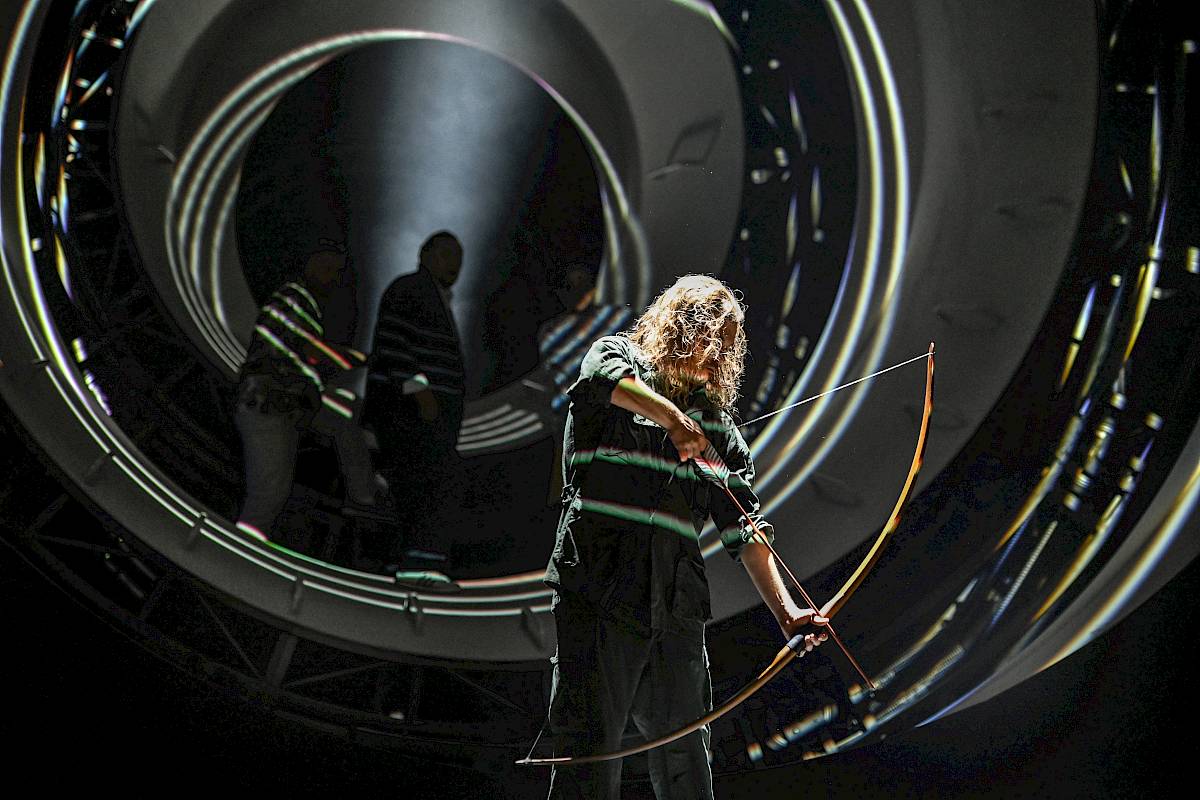
Penelope has decided that she will accept the man who is able to stretch Odysseus’s bow, but not one of them succeeds in doing so. Odysseus appears as a beggar among the men. Just as he is helping his son Telemachus to stretch the bow, Penelope recognises him. After twenty years, the family is finally reunited.