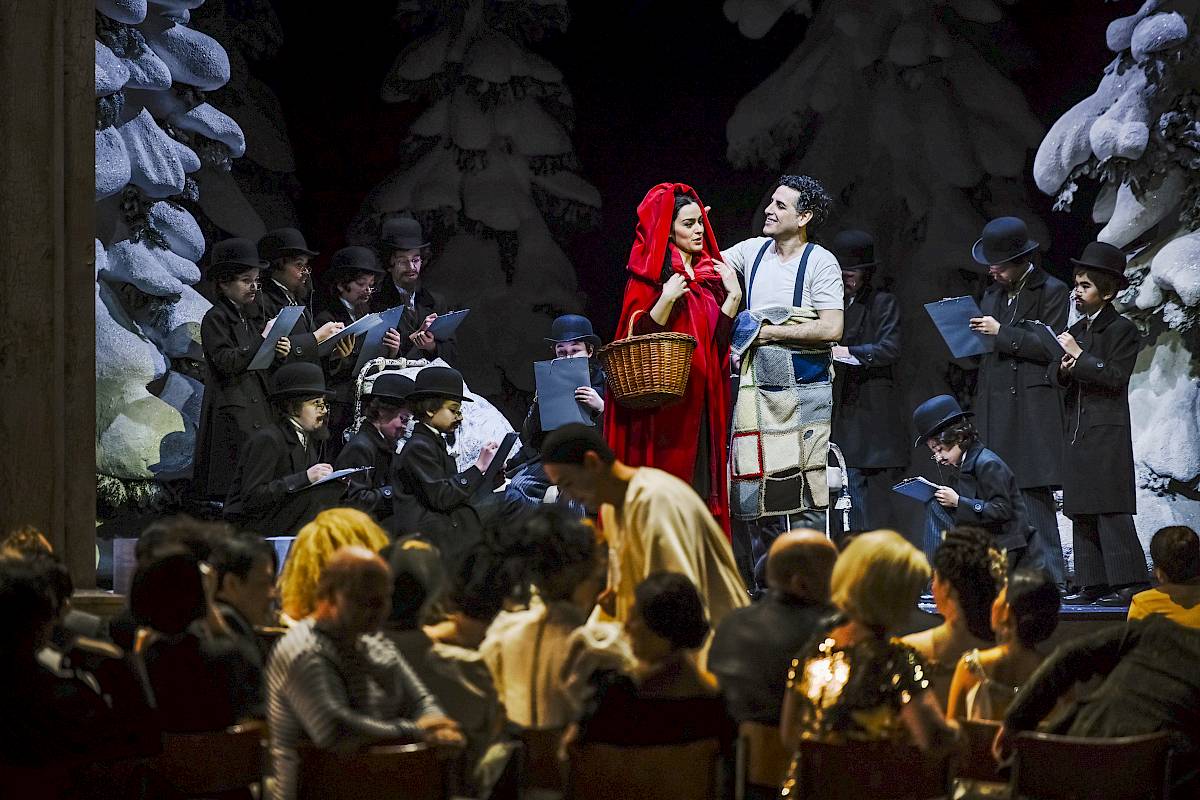

Giampaolo Bisanti wurde in Mailand geboren. Er studierte Dirigieren, Klarinette, Klavier und Komposition am Konservatorium «G. Verdi» seiner Heimatstadt und schloss sein Studium mit Auszeichnung ab. Er ist Preistraeger diverser Dirigentenwettbewerbe, sowie des «Dimitris Mitropolous»-Wettbewerbes in Athen, des Wettbewerbs der Europäischen Gemeinschaft «Franco Capuana» in Spoleto und des «Ferencsik Janos» Radio-TV-Wettbewerbes in Budapest. Er besuchte Kurse bei Maestro Juri Ahronovitch an der Chigiana Akademie von Siena und bei Maestro Donato Renzetti. Seit Beginn seiner Tätigkeit ist Giampaolo Bisanti ständiger Gast der wichtigen Opernhäuser und Theater in Italien. Zu seinen ersten grossen Erfolgen zählt Glucks Orphée et Eurydice am Teatro Comunale in Bologna mit Roberto Alagna, welche auch auf DVD von Bel Air Classiques veroeffentlicht wurde. Internationale Verpflichtungen führten ihn u.a. bereits nach Seoul, Vilnius, Tel Aviv, Strasbourg. Seit er 2013 mit Tosca debütierte, ist er regelmässig Gast an der Königlichen Oper in Stockholm. In den vergangenen Spielzeiten dirigierte Giampaolo Bisanti u.a. La traviata in Florenz, Palermo und Catania, Tosca in der Koproduktion der Theater der Lombardei, Macbeth in Triest, Turandot am Performing Art Center in Seoul, am Teatro Regio in Turin und in Cagliari, Otello in Cagliari und in der Lombardei, L’elisir d’amore in Turin, Stiffelio an der Koeniglichen Oper in Stockholm, La bohème am Teatro Carlo Felice in Genua und Madama Butterfly am Teatro La Fenice in Venedig. In der Saison 2014/2015 leitete er Madama Butterfly in der Lombardei, Cavalleria rusticana am Teatro Comunale in Florenz, Nabucco in Triest, Lucia di Lammermoor in Genua, Carmen sowie Il trovatore in Cagliari, La bohème in Bari, Il barbiere di Siviglia in Turin, Aida in Seoul und La traviata an der Koeniglichen Oper in Stockholm. 2016 wird er an der Deutschen Oper Berlin mit dem Dirigat von Rigoletto debütieren. Neben seiner Tätigkeit als Operndirigent ist Giampaolo Bisanti auch im symphonischen Bereich tätig. U.a. dirigiert er das Orchestra Sinfonica RAI Turin, das Haydn Orchester in Bozen und das Orchestra Sinfonica G.Verdi in Mailand. Als CD-Einspielung ist Strawinskys L’histoire du Soldat mit den «Solisti del Teatro Alla Scala» erhaeltlich, als DVD die Aufnahme von Glucks Orphée et Eurydice vom Teatro Comunale di Bologna.
Giacomo Puccini
Libretto by Giuseppe Giacosa and Luigi Illica
after Henri Murger’s "Scènes de la vie de Bohème"
From 15. April 2017 until 10. May 2017
-
Duration :
2 hrs. 30 min. incl. intermission after 1st part after approx. 1 hrs. -
Language:
In Italian with German and English surtitles. -
More information:
Introduction 45 min before the performance.
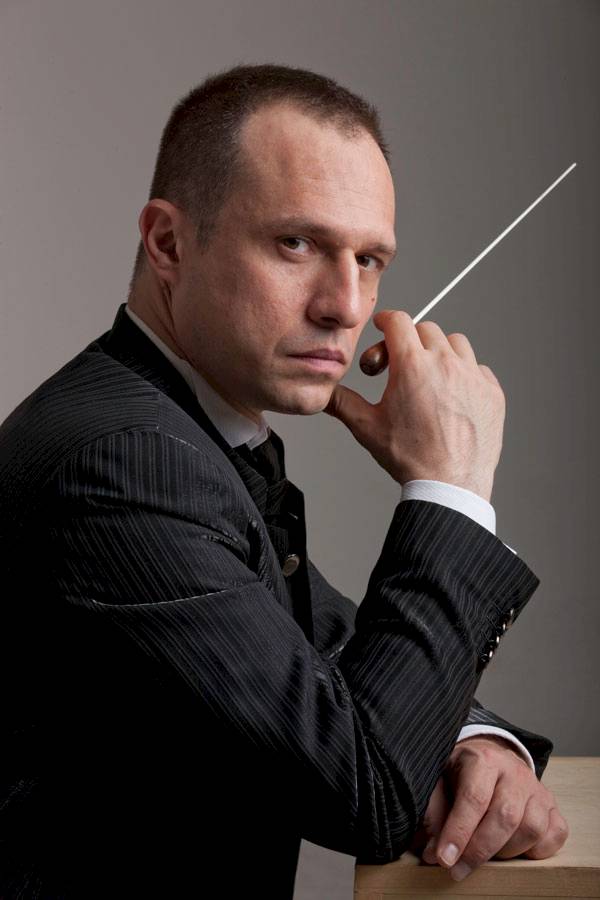
Giampaolo Bisanti
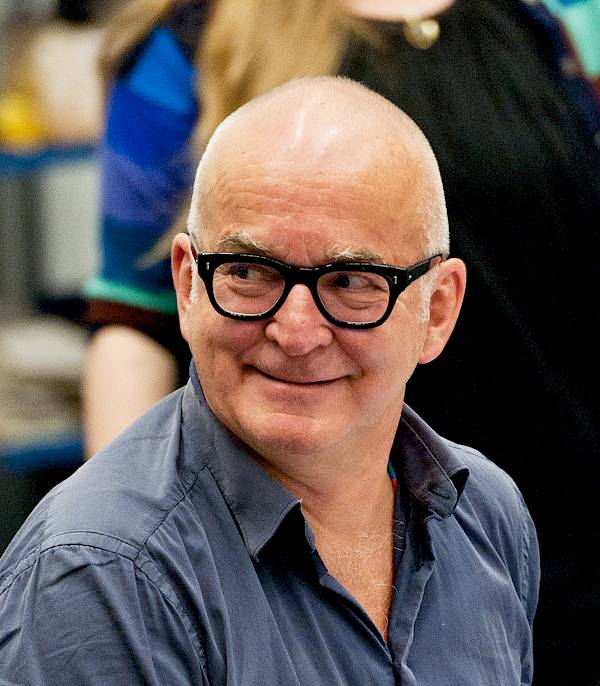
Ole Anders Tandberg
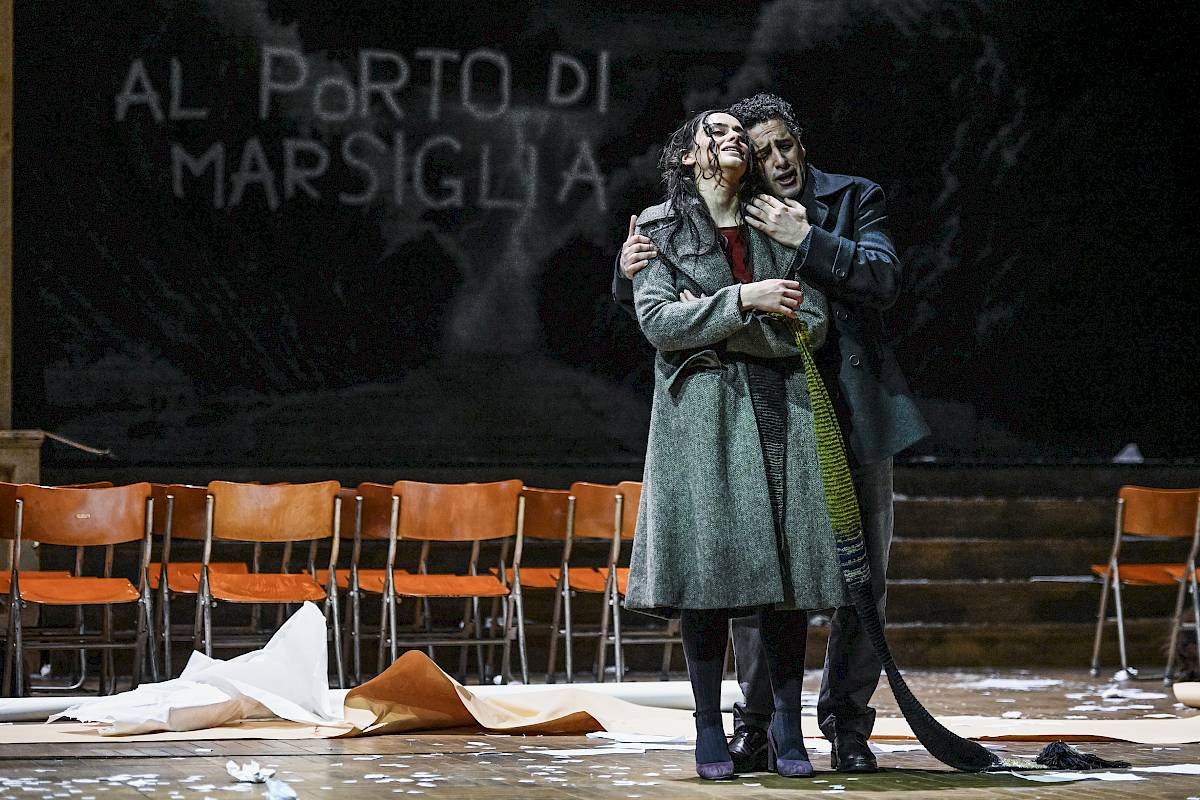
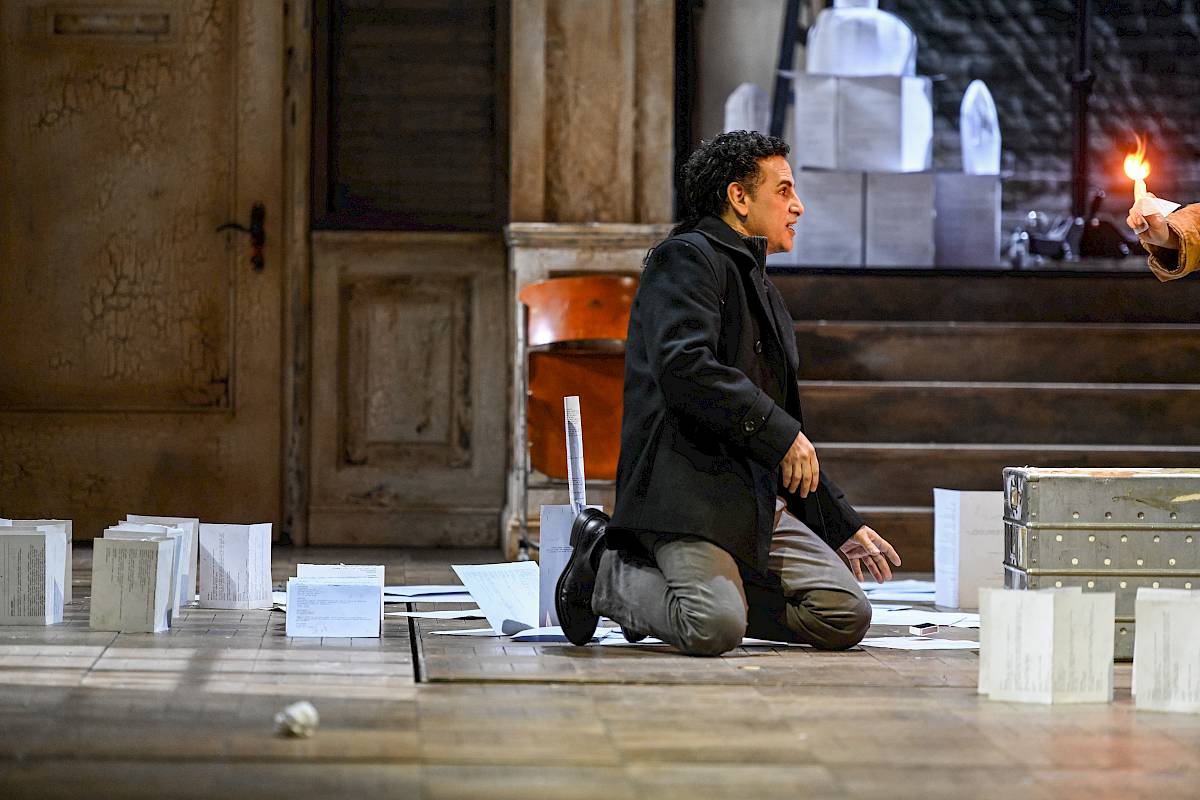
Norwegian Ole Anders Tandberg is considered one of the most distinguished theatre and opera directors in Scandinavia. After completing his training at the Guildhall School of Music and Drama in London, the School of Architecture in Oslo, and the Dramatic Institute in Stockholm, he first gained recognition in the mid-1990s with theatre productions at, among others, the National Theatre Oslo and the Royal Dramatic Theatre Stockholm, where he worked with a repertoire ranging from Shakespeare and Ibsen to Jon Fosse. In addition, he adapted numerous works for the stage, including "Fuglane" by Tarjei Vesaas and "Demons" by Fyodor Dostoevsky. Since then, Ole Anders Tandberg, who also works as a set designer, has increasingly turned to opera. At the Oslo Opera, he directed Monteverdi’s "L’incoronazione di Poppea" and "Il ritorno d’Ulisse in patria," as well as "Lady Macbeth of Mzensk" and "Rigoletto," and at the Royal Opera in Stockholm, Prokofiev’s "The Fiery Angel," Ravel’s "L’enfant et les sortilèges," "Le nozze di Figaro," "Così fan tutte," "Don Giovanni," "The Magic Flute," "Candide," and "The Merry Widow." In 2015, he made his debut at the Deutsche Oper Berlin with his production of "Lady Macbeth of Mzensk," returning there in 2017 for "Carmen" and in 2018 for "Wozzeck." At the Prague State Opera, he directed "The Flying Dutchman" in 2022, and at the Zurich Opera House, he directed "La bohème."
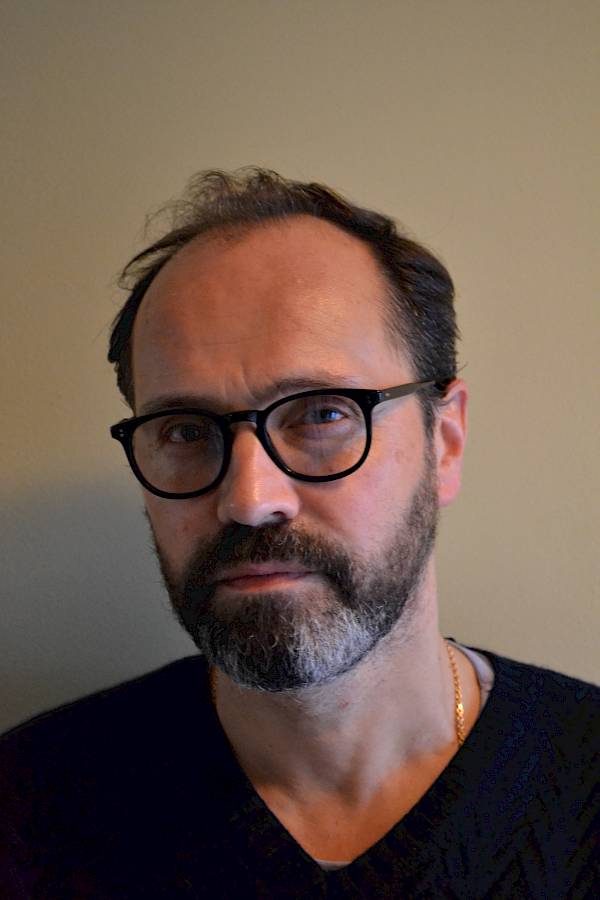
Erlend Birkeland
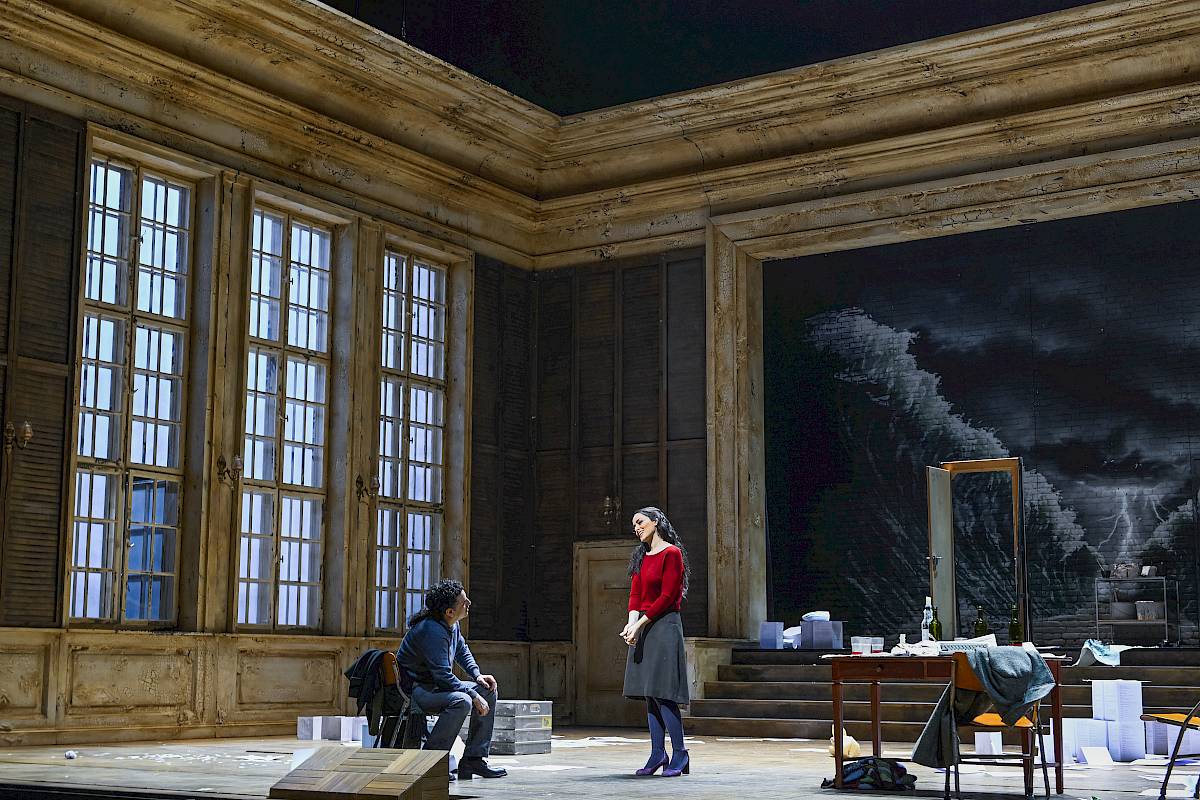
Erlend Birkeland stammt aus Norwegen. Er studierte u.a. an der Kunstschule Kolding in Dänemark, an der Staatlichen Handwerks und Kunstindustrieschule Oslo und der norwegischen Staatlichen Kunstakademie. Noch während seiner Ausbildung entstand die Ausstattung von Dagen vender am Norwegischen Nationaltheater. Er vertrat Norwegen 1999 auf der Internationalen Quadriennale in Prag mit seinem Bühnenbild zu Fuglane. Mit Ole Anders Tandberg verbindet ihn eine langjährige künstlerische Partnerschaft. Mittlerweile hat Erlend Birkeland nahezu hundert Inszenierungen in Norwegen, Schweden und Dänemark ausgestattet, hauptsächlich für das Schauspiel, aber auch zunehmend für Oper und Musiktheater. 2010 war er an der Komischen Oper Berlin für das Bühnenbild von Händels Orlando verantwortlich. 2015 gestaltete er die Bühne für Lady Macbeth von Mzensk an der Deutschen Oper Berlin, La bohème am Opernhaus Zürich, Ibsens Peer Gynt und Klein Eyolf am Nationaltheater in Oslo sowie Ibsens Volksfeind, Die Regenschirme von Cherbourg (Jacques Demy) und Karl Ove Knausgårds Mein Kampf in Stockholm. Zuletzt entstanden die Bühnenbilder für Wozzeck an der Deutschen Oper Berlin, für Tosca an der Oper in Malmö und für Rigoletto an der Königlichen Oper Stockholm. Seit 2015 ist er Professor für Bühnenbild in Oslo.
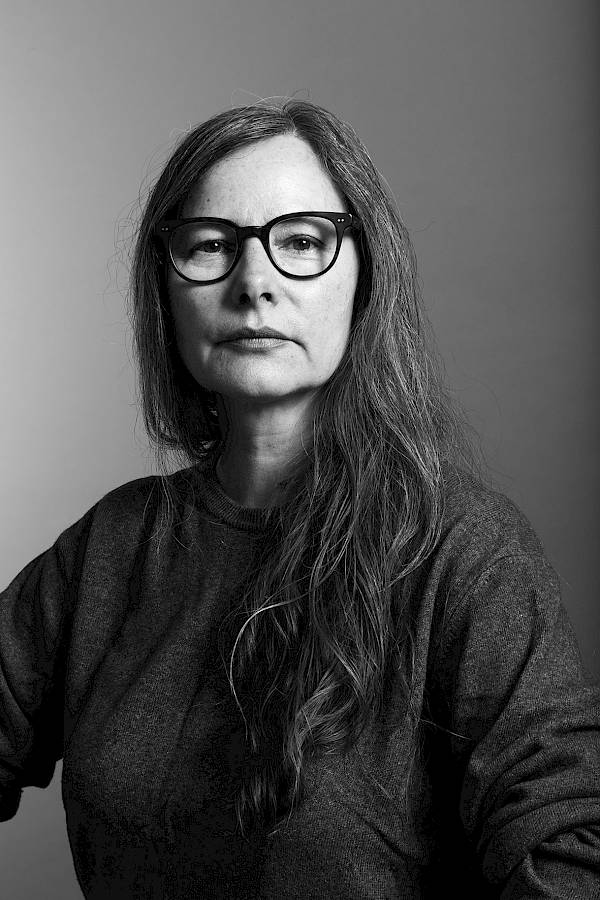
Maria Geber
Maria Geber stammt aus Schweden. Ihre Ausbildung erhielt sie an der Gerlesborgs Art School, dem San Francisco Art Institute und an der Beckmanns School of Design in Stockholm. Sie gehört seit langem zu den wichtigsten Kostümdesignerinnen Skandinaviens. Ihr Werk umfasst die Zusammenarbeit mit Choreografen und Regisseuren wie Mats Ek, Brigitta Egerbladh, Ole Anders Tandberg, Suzanne Osten, Etienne Glaser, Mattias Andersson, Rickard Günther, Linus Tunström und Sofia Jupiter (Salome, Die tote Stadt). Neben dem Kostümdesign entwirft sie auch Bühnenbilder. In langjähriger Zusammenarbeit mit Ole Anders Tandberg entstanden u.a. die Kostüme für Der feurige Engel, L’Enfant es les sortilèges, L’incoronazione di Poppea, Il ritorno d’Ulisse in patria, Le nozze di Figaro, Così fan tutte, Die Zauberflöte, Don Giovanni, Lady Macbeth von Mzensk, Rigoletto und Wozzeck. Sie arbeitete u.a. an der Deutschen Oper Berlin, der Königlichen Oper Stockholm und an der Norwegischen Oper in Oslo. Maria Geber lehrt als Assistenzprofessorin Kostümdesign an der Stockholm Academy of Dramatic Arts.
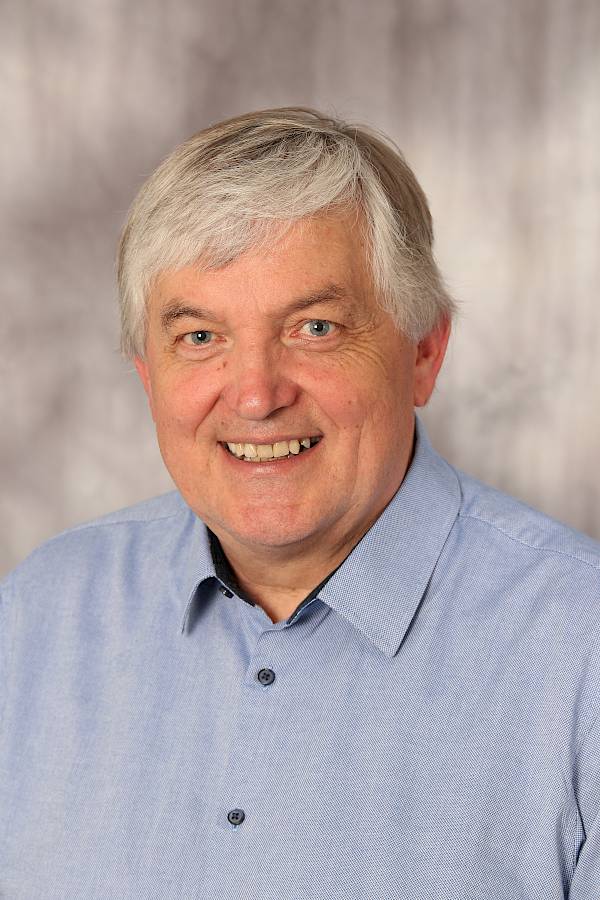
Ernst Raffelsberger
Ernst Raffelsberger comes from Gmunden, Upper Austria. He studied music education and church music at the University of Music and Performing Arts in Vienna as well as choral conducting at the Mozarteum in Salzburg. From 1983 to 1986 he was Kapellmeister of the Vienna Boys’ Choir. During this time, he led the ensemble in Vienna and on tours through Europe, South Africa, Canada, and the USA. From 1986, Ernst Raffelsberger was choral director and Kapellmeister at the Salzburg State Theatre (participating in the Salzburg Mozart Week and the Salzburg Festival). In 1989 he moved as choral director and Kapellmeister to the theatre in Freiburg/Breisgau. Since autumn 1993, Ernst Raffelsberger has been engaged at the Zurich Opera House as choral director. Here he has since supervised around 150 premieres and countless revivals and worked with many renowned conductors such as Marco Armiliato, Riccardo Chailly, Teodor Currentzis, Christoph von Dohnányi, Sir John Eliot Gardiner, Daniele Gatti, Bernard Haitink, Nikolaus Harnoncourt, Zubin Mehta, Gianandrea Noseda, and Franz Welser-Möst. Guest performances with the Zurich Opera House have taken him to Vienna, London, Paris, and Tokyo. From summer 2012 he additionally began a ten-year activity as choral director of the Vienna State Opera Chorus Association at the Salzburg Festival. There he collaborated successfully with, among others, Riccardo Muti, Mariss Jansons, and Sir Simon Rattle. After Ernst Raffelsberger ended this work with the festival summer 2021, he has since 2025 once again been responsible, at Maestro Muti’s request, for choral preparation for his festival concerts in Salzburg. Numerous CD and DVD recordings document his work in Zurich as well as in Salzburg.
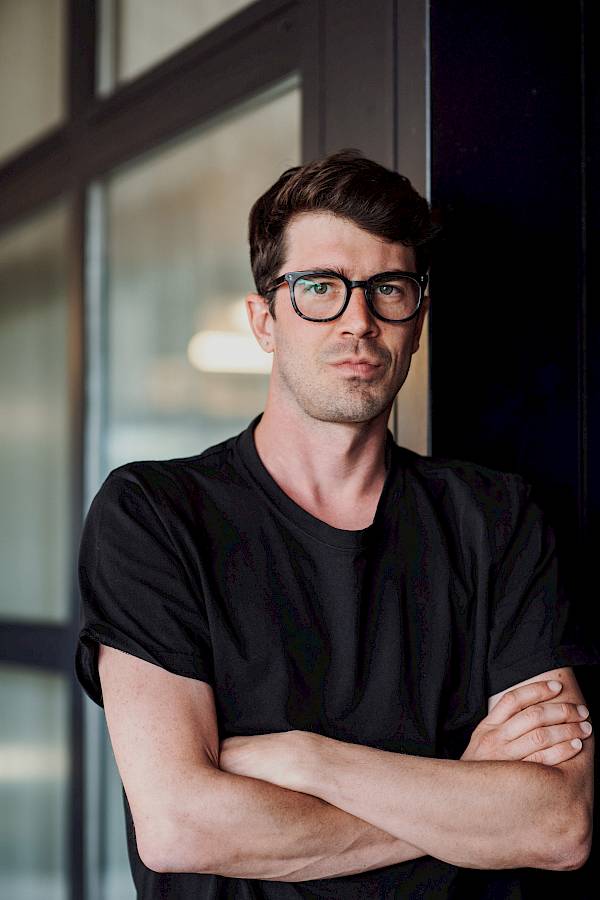
Fabio Dietsche
Fabio Dietsche studied dramaturgy at the Zurich University of the Arts as well as cross flute with Maria Goldschmidt in Zurich and with Karl-Heinz Schütz in Vienna. He gained his first experience as a dramaturge in 2012/13 with Xavier Zuber at Konzert Theater Bern, where he accompanied, among others, Matthias Rebstock’s production of "neither" (Beckett/Feldman) at the Berner Reithalle. Since 2013, he has been a dramaturge at the Zurich Opera House, where he completed his studies with the production dramaturgy of Puccini’s "La bohème." There, he has been involved, among others, in the world premieres of Stefan Wirth’s "Girl with a Pearl Earring" and Leonard Evers’ "Odyssee," the chamber opera "Jakob Lenz" by Wolfgang Rihm, and the Swiss premiere of Manfred Trojahn’s "Orest." He has worked with, among others, Robert Carsen, Tatjana Gürbaca, Rainer Holzapfel, Andreas Homoki, Ted Huffman, Mélanie Huber, Barrie Kosky, Hans Neuenfels, and Kai Anne Schuhmacher. He is currently studying cultural management on a part-time basis at the University of Zurich.
Cast
Parpignol Tae-Jin Park
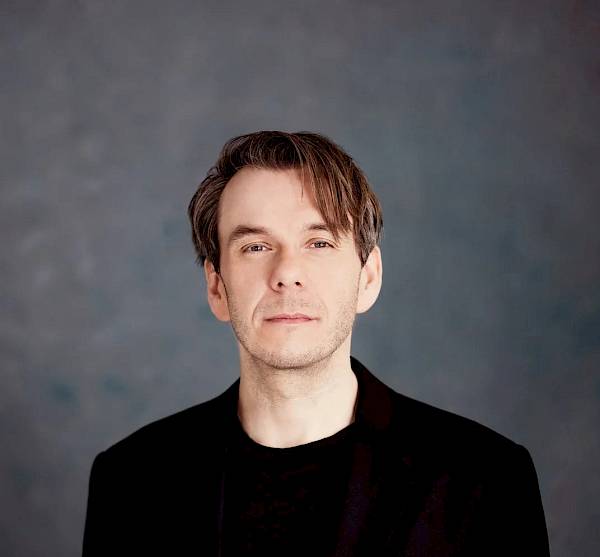
Benjamin Bernheim
Benjamin Bernheim studied with Gary Magby at the Conservatory in Lausanne and was a member of the International Opera Studio and the ensemble at Zurich Opera House. Today, the French tenor appears at the most prestigious opera houses, including the Opéra national de Paris, the Metropolitan Opera New York, the Vienna State Opera, the Staatsoper Unter den Linden, Teatro alla Scala and the Royal Opera House Covent Garden. His principal roles include Rodolfo ("La bohème"), Des Grieux ("Manon"), Edgardo ("Lucia di Lammermoor"), Roméo ("Roméo et Juliette"), Lenski ("Eugen Onegin"), as well as the title roles in "Faust", "Werther" and "Les contes d’Hoffmann". In the 2025/26 season, he returned to Zurich as Des Grieux in "Manon" and appeared as Faust in "La Damnation de Faust" at the Théâtre des Champs-Élysées and as Hoffmann in "Les contes d’Hoffmann" at the Staatsoper Unter den Linden. In 2024, he performed at the closing ceremony of the Olympic Games in Paris and at the reopening of Notre-Dame. In 2025, he was named Singer of the Year at the Opus Klassik Awards. His current repertoire is also complemented by song recitals and concert performances. In 2026/27, Bernheim returns to Zurich Opera House as Ruggero in Puccini’s "La rondine".
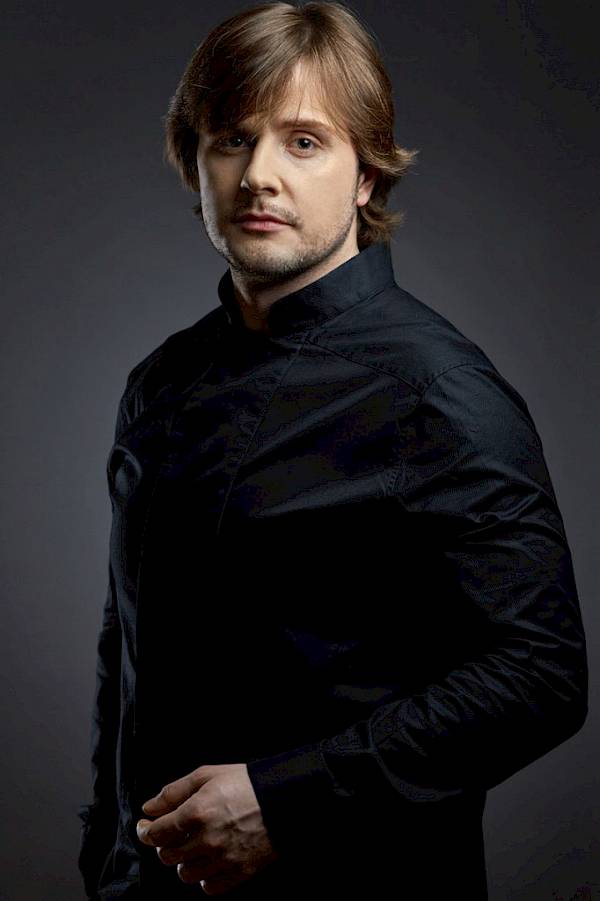
Andrei Bondarenko
Andrei Bondarenko stammt aus der Ukraine und studierte in Kiew. Acht Jahre lang war er Solist der Akademie des Mariinski-Theaters. Er ist Preisträger mehrerer Gesangswettbewerbe, u.a. des BBC Cardiff Singer of the World Competition Song Prize 2011. Am Mikhailovsky Theater in St. Petersburg gab er sein Debüt in der Titelrolle von Brittens Billy Budd, am Minsker Bolschoi-Theater in der Titelrolle von Jewgeni Onegin. Er war u.a. in der Carnegie Hall, der Wigmore Hall, beim Glyndebourne Festival, an der Sydney Opera und der Perm State Opera zu erleben. 2010 debütierte er bei den Salzburger Festspielen in Gounods Roméo et Juliette. Er arbeitete mit Dirigenten wie Valery Gergiev, Ivor Bolton, Yannik Nézet-Séguin und Vladimir Ashkenazy. Zu seinen jüngsten Erfolgen zählen Jewgeni Onegin in Köln, Berlin, Stuttgart, São Paulo, Dallas sowie am Mariinski-Theater und beim Glyndebourne Festival, Conte (Le nozze di Figaro) in Madrid, an der Opera Australia und am Bolschoi, Belcore (L’elisir d’amore) an der Bayerischen Staatsoper München, Robert (Iolanta) in Dallas, Marcello (La bohème) an der Bayerischen Staatsoper München und in Köln sowie Pelléas (Pelléas et Mélisande) an der Scottish Opera. Zu seinen Aufnahmen zählen u.a. Conte (Le nozze di Figaro) und die Titelrolle in Don Giovanni unter Teodor Currentzis. 2017/18 debütiert er als Marcello am Londoner Covent Garden und sang erneut Belcore in München. Am Opernhaus Zürich war er bisher als Marcello, als Malatesta (Don Pasquale), als Ramiro (L‘Heure espagnole) und als Albert (Werther) zu hören. Im Sommer 2018 gastierte er zudem als Belcore in L’elisir d’amore bei den Münchner Opernfestspielen.
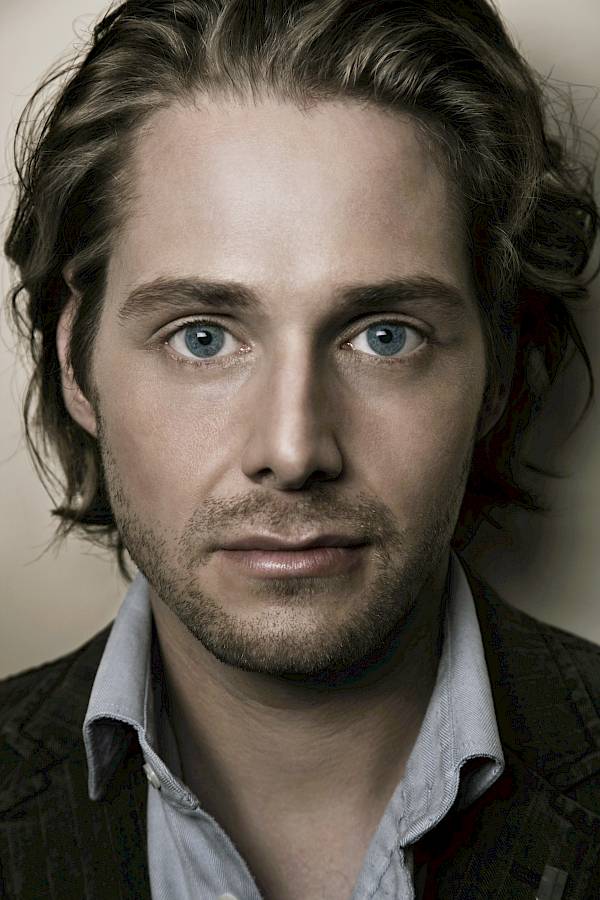
Michael Nagy
Michael Nagy, Bariton mit ungarischen Wurzeln, war zunächst Ensemblemitglied der Komischen Oper Berlin, wechselte dann an die Oper Frankfurt, wo er sich mit Papageno, Guglielmo (Così fan tutte), Graf Almaviva (Le nozze di Figaro), Hans Scholl (Die weisse Rose), Wolfram (Tannhäuser), Valentin (Faust), Jeletzki (Pique Dame), Marcello (La bohème), Albert (Werther), Frank/Fritz (Die tote Stadt), Owen Wingrave, Jason (Medea) und Dr. Falke (Die Fledermaus) wichtige Partien seines Repertoires erarbeiten konnte. Gastengagements führten ihn u.a. als Wolfram (Tannhäuser) an das Opernhaus Oslo, als Ford (Falstaff) an die Deutsche Oper Berlin, als Graf Luna (Palestrina) an die Bayerische Staatsoper München und als Nardo (La finta giardiniera) ans Theater an der Wien. Unter Simon Rattle sang er bei den Pfingstfestspielen Baden-Baden Papageno mit den Berliner Philharmonikern. Konzert-Engagements führten ihn zum Konzerthausorchester Berlin, Museumsorchester Frankfurt, Gewandhausorchester Leipzig sowie dem Schleswig-Holstein Musik Festival. Philippe Herreweghe, Helmuth Rilling, Adam Fischer, Paavo Järvi, Christoph Eschenbach und Riccardo Chailly zählen zu den prominenten musikalischen Partnern für sein breit gefächertes Konzertrepertoire. In jüngerer Zeit sang er u.a. Eugen Onegin, Stolzius (Die Soldaten), Papageno, Dr. Falke (Die Fledermaus), Guglielmo, Albert (Werther) und Le Grand-Prêtre d’Apollon / Hercule (Alceste) in München, Graf Almaviva (Le nozze di Figaro) in Zürich und Köln, Kurwenal (Tristan und Isolde) im Festspielhaus Baden-Baden sowie Don Alfonso und Wolfram von Eschenbach (Tannhäuser) in Zürich. Im Sommer 2019 war er beim Edinburgh International Festival in der Titelrolle von Eugen Onegin zu hören.
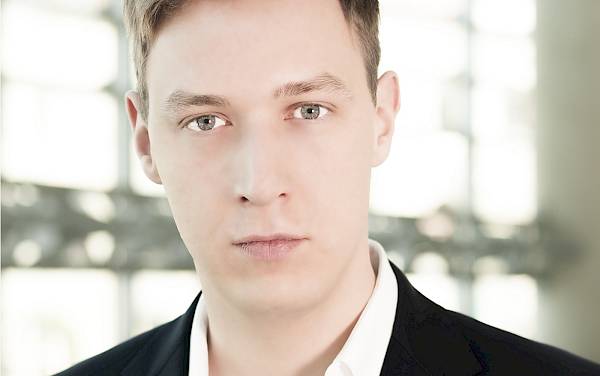
Krzysztof Baczyk
Krzysztof Baczyk wurde 1990 geboren und studierte an der Musikhochschule in Poznan. Er absolvierte Meisterkurse bei Neil Schicoff, Andrzej Dobber, Ann Murray und David Pountney. Im Opernstudio des Teatr Wielki in Poznan konnte er sich ein breites Repertoire seines Fachs erarbeiten. 2012 nahm er an der Akademie des Festivals in Aix-en-Provence teil und gewann dort den «Prix des amis». Ebenfalls beim Festival in Aix folgte Erster Priester in Mozarts Zauberflöte, als Neptun/Tindaro ging er mit einer Produktion von Cavallis Elena auf Tournee. 2015 sang er beim Festival in Aix Melisso in Händels Alcina (Regie: Katie Mitchell). Ein Jahr später debütierte er als Publio in Mozarts La clemenza di Tito an der Oper in Warschau und trat unter Marc Minkowski bei den Salzburger Mozartwochen in Händels Acis und Galathea als Poliphemo auf. Kürzlich sang er Colline (La bohème) in Cagliari sowie Commendatore (Don Giovanni) in Stockholm. Am Opernhaus Zürich war er bereits in Bellinis I Capuleti e i Montecchi sowie in Händels Alcina zu erleben; demnächst wird er hier auch Masetto (Wiederaufnahme Don Giovanni) und Colline (Wiederaufnahme La bohème) singen.
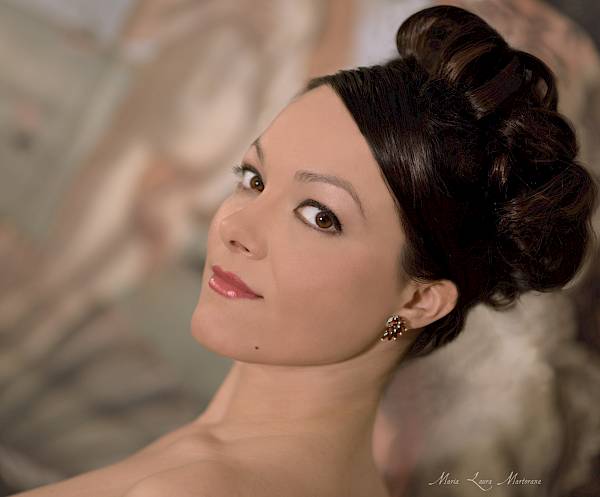
Eleonora Buratto
Eleonora Buratto, Sopran, studierte in ihrer Heimatstadt Mantua. Sie wurde über drei Jahre von Luciano Pavarotti und anschliessend von Mirella Freni unterrichtet; derzeit arbeitet sie mit Paola Leolini. Eine enge künstlerische Partnerschaft verbindet Eleonora Buratto mit Riccardo Muti: Unter seiner Leitung gab sie zu Pfingsten 2009 ihr Salzburger Festspieldebüt als Creusa in Jommellis Demofoonte. Ebenfalls unter Muti sang sie die Susanna in Mercadantes I due Figaro bei den Salzburger Pfingstfestspielen 2011 sowie am Teatro Real in Madrid und am Teatro Colón in Buenos Aires. 2012/13 war sie unter Muti als Amelia (Simon Boccanegra) zur Saisoneröffnung des Teatro dell’Opera in Rom zu hören. Zu weiteren Engagements der letzten Jahre zählen Nannetta (Falstaff) unter Zubin Mehta bei den Salzburger Festspielen, Adina (L’elisir d’amore) an der Scala, in Zürich sowie in Madrid, Musetta in Neapel, Montpellier und unter Gianandrea Noseda in Turin sowie auf Tournee in Shanghai. Sie sang Despina (Così fan tutte) in Valencia, Cleopatra (Händels Giulio Cesare) unter Ottavio Dantone in Modena, Echo (Ariadne auf Naxos) unter DanielHarding bei den Salzburger Festspielen sowie Euridice (Glucks Orfeo ed Euridice) in Montpellier. 2016 debütierte sie als Norina (Don Pasquale) an der Metropolitan Opera. Ausserdem war sie als Mimì in Barcelona und als Contessa (Le nozze di Figaro) in Amsterdam, an der Wiener Staatsoper sowie an der Scala zu erleben. Im Konzert war sie u.a. mit Bachs h-Moll-Messe sowie mit Mozarts c-Moll-Messe mit dem Chicago Symphony Orchestra unter Riccardo Muti zu hören. Zu ihren künftigen Engagements zählen Mimì und Contessa in Amsterdam, Donna Anna (Don Giovanni) beim Festival d’Aix-en-Provence und in Lyon, Micaëla (Carmen) am Teatro Real, Madrid und am Royal Opera House London, Luisa Miller in Barcelona, Idomeneo in Madrid, Simon Boccanegra an der Wiener Staatsoper sowie Rossinis Stabat Mater in Rom.
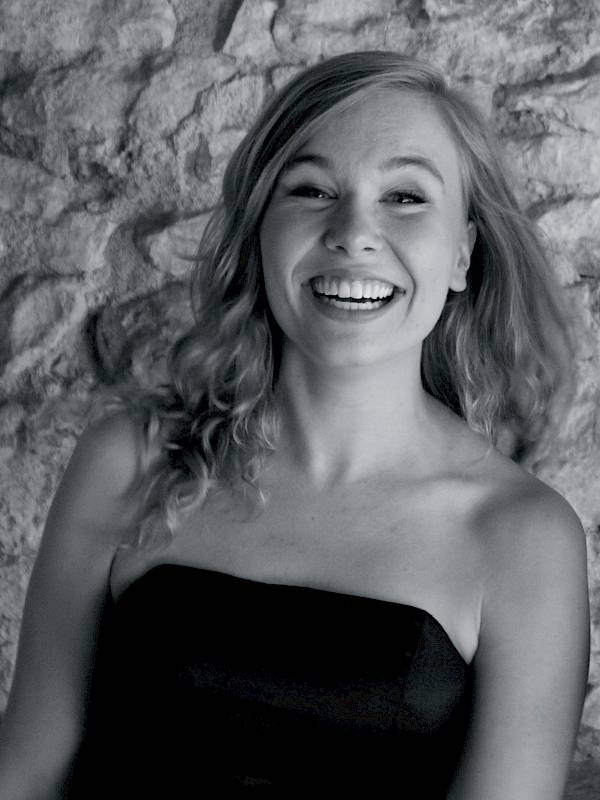
Elsa Dreisig
Elsa Dreisig hat französisch-dänische Wurzeln. Ihr Gesangsstudium absolvierte die Sopranistin am Conservatoire National Supérieur de Musique in Paris und an der Musikhochschule Leipzig. Sie ist Preisträgerin bei zahlreichen internationalen Gesangswettbewerben. Zuletzt erhielt sie den ersten Preis als beste Sängerin bei Plácido Domingos «Operalia»-Wettbewerb und wurde 2016 von der Zeitschrift Opernwelt als Nachwuchskünstlerin des Jahres ausgezeichnet. Ab der Spielzeit 2015/16 war sie Mitglied des Opernstudios der Staatsoper Berlin unter der künstlerischen Leitung von Daniel Barenboim und gehört seit der Spielzeit 2017/18 zum festen Ensemble. Dort sang sie bereits Hauptrollen wie Pamina (Die Zauberflöte) und Euridice (Orfeo ed Euridice) neben Bejun Mehta als Orfeo. Ebenfalls an der Staatsoper war sie an der Neuproduktion von Martinús Juliette beteiligt, wo sie neben Rolando Villazón und Magdalena Kozená auf der Bühne zu erleben war. Sie sang Gretchen (Szenen aus Goethes Faust unter der Leitung von Daniel Barenboim), Gretel in Hänsel und Gretel, Violetta in La traviata, Dircé in Medea, Diane in Hippolyte et Aricie unter Sir Simon Rattle und Natascha in der Uraufführung von Beat Furrers Violetter Schnee. 2017 gab sie ihr Debüt an der Opéra National de Paris als Pamina und kehrte im Juni 2018 als Lauretta (Gianni Schicchi) dorthin zurück. 2017 war sie beim Festival d’Aix-en-Provence als Micaëla in Dmitri Tcherniakovs Inszenierung von Carmen zu erleben. Am Opernhaus Zürich gastierte sie 2017 als Musetta in La bohème.
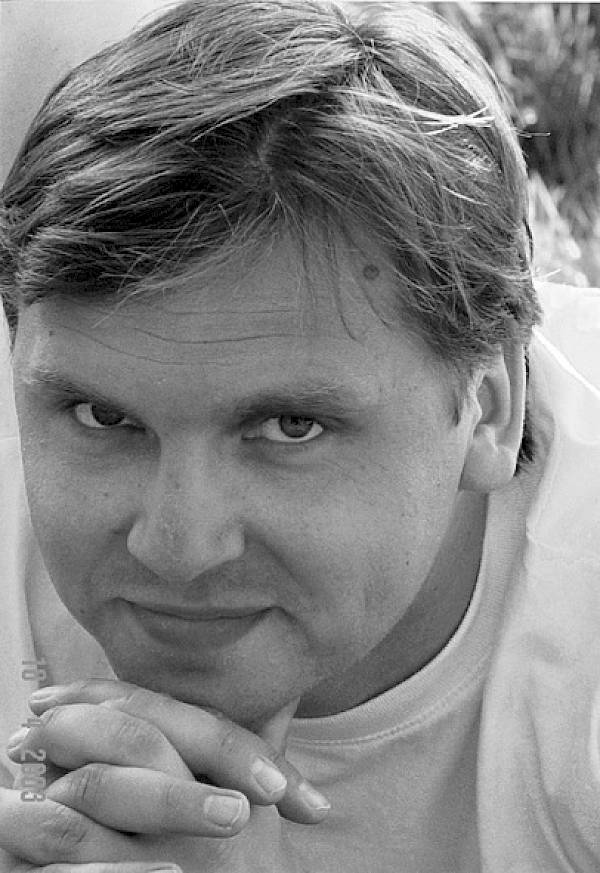
Valeriy Murga
Valeriy Murga studied at the National Music Academy of Ukraine in Kyiv. He was a finalist both at the 41st International Singing Competition in Toulouse (1996) and at the 7th Julian Gayarre Competition in Pamplona (1998). In 1997, he won second prize at the Maria Callas Grand Prix in Athens and took part in the Cardiff Singer of the World Competition in 1999. From 1997 to 1999, he was a soloist at the National Opera of Ukraine in Kyiv, where he performed, among others, Figaro ("Le nozze di Figaro"), Escamillo ("Carmen"), Schaunard ("La bohème") and the title roles in "Jewgeni Onegin", "Don Giovanni" and "Prince Igor". His repertoire also includes roles such as the Marchese di Posa ("Don Carlo") and Shaklovity ("Chowanschtschina"). At Zurich Opera House, he was initially a member of the International Opera Studio and during this time appeared, among other roles, as Sciarrone and the Jailer ("Tosca") and as Monterone ("Rigoletto"). Since the beginning of the 2000/01 season, he has been a permanent member of the ensemble at Zurich Opera House and has since appeared here, among other roles, as Prince Yeletsky ("Pique Dame"), Moralès ("Carmen"), Second Soldier ("Salome"), Alessio ("La sonnambula"), Ali ("L’italiana in Algeri"), Wagner ("Faust"), Sacristan ("Tosca") and Bogdanowitsch ("Die lustige Witwe"), as well as in family operas including "Das Gespenst von Canterville", "Robin Hood", "Das verzauberte Schwein", "Jim Knopf" and "Wir pfeifen auf den Gurkenkönig". He has also appeared as a guest in Eugen d’Albert’s "Tiefland" at the Gran Teatre del Liceu in Barcelona and in "L’italiana in Algeri" at the Staatsoper Unter den Linden in Berlin, and has performed in concerts at the Tonhalle Zurich. In the 2026/27 season, he will appear at Zurich Opera House, among other roles, as the Old Servant in "Elektra" and as Alcindoro in Puccini’s "La bohème".
Photo Gallery "La bohème"