

Bach

11. September 2022

Johann Sebastian Bach
Orchestra Suites No. 1-4


Musical Director:
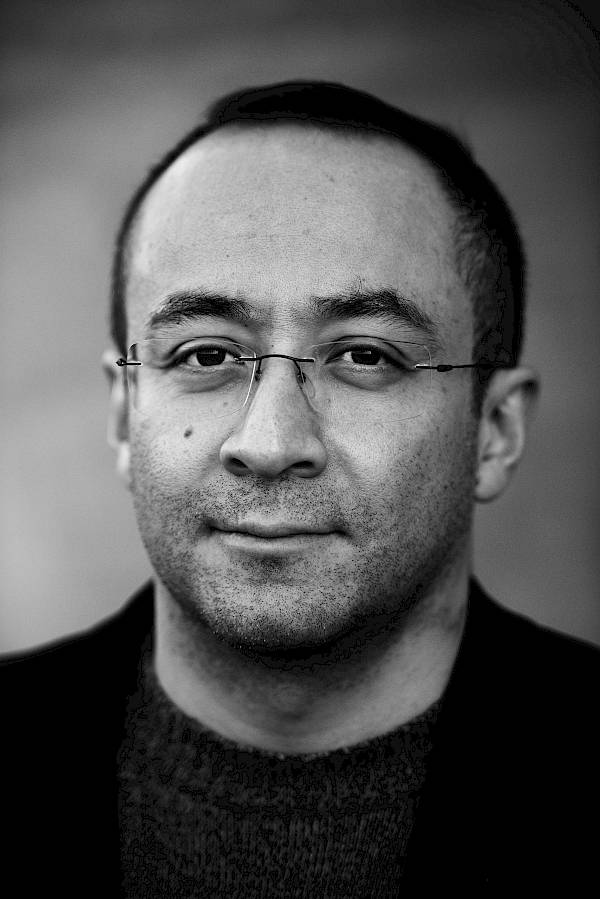
Riccardo Minasi

Riccardo Minasi

Riccardo Minasi is Principal Guest Conductor of Ensemble Resonanz, which is based at the Elbphilharmonie, as well as Artistic Director of the orchestra La Scintilla at the Opernhaus Zürich, positions he has held since 2022. Previously, from 2011 to 2016, he was co-founder and conductor of Il Pomo d’Oro, from 2017 to 2022 Chief Conductor of the Mozarteumorchester Salzburg and from 2022 to 2025 Music Director of the Teatro Carlo Felice in Genoa. As a conductor, he has led numerous renowned orchestras worldwide, including the Tokyo Metropolitan Symphony Orchestra, the Berliner Philharmoniker, the Staatskapelle Dresden, the Royal Concertgebouw Orchestra, the Symphonieorchester des Bayerischen Rundfunks, the Orchestre Philharmonique de Radio France, the Münchner Philharmoniker and the SWR Symphonieorchester Stuttgart. Engagements as musical director of various opera productions have taken him, among others, to the Salzburger Festspiele, the Opernhaus Zürich, the Staatsoper Hamburg and the Dutch National Opera. In addition, he served as musicological advisor to the Orchestre Symphonique de Montréal and, together with Maurizio Biondi, published the critical edition of Vincenzo Bellini’s "Norma" with Bärenreiter. As a soloist, Riccardo Minasi has performed with some of the most important ensembles of the early music scene, including Il Giardino Armonico and Le Concert des Nations. Minasi’s extensive discography includes recordings with artists such as Joyce DiDonato, Juan Diego Flórez and Philippe Jaroussky. Four of his albums have won the prestigious ECHO Klassik Award. His recordings include Joseph Haydn’s "The Seven Last Words of Our Saviour on the Cross" and Carl Philipp Emanuel Bach’s Cello Concertos with Jean-Guihen Queyras under the label Harmonia Mundi.

Bezuidenhout & Minasi15 Mar 2026

Cast

Show full cast Show less

Orchestra La Scintilla

Die Pflege der historischen Aufführungspraxis hat am Opern­haus Zürich seit dem Monteverdi-Zyklus in den 1970er Jahren Tradition. Bei der folgenden Reihe der Mozart-Opern mit dem Lei­tungs­­­team Harnoncourt/Ponnelle wurde weiter Pio­nierarbeit geleistet, und die Musikerinnen und Musiker passten ihre Spieltechnik den neue­sten Erkenntnissen der historischen Aufführungspraxis an. 1996 formierte sich aus dem Orchester der Oper ein eigenständiges Ensemble von erstklassigen spezialisierten MusikerInnen, das sich einen hervorragenden Ruf erwerben konnte. Der Funke der Begeisterung an neuer «Alter Musik» gab dem Ensemble seinen Namen: La Scintilla – der Funke. Aufführungen mit Koryphäen des Faches wie Nikolaus Har­non­court (u.a. Il ritorno d’Ulisse in patria, Idomeneo), William Christie (u.a. Orphée et Euridice, Les Indes galantes, Orlando), Mark Minkowski (Les Boréades, Giulio Cesare), Reinhard Goebel und Giuliano Carmignola gerieten so erfolgreich, dass das Opernhaus Zürich alle barocken und fast alle aus der klassischen Zeit stammenden Opern von seiner Barockforma­tion La Scintilla spielen liess und lässt. Ausserdem konzertiert das Orchestra La Scintilla der Oper Zürich mit namhaften Solisten – Instrumentalisten wie Sängern – und tritt unter der Leitung von Ada Pesch regelmässig in den gros­­sen Konzertsälen Europas wie der Londoner Royal Festival Hall, dem Concertgebouw Am­sterdam, der Philharmonie Berlin und dem KKL Luzern auf. Äusserst erfolgreich begleitete das Orchester Cecilia Bartoli auf mehrwöchigen Konzertreisen in Nordamerika und Europa (u.a. in der Carnegie Hall).

La clemenza di Tito26 / 29 Apr / 3 / 8 / 15 / 17 / 20 / 25 May 2026 2nd La Scintilla Concert15 Dec 2025 Giulio Cesare in Egitto11 / 13 / 15 / 17 / 21 / 25 / 28 Mar 2026 3. Konzert La Scintilla18 May 2026 Bezuidenhout & Minasi15 Mar 2026 Aci, Galatea e Polifemo20 / 29 Mar 2026 Johannes-Passion24 Mar 2026

Abstract

Often arranged, kitsched up and performed on all sorts of occasions, Johann Sebastian Bach's Air is today one of the best-known pieces of music in the classical canon. Originally, this short, song-like movement is in Bach's Third Orchestral Suite, which - like each of the four suites - begins with an extensive overture, followed by a series of dance and character movements.

The «German» music of Bach's time was characterised by numerous influences from surrounding countries; the dance movements of the suites have their origins in France (Bourrée), England (Gigue), Italy (Forlane), Spain (Sarabande) or Poland (Polonaise), for example. Bach probably performed these orchestral suites, which are as representative as they are entertaining, not only at court but also in public. At the beginning of the new season, the Orchestra La Scintilla will perform all four suites, including the famous Air, unedited and on period instruments.

Read more Show less