I puritani

Opera seria in three parts by Vincenzo Bellini (1801-1835)
Libretto by Carlo Pepoli after the drama «Têtes rondes et cavaliers» by Jacques Arsène Polycarpe Ancelot and Saintine

From 11. December 2016 until 26. December 2016

  • Duration :
    3 H. 15 Min. Inkl. Pause after 1st part after approx. 1 H. 20 Min.
  • Language:
    In Italian with German and English surtitles.

Musical Director:
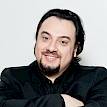
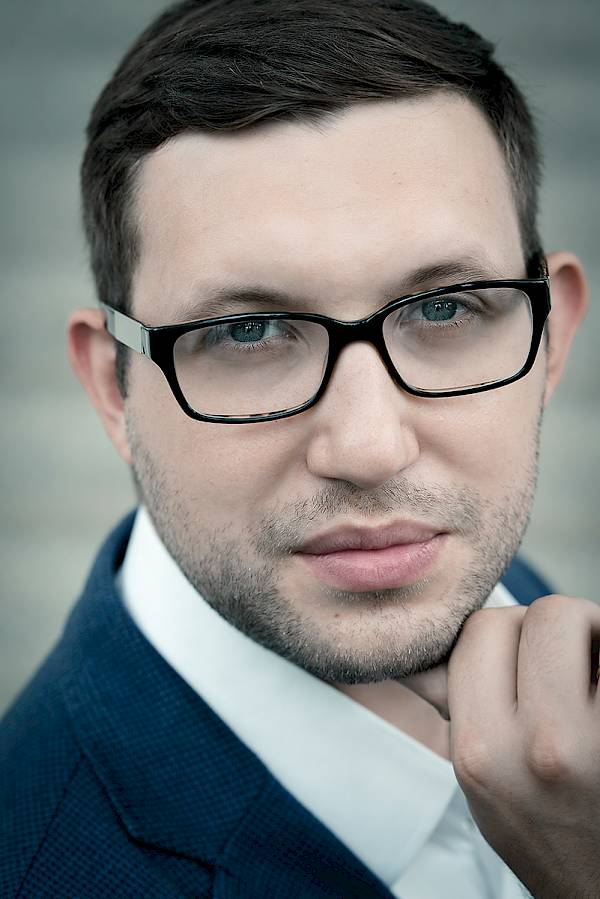
Enrique Mazzola

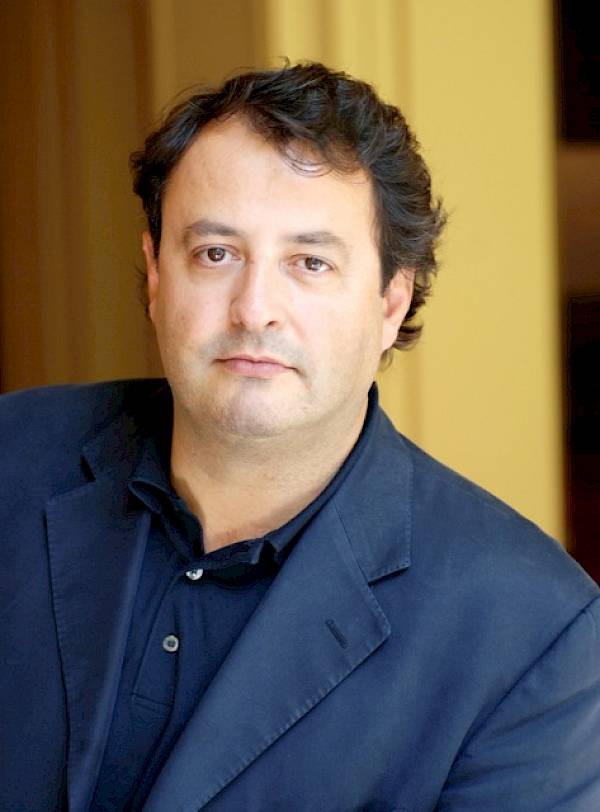
Enrique Mazzola

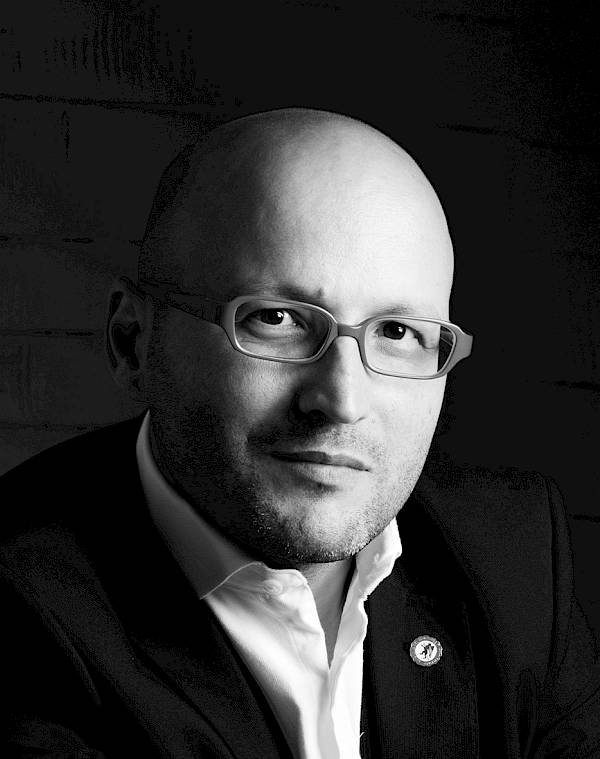
Enrique Mazzola ist seit 2019/20 General­mu­sik­direktor der Lyric Opera of Chicago so­wie Erster ständiger Gastdirigent an der Deutschen Oper Berlin. Von 2012 bis 2019 war er Musik­direktor des Orchestre Na­tional d’Île-de-France. 2018 wurde er in Frankreich zum «Chevalier de l’ordre des Arts et des Lettres» ernannt. Wichtige Engagements der jüngeren Zeit führten ihn u.a. zu den Salzburger Festspielen (Orphée aux enfers), an die Wiener Staatsoper (Don Pasquale), an die Metropo­litan Opera (La Fille du régiment), ans Opernhaus Zürich (Don Pasquale, Maria Stuarda, Il turco in Italia, Il barbiere di Siviglia, I Puritani), zu den Bregenzer Festspielen (Rigoletto, Mosè in Egitto) und zum Glyndebourne Festival (Luisa Miller, Il barbiere di Siviglia) sowie zu Konzerten mit dem Orchestre Nationale du Capitole de Toulouse, dem Philharmonia Orchestra, dem Royal Scottish National Orchestra, dem Orchestra of the Age of Englightenment und dem Oslo Philharmonic. Ausserdem dirigierte er beim Rossini Opera Festival, am Moskauer Bolschoitheater, beim Maggio Musicale Fiorentino, an der Scala di Milano, am New National Theatre in Tokio, beim Festival d’Aix-en-Provence, beim Wexford Opera Festival, an der Opéra du Rhin und bei den Münchner Opernfestspielen. Die Spielzeit 2021/22 führte ihn für Macbeth und L’elisir d’amore nach Chicago, für I vespri siciliani an die Deutschen Oper Berlin, für Anna Bolena nach Zürich und Amsterdam, für Madama Butterfly zu den Bregenzer Festspielen und für eine Operngala mit Renée Fleming in die Royal Festival Hall London.

Production:
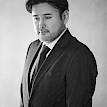
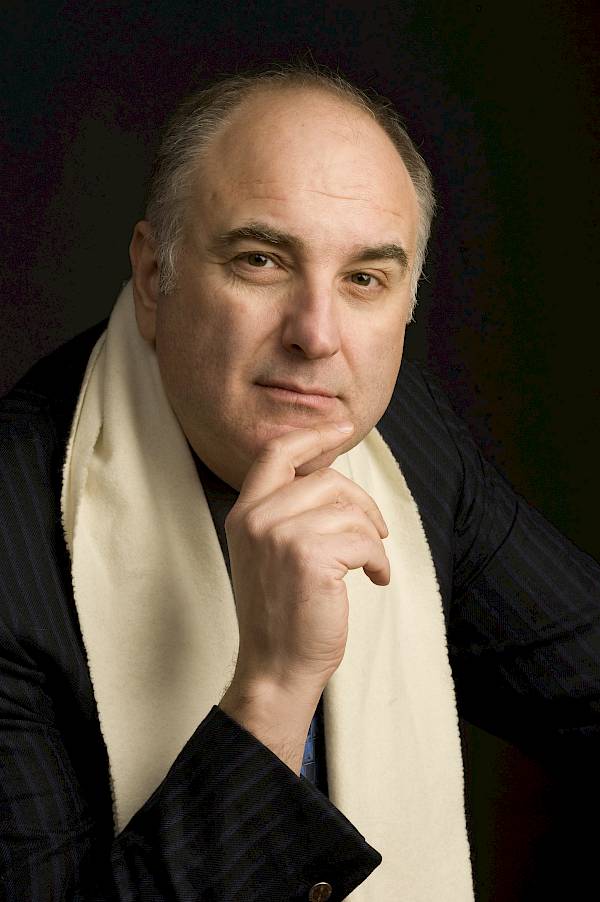
Andreas Homoki

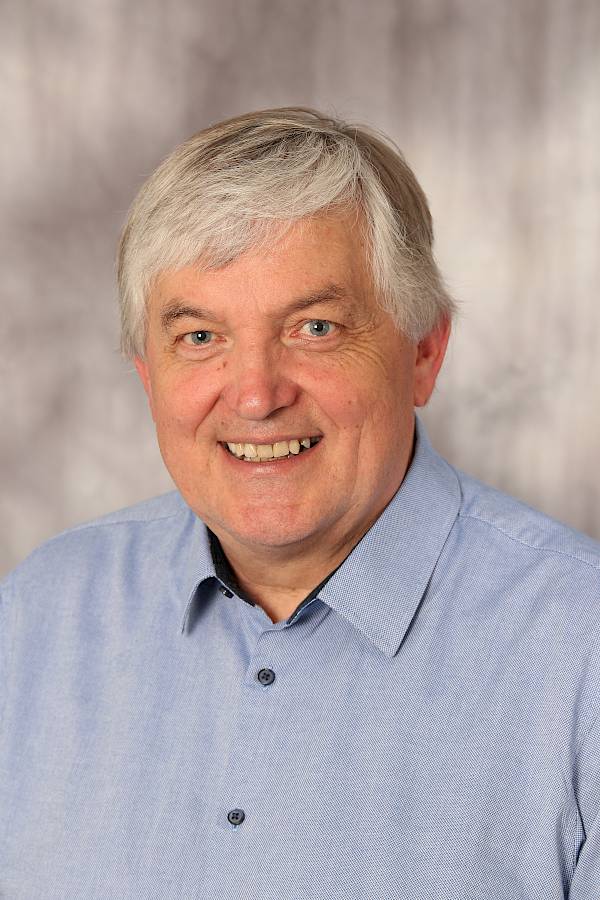
Andreas Homoki

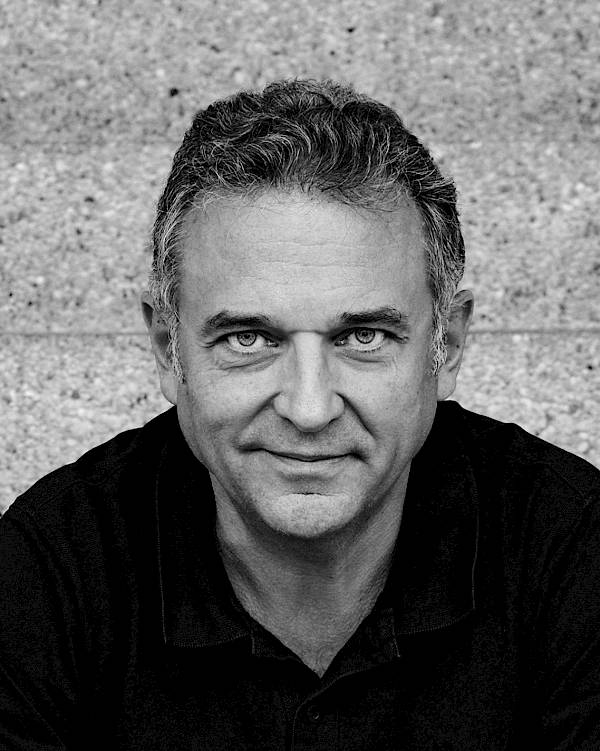
Andreas Homoki was born in Germany in 1960 as the son of a Hungarian family of musicians and studied school music and German studies in Berlin (West). In 1987 he went to the Cologne Opera as an assistant director and stage manager, where he remained until 1993. From 1988 to 1992 he was also a lecturer for stage instruction at the opera school of the Cologne University of Music. It was here that his first own productions were created. In 1992 his first guest production took him to Geneva, where his interpretation of "Die Frau ohne Schatten" received international attention. The production, which was later also shown at the Théâtre du Châtelet in Paris, received the French Critics' Prize of the Year in 1994. From 1993 to 2002 Andreas Homoki worked as a freelance opera director and staged productions in Cologne, Hamburg, Geneva, Lyon, Leipzig, Basel, Berlin, Amsterdam and Munich, among others. As early as 1996 he made his debut at the Komische Oper Berlin with "Falstaff", followed by "The Love for Three Oranges" (1998) and in 2000 "The Merry Widow". In 2002 Andreas Homoki was appointed chief director of the Komische Oper Berlin as successor to Harry Kupfer, and in 2004 he became its artistic director. In addition to his directing work at the Komische Oper Berlin, he staged productions at the Théâtre du Châtelet in Paris, the Bavarian State Opera in Munich, the New National Theatre Tokyo, the Semperoper Dresden and the Hamburg State Opera, among others. In July 2012, under the musical direction of William Christie, he staged "David et Jonathas" by Marc-Antoine Charpentier for the Festival in Aix-en-Provence – a production that was later also shown in Edinburgh, Paris and New York, among other places. From 2012 to 2025 Andreas Homoki was artistic director of the Zurich Opera House, where he staged productions including "The Flying Dutchman" (co-production with La Scala in Milan and the Norwegian National Opera Oslo), "Fidelio", "Juliette", "Lohengrin" (co-production with the Vienna State Opera), "Luisa Miller" (Hamburg State Opera), "Wozzeck", "My Fair Lady" (Komische Oper Berlin), "I puritani", "Medée", "Lunea" (named "World Premiere of the Year 2017/18" by the magazine Opernwelt), "Iphigénie en Tauride", "Nabucco", "Simon Boccanegra", "Les Contes d'Hoffmann", "Salome", the "Ring des Nibelungen" and "Carmen". Andreas Homoki has been a member of the Academy of the Arts Berlin since 1999.

Carmen18 / 21 / 23 / 27 / 31 Jan 2026 Fidelio3 / 6 / 10 / 14 / 16 May 2026 Das Rheingold29 Nov / 4 / 12 / 17 Dec 2026 Die Walküre24 / 31 Jan / 3 / 6 Feb 2027
Set Design:
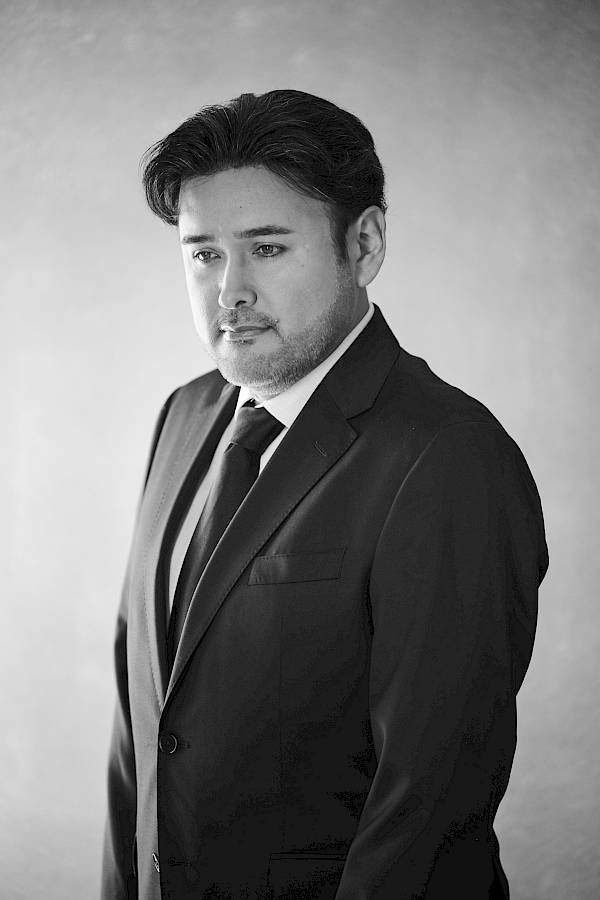
Henrik Ahr

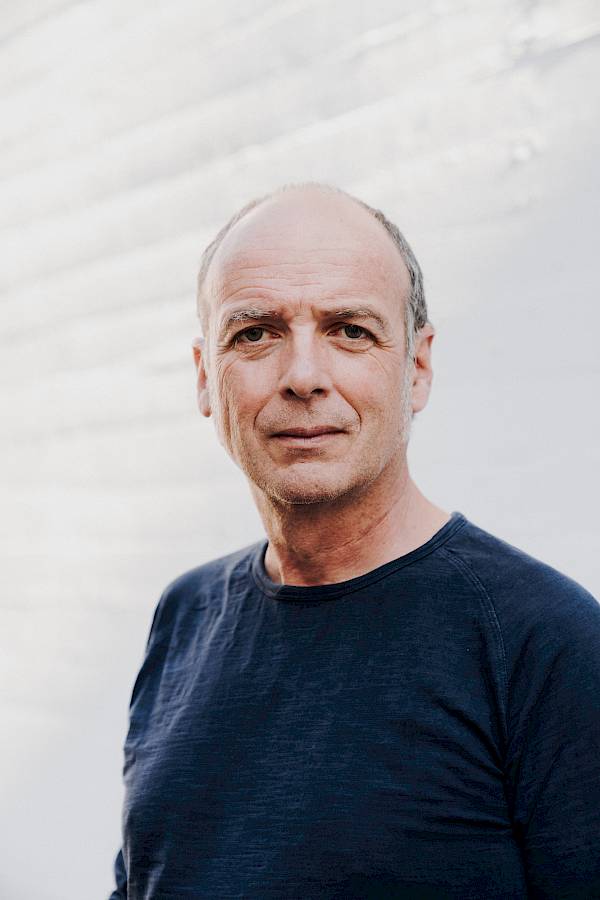
Henrik Ahr

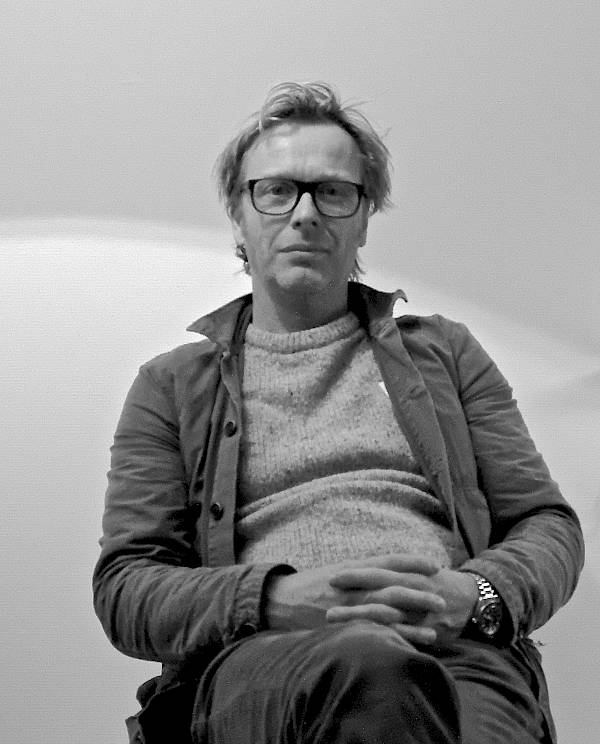
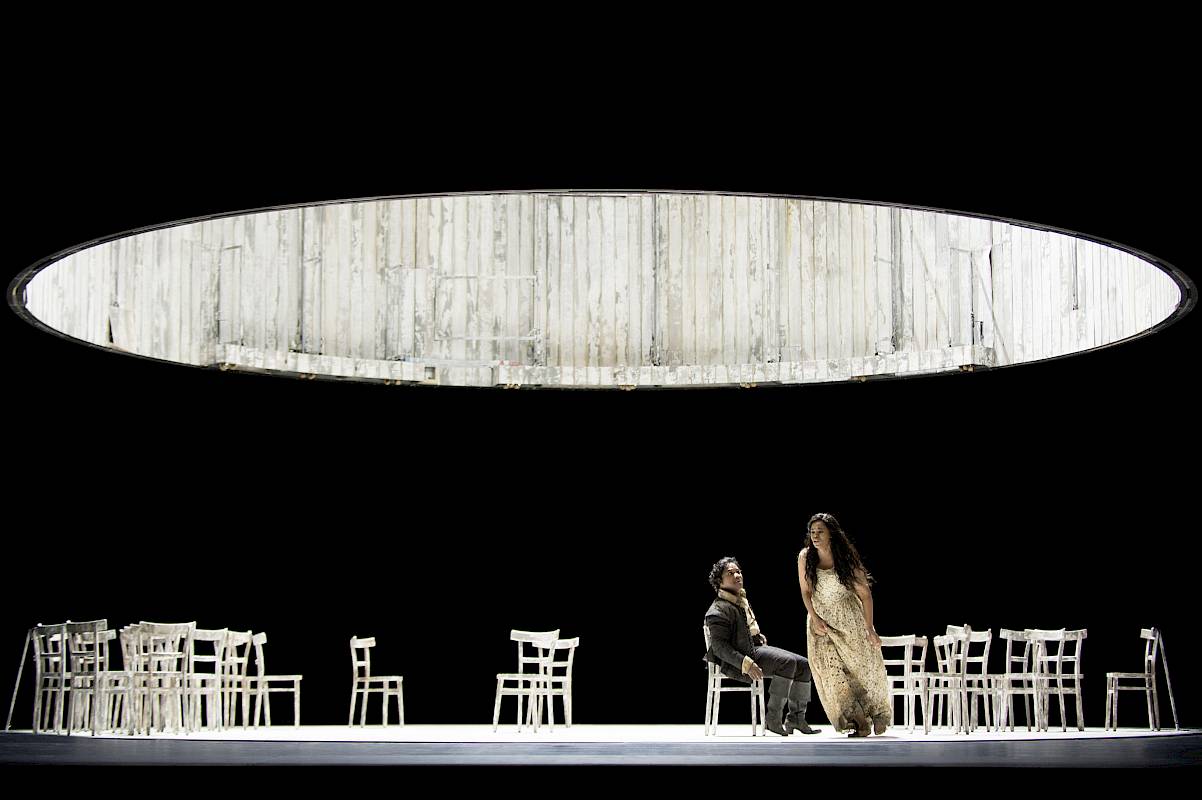
Henrik Ahr, born in Bensberg, initially worked as a freelance artist after training as a chef and studied architecture in Leipzig from 1995 to 2001. He designed his first stage sets in 2000 for the Neue Szene Leipzig and in 2001 at the Theaterhaus Jena for Chuck Palahniuk's "Fight Club". Since 2005 Henrik Ahr has lived and worked in Vienna as a stage designer and painter. Since 2010 he has been a Professor of Stage Design at the Mozarteum Salzburg, where he also heads the Department of Scenography. He has a close artistic collaboration, among others, with Michael Thalheimer, Christof Loy and Tatjana Gürbaca. With Thalheimer he created works such as Schnitzler's "Liebelei" at the Thalia Theater Hamburg, which was invited to the Berlin Theatertreffen, Brecht's "Herr Puntila und sein Knecht Matti" in Hamburg, Schubert's "Winterreise" at the Deutsches Theater Berlin and "Rigoletto" at Theater Basel. He first worked with Christof Loy in 2008 at the Theater an der Wien on Strauss's "Intermezzo"; this was followed by productions including "Lucrezia Borgia" at the Bavarian State Opera in Munich and "Der Tausch" at Schauspielhaus Zurich. Henrik Ahr has an ongoing collaboration with Tatjana Gürbaca, resulting in productions such as "Arabella" at the Deutsche Oper am Rhein, "Parsifal" at the Vlaamse Opera Antwerp, Hasse's "Leucippo" at the Schwetzingen Festival and at the Cologne Opera, "La traviata" in Oslo, the "Ring" trilogy and "Capriccio" at the Theater an der Wien, as well as "Le Grand Macabre" and most recently "Das grosse Feuer" in Zurich. At the Zurich Opera House he also designed the stage sets for "Die Schatzinsel", "Fidelio" and "I puritani".

Fidelio3 / 6 / 10 / 14 / 16 May 2026
Costumes:
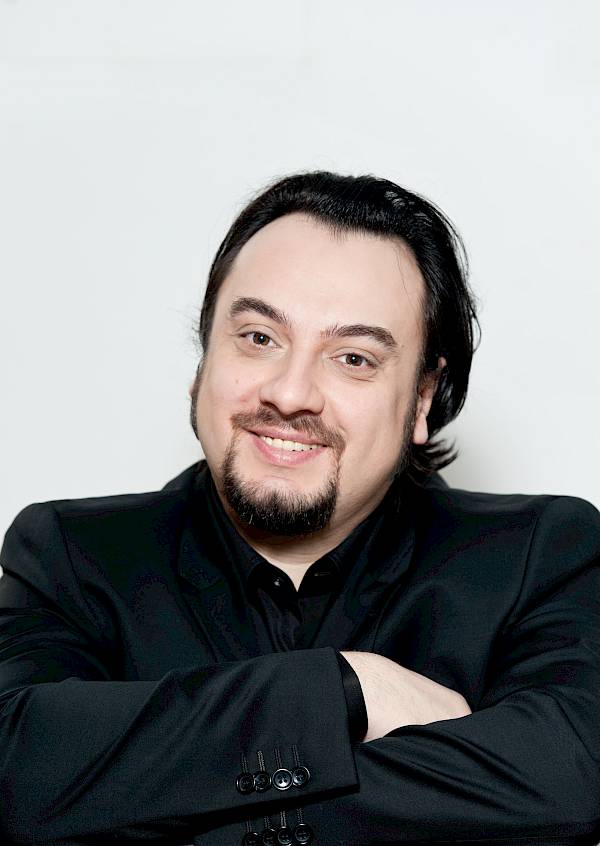
Barbara Drosihn

Barbara Drosihn

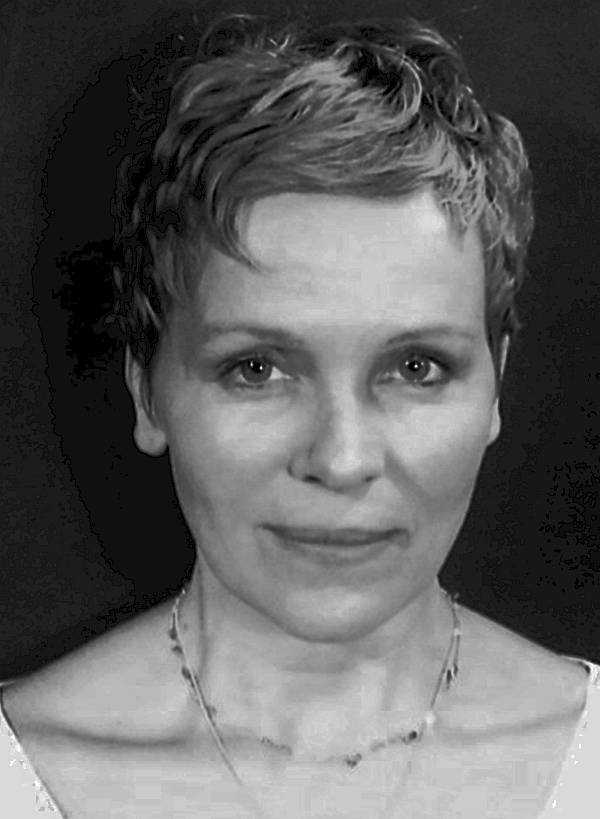
Barbara Drosihn, born in Hamburg, studied costume design at the University of Applied Sciences in her hometown after training as a seamstress. Since then she has worked as a freelance costume designer at venues including the Thalia Theater, the Deutsches Schauspielhaus Hamburg, the Burgtheater Vienna, the Schauspielhaus Bochum, the Staatsschauspiel Dresden and the Schauspiel Köln. In the process, she has created works for directors such as Michael Thalheimer, Stephan Kimmig, Nicolas Stemann, Andreas Kriegenburg and Stefan Bachmann. Her first opera was "Lucrezia Borgia", for which she designed the costumes in 2009 for Christof Loy at the Bavarian State Opera in Munich. This was followed by productions including "Der Rosenkavalier" and "Der ferne Klang" at the Royal Opera Stockholm, "The Miracle of Heliane" at the Deutsche Oper Berlin, "Così fan tutte" at the Salzburg Festival and "Don Pasquale" at the Zurich Opera House. There she also designed the costumes for Andreas Homoki's productions of "I puritani" and "Fidelio". She has a close artistic collaboration with Tatjana Gürbaca, for whom she created the costumes for "Parsifal" and "The Flying Dutchman" in Antwerp, "La traviata" in Oslo, "Capriccio" and the "Ring" trilogy at the Theater an der Wien, as well as "La finta giardiniera" and "Le Grand Macabre" at the Zurich Opera House. In recent seasons she designed the costumes for "Der Schatzgräber" at the Deutsche Oper Berlin, "Káťa Kabanová" at the Deutsche Oper am Rhein, "Il trittico" at the Salzburg Festival, "Die Königskinder" in Amsterdam, "Bluebeard's Castle" / "The Miraculous Mandarin" in Basel, "Rusalka" in Hanover and "La Voix humaine" / "Erwartung" at the Teatro Real in Madrid.

Fidelio3 / 6 / 10 / 14 / 16 May 2026 La rondine24 / 27 Sept / 1 / 10 / 15 Oct 2026 La traviata20 / 23 / 29 Dec 2026 / 1 / 3 / 6 / 9 / 12 / 15 / 19 / 23 Jan 2027 Don Pasquale23 / 27 / 30 May / 4 / 6 / 11 Jun 2027
Lighting Design:
Franck Evin

Franck Evin

Franck Evin, born in Nantes, moved to Paris at the age of 19 to study piano. At night he accompanied singers at the Café-Théâtre Le Connétable and also began to take an interest in lighting. He eventually decided to combine music and technology. Thanks to a scholarship from the French Ministry of Culture, he became assistant to the head of lighting at the Opéra de Lyon in 1983. There he worked with Ken Russell and Robert Wilson, among others. In 1986 he began working as an independent lighting designer at the Düsseldorf Schauspielhaus and obtained his master’s certificate in lighting in 1993. During this time he had a close collaboration with Werner Schröter and the conductor Eberhard Kloke. This was followed by productions in Nantes, Strasbourg, Paris, Lyon, Vienna, Bonn, Brussels and Los Angeles, among other places. From 1995 to 2012 he was Artistic Director of the lighting department at the Komische Oper Berlin, where he was responsible for all new productions. Important artistic partners during this period included Andreas Homoki, Barrie Kosky, Calixto Bieito and Hans Neuenfels. In 2006 Franck Evin was awarded the German Theatre Prize "Opus" in the category of lighting design. From 2012 to 2025 he was Artistic Director of the lighting department at the Zurich Opera House. In addition to his work in Zurich, he continued to work on international productions at opera houses in Oslo, Stockholm, Tokyo, Amsterdam, Munich and Graz, as well as at the Opéra Bastille, Teatro alla Scala, Teatro La Fenice, the Vlaamse Opera and at the Bayreuth Festival.

Carmen18 / 21 / 23 / 27 / 31 Jan 2026 Madama Butterfly30 Dec 2025 / 3 / 9 / 11 / 13 / 16 Jan 2026 Un ballo in Maschera22 / 28 / 31 May / 7 / 13 Jun / 26 / 27 / 29 / 30 Aug 2026 Fidelio3 / 6 / 10 / 14 / 16 May 2026 Così fan tutte3 / 7 / 9 / 12 Jul 2026 Alice im Wunderland8 / 15 / 19 / 21 / 26 / 28 Nov / 6 Dec 2026 / 2 / 7 / 8 / 10 / 17 Jan 2027 Das Rheingold29 Nov / 4 / 12 / 17 Dec 2026 Manon Lescaut11 / 15 / 18 / 22 / 26 Dec 2026 Die Walküre24 / 31 Jan / 3 / 6 Feb 2027 Roméo et Juliette12 / 19 / 21 Feb / 2 / 5 Mar 2027 Don Pasquale23 / 27 / 30 May / 4 / 6 / 11 Jun 2027 La bohème16 / 18 / 23 Jun / 4 / 7 / 10 Jul 2027
Chorus Master:
Ernst Raffelsberger

Ernst Raffelsberger

Ernst Raffelsberger comes from Gmunden, Upper Austria. He studied music education and church music at the University of Music and Performing Arts in Vienna as well as choral conducting at the Mozarteum in Salzburg. From 1983 to 1986 he was Kapellmeister of the Vienna Boys’ Choir. During this time, he led the ensemble in Vienna and on tours through Europe, South Africa, Canada, and the USA. From 1986, Ernst Raffelsberger was choral director and Kapellmeister at the Salzburg State Theatre (participating in the Salzburg Mozart Week and the Salzburg Festival). In 1989 he moved as choral director and Kapellmeister to the theatre in Freiburg/Breisgau. Since autumn 1993, Ernst Raffelsberger has been engaged at the Zurich Opera House as choral director. Here he has since supervised around 150 premieres and countless revivals and worked with many renowned conductors such as Marco Armiliato, Riccardo Chailly, Teodor Currentzis, Christoph von Dohnányi, Sir John Eliot Gardiner, Daniele Gatti, Bernard Haitink, Nikolaus Harnoncourt, Zubin Mehta, Gianandrea Noseda, and Franz Welser-Möst. Guest performances with the Zurich Opera House have taken him to Vienna, London, Paris, and Tokyo. From summer 2012 he additionally began a ten-year activity as choral director of the Vienna State Opera Chorus Association at the Salzburg Festival. There he collaborated successfully with, among others, Riccardo Muti, Mariss Jansons, and Sir Simon Rattle. After Ernst Raffelsberger ended this work with the festival summer 2021, he has since 2025 once again been responsible, at Maestro Muti’s request, for choral preparation for his festival concerts in Salzburg. Numerous CD and DVD recordings document his work in Zurich as well as in Salzburg.

Manon24 / 27 Sept / 3 / 7 / 10 Oct 2025 Tosca28 Sept / 2 / 8 / 11 / 15 / 19 Oct 2025 La clemenza di Tito26 / 29 Apr / 3 / 8 / 15 / 17 / 20 / 25 May 2026 Madama Butterfly30 Dec 2025 / 3 / 9 / 11 / 13 / 16 Jan 2026 Le nozze di Figaro24 / 29 Jan / 1 / 5 / 7 / 10 / 14 Feb 2026 Die Fledermaus7 / 10 / 12 / 14 / 18 / 26 / 28 / 31 Dec 2025 / 2 / 4 / 6 / 10 Jan 2026 Messa da Requiem20 / 22 / 28 Feb / 1 / 5 / 7 Mar / 6 Apr 2026 Arabella14 / 18 / 22 / 25 / 28 Apr 2026
Dramaturgy:
Claus Spahn

Claus Spahn

Claus Spahn was chief dramaturge at the Zurich Opera House during Andreas Homoki’s tenure as artistic director. There, he supervised music theater projects by Wolfgang Rihm, Helmut Lachenmann, George Benjamin, Roman Haubenstock-Ramati, and world premieres by Heinz Holliger, Christian Jost, and Stefan Wirth. As a production dramaturge, he worked with directors such as Sebastian Baumgarten, Herbert Fritsch, Jan Philipp Gloger, Tatjana Gürbaca, Andreas Homoki, Barrie Kosky, Nadja Loschky, David Marton, and Evgeni Titov. He also shares a close artistic partnership with the choreographer and former director of Zurich Ballet, Christian Spuck. For him, Spahn was involved in the development of the productions “Anna Karenina,” “Nussknacker und Mausekönig,” and “Monteverdi” in Zurich, he also wrote libretti for the ballets “Orlando” based on Virginia Woolf (world premiere in 2021 at the Moscow Bolshoi Ballet) and “Bovary” based on Gustave Flaubert (world premiere in 2023 at the Berlin State Ballet). Additionally, he is the librettist of the chamber opera “The Dream of You” by Swiss composer Xavier Dayer, which premiered in 2017 at the Zurich Opera House. Before joining the Zurich Opera House, Claus Spahn was the arts editor for 14 years at the German weekly newspaper DIE ZEIT, where he was responsible for the music section. From 1990 to 1997, he worked as a freelance music journalist mainly for the Süddeutsche Zeitung and Bavarian Broadcasting. Claus Spahn was born in Germany, studied classical guitar in Freiburg im Breisgau, and completed training at the German School of Journalism in Munich.

Rigoletto20 / 23 / 27 Dec 2025 / 1 / 4 Jan 2026 Le nozze di Figaro24 / 29 Jan / 1 / 5 / 7 / 10 / 14 Feb 2026 / 2 / 6 / 8 / 15 / 19 May 2027 Werther14 / 19 Jun / 1 / 4 / 10 Jul 2026 Macbeth8 / 11 / 14 / 19 / 22 / 30 Nov 2025 Messa da Requiem20 / 22 / 28 Feb / 1 / 5 / 7 Mar / 6 Apr 2026

Cast


Lord Gualtiero Valton Stanislav Vorobyov


Sir Giorgio Michele Pertusi


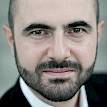
Lord Arturo Talbo Javier Camarena


Sir Riccardo Forth George Petean


Sir Bruno Robertson Otar Jorjikia


Enrichetta di Francia Diana Haller


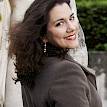
Elvira Zuzana Marková

Stanislav Vorobyov

Stanislav Vorobyov comes from Russia and studied at the Moscow Conservatory. He was a member of the International Opera Studio and has been an ensemble member at the Zurich Opera House since the 2018/19 season. Here he has appeared, among others, as Colline ("La bohème"), Alidoro ("La Cenerentola"), High Priest ("Nabucco"), Notary ("Der Rosenkavalier"), Reinmar von Zweter ("Tannhäuser"), Faust ("The Fiery Angel"), Zaretsky ("Eugene Onegin"), Cesare Angelotti ("Tosca"), Fifth Jew and 1st Nazarene ("Salome"), Lord Rochefort ("Anna Bolena"), Doctor Grenvil ("La traviata"), Crébillon ("La rondine"), Zuniga ("Carmen"), Roberto ("I vespri siciliani"), Roucher ("Andrea Chénier"), Police Commissioner ("Der Rosenkavalier"), Marchese Calatrava ("La forza del destino"), Tom ("Un ballo in maschera"), Brühlmann ("Werther"), as well as Faust ("The Fiery Angel"), Gold Dealer ("Cardillac") and Méphistophélès ("La Damnation de Faust"). In addition, he sang Don Basilio ("Il barbiere di Siviglia") at the Bregenz Festival, Nourabad ("Les Pêcheurs de perles") at Opera Flanders and in Luxembourg, as well as Ombra di Nino ("Semiramide") at the Concertgebouw Amsterdam. At the Bregenz Festival he appeared as Uncle Bonzo in "Madama Butterfly" and as Il capitano/L’ispettore in Giordano’s "Siberia". In 2024, he also appeared as Colline ("La bohème") at the Tokyo Metropolitan Theater and at the ROHM Theatre Kyoto.

Cardillac15 / 18 / 21 / 25 Feb / 1 / 6 / 10 Mar 2026 La Damnation de Faust10 / 14 / 17 May 2026 Carmen18 / 21 / 23 / 27 / 31 Jan 2026 Madama Butterfly30 Dec 2025 / 3 / 9 / 11 / 13 / 16 Jan 2026 Un ballo in Maschera22 / 28 / 31 May / 7 / 13 Jun / 26 / 27 / 29 / 30 Aug 2026 La forza del destino2 / 7 / 12 / 15 / 18 / 21 / 26 / 29 Nov / 17 / 21 Dec 2025 Der Rosenkavalier21 / 26 Sept / 1 / 5 / 14 / 17 / 21 / 26 Oct 2025 Rachmaninov – Die drei Opern1 / 4 / 8 / 15 / 18 / 21 / 28 Nov 2026 La traviata20 / 23 / 29 Dec 2026 / 1 / 3 / 6 / 9 / 12 / 15 / 19 / 23 Jan 2027 La fanciulla del west25 / 28 Feb / 3 / 7 Mar / 4 / 7 / 10 / 16 Apr 2027 Samson et Dalila13 / 17 / 20 / 24 / 27 / 30 Jun / 2 / 9 Jul 2027 La bohème16 / 18 / 23 Jun / 4 / 7 / 10 Jul 2027

Michele Pertusi

Michele Pertusi is a native of Parma. He is an internationally sought-after bass and has appeared at leading opera houses including La Scala in Milan, the Metropolitan Opera, Covent Garden, the Paris Opéra, the state operas of Vienna, Munich, and Berlin, as well as in Rome, Zurich, Brussels, Amsterdam, Madrid, Barcelona, and Salzburg. His roles have included the title characters in “Maometto II,” “Guillaume Tell,” “Don Pasquale,” “Attila,” “Oberto,” and “Falstaff,” as well as Don Alfonso (“Così fan tutte”), Basilio (“Il barbiere di Siviglia”), Mustafà (“L’italiana in Algeri”), Lord Sidney (“Il viaggio a Reims”), Pharaoh (“Mosè in Egitto”), Le Gouverneur (“Le Comte Ory”), Count Rodolfo (“La sonnambula”), Dulcamara (“L’elisir d’amore”), Don Alfonso (“Lucrezia Borgia”), Walter (“Luisa Miller”), Pagano (“I Lombardi alla prima crociata”), Fiesco (“Simon Boccanegra”), and Méphistophélès (“Faust”). A renowned Rossini interpreter, he made his debut at the Rossini Opera Festival in Pesaro in 1997 as Moïse in “Moïse et Pharaon,” and has since been regularly invited back, receiving the “Rossini d’oro” award. Michele Pertusi has made numerous recordings: “Il turco in Italia” under Riccardo Chailly received a Gramophone Award, and “Falstaff” under Sir Colin Davis won a Grammy. In 1995, Pertusi was awarded the prestigious Premio Abbiati, and in 2003 he received the Gold Medal for Cultural Merit from the Republic of Italy. Most recently, he has appeared as Padre Guardiano (“La forza del destino”) at the Opéra de Lyon, as Attila at Teatro La Fenice in Venice, as Oroveso (“Norma”) at La Scala in Milan, and as Timur (“Turandot”) at the Puccini Festival in Viareggio.

La forza del destino2 / 7 / 12 / 15 / 18 / 21 / 26 / 29 Nov / 17 / 21 Dec 2025

Javier Camarena

Javier Camarena wurde in Veracruz (Mexiko) geboren. Nach seinem Studium an der Musikhochschule der Universität von Guanajuato gewann er 2004 den ersten Preis beim Gesangswettbewerb «Carlo Morelli» in Mexiko und 2005 den Sonderpreis «Juan Oncina» im Wettbewerb Francisco Viñas in Barcelona. Francisco Araiza ist sein Gesangslehrer und Berater. 2004 debütierte er am Palacio de Bellas Artes als Tonio in La Fille du Régiment. In Mexiko war er zudem als Belmonte (Die Entführung aus dem Serail), Nemorino (L’elisir d’amore), Ernesto (Don Pasquale) und Dorvil (La scala di seta) zu hören. Als Ensemblemitglied des Opernhauses Zürich von 2007-2014 hat er u.a. Lindoro (L’italiana in Algeri), Almaviva in Il barbiere di Siviglia von Paisiello und Rossini, Belfiore (La finta giardiniera) sowie in den Neuproduktionen von Tristan und Isolde (Stimme eines Seemanns), Così fan tutte, La fedeltà premiata, Mosè in Egitto, Les Pêcheurs de perles, Le Comte Ory, Falstaff, Die Entführung aus dem Serail und Rossinis Otello gesungen. Gastengagements führten ihn u.a. an die Opernhäuser in Paris, Wien, München, Dresden, Brüssel, Barcelona, Madrid, New York und San Francisco. Bei den Salzburger Festspielen war er 2013 als Fenton und Belmonte (Die Entführung aus dem Serail) sowie 2014 als Ramiro (La cenerentola) zu erleben. Zu seinen künftigen Engagements zählen u.a. Almaviva (Il barbiere di Siviglia) an der Wiener und der Münchener Staatsoper, Conte di Libenskoff (Il viaggio a Reims) in Zürich, Ernesto (Don Pasquale) in Zürich und an der Met sowie Lord Arturo (I puritani) in Madrid.

George Petean

George Petean was born in Cluj-Napoca (Romania) and studied piano, trombone, and voice. He made his stage debut in 1997 at the Cluj-Napoca Opera as Don Giovanni. In 1999, he won the Grand Prize at the international singing competition Hariclea Darclée. In 2000, he made his debut as Marcello (“La bohème”) at the Teatro dell’Opera di Roma, and from 2002 to 2010 he was a member of the Hamburg State Opera ensemble. Since then, he has worked as a freelance artist. Engagements have taken him to the Royal Opera House Covent Garden, the Vienna State Opera, Opéra de Paris, the Bavarian State Opera in Munich, the New York Met, Gran Teatre del Liceu in Barcelona, Berlin opera houses, Semperoper Dresden, Opera Amsterdam, and the Bregenz Festival. His repertoire includes roles such as Figaro (“Il barbiere di Siviglia”), Silvio (“Pagliacci”), Conte di Luna (“Il trovatore”), Rodrigo, Marquis of Posa (“Don Carlo”), Lord Enrico Ashton (“Lucia di Lammermoor”), Giorgio Germont (“La traviata”), Amonasro (“Aida”), Simon Boccanegra, and Rigoletto. At the Zurich Opera House, he has recently appeared as Macbeth, Simon Boccanegra, and Renato (“Un ballo in maschera”). More recently, he has performed Simon Boccanegra at the Berlin State Opera, Conte di Luna at the Hamburg State Opera and Berlin State Opera, Carlo Gérard (“Andrea Chénier”) at the Vienna State Opera, and Marquis of Posa at the Bavarian State Opera.

La forza del destino2 / 7 / 12 / 15 / 18 / 21 / 26 / 29 Nov / 17 / 21 Dec 2025 Un ballo in Maschera27 / 29 Aug 2026

Otar Jorjikia

Otar Jorjikia stammt aus Georgien. Er studierte Gesang am Konservatorium in Tiflis und be­suchte Meisterkurse von Renato Bruson und Edda Moser. In der Spielzeit 2016/17 war er Mitglied des Internationalen Opernstudios am Opernhaus Zürich und war da als Malcolm (Macbeth), Gustavo III / Giudice (Un ballo in maschera) und als Conte di Lerma (Don Carlo) zu erleben. An der Oper Tiflis sang er Partien wie Don Alvaro (La forza del destino) und Don José (Carmen), im Konzertsaal von Tiflis war er als Duca (Rigoletto) und Lenski (Eugen Onegin) zu hören. 2014 debütierte er als Alfredo (La traviata) am Teatro Giuseppe Verdi in Busseto und am Teatro Regio di Parma. Ein Höhepunkt seiner bisherigen Karriere war das Debüt am Mariinski-Theater, wo er 2016 an der Seite von Plácido Domingo die Partie des Gabriele Adorno in Verdis Simon Boccanegra sang. 2017 gab er sein Debüt am Bolshoi Theater in Moskau als Alfredo und sang 2018 am Opernhaus in Sidney Don José. Die Spielzeit 2019/20 führte ihn dann zurück nach Zürich, wo er Ismaele in Nabucco sang, ans Mariinsky Theater St. Petersburg als Gabriele Adorno (Simon Boccanegra), Ricard und für das Verdi-Requiem, nach Sydney als Don José und ans Théâtre du Capitole Toulouse als Nemorino (L’elisir d’amore). In der Spielzeit 2020/21 gastierte er in der Titelpartie von Don Carlos und als Mario Cavaradossi (Tosca) am Mariinsky Theater und als Riccardo (Un ballo in maschera) und Alfredo am Bolshoi Theater in Moskau.

Diana Haller

Diana Hallerwurde in Rijeka, Kroatien, geboren. Sie absolvierte ein Gesangstudium in ihrer Heimatstadt, anschliessend am Conservatorio di Musica Giuseppe Tartini in Triest, an der Royal Academy of Music in London sowie in Stuttgart bei Dunja Vejzović. 2012 erhielt sie  den 1. Preis beim Internationalen Wettbewerb für Liedkunst der Hugo-Wolf-Akademie Stuttgart. 2009/10 debütierte sie als Mitglied des Opernstudios der Oper Stuttgart als Knappe in Parsifal. Seit der Saison 2010/11 ist sie festes Ensemblemitglied der Oper Stuttgart und sang dort u.a. Laura (Luisa Miller), Mère Jeanne (Dialogues des Carmélites), Berta (Il barbiere di Siviglia), Erste Magd (Elektra) und Cherubino (Le nozze di Figaro). 2011 gab sie mit der Titelpartie in Siroe, Re di Persia von Hasse ihr Debüt beim London Handel Festival und in Il noce di Benevento von Giuseppe Balducci beim Festival Rossini in Wildbad. 2013 wurde Diana Haller in der Kritikerumfrage der «Opernwelt» zur Nachwuchssängerin des Jahres für ihre Stuttgarter Cenerentola gewählt. 2014 gastierte sie als Ines (Il trovatore) bei den Salzburger Festspielen und 2015/16 als Angelina (La cenerentola) am Gärtnerplatztheater in München. 2016/17 übernimmt sie an der Oper Stuttgart die Partien Ruggiero (Alcina), Enrichetta (I puritani) sowie die Titelpartie in einer Neuinszenierung von Ariodante.

Zuzana Marková

Zuzana Marková stammt aus Prag. Sie studierte Gesang, Klavier und Dirigieren am Prager Konservatorium und setzte ihre Gesangsausbildung im Opernstudio in Bologna bei Paola Pittaluga fort. 2003 gewann sie den Gesangswettbewerb Young Prague Singers, 2012 erhielt sie den 2. Preis beim Internationalen Gesangswettbewerb Ernst Häfliger. In der Spielzeit 2014/15 sang sie Marianne in Saugets Les caprices de Marianne an der Opéra de Reims, Opéra-Théâtre de Metz-Métropole, Opéra municipal de Marseille, Opéra de Tours und der Opéra Grand Avignon, Ismene (Alceste) am Teatro La Fenice Venedig und Oscar (Un ballo in maschera) am Teatro Massimo in Palermo. In der Spielzeit 2015/16 war sie wiederum als Marianne zu hören (Grand Théâtre de Bordeaux und Opéra-Théâtre de Limoges), sang Lucia di Lammermoor an der Opéra Grand Avignon, Violetta in Cagliari und hatte grossen Erfolg als Lucia am Teatro delle Muse in Ancona sowie als Anna Bolena an der Opéra municipal de Marseille. 2015 war sie beim Festival della Valle d’Itria als Miranda in La donna serpente unter der musikalischen Leitung von Fabio Luisi zu erleben. In Bologna sang sie Donna Anna (Don Giovanni) und Clorina (La cenerentola) unter der musikalischen Leitung von Michele Mariotti. Zukünftige Engagements beinhalten Violetta am Teatro Massimo in Palermo und Lucia am Teatro La Fenice in Venedig.

Show full cast Show less

Philharmonia Zürich

1985 entstand in Folge der Trennung des traditionsreichen Tonhalle- und Theaterorchesters das Orchester der Oper Zürich. 2012, mit Beginn der Intendanz von Andreas Homoki und dem Amtsantritt des neuen Generalmusikdirektors Fabio Luisi, wird das Orchester der Oper Zürich zur Philharmonia Zürich. Pro Saison ist das Orchester in rund 250 Opern- und Ballettvorstellungen des Opernhauses Zürich zu hören. Als Podium für das Konzertrepertoire werden zusätzlich die Philharmonischen Konzerte veranstaltet. Soiréen und Kammermusikmatinéen ergänzen das künstlerische Spektrum des Orchesters. Bevor Fabio Luisi mit der Saison 2012/13 als Generalmusikdirektor die künstlerische Leitung des Orchesters übernommen hat, haben u. a. Franz Welser-Möst (1995-2008, ab 2005 als Generalmusikdirektor) und zuletzt Daniele Gatti als Chefdirigent (2009-2012) das Orchester geleitet. 2000/01 fanden die Beständigkeit der Leistungen des Orchesters der Oper Zürich und die Breite seines Könnens mit der Wahl zum «Orchester des Jahres» in der Umfrage der Zeitschrift «Opernwelt» weit verbreitete internationale Anerkennung.

Mehr Informationen zur Philharmonia Zürich finden Sie hier

La traviata20 / 23 / 29 Dec 2026 / 1 / 3 / 6 / 9 / 12 / 15 / 19 / 23 Jan 2027 Die lustige Witwe27 / 31 Dec 2026 / 3 / 7 / 10 / 13 Jan 2027

Statistenverein am Opernhaus Zürich

Der Statistenverein am Opernhaus Zürich wurde im Jahr 1900 gegründet und dürfte damit einer der traditionsreichsten Vereine auf dem Kulturplatz Zürich sein. Rund hundert Frauen und Männer im Alter von 16 bis 70 Jahren bereichern das Bühnengeschehen in zahlreichen Inszenierungen.Statisten, früher auch als Figuranten bezeichnet, haben generell nicht sprechende Rollen. Ihre Einsätze am Opernhaus Zürich fallen je nach Inszenierung unterschiedlich umfangreich aus. Während früher Massenszenen im Vordergrund standen, sind die Statistinnen und Statisten seit der Ära Pereira und der Intendanz von Andreas Homoki zunehmend auch für aufwändigere Einzelauftritte sowie für anspruchsvolle technische Einsätze gefragt. Die Mitglieder des Statistenvereins üben ihre Einsätze in der Freizeit und ohne finanzielle Interessen aus. Sie bringen Begeisterung für Musik und Theater mit.

Manon24 / 27 Sept / 3 / 7 / 10 Oct 2025 La scala di seta25 / 28 Sept / 19 / 24 Oct 2025 Tosca28 Sept / 2 / 8 / 11 / 15 / 19 Oct 2025 / 11 / 14 / 17 / 21 / 24 Apr / 13 / 17 May 2027 Madama Butterfly30 Dec 2025 / 3 / 9 / 11 / 13 / 16 Jan 2026 Rigoletto20 / 23 / 27 Dec 2025 / 1 / 4 Jan 2026 Le nozze di Figaro24 / 29 Jan / 1 / 5 / 7 / 10 / 14 Feb 2026 / 2 / 6 / 8 / 15 / 19 May 2027 Werther14 / 19 Jun / 1 / 4 / 10 Jul 2026 Così fan tutte3 / 7 / 9 / 12 Jul 2026 Macbeth8 / 11 / 14 / 19 / 22 / 30 Nov 2025 Arabella14 / 18 / 22 / 25 / 28 Apr 2026 Der Rosenkavalier21 / 26 Sept / 1 / 5 / 14 / 17 / 21 / 26 Oct 2025 La clemenza di Tito26 / 29 Apr / 3 / 8 / 15 / 17 / 20 / 25 May 2026 Cardillac15 / 18 / 21 / 25 Feb / 1 / 6 / 10 Mar 2026 Hänsel und Gretel16 / 20 / 23 / 28 / 30 Nov / 2 / 4 / 11 / 16 / 18 / 21 Dec 2025 / 2 / 24 / 25 / 31 Jan 2026 Carmen18 / 21 / 23 / 27 / 31 Jan 2026 Un ballo in Maschera22 / 28 / 31 May / 7 / 13 Jun 2026 Die Fledermaus7 / 10 / 12 / 14 / 18 / 26 / 28 / 31 Dec 2025 / 2 / 4 / 6 / 10 Jan / 29 Sept / 8 / 17 / 23 / 25 Oct 2026 Giulio Cesare in Egitto11 / 13 / 15 / 17 / 21 / 25 / 28 Mar 2026 Scylla et Glaucus27 / 29 / 31 Mar / 2 / 6 / 30 Apr / 2 May 2026 La forza del destino2 / 7 / 12 / 15 / 18 / 21 / 26 / 29 Nov / 17 / 21 Dec 2025 Sillons de Mémoires5 / 6 / 7 Feb 2026 Gianni Schicchi2 / 6 / 8 / 10 / 13 May 2026 Monster's Paradise8 / 14 / 18 Mar / 10 / 12 Apr 2026 Alice im Wunderland8 / 15 / 19 / 21 / 26 / 28 Nov / 6 Dec 2026 / 2 / 7 / 8 / 10 / 17 Jan 2027 Manon Lescaut11 / 15 / 18 / 22 / 26 Dec 2026 Die lustige Witwe27 / 31 Dec 2026 / 3 / 7 / 10 / 13 Jan 2027 Die Walküre24 / 31 Jan / 3 / 6 Feb 2027 Roméo et Juliette12 / 19 / 21 Feb / 2 / 5 Mar 2027 La bohème16 / 18 / 23 Jun / 4 / 7 / 10 Jul 2027 Don Carlo1 / 6 / 8 / 11 Jul 2027 La fanciulla del west25 / 28 Feb / 3 / 7 Mar / 4 / 7 / 10 / 16 Apr 2027 Elektra22 / 26 Nov / 2 / 5 / 10 / 13 / 16 Dec 2026 Rinaldo22 / 24 / 26 / 28 Feb / 14 / 19 / 23 / 25 / 27 / 29 Mar 2027 Samson et Dalila13 / 17 / 20 / 24 / 27 / 30 Jun / 2 / 9 Jul 2027 Tannhäuser26 Sept / 4 / 9 / 13 Oct 2026 Doctor Atomic7 / 11 / 14 / 20 / 24 / 28 Feb 2027

Chor der Oper Zürich

Der Chor der Oper Zürich bildet mit seinen 60 festangestellten Mitgliedern und der Mitwirkung von bis zu 160 Vorstellungen pro Saison einen wesentlichen Eckpfeiler des künstlerischen Ensembles am Opernhaus Zürich. Er vereinigt unter dem Dach des traditionsreichsten schweizerischen Opernhauses Sängerinnen und Sänger auf höchstem professionellen Niveau, deren musikalische und stilistische Versiertheit sich mit darstellerischer Gestaltungskraft und spontaner Spielfreude verbinden. Regelmässig stellen seine Mitglieder auch als Solisten ihr künstlerisches Format unter Beweis. Der Chor spiegelt in seiner internationalen Zusammensetzung den Anspruch und die Strahlkraft der Oper Zürich wieder, die sich durch zahlreiche DVD-Aufnahmen erwiesen haben und 2104 mit dem Preis der «Opera Company of the Year» ausgezeichnet wurden. Wichtige musikalische Impulse erhielten die Chormitglieder durch die Arbeit mit Dirigenten wie Nello Santi, Nikolaus Harnoncourt, Franz Welser-Möst, Bernard Haitink, Riccardo Chailly, Valery Gergiev, Daniele Gatti, Zubin Mehta und Fabio Luisi. Ihre schauspielerischen Fähigkeiten entwickelten sie im Dialog mit Regisseuren wie David Pountney, Robert Wilson, Harry Kupfer, Peter Stein, Peter Konwitschny oder Andreas Homoki. Gastspiele führten den Chor nach Tokio (Der Rosenkavalier und La traviata), London (Die Meistersinger von Nürnberg, Tannhäuser, Der fliegende Holländer), Paris (La cenerentola, Fierrabras), Athen (Carmen, Idomeneo) oder nach Rom, wo er anässlich einer Papstmesse zur Feier des 500-jährigen Bestehens der Schweizer Garde Mozarts Krönungsmesse aufführte. Als «International Chamber Vocalists» wirkte der Chor der Oper Zürich in der 2014 mit einem Echo-Preis ausgezeichneten Neueinspielung von Vincenzo Bellinis Norma mit.

Der Rosenkavalier21 / 26 Sept / 1 / 5 / 14 / 17 / 21 / 26 Oct 2025 Manon24 / 27 Sept / 3 / 7 / 10 Oct 2025 Tosca28 Sept / 2 / 8 / 11 / 15 / 19 Oct 2025 / 11 / 14 / 17 / 21 / 24 Apr / 13 / 17 May 2027 La clemenza di Tito26 / 29 Apr / 3 / 8 / 15 / 17 / 20 / 25 May 2026 / 7 / 10 / 12 / 16 / 18 / 21 Mar 2027 Tannhäuser21 / 24 / 27 Jun / 2 / 5 / 8 / 11 Jul / 26 Sept / 4 / 9 / 13 Oct 2026 Cardillac15 / 18 / 21 / 25 Feb / 1 / 6 / 10 Mar 2026 La Damnation de Faust10 / 14 / 17 May 2026 Carmen18 / 21 / 23 / 27 / 31 Jan 2026 Madama Butterfly30 Dec 2025 / 3 / 9 / 11 / 13 / 16 Jan 2026 Un ballo in Maschera22 / 28 / 31 May / 7 / 13 Jun / 26 / 27 / 29 / 30 Aug 2026 La forza del destino2 / 7 / 12 / 15 / 18 / 21 / 26 / 29 Nov / 17 / 21 Dec 2025 Rigoletto20 / 23 / 27 Dec 2025 / 1 / 4 Jan 2026 Le nozze di Figaro24 / 29 Jan / 1 / 5 / 7 / 10 / 14 Feb 2026 Fidelio3 / 6 / 10 / 14 / 16 May 2026 Così fan tutte3 / 7 / 9 / 12 Jul 2026 Macbeth8 / 11 / 14 / 19 / 22 / 30 Nov 2025 Die Fledermaus7 / 10 / 12 / 14 / 18 / 26 / 28 / 31 Dec 2025 / 2 / 4 / 6 / 10 Jan / 29 Sept / 8 / 17 / 23 / 25 Oct 2026 Messa da Requiem20 / 22 / 28 Feb / 1 / 5 / 7 Mar / 6 Apr 2026 Arabella14 / 18 / 22 / 25 / 28 Apr 2026 Europa-Tournee 2026 «Messa da Requiem»22 / 23 / 25 / 26 / 29 / 31 Mar 2026 Die Zauberflöte20 / 25 Sept / 6 / 18 / 21 / 24 / 30 Oct 2026 / 2 / 8 / 18 / 20 / 23 Apr 2027 La rondine24 / 27 Sept / 1 / 10 / 15 Oct 2026 Rachmaninov – Die drei Opern1 / 4 / 8 / 15 / 18 / 21 / 28 Nov 2026 Manon Lescaut11 / 15 / 18 / 22 / 26 Dec 2026 La traviata20 / 23 / 29 Dec 2026 / 1 / 3 / 6 / 9 / 12 / 15 / 19 / 23 Jan 2027 Die lustige Witwe27 / 31 Dec 2026 / 3 / 7 / 10 / 13 Jan 2027 Doctor Atomic7 / 11 / 14 / 20 / 24 / 28 Feb 2027 Roméo et Juliette12 / 19 / 21 Feb / 2 / 5 Mar 2027 La fanciulla del west25 / 28 Feb / 3 / 7 Mar / 4 / 7 / 10 / 16 Apr 2027 L'elisir d'amore25 / 27 / 29 Apr / 2 / 6 / 9 / 12 / 14 / 17 / 21 May 2027 Requiem pour Ophélie4 / 7 / 9 May 2027 Don Pasquale23 / 27 / 30 May / 4 / 6 / 11 Jun 2027 Samson et Dalila13 / 17 / 20 / 24 / 27 / 30 Jun / 2 / 9 Jul 2027 La bohème16 / 18 / 23 Jun / 4 / 7 / 10 Jul 2027 Don Carlo1 / 6 / 8 / 11 Jul 2027

Abstract

Vincenzo Bellini’s last opera demands the greatest artistry of the singers. In the revival of this production, which Andreas Homoki staged last season, the soprano Zuzana Marková will be singing the “mad role” of Elvira. One of the greatest bel canto tenors of our time can be heard as Lord Arturo: Javier Camarena, who has been closely linked to Zurich Opera House for many years. The conductor Enrique Mazzola, who is internationally renowned as a bel canto specialist, will also be making Bellini’s love drama smoulder from the orchestra pit.

In the midst of the English Civil War, a deeply loving relationship takes the audience through the two enemy camps: Elvira, daughter of the puritan Lord Valton, is in love with Arturo Talbo, a secret supporter of the Royalists. Elvira even receives her father’s permission to marry her lover. Arturo, however, places his loyalty to the King above his love for Elvira – on their wedding day, of all days. He frees the King’s widow, Henrietta of France, who is being held captive by the Puritans, and escapes with her. Elvira, believing that her husband is in love with another woman, goes mad…


Read more Show less


Good to know

Program book

Synopsis

In 17th-century England, the Civil War is raging between the republican Roundheads and the royalist Cavaliers. The Stuart King Charles I has been executed by the Roundheads under the leadership of Oliver Cromwell.

Act One
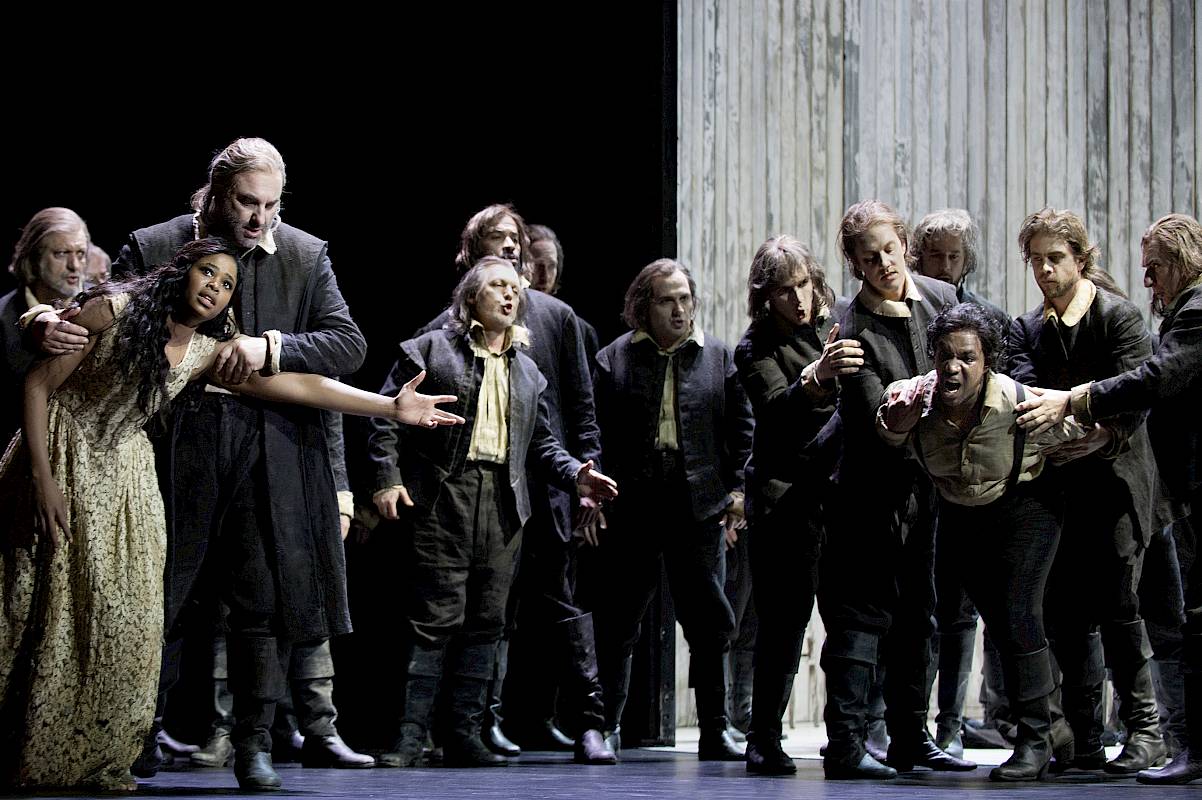
The belligerent Puritan Roundhead troops are girding themselves for a new day. From the chapel in the Roundheads’ stronghold, morning prayers can be heard. It is the day on which Elvira, daughter of the Governor, Lord Walton (Valton), is to celebrate her wedding. Walton has promised his daughter’s hand to his best officer, Richard (Riccardo) Forth. Elvira, however, is in love with Lord Arthur Talbot (Arturo Talbo), a supporter of the enemy royalists.

Elvira’s beloved uncle, Sir George (Giorgio), Lord Walton’s brother, brings the good news that he has persuaded Elvira’s father to allow her to marry her great love Arturo, rather than the Puritan Riccardo. Elvira, who had feared she would be forced to marry Riccardo, is beside herself with joy.

The despondent Riccardo is deeply disappointed that he may not marry Elvira, although she had been promised to him. Even his fellow officer, Bruno, who reminds him of his honour as a soldier, cannot lift his depression.

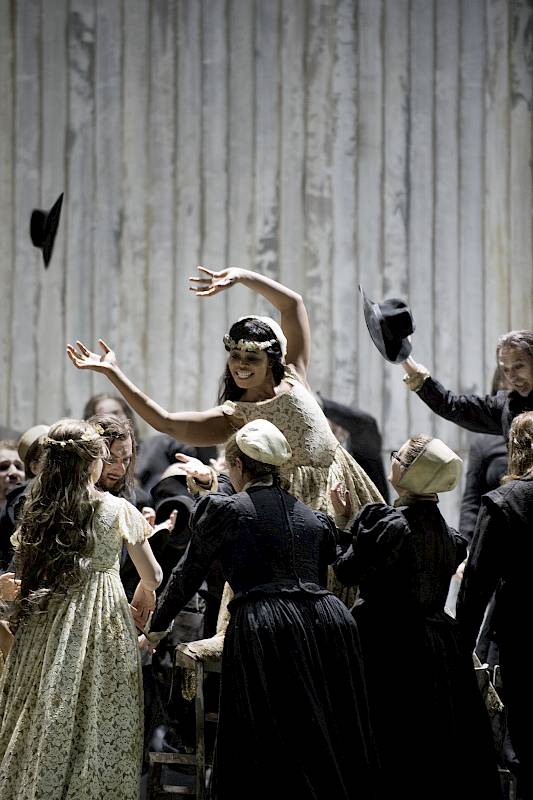
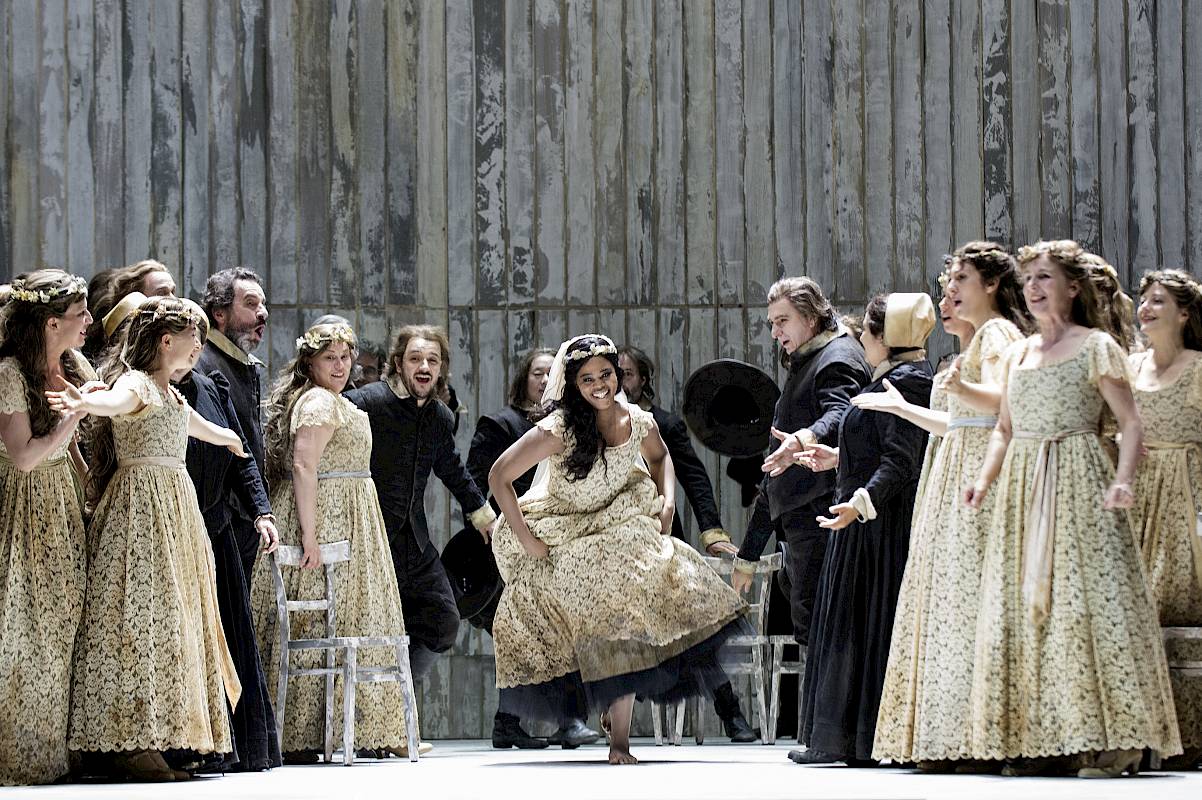
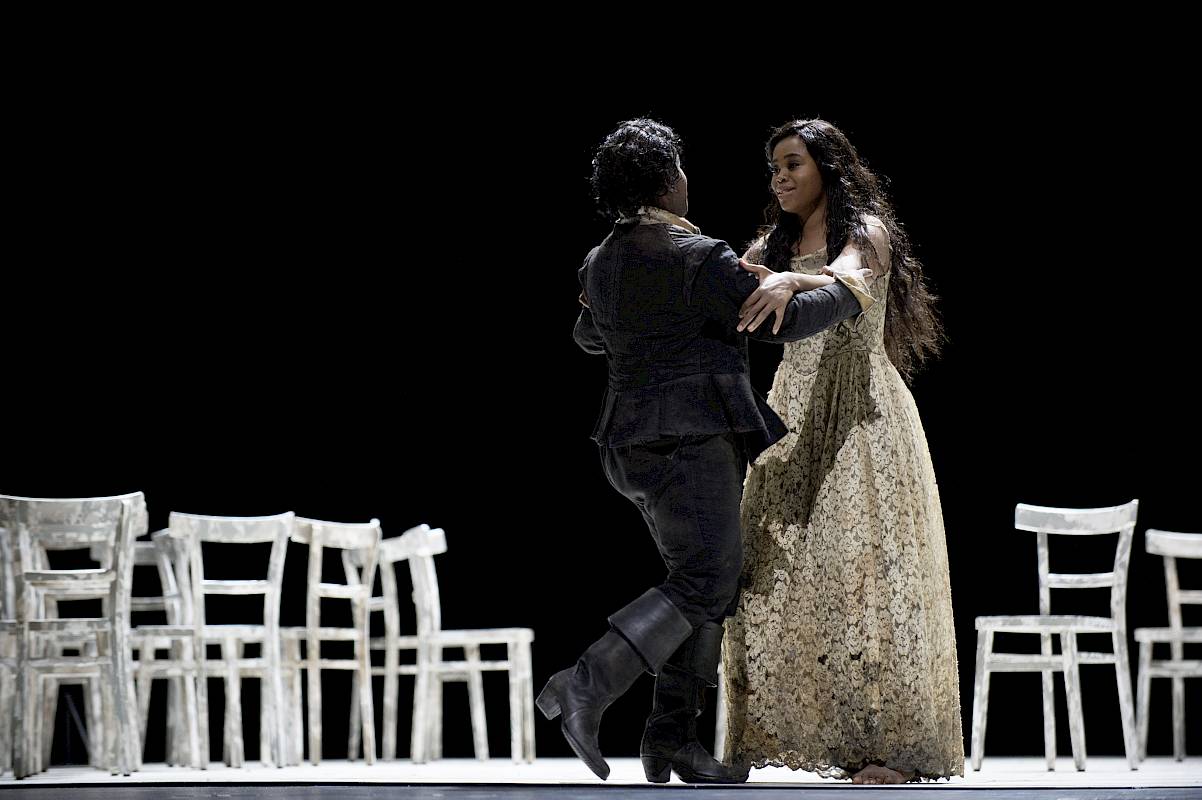
The Puritans welcome the bridegroom Arturo and hail the bridal couple. Arturo tells Elvira how happy their marriage will make him.  The wedding guests give the loving couple their blessing.

Lord Walton declares that he will unfortunately be unable to attend his daughter’s wedding, as he must immediately take an important prisoner before Parliament to be sentenced. While Elvira withdraws to prepare for the wedding, Arturo remains behind alone with the prisoner for a moment. He makes it known that he is a royalist supporter, whereupon the lady reveals her true identity: Henrietta Maria (Enrichetta), widow of the executed King Charles I. Arturo vows to save her from certain death on the scaffold.

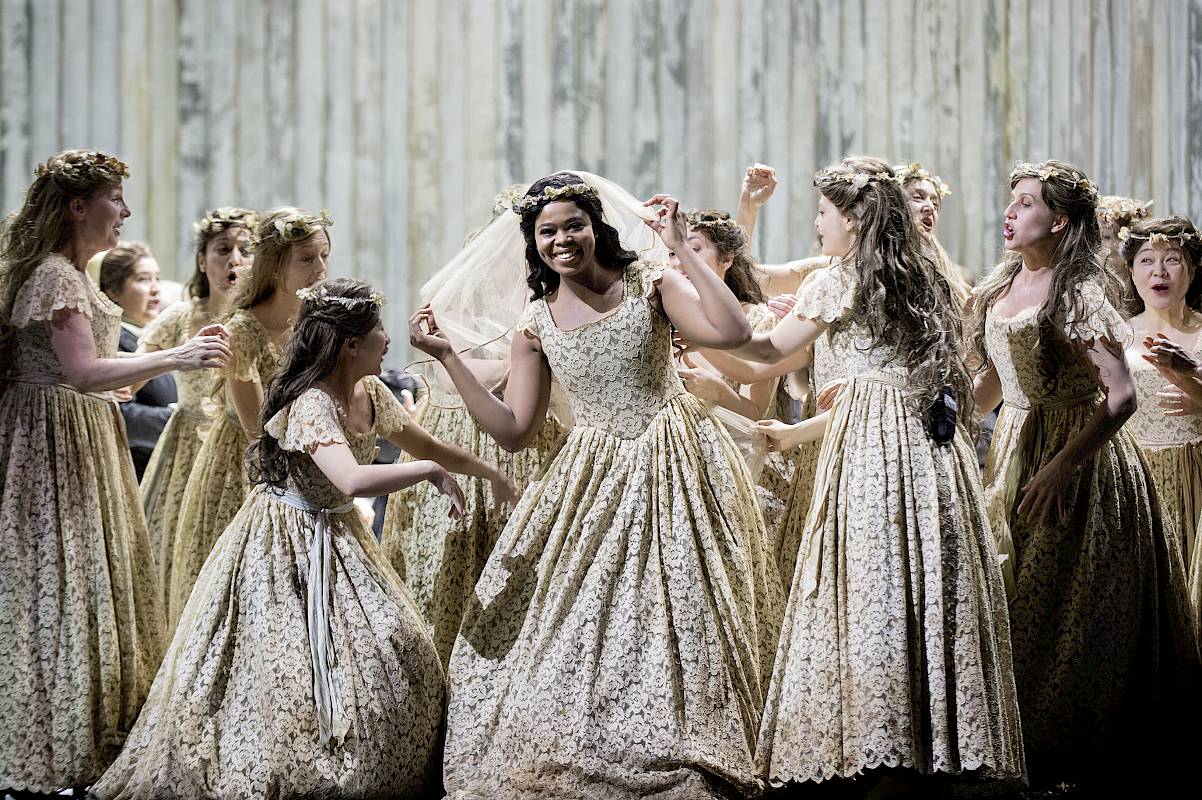
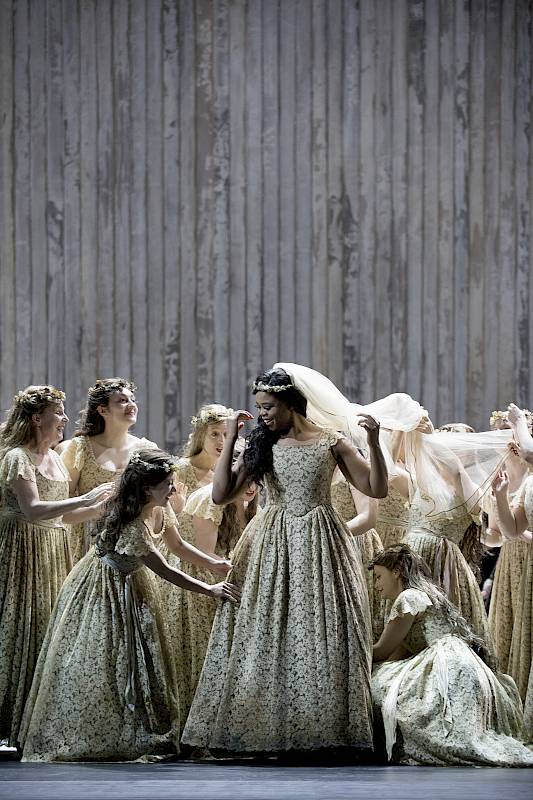
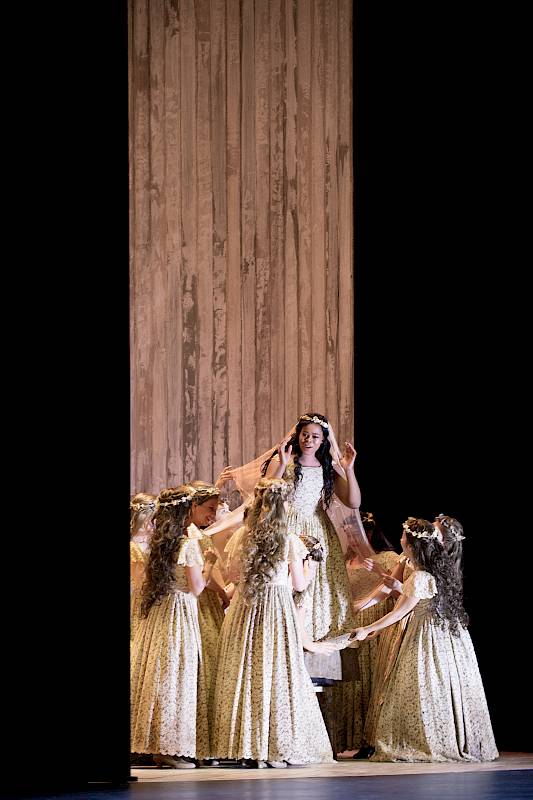
Elvira is happy in her wedding dress. She asks Enrichetta to put on her veil, and the prisoner gladly complies. For a brief moment, Enrichetta is once more alone with Arturo, who seizes the opportunity to escort the endangered Queen, unrecognised under Elvira’s veil, out of the castle.

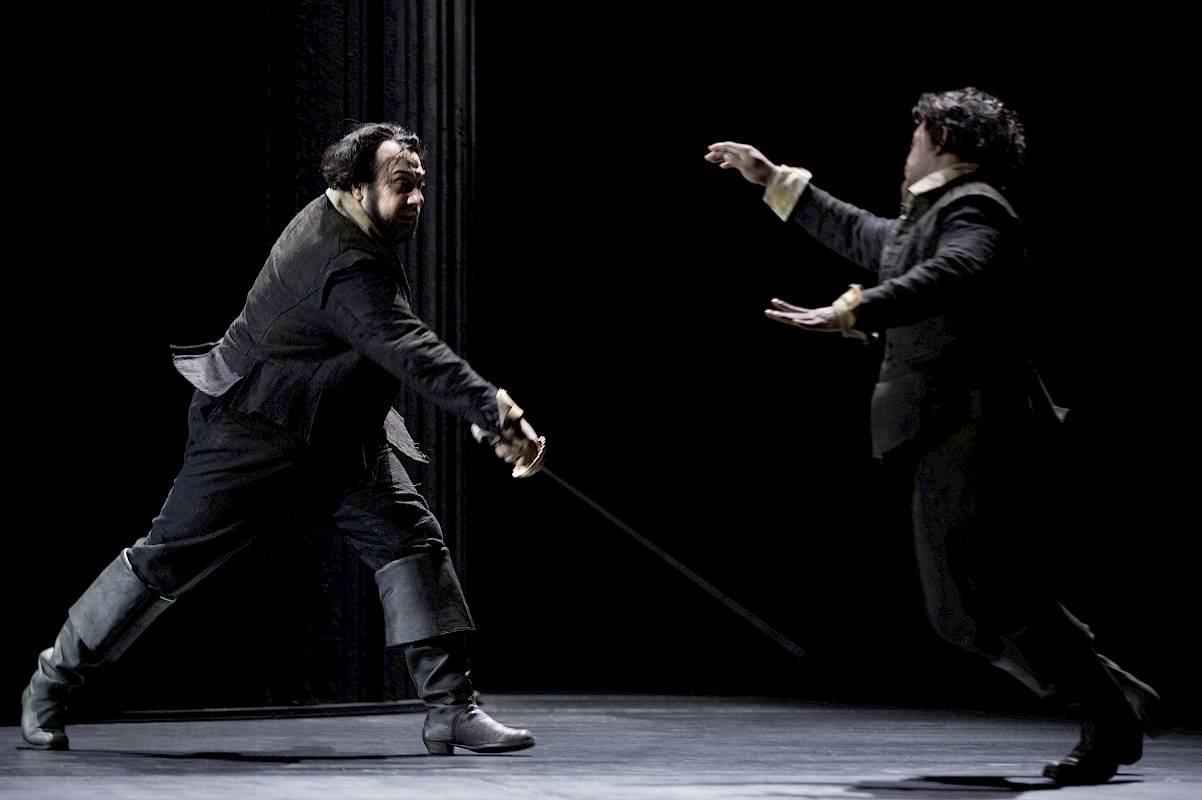
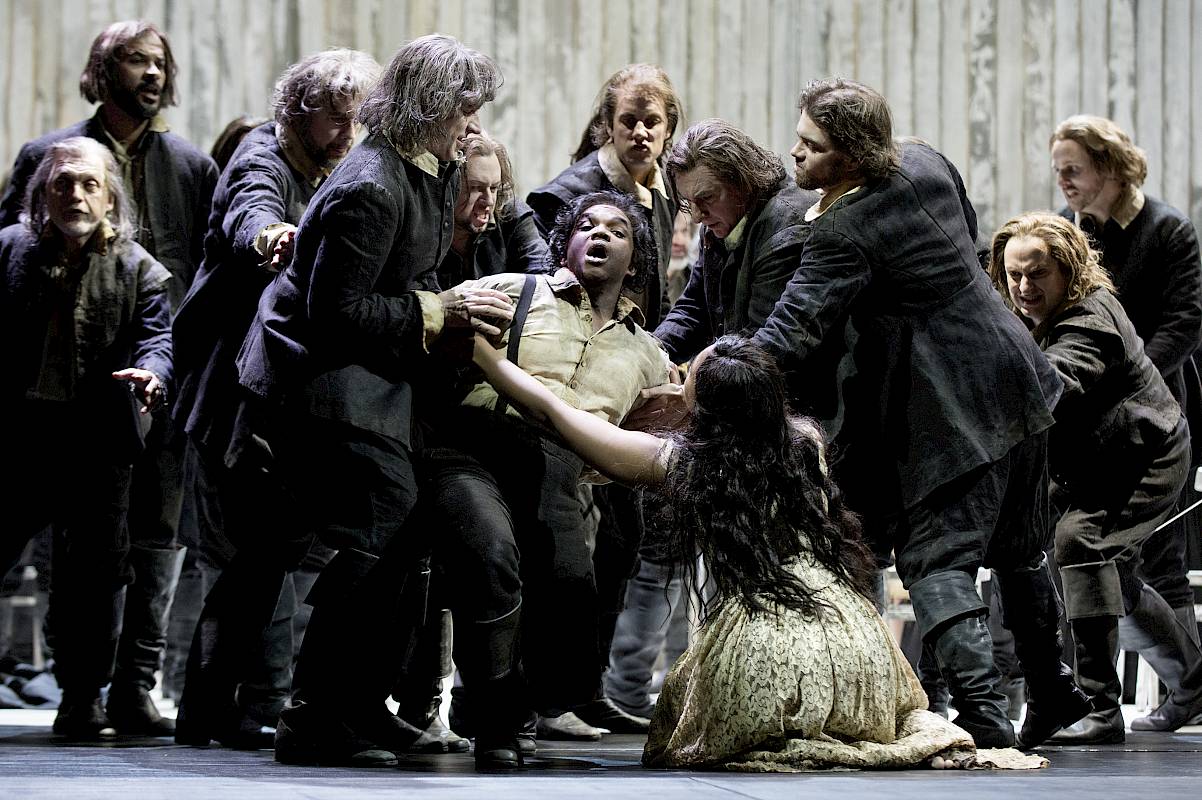
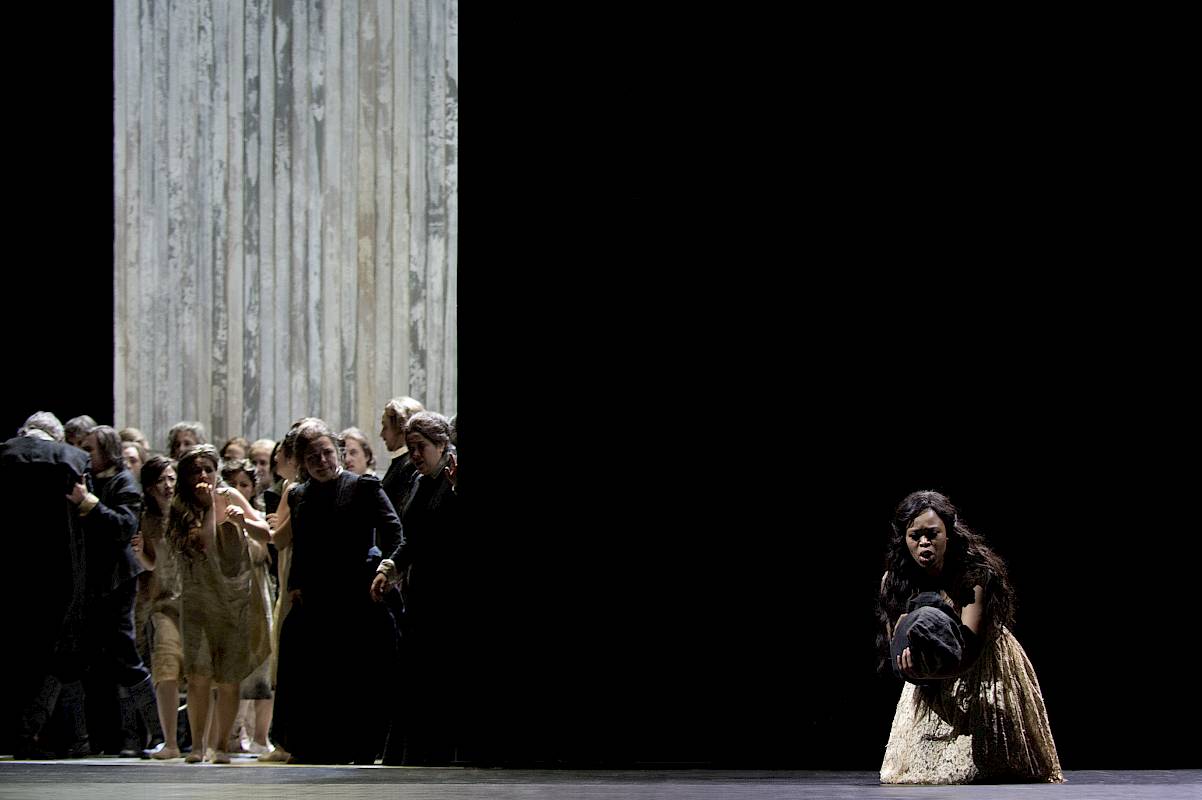
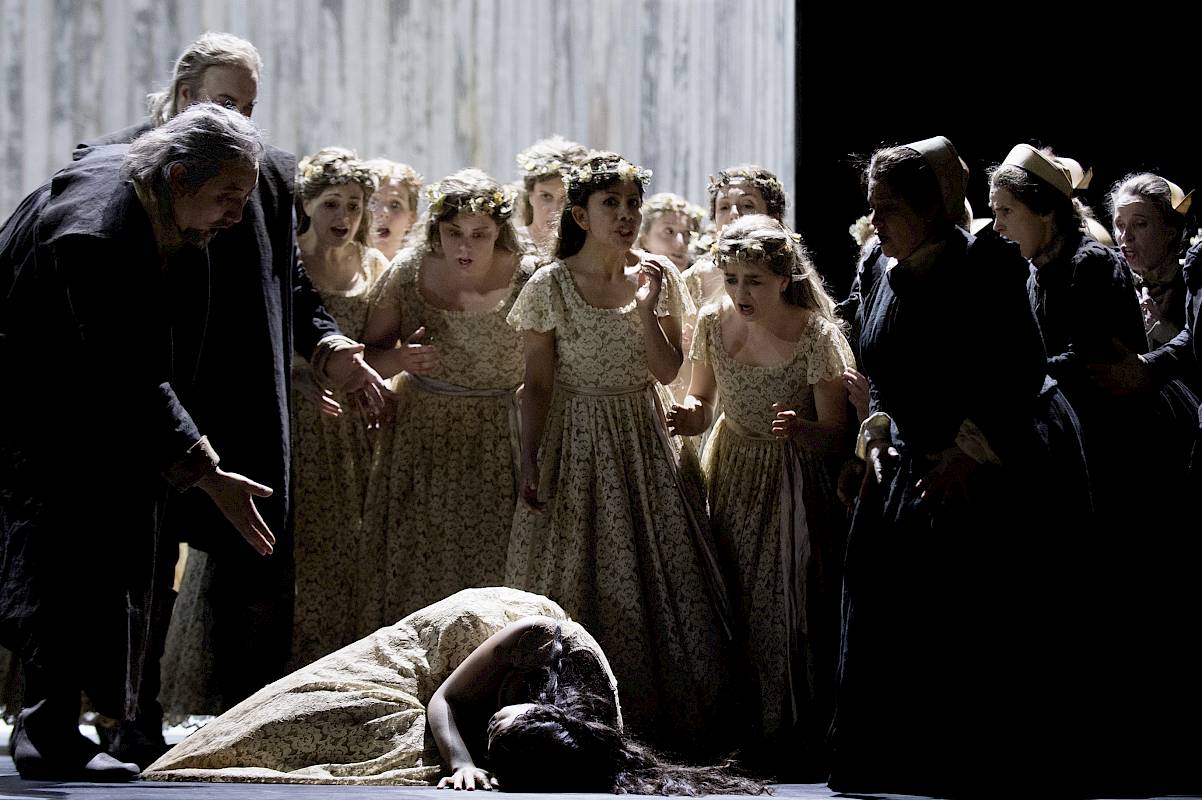
Riccardo, who will not accept that Elvira is to marry an enemy royalist, bars the supposed bridal couple’s path. He challenges Arturo to a duel. Enrichetta stands between them and lifts her veil. Having recognised her as the prisoner, Riccardo allows the two of them to escape. Elvira and the wedding party, who are looking for Arturo, discover that he has fled with the prisoner. The Puritans helplessly watch as the traumatised Elvira becomes increasingly disturbed.

Act Two
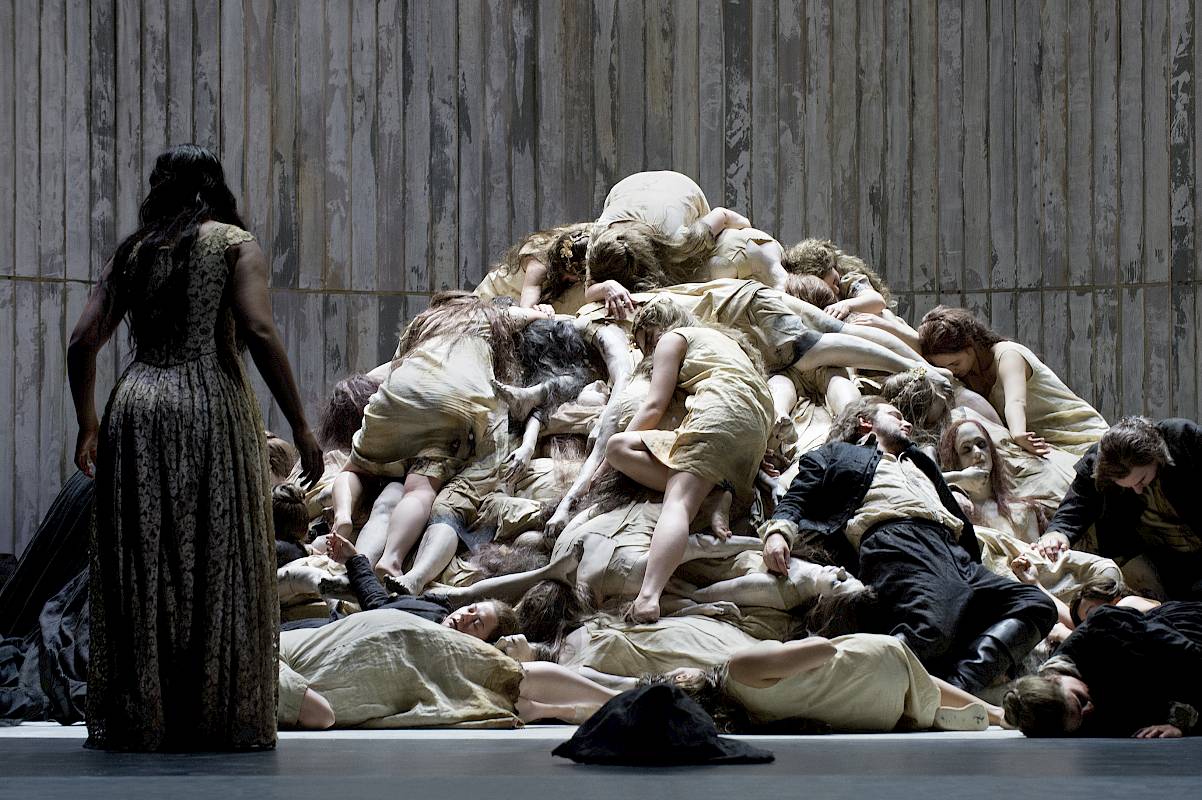
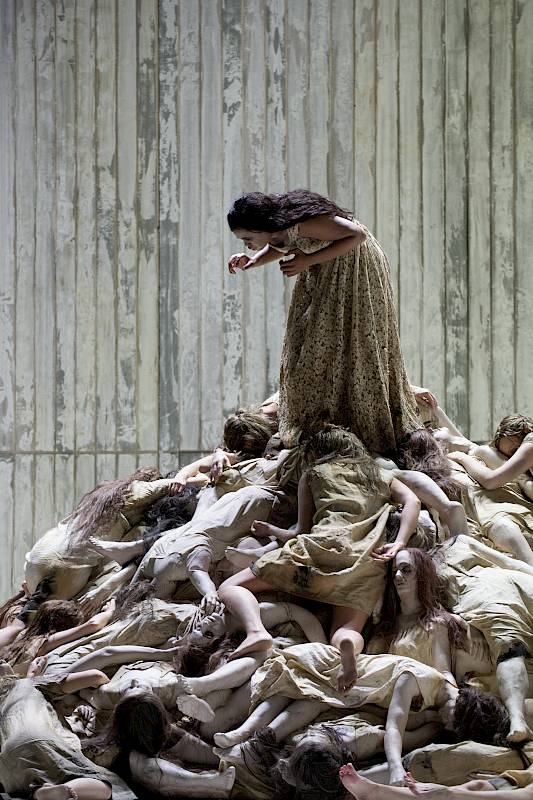
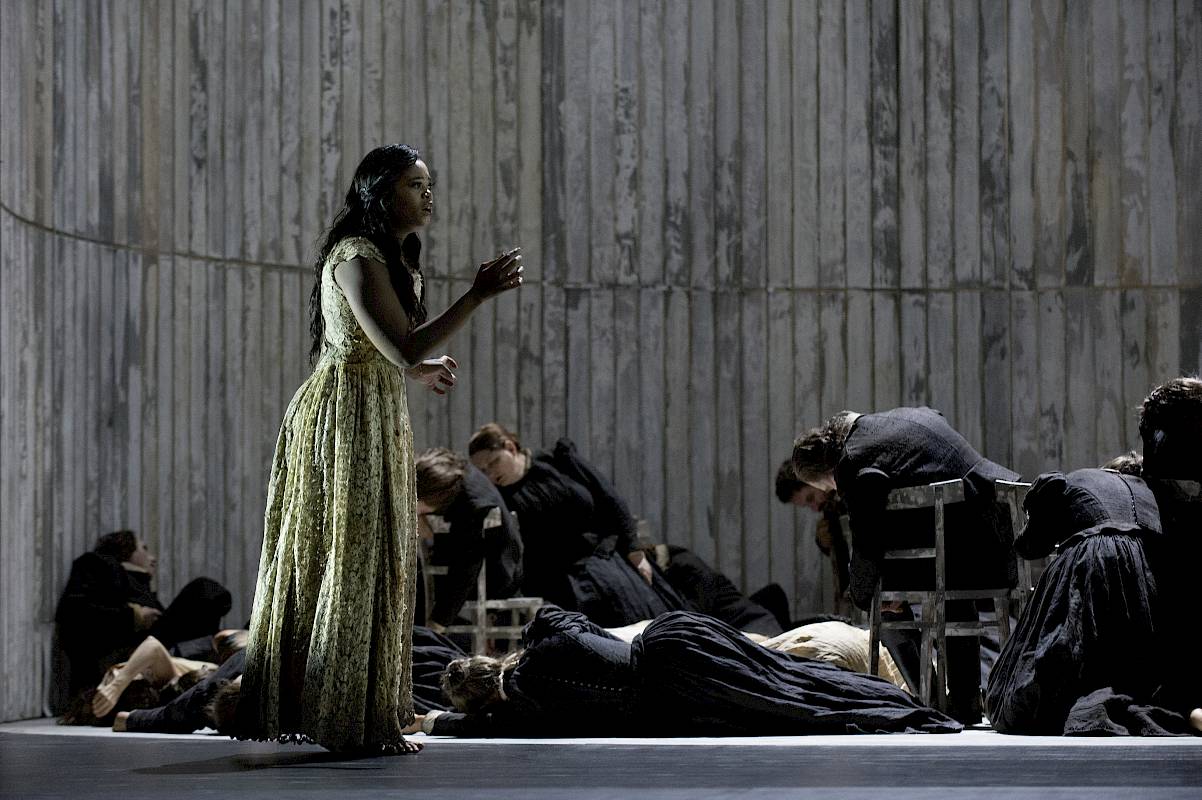
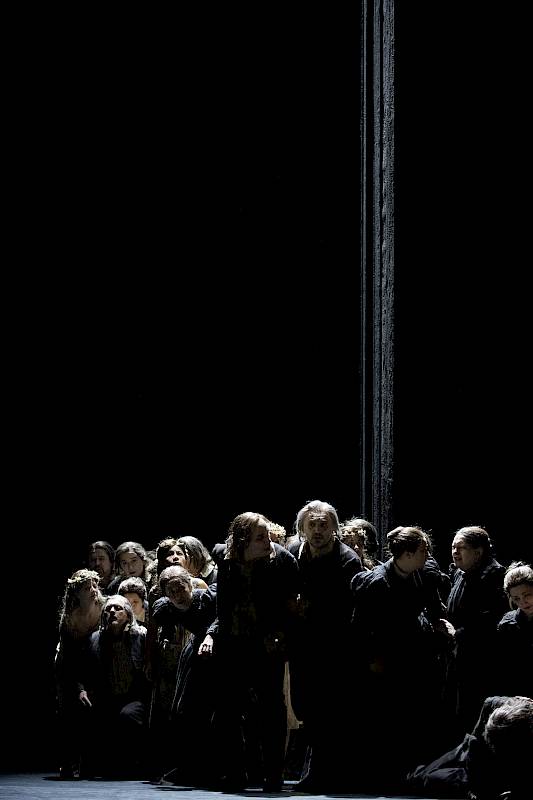
Giorgio and the Puritans deplore Elvira’s derangement: like a ghost, she aimlessly wanders about, begging for mercy, acting out the wedding ceremony, and constantly calling for Arturo. All the onlookers fear that Elvira will die of grief. Riccardo declares that Parliament has sentenced Arturo to death. The people demand vengeance for Elvira’s suffering and a harsh punishment for Arturo.

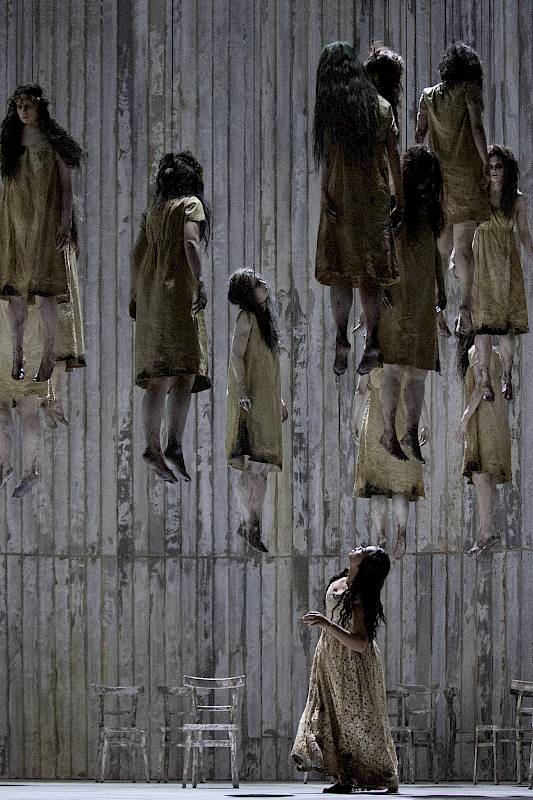
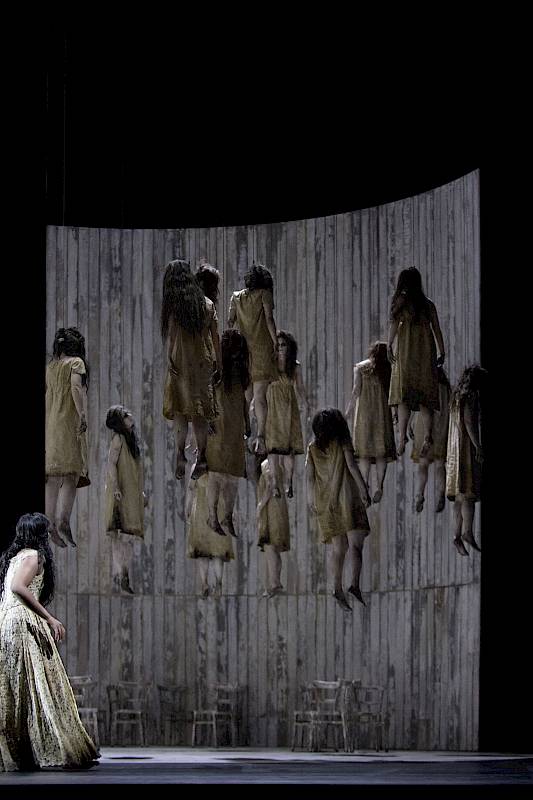
Memories and hallucinations merge in Elvira’s consciousness.

Giorgio is convinced that only Arturo’s return can save Elvira. He implores Riccardo to forgive his rival, to spare his life and thus to preserve Elvira from dying of lovesickness. Riccardo insists that Arturo be sentenced to death and that he deserves just punishment. Nonetheless, Riccardo is moved by Giorgio’s pleas. The pair assure one another emphatically that they will fight side by side for the fatherland, honour and freedom.

Act Three
Following his escape, Arturo has secretly returned to England, although he remains a fugitive. He hears Elvira singing a song of a wistful troubadour that he once wrote for her. Deeply moved, he sings the song himself. Elvira recognises his voice, and they are joyfully reunited. Elvira learns that Arturo still feels profound love for her, and that he abandoned the wedding only in order to save the life of the imprisoned Queen.

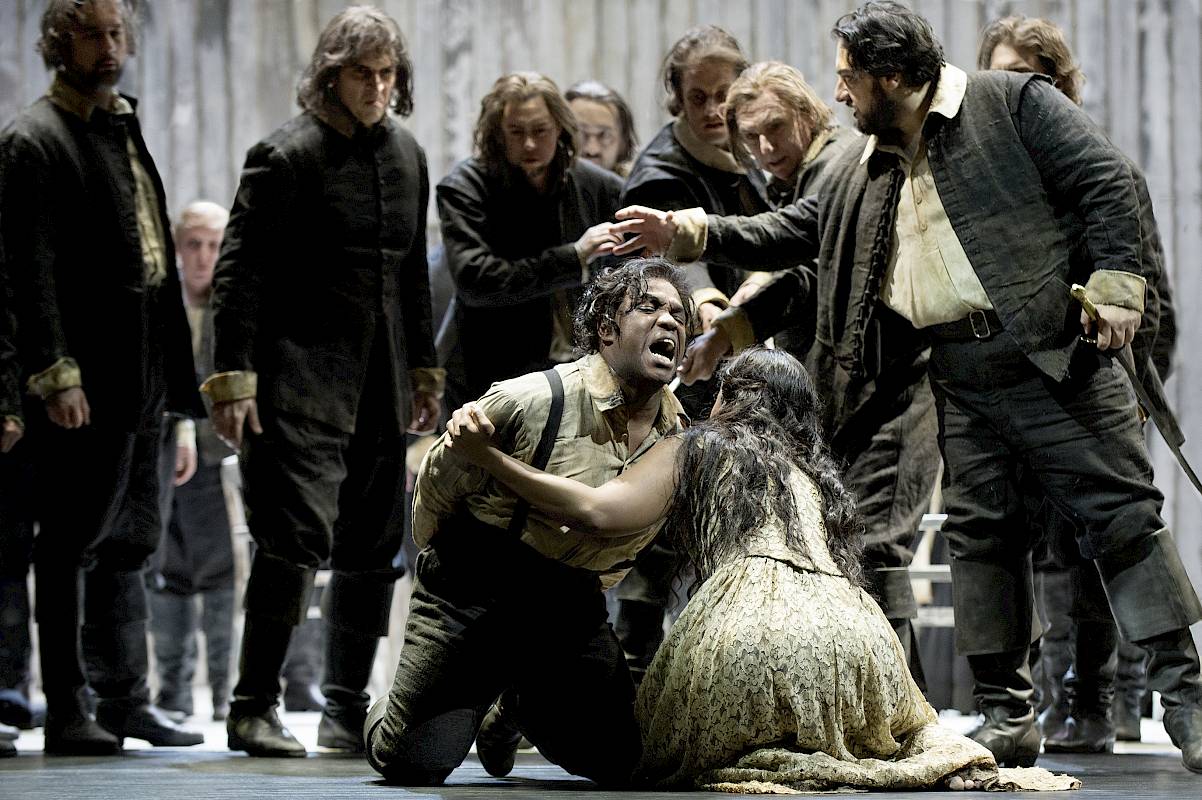
Riccardo and his soldiers discover Arturo and take him prisoner. The soldiers demand that he be executed forthwith; Giorgio and the women, on the other hand, beg that Arturo be pardoned. A fanfare is heard, heralding the news that the royalists have suffered a devastating defeat. A general amnesty has been declared for all prisoners. The Puritans celebrate their victory and England’s liberty. An ecstatic Elvira declares that she will love Arturo for all eternity.