

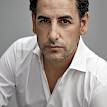
Juan Diego Flórez is considered one of the leading tenors of our time. Born in Lima in 1973, he devoted himself early on to singing as well as to Peruvian folk and pop music. At the age of 17, he began his studies at the Conservatorio Nacional de Música in Peru and three years later received a scholarship to study singing at the Curtis Institute of Music in Philadelphia. In 1996, he made his debut at the Rossini Opera Festival in Pesaro as Corradino in "Matilde di Shabran", followed by his debut at Teatro alla Scala in Milan as Chevalier Danois in Gluck’s "Armide" under Riccardo Muti. Since then, he has been a regular guest at international opera houses and renowned festivals such as the Teatro Real in Madrid, the Opéra Garnier in Paris, the Royal Opera in London, the Vienna State Opera, the Sydney Opera House, the Los Angeles Opera, the Bavarian State Opera in Munich, the Deutsche Oper Berlin, the Metropolitan Opera in New York, and the Salzburg Festival. He has released numerous solo albums and opera recordings on CD and DVD, including the recording "Rossini Arias", which was awarded an ECHO Klassik prize. Among his many honours are the "Gran Cruz de la Orden del Sol", the highest distinction of the Peruvian state, his appointment as an Austrian Kammersänger, and in 2018 the Opus Klassik award as "Singer of the Year". He is also the founder of the project "Sinfonía por el Perú". In recognition of his social commitment, he was appointed UNESCO Goodwill Ambassador in 2012 and received the Crystal Award from the World Economic Forum in 2014. At the Zurich Opera House, Juan Diego Flórez has already appeared in song recitals and concerts as well as, among other roles, Werther.
21. June 2016
Vincenzo Scalera, Klavier
Henri Duparc (1848-1933)
Chanson triste
Phidylé
L’invitation au voyage
Le Manoir de Rosemonde
Wolfgang Amadeus Mozart (1756-1791)
«Misero o sogno o son desto», Arie für Tenor und Orchester, KV 431
«Dies Bildnis ist bezaubernd schön», aus Die Zauberflöte
«D’ogni colpa», aus La betulia liberata
Break
Ruggero Leoncavallo (1858-1919)
Aprile
Vieni amor mio
Mattinata
Francesco Paolo Tosti (1846-1916)
L’alba separa
Marecchiare
Gioachino Rossini (1792-1868)
Bolero
«Cessa di più resistere», aus
Il barbiere di Siviglia
Cast
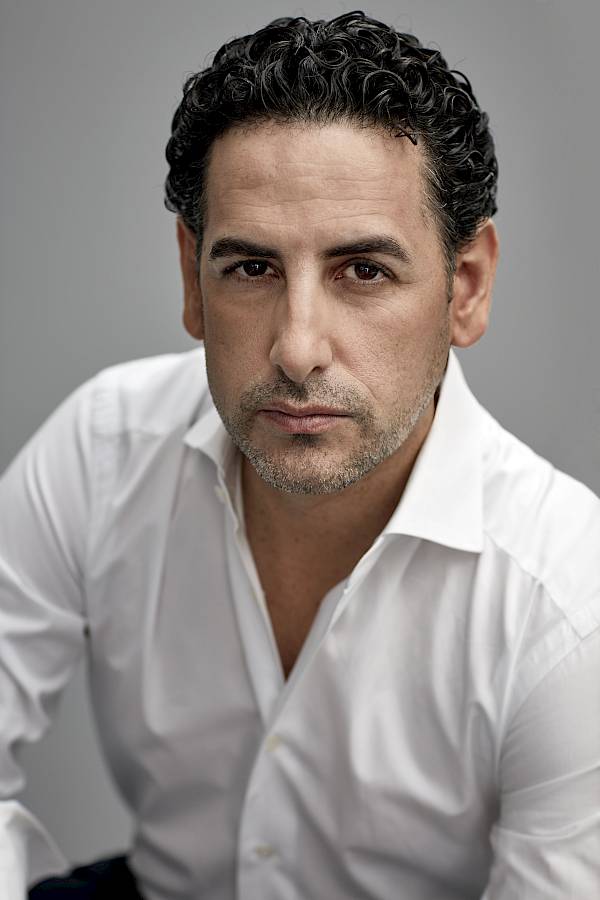
Juan Diego Flórez
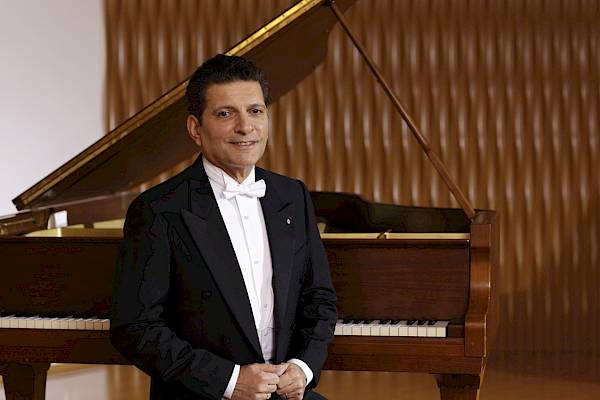
Vincenzo Scalera
Vincenzo Scalera was born in New Jersey, USA, and began playing the piano at the age of five. He received his training at the Manhattan School of Music and worked as a musical assistant at the New Jersey State Opera. In Italy, he continued his studies and in 1980 was engaged as répétiteur and pianist at Teatro alla Scala in Milan, where he assisted conductors such as Claudio Abbado, Riccardo Chailly, Gianandrea Gavazzeni, and Carlos Kleiber. Vincenzo Scalera has appeared at major festivals including those in Edinburgh, Martina Franca, Jerusalem, and Istanbul, as well as at Les Chorégies d’Orange, the Carinthian Summer, the Salzburg Festival, and the Rossini Opera Festival in Pesaro. He has accompanied singers such as Carlo Bergonzi, Andrea Bocelli, Montserrat Caballé, José Carreras, Juan Diego Flórez, Leyla Gencer, Vittorio Grigolo, Katia Ricciarelli, Renata Scotto, Nadine Sierra, and Lucia Valentini Terrani. In 2021, he appeared with Sondra Radvanovsky and Piotr Beczała in a live-streamed concert at the Metropolitan Opera in New York. His discography includes recordings with Sumi Jo ("La Promessa"), Renata Scotto ("Complete Songs of Verdi"), Carlo Bergonzi ("Canzone: The Art of Bel Canto" and "Carlo Bergonzi in Concert"), José Carreras ("Comeback Concerts"), as well as the recording of a recital with Anita Rachvelishvili and the tribute "A te, Puccini" with Angela Gheorghiu. As a harpsichordist, Vincenzo Scalera can be heard on the soundtrack of the film adaptation of "La Cenerentola" as well as in "Il viaggio a Reims", both under Claudio Abbado. He is a Steinway Artist and teaches at the Accademia d’Arti e Mestieri dello Spettacolo of La Scala in Milan.