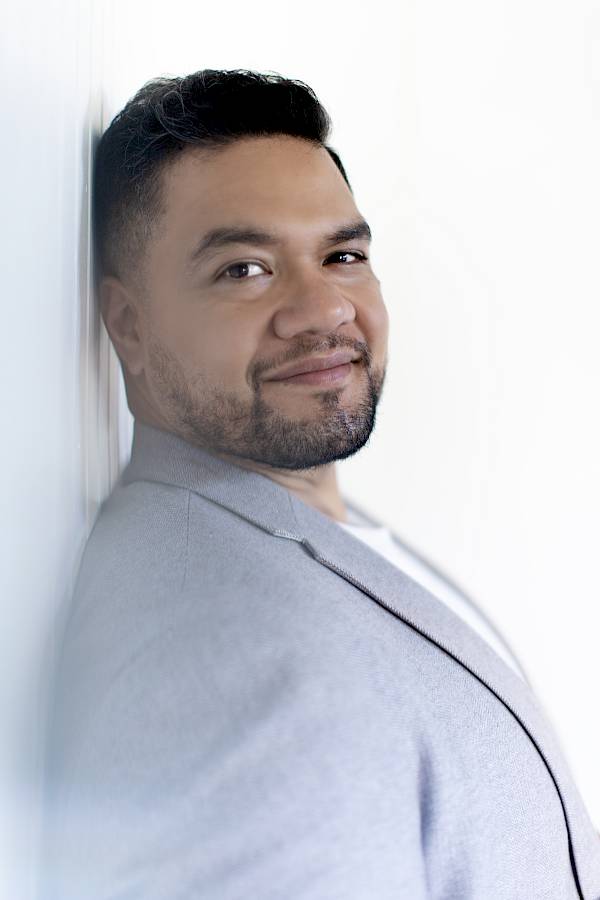
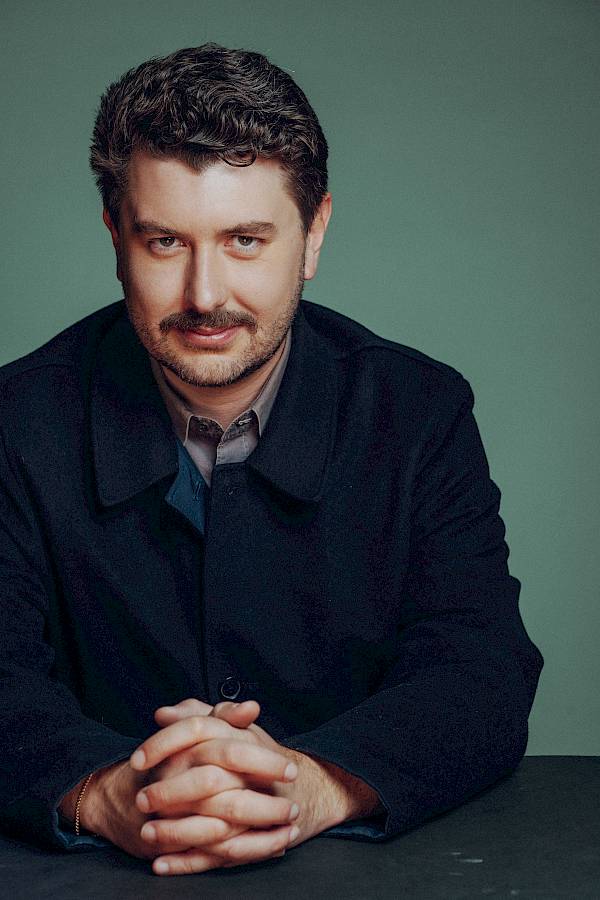
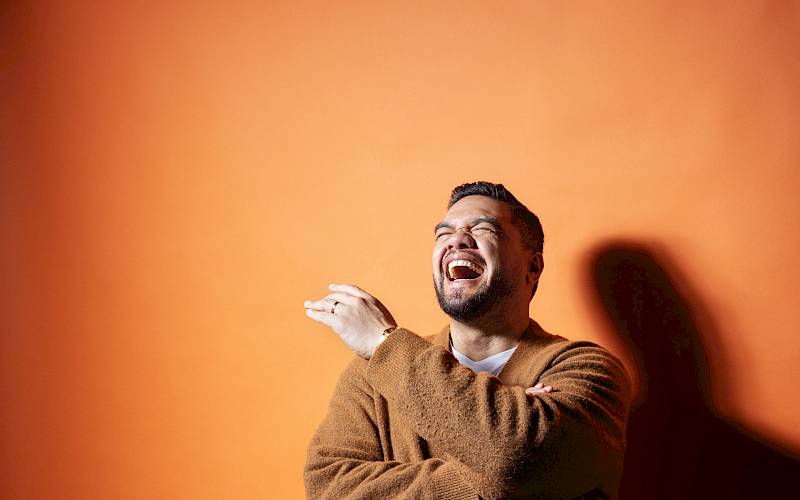
Tenor Pene Pati is currently enjoying a major international career. As a child, he moved from Samoa to New Zealand. He discovered singing through the school choir, which was a requirement for joining the rugby team. Now Pene Pati appears for the first time at the Zurich Opera House, where he can be seen as Mozart’s ruler Tito. Volker Hagedorn spoke with the personable singer.
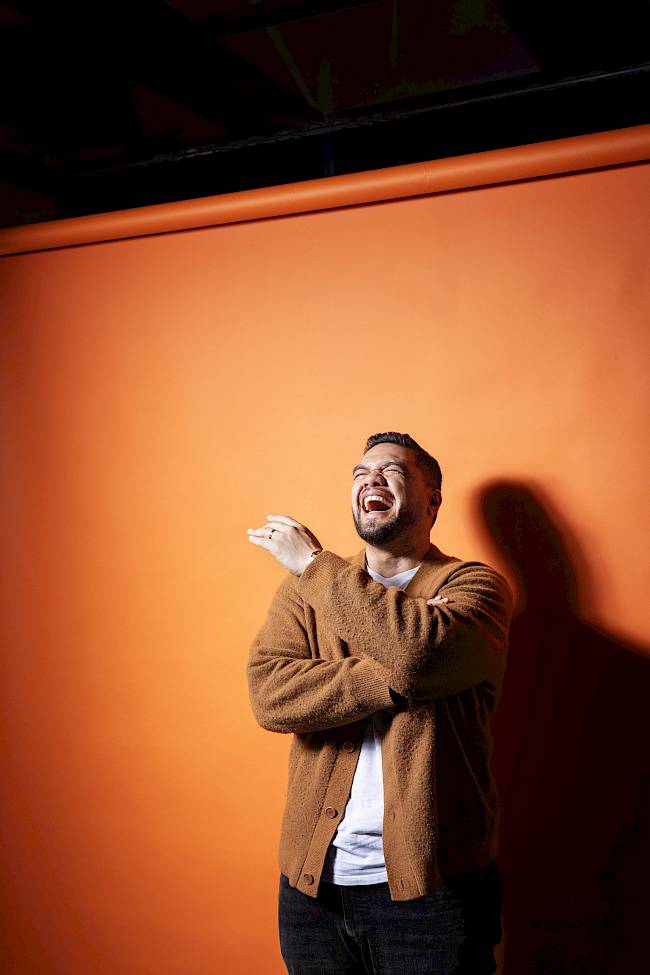
Some conversations are so good that at some point you can even ask crazy questions. And that’s exactly what I do, barely half an hour after a cheerful 38-year-old has placed his smartphone on the table for a Zoom meeting in an Airbnb flat somewhere in Zurich – a broad-shouldered, bearded chap in a white T-shirt, with short black hair and a broad smile: Pene Pati, the title role in the new production of La clemenza di Tito. His tenor career really took off nine years ago when he sang the Duke in Verdi’s Rigoletto at the San Francisco Opera, which is why I venture to ask the “funny question”: What does “La donna è mobile” sound like in Samoan?
Pene Pati reacts with a mixture of fits of laughter and a moment’s thought, gazes pensively at the ceiling and then says: “Le fafine e fa’apea… That’s what I would say. Le fafine e fa’apea.” Then he leans back in his chair, arms crossed over his chest, and laughs uncontrollably once more. “I’ve never thought of that in Samoan. That´s kind of funny. Yes, the sounds of the vowels in Samoan and Italian are exactly the same, so it came so naturally for me to sing in Italian.” Of course, that is not the only reason why Pene Pati has been conquering the international opera world for just under a decade, as the the first person ever of those born in the tiny Pacific island nation of Samoa.
Isn´t it embarrassing for him that every journalist interviews him not just as a tenor, but also as a tenor from Samoa? “No, actually, I think this is a good way to get an understanding of what´s beyond Europe and America. Huh, why would a Samoan take on opera? I ask myself the same question all the time. I find it rather opening.” It also plays a part, he says, “that Polynesian singing, be it Samoan or Maori, it`s very open, full-voiced singing, you have to fully use the body. I think that's also why operatic singing comes quite naturally to me, even if the Polynesian harmonies are very simple and we don’t use any string instruments at all. And in our culture, too, it’s all about storytelling.”
First and foremost, Pene – still a child at the time – moved from his hometown of Apia, on the eastern of Samoa’s two main islands, to New Zealand because his father had taken over the management of a retirement home in Auckland. And, much to the delight of the residents, he encouraged his children to sing for them every Friday. “My younger brother, me and our two older sisters – we did that for about fifteen years. Until I was nineteen.” By that time, Pene’s voice had already been noticed in the school choir, which he only joined, however, because it was a condition for playing in the rugby team. “The choir director discovered my voice. And at the age of 20 or 21, I thought, perhaps I should try and do something with this voice.”
Around that time, he saw his first opera on stage – the newly founded New Zealand Opera was performing La bohème in Auckland. „I don't remember any of the singers. I don't remember the music at the time. Now I know it, of course. I don't remember the stage setting. All I remember was how I felt when I left the theatre. I was so moved. I was in tears, which I didn't understand because I was a rugby player. I thought I was a strong man that doesn't have any tears. And then I said to myself: I want to do this. I want to do this.”
Which isn’t so easy when there are no proper singing teachers nearby. Pene initially studied computer science at the University of Auckland, sang in the university choir and came across his first role model – Luciano Pavarotti. On YouTube. “It was right at the beginnings of YouTube, mid 2000s. I started listening and zooming in on Pavarotti’s face: what is he doing? How is he going through the tessitura and the passaggio without making it look like it was difficult?” Pene uses his hand to model the the curve of a vocal line. “So I started to imitate his technique for a while. And I was truly moved by a lot of his performances even though he wasn’t the best of actors. I don't think he had a choice with the size of what he was. It was the voice that was emotional instead of his body. I’m a bit like that…”
When Pene was 23, he took part in a singing competition in New Zealand, won it, went on to another competition in Australia, came first again and met Kiri te Kanawa, “the role model for any New Zealand singer”. She recommended him to Dennis O’Neill at the National Opera Academy in Cardiff, Wales. “I had the money for the trip thanks to the competition.” To fund his further studies, he formed a crossover trio called “Sol3Mio” with his brother Amitai and a cousin – both of whom were also on their way to becoming professional opera singers – which proved immensely successful. “Our first album became the highest selling album in New Zealand ever in history!”
So it really isn’t just down to the similarity of the vowels in Samoan and Italian that a highly gifted individual from – given a European perspective! – the edge of the universe made his way to the stages at its very centre. There is a great deal of determination and fearlessness involved, as Pene’s agent also experienced. Shirley Thomson had heard him sing at the academy in Cardiff and hadn’t immediately offered him a contract with the Harrison Parrott agency, but had simply given him some advice. “And then two years later, I turned up to her office unexpectedly and said, I'm ready to be signed now. And she was so shocked. No one does it like this.“ He laughs.
Shirley still manages him today. She had also advised him to take up a scholarship in San Francisco – which led to his brilliant and momentous debut in Rigoletto. He lived there for seven years with his wife, the soprano Amina Edris. They have since moved to Paris. San Francisco, he says, was a vibrant city – until the pandemic. But the city has not yet recovered from the crisis caused by the lockdowns. And there is more for him to do in Europe. In Paris, a recent production moved him as deeply as rarely before. “I sang Werther at the Opéra-Comique; it was so moving and real. Ted Huffman´s production is so sincere. It wasn't like you were watching a show. It felt like you were watching someone's life actually play out in front of you, intimate. For a month afterwards, I couldn't shake it from my mind and found it difficult to get into my next character.“
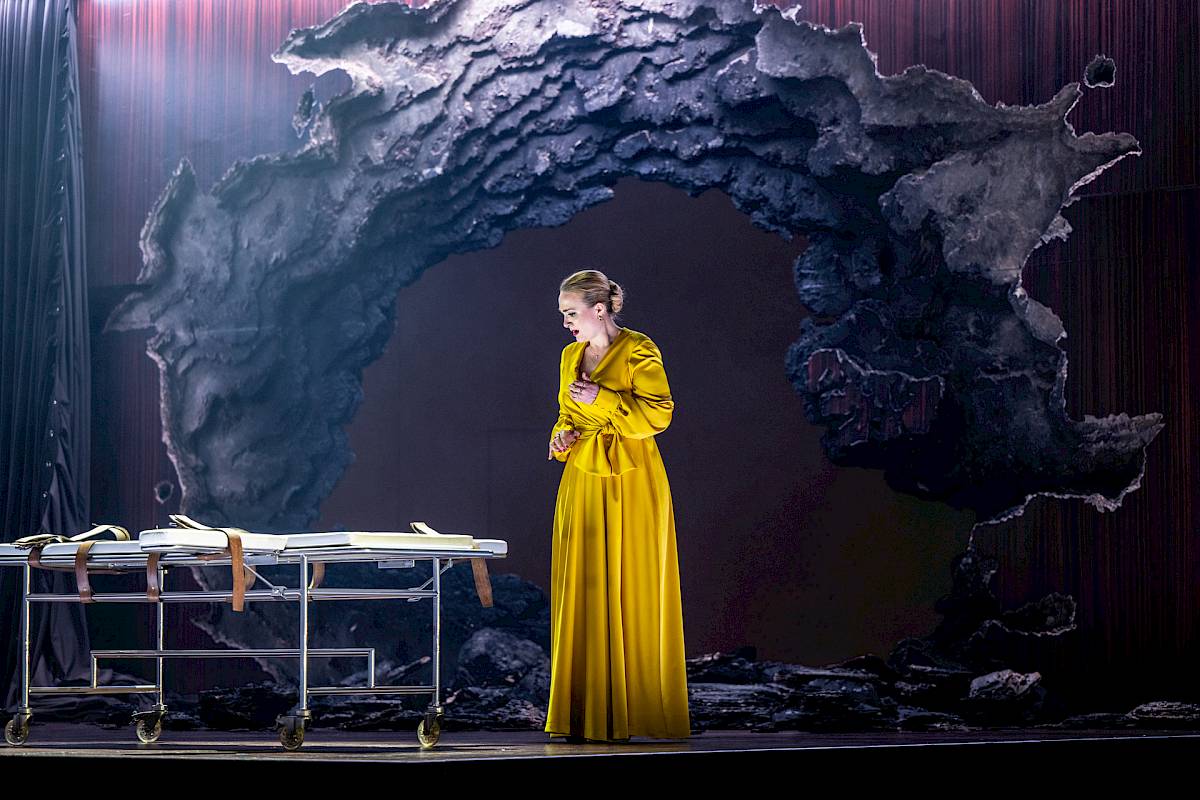
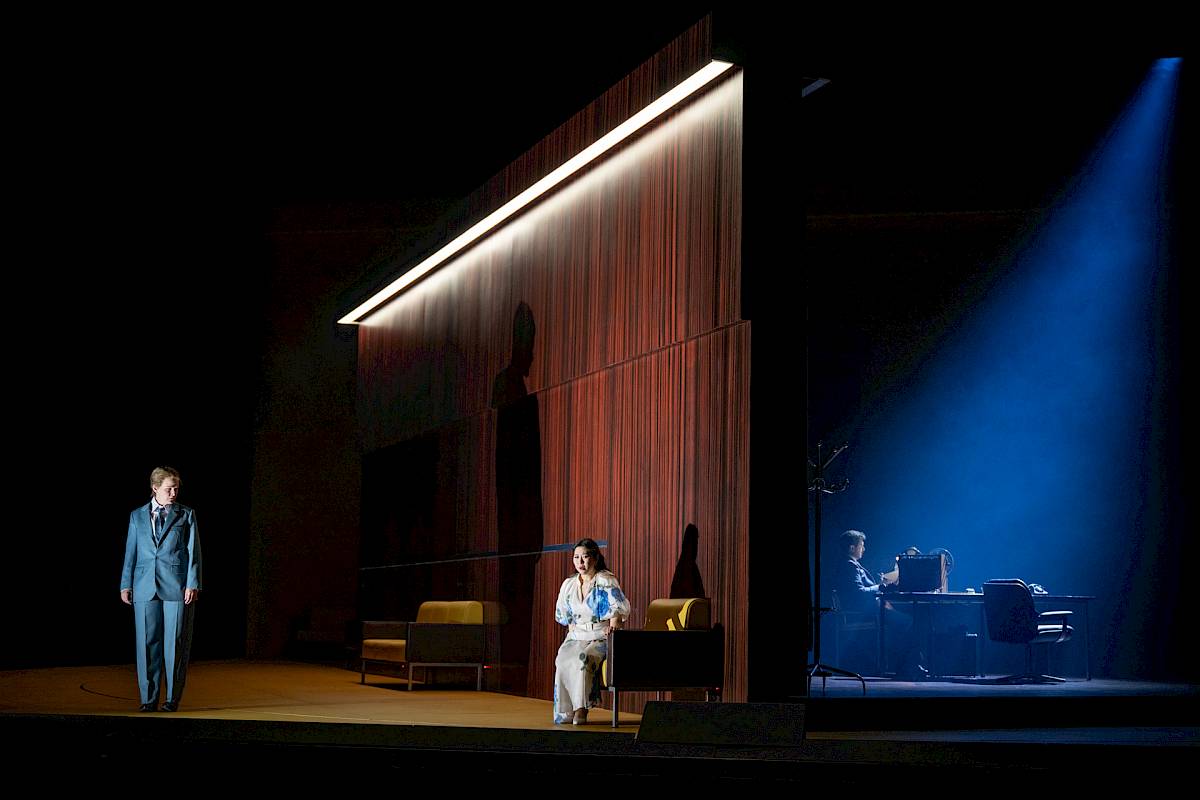
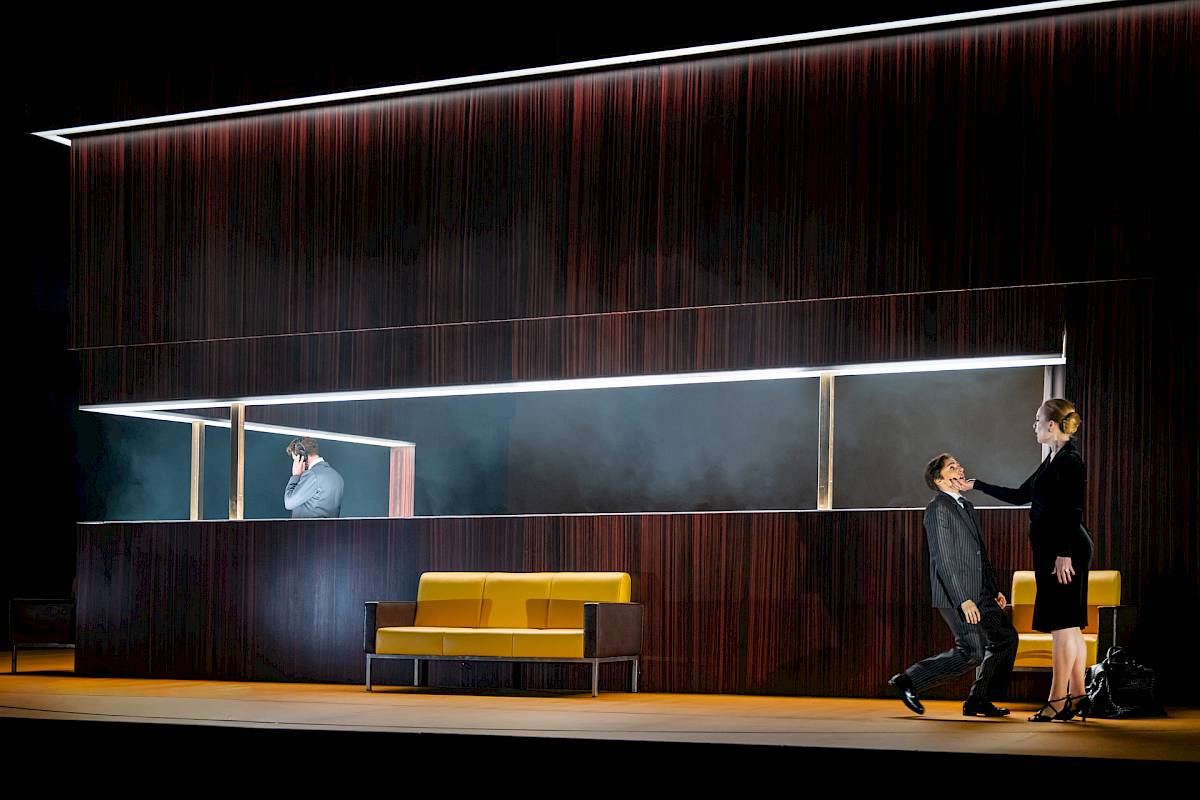
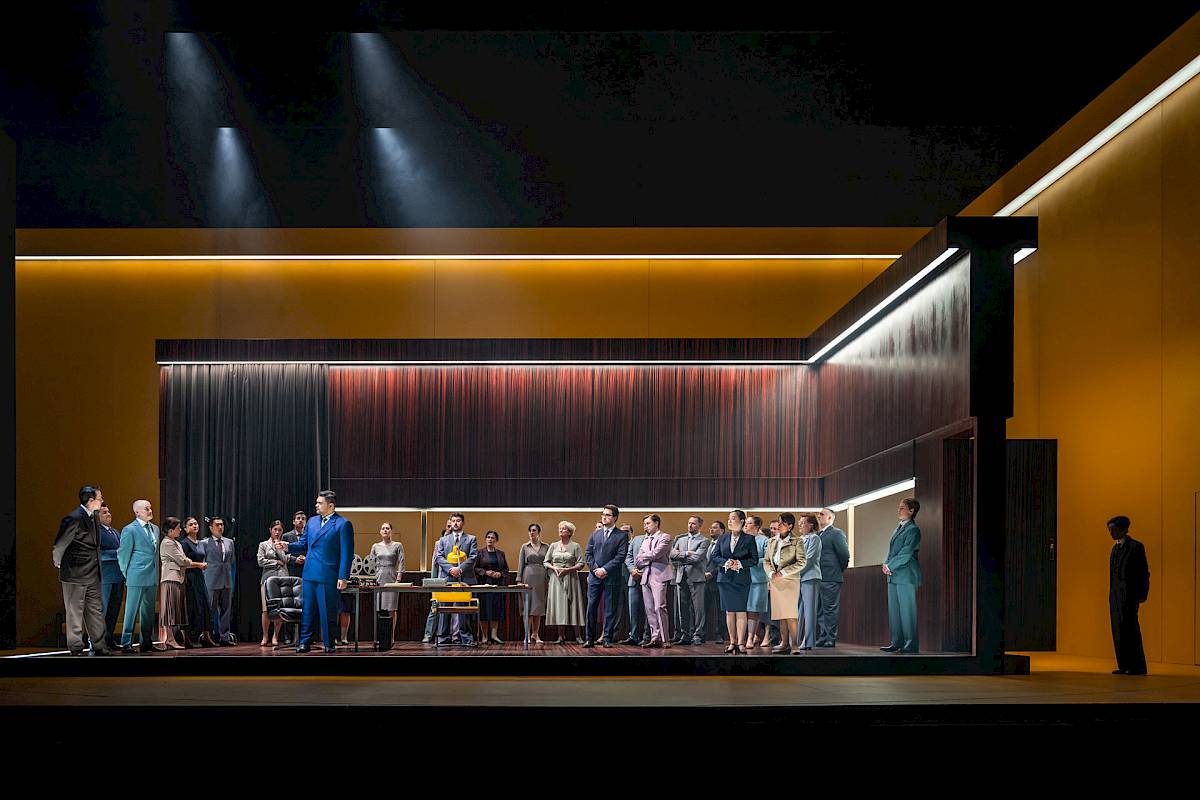
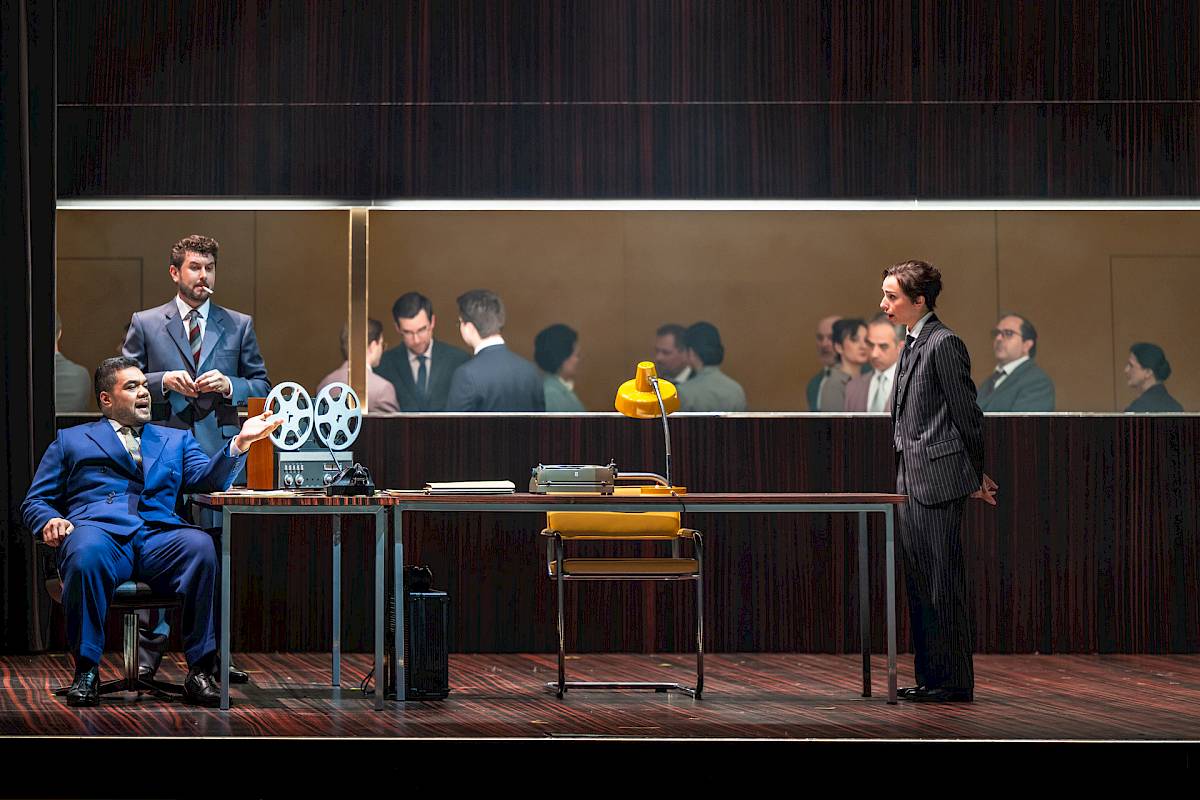
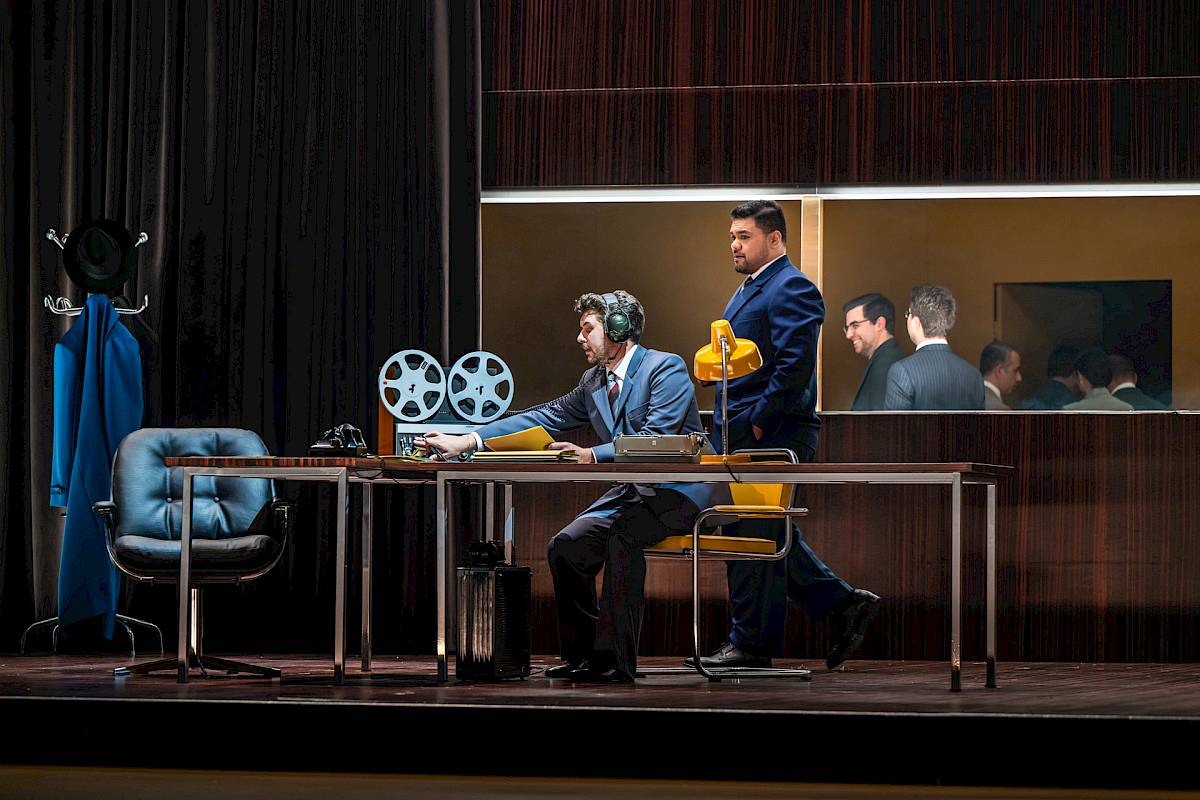
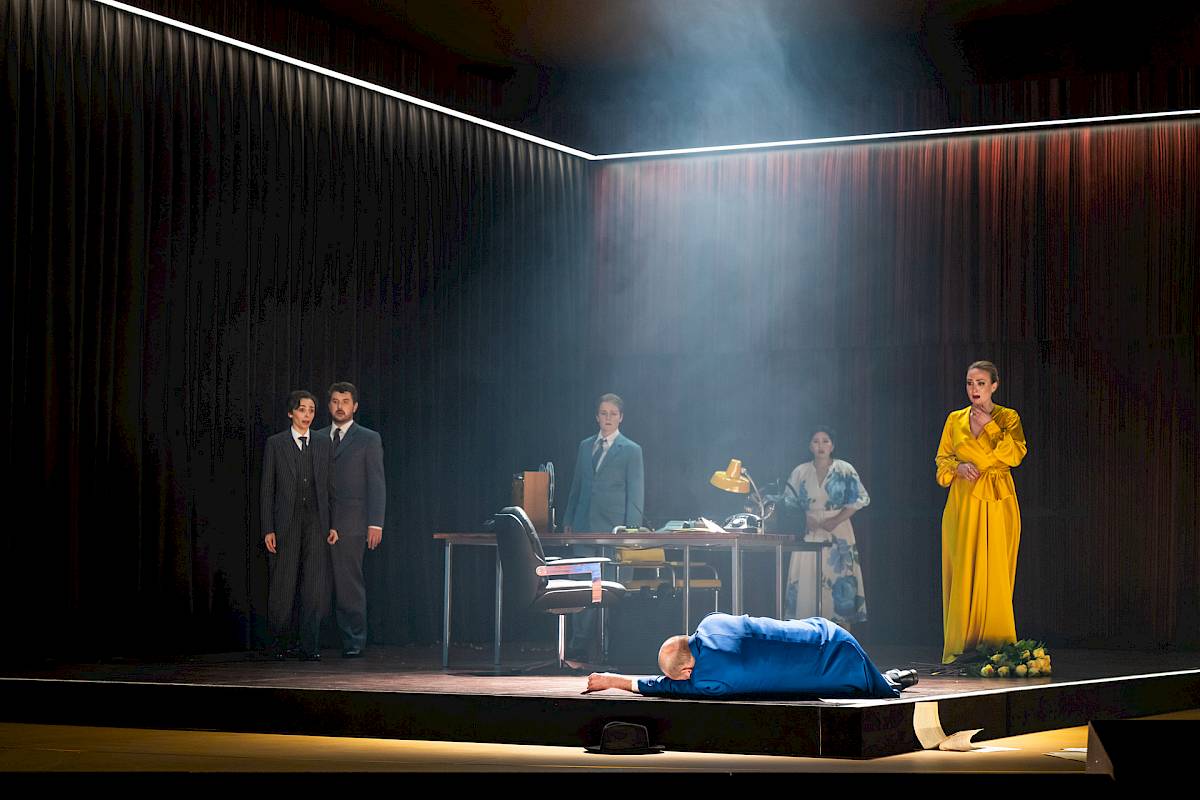
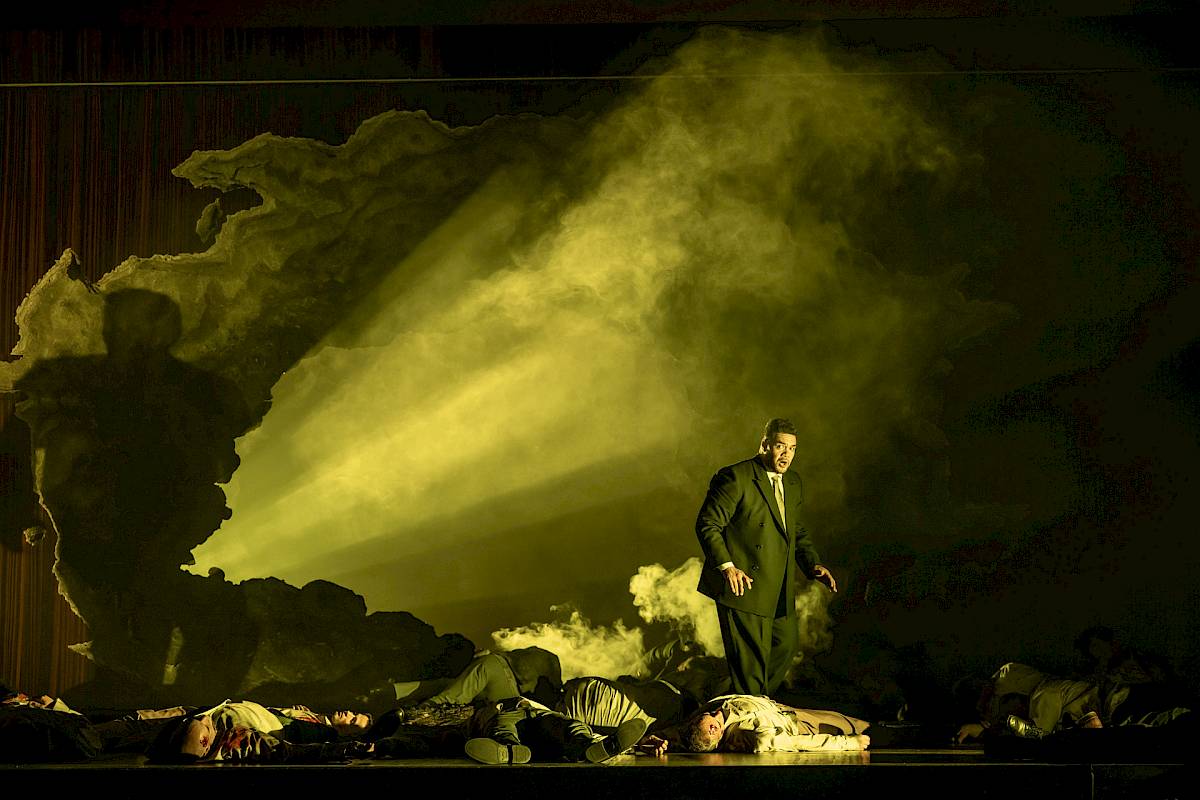
And how is he getting on in Zurich with Mozart’s Titus? At first glance, this emperor isn’t the most exciting of characters – a paragon of goodwill, patience and forbearance towards traitors. “He can be a boring character, but if you really go into his nuances then it can become complex. What I love about Damiano’s concept is that Titus isn’t necessarily a good person, but uses clemency to retain his power. ‘How can I manage this,’ he asks himself, ‘without anybody trying to kill me?’ Even at the top he has to be diplomatic.”
Pene doesn’t approach a role like this with fixed ideas: “I always try to do it at least closely to what the directors want. And always I try to make myself the character instead of making it like La Clemenza di Pene Pati.” And yet there is much of him in Mozart’s Tito, who is far from being a mild-mannered ruler. “I come from a small island that knows nothing of opera. I sing Tito the way I feel it. I can’t say, ‘Yes, my grandad used to listen to this piece on the radio.’ Someone like me views the world of opera differently from people who grew up with it.”
This also becomes clear when I ask him about the latest stir in the opera world: Oscar hopeful Timothée Chalamet, who said in an interview that nobody is interested in ballet and opera anymore. “He’s young, and he’s probably already regretted what he said. I think what lay behind it was his impression that he doesn’t belong, because opera purists want to keep to themselves. I’m challenging that stereotype, because I don’t belong to the opera community either.”
The irony of the whole thing, says Pene, “is that the film industry of which he is part of is probably going to be the first one to be in trouble because of what Artificial Intelligence is doing. You can create an entire movie now with AI without any actors. So he's actually more in trouble than the ballet and the opera. And in moving forward, the ballet and opera is going to become more and more necessary because we want to see something that is done by humans, that is live and certainly not AI. The only way we can find something organic is to see true human emotion on stage. So we could say we’re doing fine, we’re not dying out, we’ve been around for hundreds of years – but we would love more support.”