Anna Karenina

Ballet by Christian Spuck
After the eponymous novel by Leo Tolstoy (1828-1910)
Music by Sergei Rachmaninoff, Witold Lutosławski, Sulkhan Tsintsadze and Josef Bardanashvili

From 15. November 2020 until 12. December 2020

  • Duration :
    2 H. 10 Min. Inkl. Pause after 1st part after approx. 1 H.
  • More information:
    Introduction 45 min before the performance.
    A co-production with Den Norske Opera & Ballett / Nasjonalballetten, Oslo.

Choreography and assistant direction:
Christian Spuck

Christian Spuck

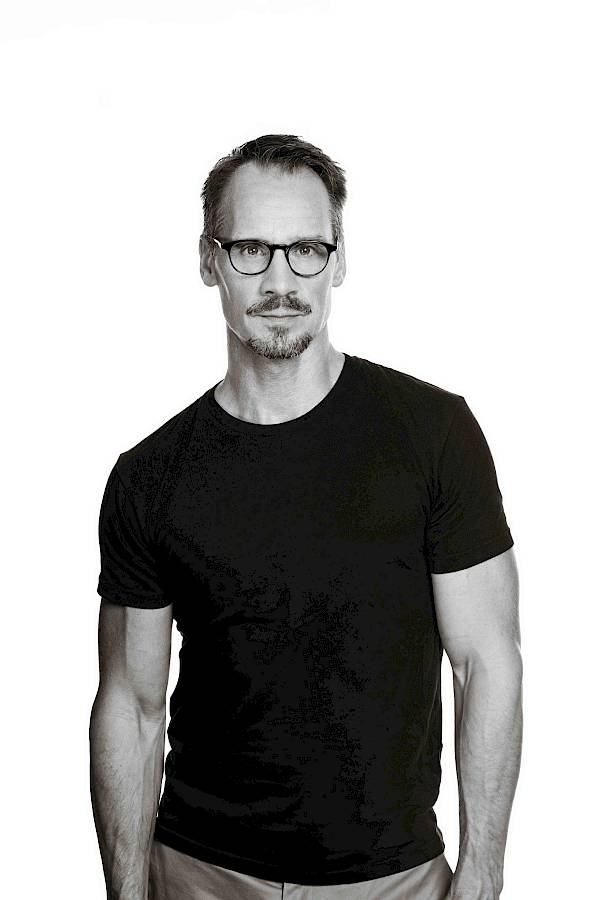
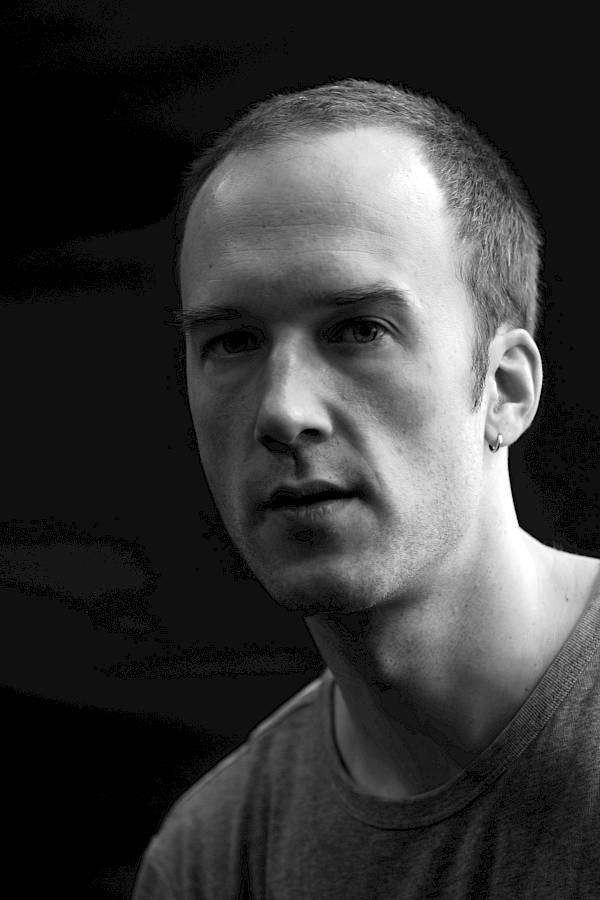
Christian Spuck is from Marburg and was trained at the John Cranko School in Stuttgart. He began his dance career with Jan Lauwers’ Needcompany and Anne Teresa de Keersmaeker’s ensemble "Rosas". In 1995 he joined the Stuttgart Ballet and served as the company’s resident choreographer from 2001 to 2012. In Stuttgart, he created fifteen world premieres, including the narrative ballets "Lulu. Eine Monstretragödie" after Frank Wedekind, "Der Sandmann", and "Das Fräulein von S." after E.T.A. Hoffmann. In addition, Christian Spuck has worked with numerous prominent ballet companies across Europe and the USA. For the Royal Ballet of Flanders, he created "The Return of Ulysses" in 2006, and at the Norwegian National Ballet in Oslo, "Woyzeck" after Georg Büchner was premiered. His ballet "Die Kinder" at Aalto Ballett Essen was nominated for the Prix Benois de la Danse; the ballet "Leonce und Lena", also premiered in Essen and based on Georg Büchner, was taken up by the Grands Ballets Canadiens de Montréal, Charlotte Ballet, USA, the Czech National Ballet in Prague, and the Stuttgart Ballet. The premiere of "Poppea//Poppea" for Gauthier Dance at Theaterhaus Stuttgart in 2010 was selected by Dance Europe magazine as one of the ten most successful dance productions worldwide and was awarded the German theater prize Der Faust 2011 as well as the Italian "Danza/Danza Award." Christian Spuck has also directed operas: following Gluck’s "Orphée et Euridice" at the Stuttgart State Opera, he staged Verdi’s "Falstaff" at the Staatstheater Wiesbaden, as well as Berlioz’ "La damnation de Faust" and Wagner’s "The Flying Dutchman" at the Deutsche Oper Berlin. From 2012 to 2023, Christian Spuck was director of the Zürich Ballet. There he created choreographies for "Romeo and Juliet", "Leonce und Lena", "Woyzeck", "Der Sandmann", "Messa da Requiem", "The Nutcracker and the Mouse King", "Sleeping Beauty", and "Monteverdi". The ballet "Anna Karenina", premiered in Zurich in 2014 and based on Leo Tolstoy, was added to the repertoire in Oslo, at the Moscow Stanislavski Theatre, by the Korean National Ballet, and the Bavarian State Ballet. In 2018, Spuck’s ballet "Winterreise" premiered in Zurich, earning him the Prix Benois de la Danse in 2019. In 2019, the Zürich Ballet staged Helmut Lachenmann’s "Mädchen mit den Schwefelhölzern", recognized as "Production of the Year" and "Company of the Year" by tanz magazine. For the Moscow Bolshoi Theatre, he created the ballet "Orlando" after Virginia Woolf in 2021. His "Messa da Requiem" was not only invited to the Adelaide Festival in Australia but also adopted by Het Nationale Oper & Ballet Amsterdam and the Finnish National Ballet. Since the beginning of the 2023/24 season, Christian Spuck has been the artistic director of the Staatsballett Berlin.

Messa da Requiem20 / 22 / 28 Feb / 1 / 5 / 7 Mar / 6 Apr 2026
Musical Director:
Paul Connelly

Paul Connelly

Paul Connelly debütierte 23-jährig als Dirigent mit Gershwins Porgy and Bess im Rahmen einer Tournee der Houston Grand Opera. 1980 wurde er auf Einladung von Michail Baryshnikov Erster Kapellmeister des American Ballet Theatre und arbeitete dort mit Choreografen wie Jerome Robbins, George Balanchine und Anthony Tudor. Während dieser Zeit di­rigierte er auch Vorstellungen des New York City Ballet sowie Gala-Veranstaltungen wie Nureyev and Friends und Baryshnikov and Co., aus­ser­dem war er Gastdirigent beim National Ballet of Canada. Während der Zeit beim ABT war er an zahlreichen Film- und Fernsehprojekten beteiligt (u.a. Don Quixote). Zu seinen Opernaktivitäten in dieser Zeit gehören Brittens Death in Venice, Debussys Pelléas et Mélisande sowie Purcells Dido and Aeneas. Nach der musikalischen Leitung einer Ballettgala an der Wiener Staatsoper wurde ihm dort Rossinis Barbiere di Siviglia anvertraut, ein Erfolg, der den Anfang einer intensiven Dirigententätigkeit in Europa markiert. Einladungen führten ihn zum Staatsballett Berlin, das Ballett der Opéra Paris (Verfilmungen von Neumeiers Sylvia, Balanchines Jewels, Giselle, Roland-Petit-Abend), zum Orchestre Colonne in Paris, an das Opernhaus Nizza, ans Teatro di San Carlo in Neapel, an die Oper Oslo, zum Royal Ballet in London und in Birmingham, zum Het Nationale Ballet in Amsterdam, zum Tokyo Ballet, zum Semper­oper Ballett Dresden und an die Mailänder Scala, wo er auf Einladung von Riccardo Muti die Opern Il turco in Italia, Die Zauberflöte und Don Giovanni dirigierte. An der Scala leitete er auch eine Reihe von Bal­lett­aufführungen, unter anderem Giselle, die auch verfilmt wurde. Auf DVD erschienen Mauro Bigonzettis Caravag­gio mit dem Staatsballett Berlin und Nureyews Nussknacker mit dem Ballett der Wiener Staatsoper. Unlängst dirigierte er Kenneth MacMillans Mayerling an der Staatsoper Budapest. Geplant sind The Cellist von Cathy Marston beim Ballett Zürich sowie eine Neuproduktion von Coppélia in der Choreografie von Alexei Ratmansky an der Mailänder Scala.

Set Design:
Christian Spuck,

Christian Spuck

Christian Spuck is from Marburg and was trained at the John Cranko School in Stuttgart. He began his dance career with Jan Lauwers’ Needcompany and Anne Teresa de Keersmaeker’s ensemble "Rosas". In 1995 he joined the Stuttgart Ballet and served as the company’s resident choreographer from 2001 to 2012. In Stuttgart, he created fifteen world premieres, including the narrative ballets "Lulu. Eine Monstretragödie" after Frank Wedekind, "Der Sandmann", and "Das Fräulein von S." after E.T.A. Hoffmann. In addition, Christian Spuck has worked with numerous prominent ballet companies across Europe and the USA. For the Royal Ballet of Flanders, he created "The Return of Ulysses" in 2006, and at the Norwegian National Ballet in Oslo, "Woyzeck" after Georg Büchner was premiered. His ballet "Die Kinder" at Aalto Ballett Essen was nominated for the Prix Benois de la Danse; the ballet "Leonce und Lena", also premiered in Essen and based on Georg Büchner, was taken up by the Grands Ballets Canadiens de Montréal, Charlotte Ballet, USA, the Czech National Ballet in Prague, and the Stuttgart Ballet. The premiere of "Poppea//Poppea" for Gauthier Dance at Theaterhaus Stuttgart in 2010 was selected by Dance Europe magazine as one of the ten most successful dance productions worldwide and was awarded the German theater prize Der Faust 2011 as well as the Italian "Danza/Danza Award." Christian Spuck has also directed operas: following Gluck’s "Orphée et Euridice" at the Stuttgart State Opera, he staged Verdi’s "Falstaff" at the Staatstheater Wiesbaden, as well as Berlioz’ "La damnation de Faust" and Wagner’s "The Flying Dutchman" at the Deutsche Oper Berlin. From 2012 to 2023, Christian Spuck was director of the Zürich Ballet. There he created choreographies for "Romeo and Juliet", "Leonce und Lena", "Woyzeck", "Der Sandmann", "Messa da Requiem", "The Nutcracker and the Mouse King", "Sleeping Beauty", and "Monteverdi". The ballet "Anna Karenina", premiered in Zurich in 2014 and based on Leo Tolstoy, was added to the repertoire in Oslo, at the Moscow Stanislavski Theatre, by the Korean National Ballet, and the Bavarian State Ballet. In 2018, Spuck’s ballet "Winterreise" premiered in Zurich, earning him the Prix Benois de la Danse in 2019. In 2019, the Zürich Ballet staged Helmut Lachenmann’s "Mädchen mit den Schwefelhölzern", recognized as "Production of the Year" and "Company of the Year" by tanz magazine. For the Moscow Bolshoi Theatre, he created the ballet "Orlando" after Virginia Woolf in 2021. His "Messa da Requiem" was not only invited to the Adelaide Festival in Australia but also adopted by Het Nationale Oper & Ballet Amsterdam and the Finnish National Ballet. Since the beginning of the 2023/24 season, Christian Spuck has been the artistic director of the Staatsballett Berlin.

Messa da Requiem20 / 22 / 28 Feb / 1 / 5 / 7 Mar / 6 Apr 2026
Jörg Zielinski

Jörg Zielinski

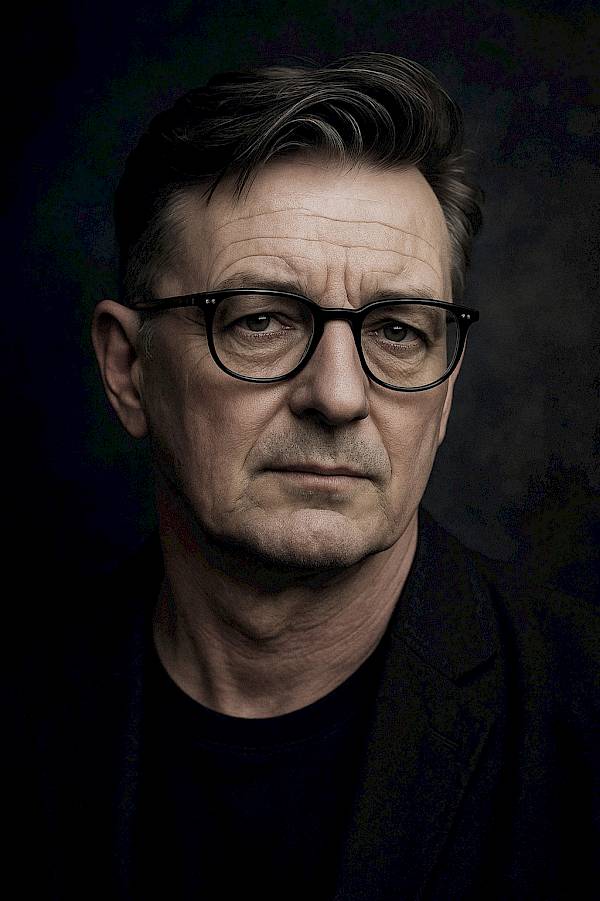
Jörg Zielinski comes from Berlin and has been living in Switzerland since 1991. He completed his training and studies in Berlin, Basel, and Zurich. His production management at Theater Basel and his senior role at "The Really Useful Group" gave him experience with international theater productions. He worked at Expo.02 in Yverdon-les-Bains as well as on the spatial installation Hotel Offen in Baden. He gained design experience at Vitra. As head of the props department at the Zurich Opera House, he collaborated with the Shanghai Opera House. This collaboration led to contacts with the National Academy of Chinese Theatre Arts in Beijing and the Zurich University of the Arts, where he was invited to give lectures. As part of a master’s program, Jörg Zielinski gives lectures at the Bern University of the Arts. He designs and realizes stage sets and scenic installations. Designs have been created for the Zurich Opera House, the Zurich Chamber Orchestra, the London studio "United Visual Artists," and various independent projects. His photographs have been published and exhibited internationally.

Oiseaux Rebelles12 / 18 / 23 / 25 / 31 Oct / 1 / 9 / 13 Nov / 2 / 5 / 6 / 9 Dec 2025 / 11 / 13 / 16 / 18 / 27 Sept 2026 The Butterfly Effect4 / 13 / 23 Apr 2026 Art Matters19 / 20 / 23 / 25 Feb / 29 Mar / 4 / 11 Apr 2027
Costumes:
Emma Ryott

Emma Ryott

Emma Ryott is from England and works internationally as a costume and set designer. Since 2003, she has collaborated with Christian Spuck in ballet and opera. Their joint ballet projects include "The Little Match Girl", "Winterreise", "Messa da Requiem", "Anna Karenina", and "Romeo and Juliet" in Zurich; "Lulu. Eine Monstretragödie" and "Das Fräulein von S." in Stuttgart; "Woyzeck" in Oslo and Zurich; "Leonce und Lena" in Montreal, Stuttgart, Zurich, and Prague; "Der Sandmann" in Stuttgart and Zurich; and "The Return of Ulysses" in Antwerp. In opera, they have worked on "The Flying Dutchman" and "La damnation de Faust" at the Deutsche Oper Berlin, "Falstaff" in Wiesbaden, and "Orfeo ed Euridice" in Stuttgart. Other opera productions include "Mathis der Maler" at the Theater an der Wien, "Manon Lescaut" at the English National Opera, "Otello" at the Salzburg Festival, "La damnation de Faust" and "The Great Gatsby" at the Semperoper Dresden, "Marco Polo" at the Guangzhou Opera, "Das Rheingold" and "Die Walküre" at the Longborough Festival, "La bohème" at the Copenhagen Opera Festival, "Roméo et Juliette" in Malmö and at the Savonlinna Opera Festival, and "Orfeo" at the Opéra du Rhin. Their theater work has taken them from the Royal Shakespeare Company through Toronto and the National Theatre London to London’s West End and the New York Broadway. For the globally broadcast 2020 New Year’s Concert of the Vienna Philharmonic, Emma Ryott designed the ballet costumes. Additional ballet projects include "Cinderella" at the Finnish National Ballet, as well as Christian Spuck’s "Orlando" and Yuri Possokhov’s "The Seagull" at the Moscow Bolshoi Theatre.

Messa da Requiem20 / 22 / 28 Feb / 1 / 5 / 7 Mar / 6 Apr 2026
Lighting Design:
Martin Gebhardt

Martin Gebhardt

Martin Gebhardt was lighting designer and Head of Lighting for John Neumeier’s Hamburg Ballet. From 2002 onward he collaborated with Heinz Spoerli and the Ballett Zürich. Ballet productions of both companies took him to renowned theatres across Europe, Asia, and the Americas. At Zurich Opera House he created the lighting design for productions by Jürgen Flimm, David Alden, Jan Philipp Gloger, Grischa Asagaroff, Matthias Hartmann, David Pountney, Moshe Leiser/Patrice Caurier, Damiano Michieletto, and Achim Freyer. At the Salzburg Festival he designed the lighting for "La bohème" and for a new version of Spoerli’s "Der Tod und das Mädchen". Since the 2012/13 season Martin Gebhardt has been Head of Lighting at Zurich Opera House. He maintains a close collaboration with choreographer Christian Spuck (including "Winterreise", "Nussknacker und Mausekönig", "Messa da Requiem", "Anna Karenina", "Woyzeck", "Der Sandmann", "Leonce und Lena", "Das Mädchen mit den Schwefelhölzern"). He has also worked as lighting designer for choreographers Edward Clug (including "Strings", "Le Sacre du printemps" and "Faust" in Zurich), Alexei Ratmansky, Wayne McGregor, Marco Goecke, and Douglas Lee. He collaborated with Christoph Marthaler and Anna Viebrock on Handel’s "Sale" and Rossini’s "Il viaggio a Reims" in Zurich as well as on "Lulu" at the Hamburg State Opera, and with Jossi Wieler and Sergio Morabito at the Grand Théâtre de Genève for "Les Huguenots". In 2023 he designed the lighting for Spuck’s ballet "Bovary" at the Staatsballett Berlin and in 2024 for Rossini’s "Tancredi" at the Bregenz Festival. He was also the lighting designer for Cathy Marston’s "Atonement" at Zurich Opera House.

Tannhäuser21 / 24 / 27 Jun / 2 / 5 / 8 / 11 Jul / 26 Sept / 4 / 9 / 13 Oct 2026 Le nozze di Figaro24 / 29 Jan / 1 / 5 / 7 / 10 / 14 Feb 2026 / 2 / 6 / 8 / 15 / 19 May 2027 Oiseaux Rebelles12 / 18 / 23 / 25 / 31 Oct / 1 / 9 / 13 Nov / 2 / 5 / 6 / 9 Dec 2025 / 11 / 13 / 16 / 18 / 27 Sept 2026 Die Fledermaus7 / 10 / 12 / 14 / 18 / 26 / 28 / 31 Dec 2025 / 2 / 4 / 6 / 10 Jan / 29 Sept / 8 / 17 / 23 / 25 Oct 2026 Clara13 / 14 / 19 / 20 / 26 / 28 Dec 2025 / 11 / 12 / 17 / 19 / 24 Apr 2026 Timeframed17 / 18 / 22 / 25 / 30 Jan / 1 / 4 / 6 / 8 / 11 / 12 Feb 2026 / 27 Feb / 6 / 24 Mar / 1 / 3 / 9 / 18 / 22 / 28 / 30 Apr / 1 May 2027 Scylla et Glaucus27 / 29 / 31 Mar / 2 / 6 / 30 Apr / 2 May 2026 The Butterfly Effect4 / 13 / 23 Apr 2026 Messa da Requiem20 / 22 / 28 Feb / 1 / 5 / 7 Mar / 6 Apr 2026 Romeo und Julia23 / 29 / 30 May / 4 / 6 / 7 / 10 / 12 / 14 / 23 / 26 Jun / 20 / 27 / 29 Nov / 6 / 13 / 19 / 26 / 27 Dec 2026 Nachtträume20 / 25 / 28 / 30 Jun / 4 Jul 2026 Ein Sommernachtstraum26 Sept / 11 / 16 / 18 / 25 / 28 / 29 / 31 Oct / 12 / 13 / 14 Nov 2026 / 19 / 22 / 29 Jun / 3 Jul 2027 Slow Rush16 / 17 / 22 / 28 / 30 Jan / 5 / 10 / 13 / 17 / 21 Feb / 29 / 30 May / 3 Jun 2027 Doctor Atomic7 / 11 / 14 / 20 / 24 / 28 Feb 2027 Samson et Dalila13 / 17 / 20 / 24 / 27 / 30 Jun / 2 / 9 Jul 2027
Video:
Tieni Burkhalter

Tieni Burkhalter

Tieni Burkhalter studied Fine Arts at the Zurich University of the Arts (ZHdK), where he specialized in video and video installation. After his works were mainly shown in galleries and at experimental film festivals, he has been working for the stage since 2009. As a video producer, he is closely associated with the Zurich Opera House. His stage work has also taken him to theaters in Berlin, Hamburg, Paris, Moscow, Oslo, and Savonlinna. At the Zurich Opera House, he worked with Andreas Homoki ("Der fliegende Holländer", "Das Land des Lächelns", "Das Rheingold", "Siegfried" and "Die Walküre"), Evgeny Titov ("Lessons in Love and Violence" and "L’Orfeo"), Jan Philipp Gloger ("Die Csárdásfürstin" and "Le nozze di Figaro"), Adele Thomas ("Il trovatore"), Rainer Holzapfel ("Die Odyssee"), Nina Russi ("Coraline") and Kai Anne Schuhmacher ("Jim Knopf und Lukas der Lokomotivführer"). For Ballet Zurich, he produced videos for Christian Spuck ("Anna Karenina" and "Das Mädchen mit den Schwefelhölzern"), Marcos Morau ("Nachtträume"), Edward Clug ("Faust") and Douglas Lee ("A-Life"). He was also involved at the Savonlinna Opera Festival with Philipp Himmelmann for "Aida", in Berlin with Christian Spuck for "Madame Bovary", and has been collaborating for many years on Dmitri Tcherniakov’s productions: "Pelléas et Mélisande" and "Die Sache Makropulos" at the Zurich Opera House, "Senza Sangue/Herzog Blaubarts Burg", "Elektra" and "Salome" at the Hamburg State Opera, "La Fille de Neige" and "Les Troyens" at the Opéra National de Paris, and "Tristan und Isolde" at the Staatsoper Unter den Linden in Berlin.

Hänsel und Gretel16 / 20 / 23 / 28 / 30 Nov / 2 / 4 / 11 / 16 / 18 / 21 Dec 2025 / 2 / 24 / 25 / 31 Jan 2026 Un ballo in Maschera22 / 28 / 31 May / 7 / 13 Jun 2026 Le nozze di Figaro24 / 29 Jan / 1 / 5 / 7 / 10 / 14 Feb 2026 / 2 / 6 / 8 / 15 / 19 May 2027 Nachtträume20 / 25 / 28 / 30 Jun / 4 Jul 2026 Elektra22 / 26 Nov / 2 / 5 / 10 / 13 / 16 Dec 2026
Sound collages:
Martin Donner

Martin Donner

Martin Donner, Jahrgang 1974, ist seit Mitte der neunziger Jahre als Komponist, Produzent und Musiker tätig. Musikalisch vielseitig interessiert, arbeitet er seit 2000 als freischaffender Künstler in verschiedenen Projekten und Formationen. Dabei setzte er sich intensiv mit der Ästhetik und Produktion elektronischer Musik auseinander. In Kooperation mit der Agentur «Publikmacher» baute er ein digitales Klangarchiv für das Internet auf und war von 2001-2003 Dozent für Audioproduktion an der Medienwerkstatt Stuttgart. Seit 2002 komponiert er regelmässig Musik für verschiedene internationale Theater und Tanzkompanien. Dabei arbeitete er mit Christian Spuck, Rene Pollesch und Hans Kresnik zusammen. Von 2004 bis 2010 lebte Donner in Berlin, wo er einem fortbildenden Studium der Kultur- und Medienwissenschaften an der Humboldt Universität nachging. In Folge entstanden neben seiner Musik auch theoretische Texte und Klanginstallationen. Seit 2010 lebt Donner wieder in Stuttgart.

Dramaturgy:
Michael Küster, Claus Spahn

Michael Küster, Claus Spahn

Cast


Cast


Klavier Adrian Oetiker


Klavier Adrian Oetiker


Klavier Adrian Oetiker


Klavier Adrian Oetiker


Klavier Adrian Oetiker


Klavier Adrian Oetiker


Klavier Adrian Oetiker

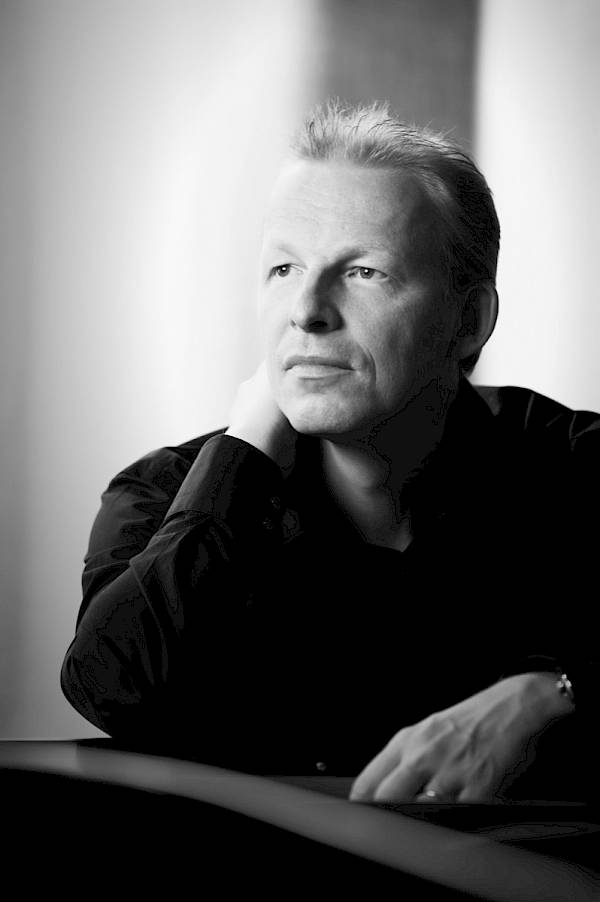
Adrian Oetiker

Der Schweizer Pianist Adrian Oetiker verfolgt seit vielen Jahren eine weltweite Karriere. Er stu­dierte er in der Meisterklasse von Homero Francesch an der Zürcher Hochschule der Küns­te und bei Bella Davidovich an der Juilliard School in New York. Auch Lazar Berman zählte zu seinen Lehrern. 1995 gewann er den ARD-Wettbewerb in Mün­chen. Konzerte in Europa, Amerika und Australien führten ihn mit vielen Orchestern zu­sam­men, darunter das Tonhalle-Orchester Zürich, das Sym­phonie-Orchester des Bayerischen Rund­funks, die Staatskapelle Dresden, das Irish National Symphony Or­ches­­tra und das Melbourne Symphony Orchestra. Bei wiederholten Einladungen nach Australien trat er mit den meisten Or­chestern des Kontinents auf. Mit dem Or­ches­tre Symphonique de Mulhouse unter Daniel Klajner spielte er von 2006 bis 2008 alle Klavierkon­zerte von Béla Bartók. Rezitals und Kam­mer­musik-­Programme spielte er u.a. in der Ber­liner Philharmonie, im Ge­wand­­haus Leipzig, im Fest­­spiel­haus Salzburg, im KKL und im Teatro La Fenice in Venedig. Er musiziert regel­mässig im Klavierduo Paola & Adrian Oetiker und ist Pianist im Feininger Trio der Berliner Philharmoni­ker. Mehrere Ballettproduktionen am Opernhaus Zürich, an der Semperoper Dres­den, an der Bayerischen Staatsoper und an der Deutschen Oper Berlin, u.a. mit Christian Spuck, runden seine vielfältigen Tätigkeiten ab. Adrian Oetiker ist Künstlerischer Leiter der Internationalen Sommerakademie Ettal und war von 1996 bis 2021 Professor für Klavier an der Hochschule für Musik Basel. 2011 wurde er als Professor an die Hochschule für Musik und Theater in Mün­chen berufen.

Show full cast Show less

Ballett Zürich

Die grösste professionelle Ballettcompagnie der Schweiz wird seit der Saison 2012/13 von Christian Spuck geleitet.  Beheimatet am Opernhaus Zürich, bestreitet das 36 Tänzerinnen und Tänzer umfassende Ensemble mit seinen Produktionen nicht nur einen wesentlichen Teil des Opernhaus-Spielplans, sondern wird regelmässig auch auf internationalen Gastspielen gefeiert. Hervorgegangen aus dem einstigen Ballett des Stadttheaters Zürich, wurde die Compagnie von ihren Direktoren Nicholas Beriozoff, Patricia Neary, Uwe Scholz und Bernd Bienert geprägt. Der Schweizer Choreograf Heinz Spoerli, Ballettdirektor von 1996 bis 2012, etablierte die Compagnie innerhalb weniger Jahre unter den führenden europäischen Ballettformationen.

Mehr Informationen zum Ballett Zürich finden Sie hier

Oiseaux Rebelles12 / 18 / 23 / 25 / 31 Oct / 1 / 9 / 13 Nov / 2 / 5 / 6 / 9 Dec 2025 / 11 / 13 / 16 / 18 / 27 Sept 2026 Clara13 / 14 / 19 / 20 / 26 / 28 Dec 2025 / 11 / 12 / 17 / 19 / 24 Apr 2026 Countertime5 / 7 / 14 Sept 2025 Messa da Requiem20 / 22 / 28 Feb / 1 / 5 / 7 Mar / 6 Apr 2026 Romeo und Julia23 / 29 / 30 May / 4 / 6 / 7 / 10 / 12 / 14 / 23 / 26 Jun / 20 / 27 / 29 Nov / 6 / 13 / 19 / 26 / 27 Dec 2026 Nachtträume20 / 25 / 28 / 30 Jun / 4 Jul 2026 Next Generation1 / 2 / 3 / 4 Jul 2026 Timeframed17 / 18 / 22 / 25 / 30 Jan / 1 / 4 / 6 / 8 / 11 / 12 Feb 2026 Ein Sommernachtstraum26 Sept / 11 / 16 / 18 / 25 / 28 / 29 / 31 Oct / 12 / 13 / 14 Nov 2026 / 19 / 22 / 29 Jun / 3 Jul 2027 Slow Rush16 / 17 / 22 / 28 / 30 Jan / 5 / 10 / 13 / 17 / 21 Feb / 29 / 30 May / 3 Jun 2027 See the music, hear the dance22 / 28 May / 6 / 10 / 12 / 15 / 25 / 26 / 27 Jun 2027

Junior Ballett

Das Junior Ballett ist die Nachwuchscompagnie des Balletts Zürich. Seit seiner Gründung im Jahr 2001 erhalten hier ausgewählte junge Tänzerinnen und Tänzer aus aller Welt die Möglichkeit, nach Ende ihrer Ballettausbildung unter fachkundiger Betreuung in das tänzerische Berufsleben einzusteigen. Im Rahmen eines nicht länger als zwei Jahre währenden Engagements trainieren sie gemeinsam mit den Mitgliedern des Balletts Zürich, tanzen mit ihnen in ausgewählten Vorstellungen des Repertoires und sammeln so die für eine Tänzerlaufbahn notwendige Bühnenerfahrung. Einmal pro Spielzeit stellt das Junior Ballett in einem eigenen Ballettabend mit Werken international renommierter Choreografen seine hohe Leistungsfähigkeit und tänzerische Kreativität unter Beweis. In der Saison 2014/15 vereint das Junior Ballett dreizehn Tänzerinnen und Tänzer aus acht Nationen.

Oiseaux Rebelles12 / 18 / 23 / 25 / 31 Oct / 1 / 9 / 13 Nov / 2 / 5 / 6 / 9 Dec 2025 / 11 / 13 / 16 / 18 / 27 Sept 2026 Clara13 / 14 / 19 / 20 / 26 / 28 Dec 2025 / 11 / 12 / 17 / 19 / 24 Apr 2026 Countertime5 / 7 / 14 Sept 2025 The Butterfly Effect4 / 13 / 23 Apr 2026 Romeo und Julia23 / 29 / 30 May / 4 / 6 / 7 / 10 / 12 / 14 / 23 / 26 Jun / 20 / 27 / 29 Nov / 6 / 13 / 19 / 26 / 27 Dec 2026 Nachtträume20 / 25 / 28 / 30 Jun / 4 Jul 2026 Next Generation1 / 2 / 3 / 4 Jul 2026 Timeframed17 / 18 / 22 / 25 / 30 Jan / 1 / 4 / 6 / 8 / 11 / 12 Feb 2026 Ein Sommernachtstraum11 / 16 / 18 / 25 / 28 / 29 / 31 Oct / 12 / 13 / 14 Nov 2026 / 19 / 22 / 29 Jun / 3 Jul 2027 See the music, hear the dance22 / 28 May / 6 / 10 / 12 / 15 / 25 / 26 / 27 Jun 2027

Statistenverein am Opernhaus Zürich

Der Statistenverein am Opernhaus Zürich wurde im Jahr 1900 gegründet und dürfte damit einer der traditionsreichsten Vereine auf dem Kulturplatz Zürich sein. Rund hundert Frauen und Männer im Alter von 16 bis 70 Jahren bereichern das Bühnengeschehen in zahlreichen Inszenierungen.Statisten, früher auch als Figuranten bezeichnet, haben generell nicht sprechende Rollen. Ihre Einsätze am Opernhaus Zürich fallen je nach Inszenierung unterschiedlich umfangreich aus. Während früher Massenszenen im Vordergrund standen, sind die Statistinnen und Statisten seit der Ära Pereira und der Intendanz von Andreas Homoki zunehmend auch für aufwändigere Einzelauftritte sowie für anspruchsvolle technische Einsätze gefragt. Die Mitglieder des Statistenvereins üben ihre Einsätze in der Freizeit und ohne finanzielle Interessen aus. Sie bringen Begeisterung für Musik und Theater mit.

Manon24 / 27 Sept / 3 / 7 / 10 Oct 2025 La scala di seta25 / 28 Sept / 19 / 24 Oct 2025 Tosca28 Sept / 2 / 8 / 11 / 15 / 19 Oct 2025 / 11 / 14 / 17 / 21 / 24 Apr / 13 / 17 May 2027 Madama Butterfly30 Dec 2025 / 3 / 9 / 11 / 13 / 16 Jan 2026 Rigoletto20 / 23 / 27 Dec 2025 / 1 / 4 Jan 2026 Le nozze di Figaro24 / 29 Jan / 1 / 5 / 7 / 10 / 14 Feb 2026 / 2 / 6 / 8 / 15 / 19 May 2027 Werther14 / 19 Jun / 1 / 4 / 10 Jul 2026 Così fan tutte3 / 7 / 9 / 12 Jul 2026 Macbeth8 / 11 / 14 / 19 / 22 / 30 Nov 2025 Arabella14 / 18 / 22 / 25 / 28 Apr 2026 Der Rosenkavalier21 / 26 Sept / 1 / 5 / 14 / 17 / 21 / 26 Oct 2025 La clemenza di Tito26 / 29 Apr / 3 / 8 / 15 / 17 / 20 / 25 May 2026 Cardillac15 / 18 / 21 / 25 Feb / 1 / 6 / 10 Mar 2026 Hänsel und Gretel16 / 20 / 23 / 28 / 30 Nov / 2 / 4 / 11 / 16 / 18 / 21 Dec 2025 / 2 / 24 / 25 / 31 Jan 2026 Carmen18 / 21 / 23 / 27 / 31 Jan 2026 Un ballo in Maschera22 / 28 / 31 May / 7 / 13 Jun 2026 Die Fledermaus7 / 10 / 12 / 14 / 18 / 26 / 28 / 31 Dec 2025 / 2 / 4 / 6 / 10 Jan / 29 Sept / 8 / 17 / 23 / 25 Oct 2026 Giulio Cesare in Egitto11 / 13 / 15 / 17 / 21 / 25 / 28 Mar 2026 Scylla et Glaucus27 / 29 / 31 Mar / 2 / 6 / 30 Apr / 2 May 2026 La forza del destino2 / 7 / 12 / 15 / 18 / 21 / 26 / 29 Nov / 17 / 21 Dec 2025 Sillons de Mémoires5 / 6 / 7 Feb 2026 Gianni Schicchi2 / 6 / 8 / 10 / 13 May 2026 Monster's Paradise8 / 14 / 18 Mar / 10 / 12 Apr 2026 Alice im Wunderland8 / 15 / 19 / 21 / 26 / 28 Nov / 6 Dec 2026 / 2 / 7 / 8 / 10 / 17 Jan 2027 Manon Lescaut11 / 15 / 18 / 22 / 26 Dec 2026 Die lustige Witwe27 / 31 Dec 2026 / 3 / 7 / 10 / 13 Jan 2027 Die Walküre24 / 31 Jan / 3 / 6 Feb 2027 Roméo et Juliette12 / 19 / 21 Feb / 2 / 5 Mar 2027 La bohème16 / 18 / 23 Jun / 4 / 7 / 10 Jul 2027 Don Carlo1 / 6 / 8 / 11 Jul 2027 La fanciulla del west25 / 28 Feb / 3 / 7 Mar / 4 / 7 / 10 / 16 Apr 2027 Elektra22 / 26 Nov / 2 / 5 / 10 / 13 / 16 Dec 2026 Rinaldo14 / 19 / 23 / 25 / 27 / 29 Mar 2027 Samson et Dalila13 / 17 / 20 / 24 / 27 / 30 Jun / 2 / 9 Jul 2027 Tannhäuser26 Sept / 4 / 9 / 13 Oct 2026

Philharmonia Zürich

1985 entstand in Folge der Trennung des traditionsreichen Tonhalle- und Theaterorchesters das Orchester der Oper Zürich. 2012, mit Beginn der Intendanz von Andreas Homoki und dem Amtsantritt des neuen Generalmusikdirektors Fabio Luisi, wird das Orchester der Oper Zürich zur Philharmonia Zürich. Pro Saison ist das Orchester in rund 250 Opern- und Ballettvorstellungen des Opernhauses Zürich zu hören. Als Podium für das Konzertrepertoire werden zusätzlich die Philharmonischen Konzerte veranstaltet. Soiréen und Kammermusikmatinéen ergänzen das künstlerische Spektrum des Orchesters. Bevor Fabio Luisi mit der Saison 2012/13 als Generalmusikdirektor die künstlerische Leitung des Orchesters übernommen hat, haben u. a. Franz Welser-Möst (1995-2008, ab 2005 als Generalmusikdirektor) und zuletzt Daniele Gatti als Chefdirigent (2009-2012) das Orchester geleitet. 2000/01 fanden die Beständigkeit der Leistungen des Orchesters der Oper Zürich und die Breite seines Könnens mit der Wahl zum «Orchester des Jahres» in der Umfrage der Zeitschrift «Opernwelt» weit verbreitete internationale Anerkennung.

Mehr Informationen zur Philharmonia Zürich finden Sie hier

La traviata20 / 23 / 29 Dec 2026 / 1 / 3 / 6 / 9 / 12 / 15 / 19 / 23 Jan 2027 Die lustige Witwe27 / 31 Dec 2026 / 3 / 7 / 10 / 13 Jan 2027

Abstract

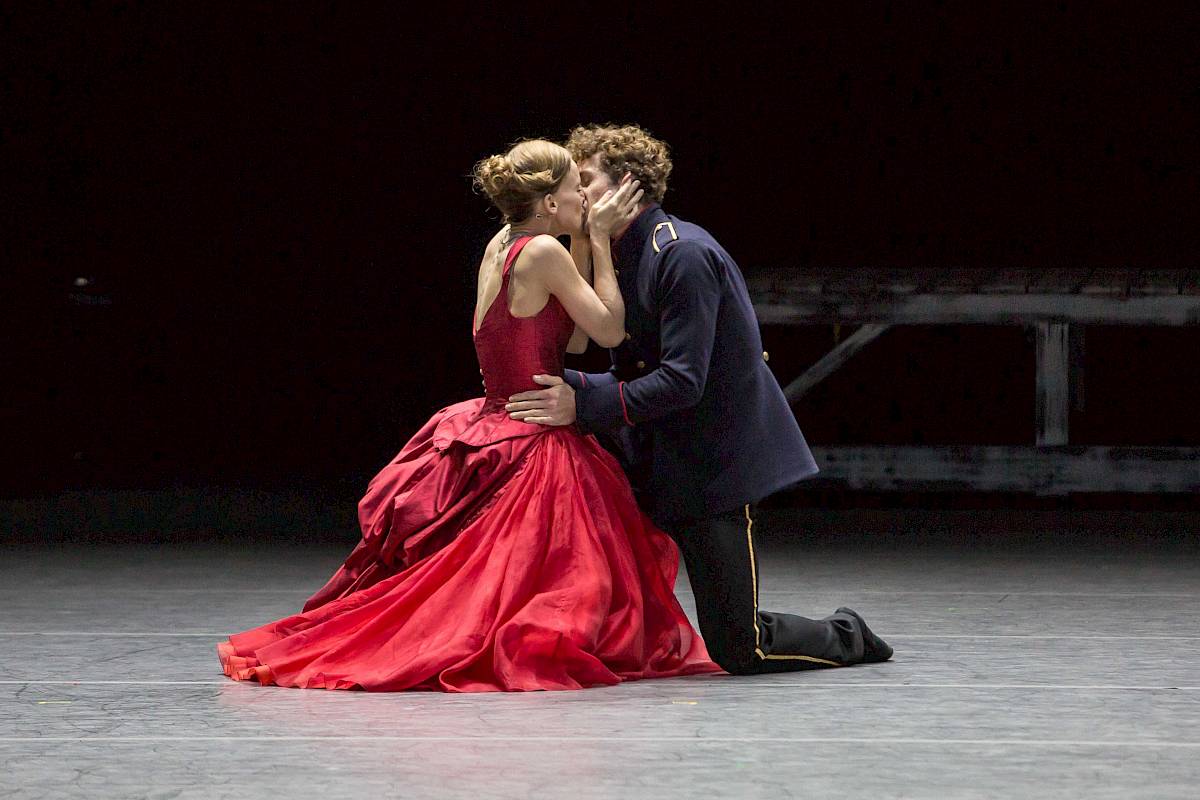
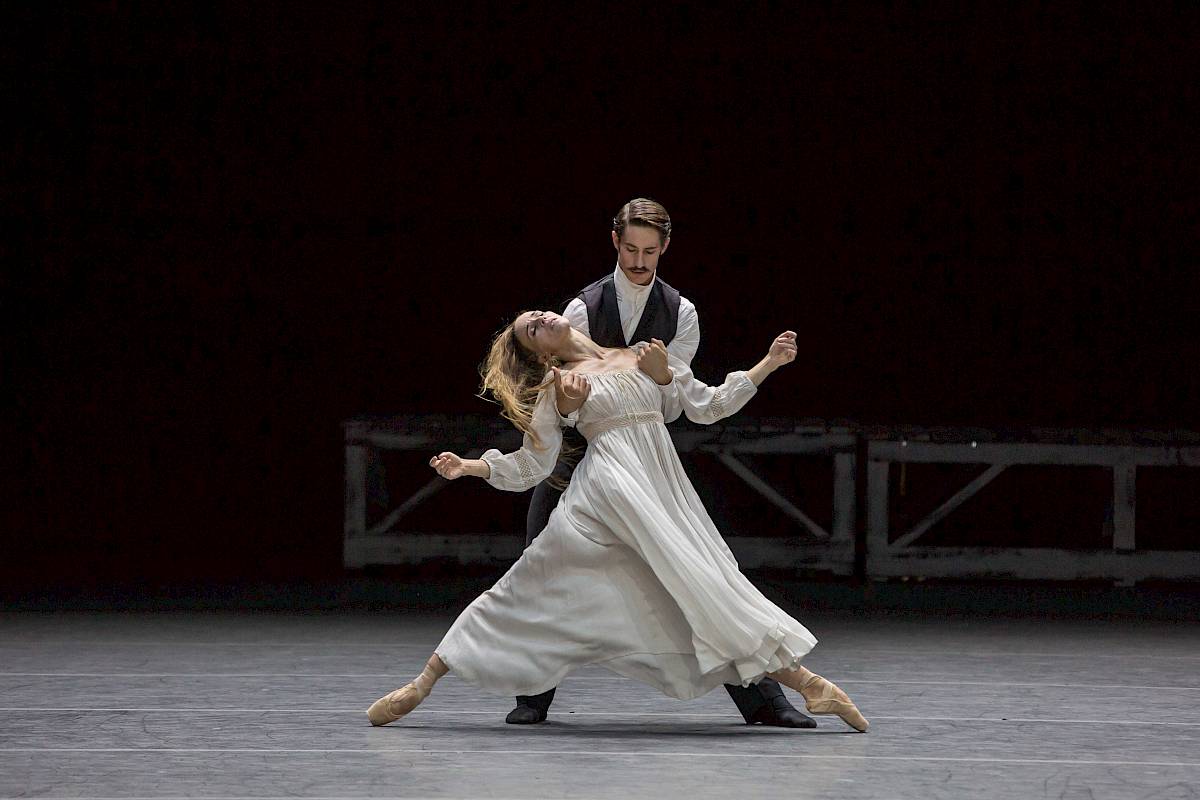
The beautiful Anna Karenina is married to a strict and highly respected government official in St. Petersburg, but her marriage to him is a joyless one. When she meets the easy-going officer Count Wronski, it’s love at first sight – but she is initially reluctant to have an affair. Wronski courts her until she becomes his secret lover. This amour fou does not remain undiscovered for long, and the adulteress is socially ostracized. Anna despairs, caught between love and the moral obligation to marry. Nothing can stop the impending catastrophe.

With Anna Karenina, Leo Tolstoy wrote a novel that achieved international reach. Not only does it tell the story of a love affair that fails because of prevailing moral concepts, but it also sketches a multi-layered panorama of Russian society at the end of the 19th century. In Tolstoy’s opulent morality tale, Lewin, the honorable landowner, and his wife Kitty, the daughter of St. Petersburg nobility, are presented in contrast to Anna and Wronski. Their relationship is dominated not by passion, but by responsibility, sincerity, and tenderness, and they find fulfillment in living a happy life in the country.

Christian Spuck’s ballet adaption of this demanding novel has found itself a steadfast place in the great ballet companies the world over. Oslo, Moscow, Munich, and Seoul keep the ballet in their repertoire, and the Ballet Zürich was celebrated with guest performances of the production in Tel Aviv and Hong Kong. The titular hero’s fate lies at the center of the story Spuck tells, but the artistic director of the Ballet Zürich also turns his attention to the other main characters’ lives. Set to symphonic music by Sergei Rachmaninoff and Witold Lutosławski, he translates the fate of Tolstoy’s heroes into haunting choreographic images.

Read more Show less

Photos «Anna Karenina»


Good to know

Synopsis

Prologue
Martin Donner: Trains I
Sergei Rachmaninoff: Moment musical op. 16 no. 3 B minor
 

Salon I
Stiva Oblonski is cheating on his wife Dolly with the female maids. Kitty Shcherbatskaya is being pursued by landowner Konstantin Levin, who has come to town specifically for this purpose. 
Sergei Rachmaninoff: Symphonic Dances op. 45,
2. Andante con moto (Tempo di Valse)


Arrival in Moscow
Anna Karenina has come to Moscow from St. Petersburg where she intends to mediate between Stiva and Dolly. Stiva is waiting for Anna on the platform, while her travelling acquaintance, Countess Vronskaya, is being collected by her son Alexei. Anna Karenina and Alexei Vronsky are introduced to one another, and this first sighting remains unforgettable for both.
Witold Lutosławski: Novelette for Orchestra, No. 1 Announcement

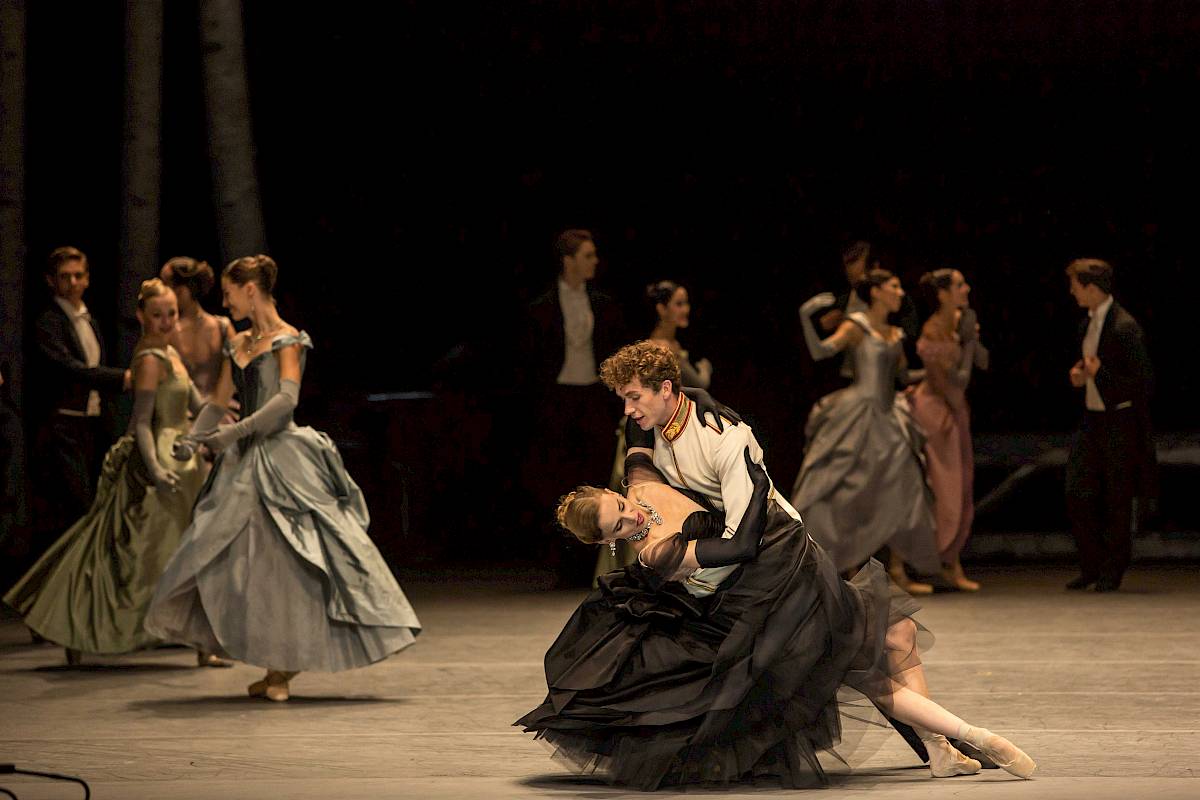
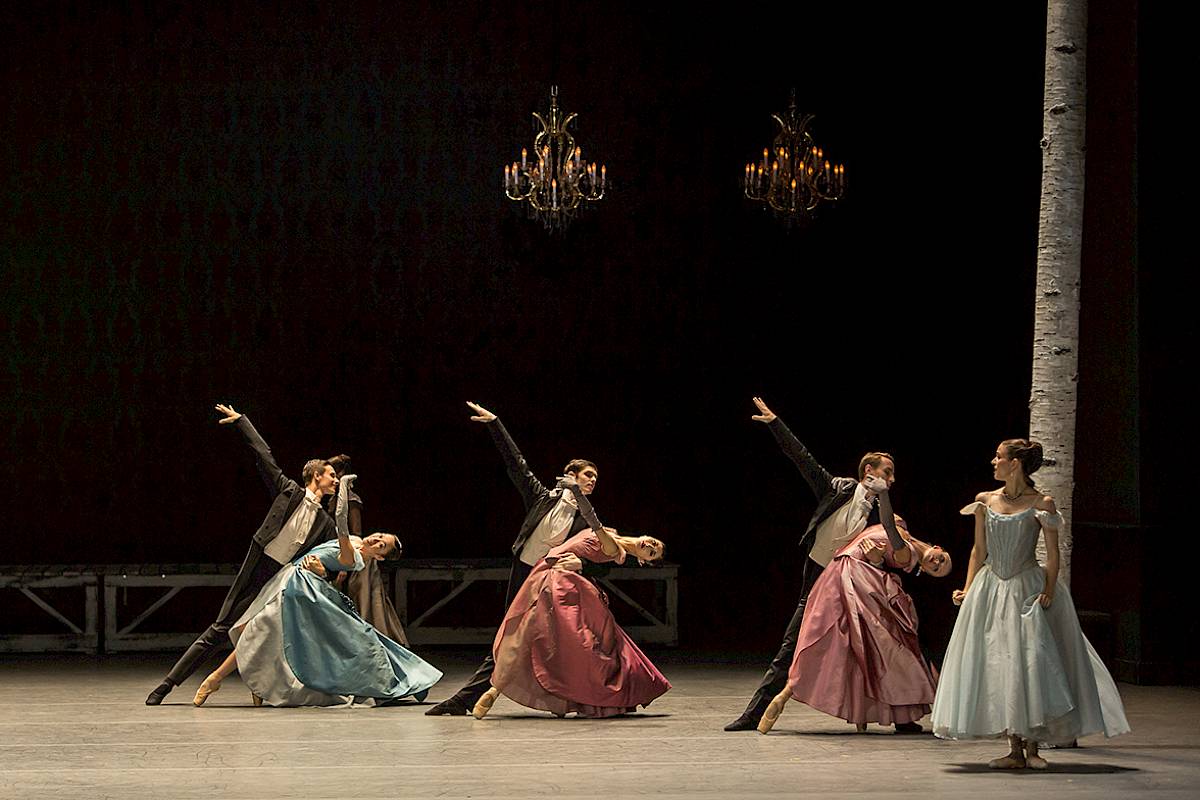
The ball
Levin asks for Kitty’s hand in marriage and she turns him down. She is infatuated with Vronsky, and is hoping he will propose to her. However, Vronsky’s only desire is to see Anna Karenina again at the ball. When Anna appears and Vronsky only has eyes for her, Kitty’s world falls apart. Anna realises that she is the reason for Kitty’s destroyed hopes and leaves.
Sergei Rachmaninoff:
Symphonic Dances op. 45, 2. Andante con moto (Tempo di Valse)


To St. Petersburg
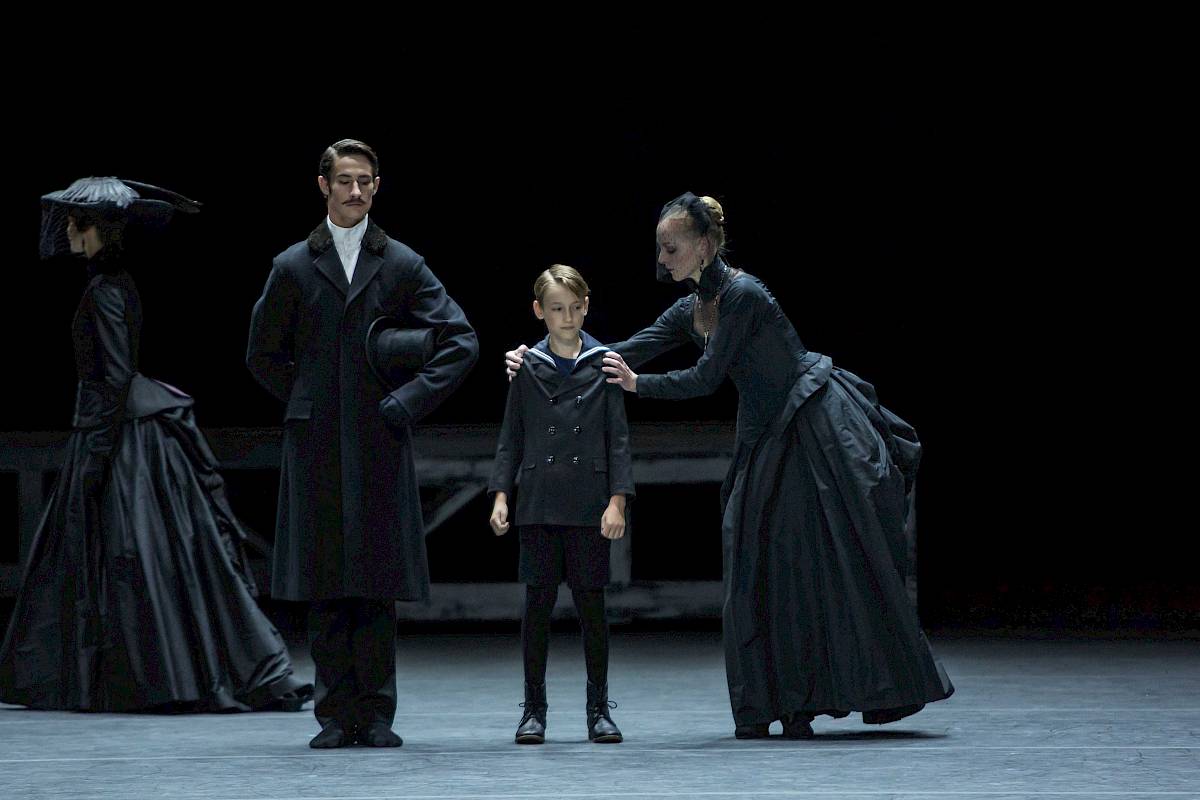
Vronsky follows Anna to St. Petersburg. They become closer during the journey. In St. Petersburg, Anna Karenina is collected by her husband Alexei and their son Seryozha.
Sergei Rachmaninoff: Rhapsody on a Theme of Paganini op. 43 for piano and orchestra, Variation 12 Martin Donner: Trains II

In the country I
After his refused proposal, Levin flees to the solitude of his estate and avoids society. 
Sergei Rachmaninoff (Arr.: Christophe Barwinek):
Noch' pechal'na, op. 26 No. 12 (The Night is Sad)


Betsy’s salon
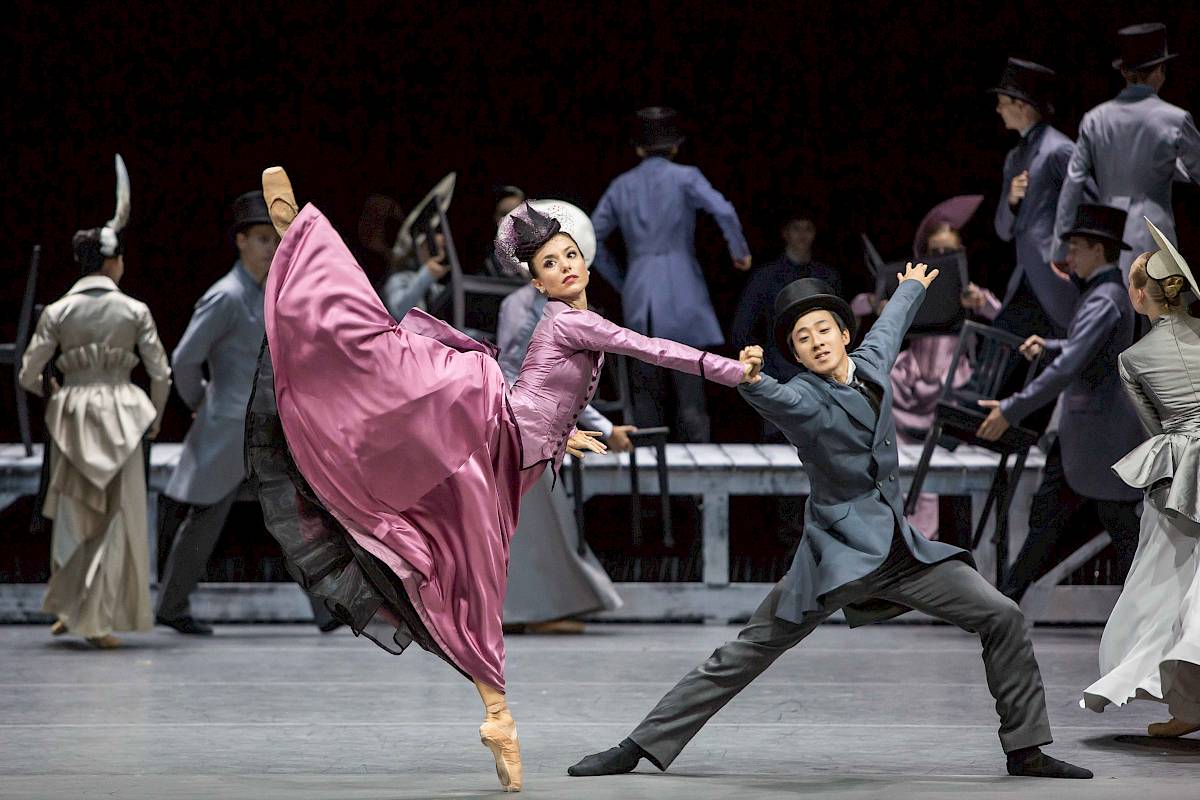
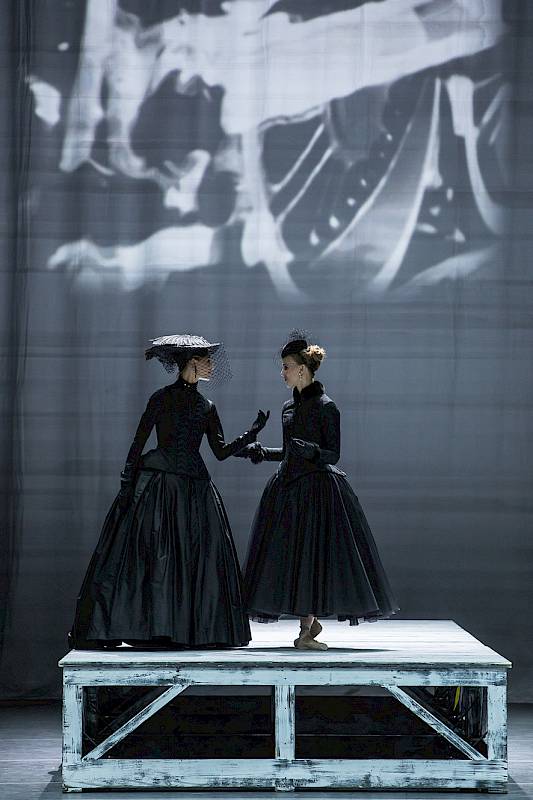
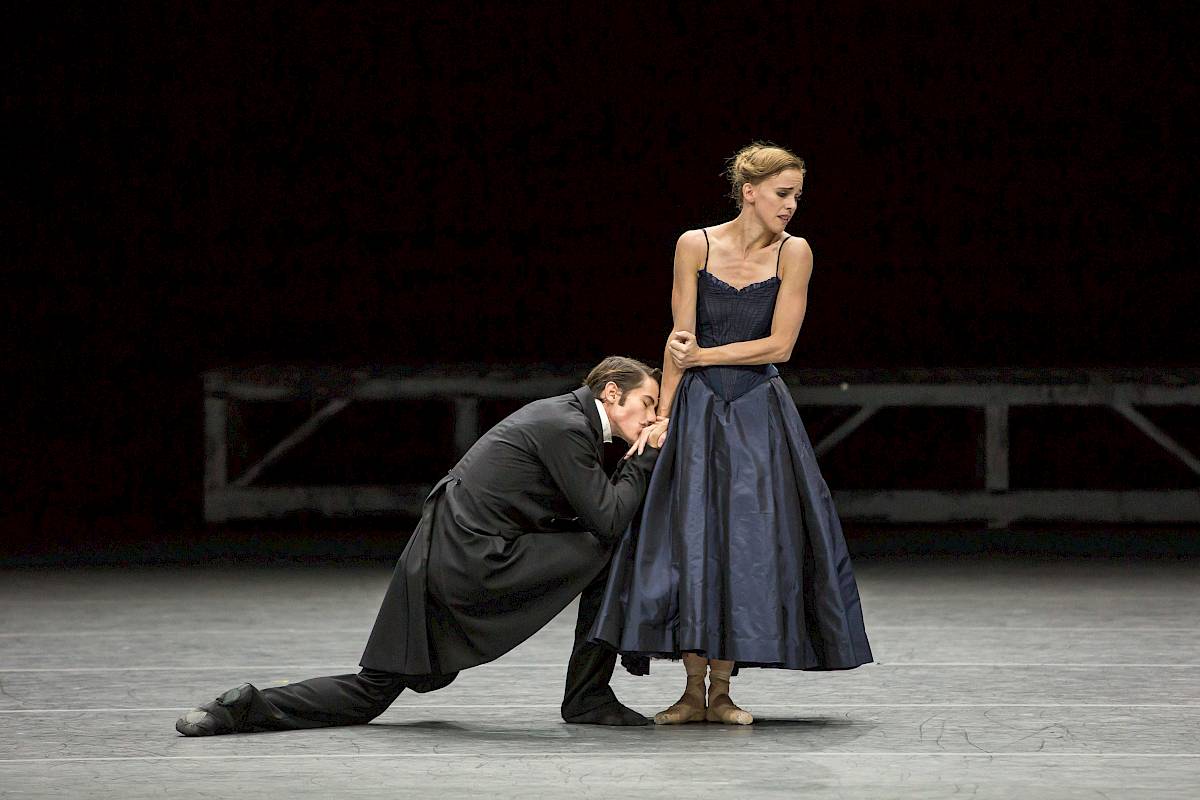
The salon of Betsy Tverskaya, a friend of Anna’s, is the meeting point of the decadent Petersburg society. While Dolly and Stiva continue to argue here, Anna and Vronsky enjoy their reunion. When Karenin turns up to collect his wife, she refuses to go home with him. The Karenins are the subject of much discussion in the salon: A shadow has been cast over Anna’s reputation – Vronsky. 
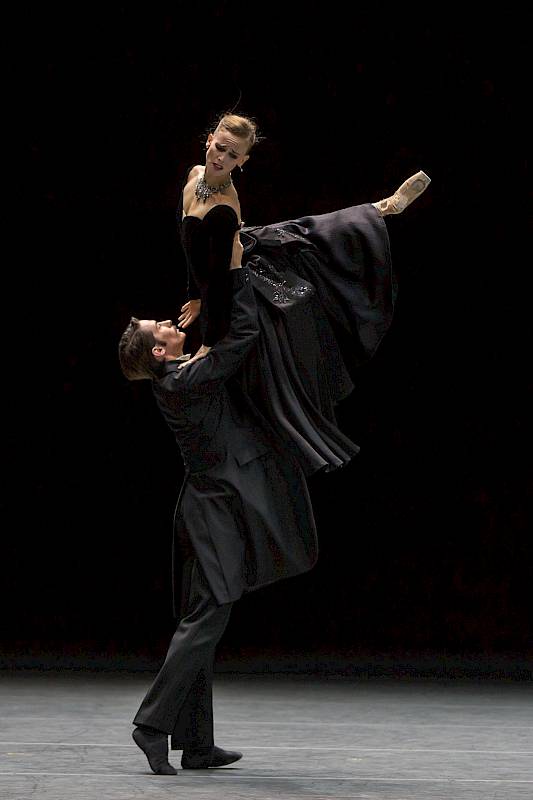
As society becomes more distant, Anna and Vronsky’s passion for one another can no longer be assuaged. Vronsky’s love allows Anna to forget the feelings of guilt and shame about the breakdown of her marriage.
Sergei Rachmaninoff: Piano Concert no. 2 c-minor op. 18, 3rd movement 
Witold Lutosławski: Chain 3 for Orchestra, III. 38

Horse racing
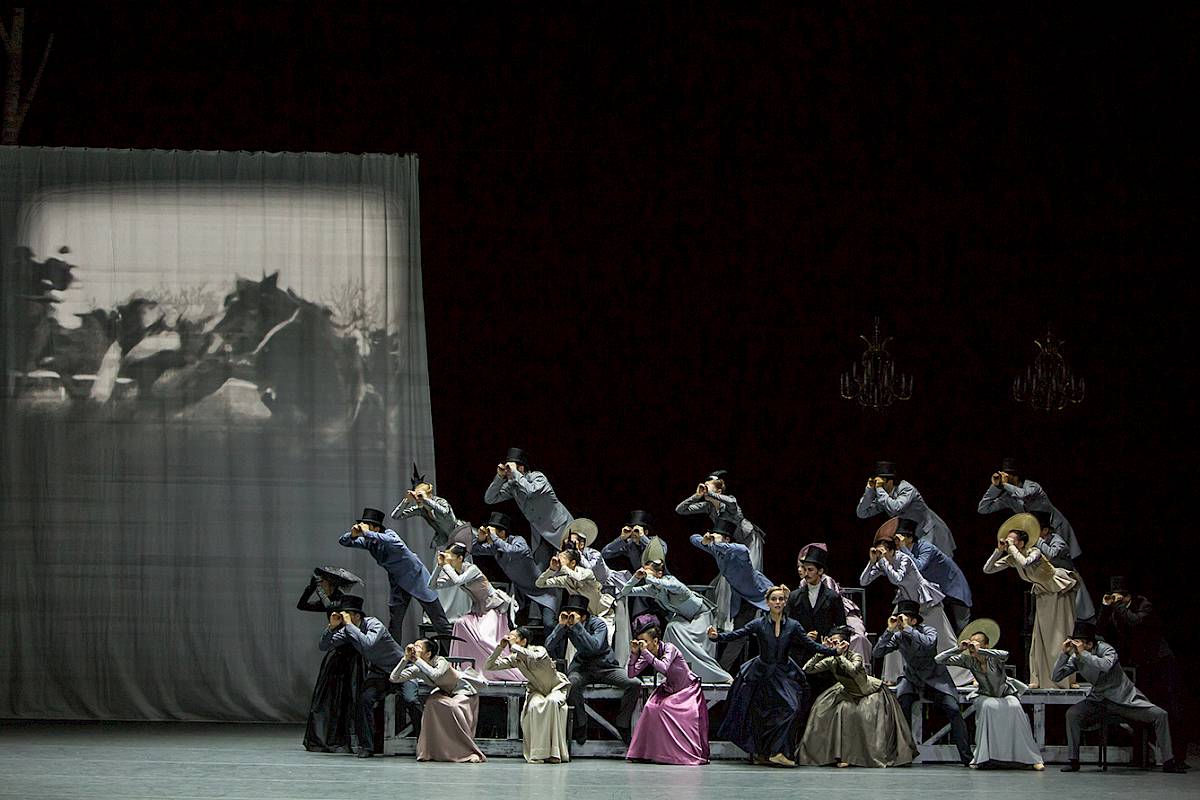
The distinguished society meets at a horse race, including the Karenins, the Oblonskis, Betsy and Countess Vronskaya. The fact that Anna screams when Vronsky falls with his horse is proof of her unfaithfulness for Karenin and those present. Karenin demands the fulfilment of marital obligations from Anna.
Sergei Rachmaninoff: Rhapsody on a Theme of Paganini op. 43,
Variations no. 8 and no. 9 
Witold Lutosławski: Piano concert, 2nd movement


In the country II
Levin takes part in haymaking, forgets his heartache and finds new meaning in life in the shared work with his farmers.
The transformed Kitty comes to the country, and she and Levin become closer to one another.
Martin Donner: Sensen
Sergei Rachmaninoff (Arr.: Christophe Barwinek):
Ne poy, krasavitsa! op. 4 no. 4 (Don’t sing, beautiful)


At the home of the Karenins
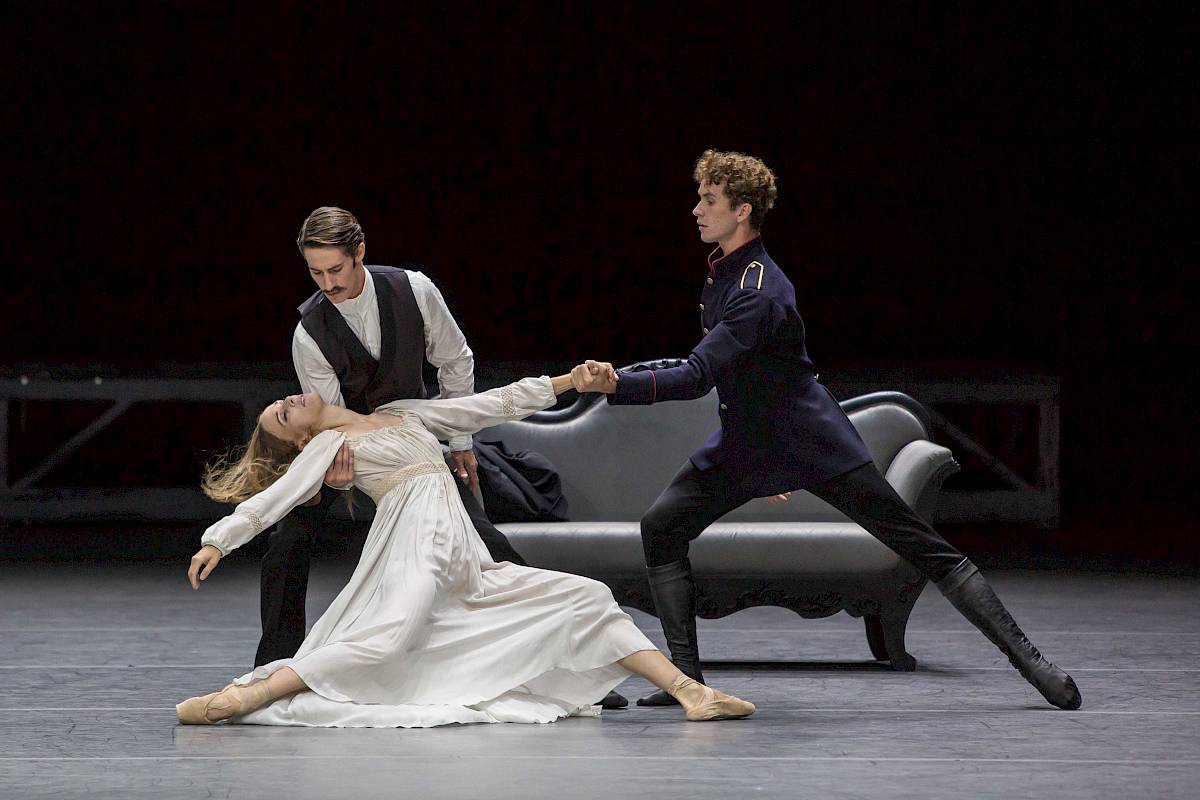
After the birth of Vronsky’s daughter, Anna is under threat of death. This situation causes Karenin to forgive her and his love rival. Vronsky, who fears that Anna will return to her husband, attempts suicide.
Sergei Rachmaninoff (Arr.: Christophe Barwinek):
Rhapsody on a Theme of Paganini op. 43, Variation 17
Witold Lutosławski: Piano Concert, 1st Movement


Break
Prelude:
Witold Lutosławski: Novelette for Orchestras, no. 1 Announcement


Italy/Russia 
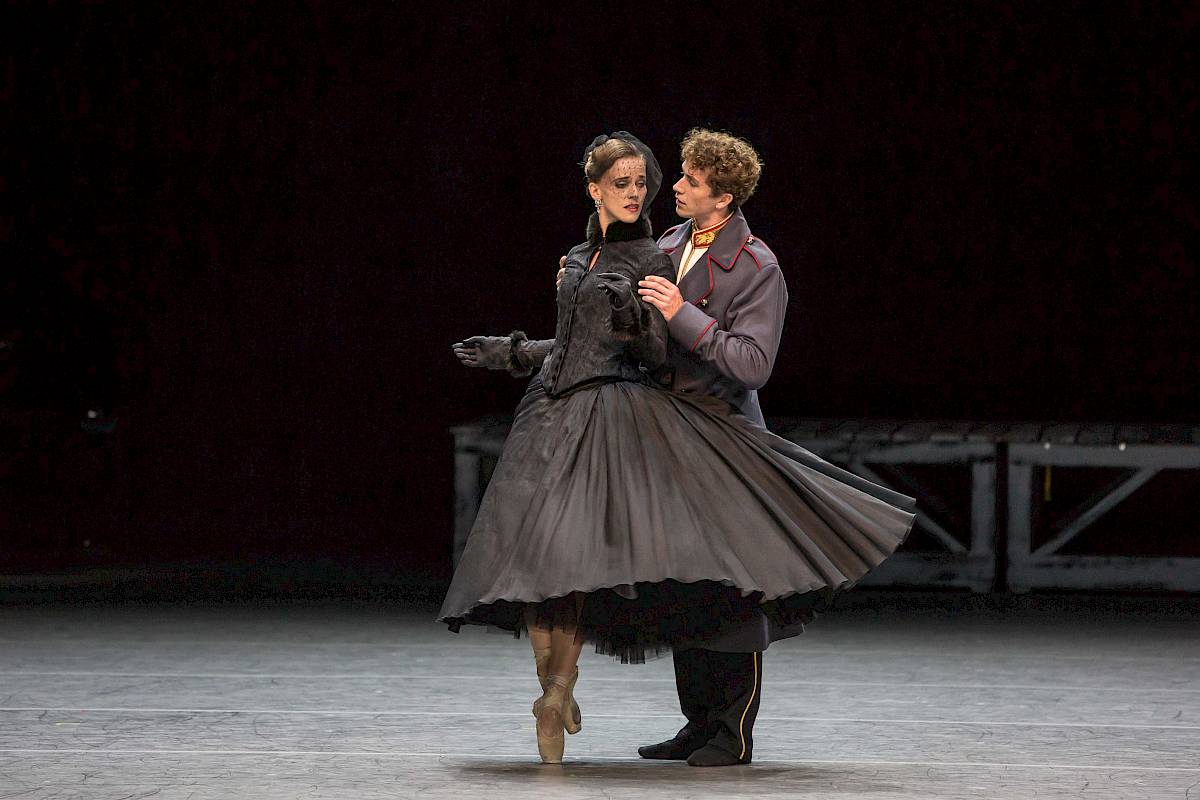
Vronsky is in Italy with Anna. She has left her old life behind - including Seryozha. Vronsky has given up his career in the military for her. They enjoy their abundance of happiness as a pair, but soon Anna misses her son, while Vronsky misses life in society. They return to Russia. Dolly appears to have come to terms with remaining at the side of the notoriously unfaithful Stiva.
Sergei Rachmaninoff: Piano Concert no. 2 c minor op. 18, 2nd Movement

Wedding
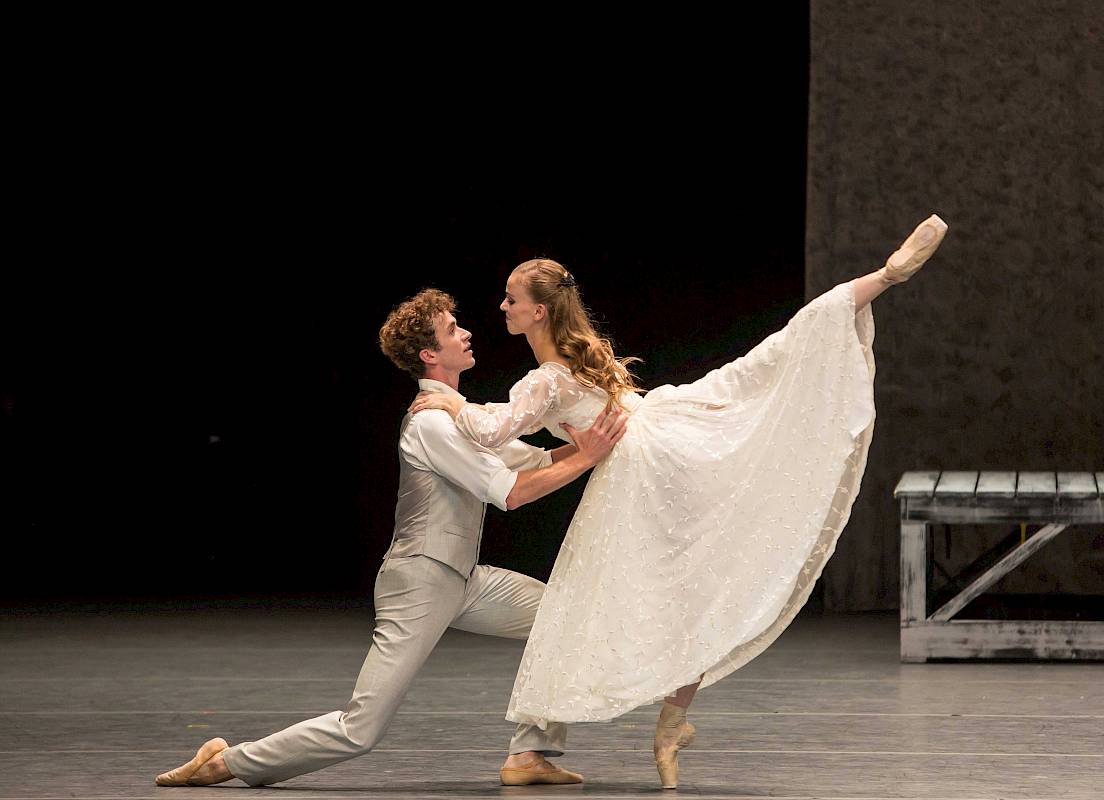
Kitty and Levin have come together and marry.
Sulkhan Tsintsadze (Arr.: Christophe Barwinek):
Miniatures for String Quartet, 5th harmony


Seryozha’s birthday
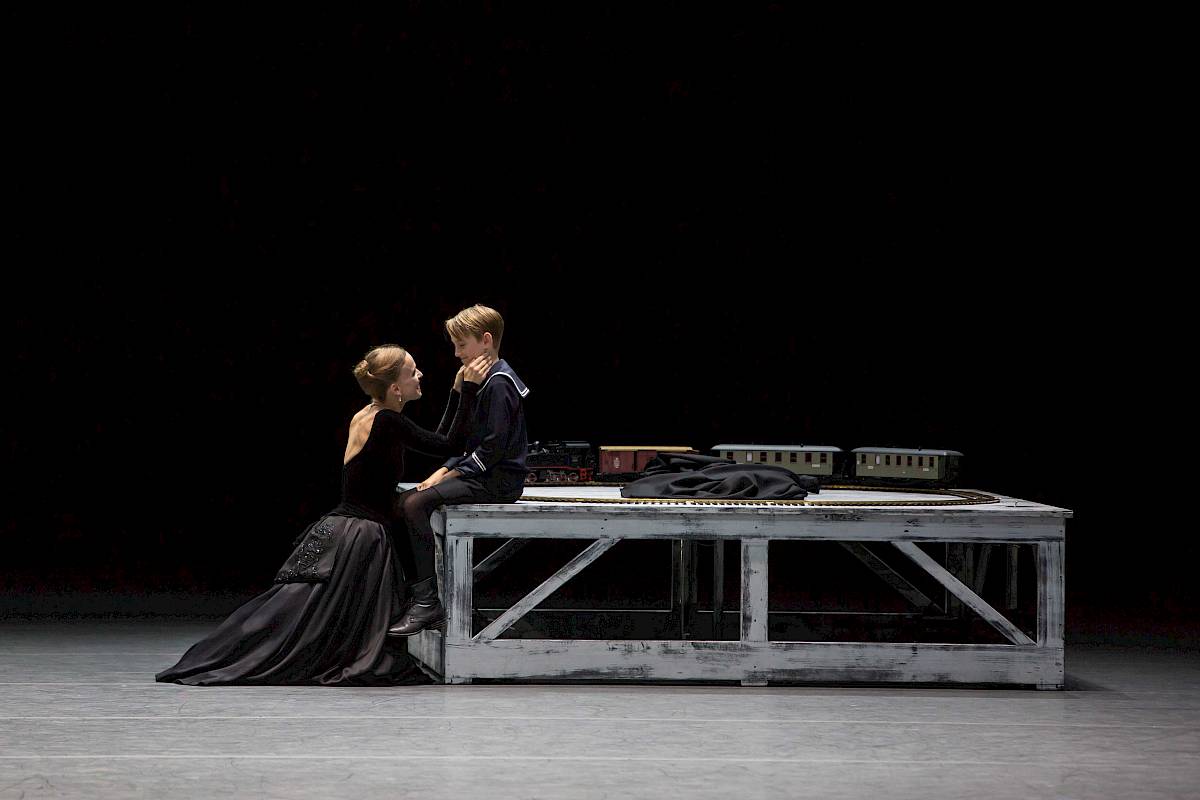
In secret, Anna visits her son Seryozha, who is now being looked after by the confidante of the Karenins, Lidia Ivanovna. They both bring the reunion of mother and son to an abrupt end. Anna and Karenin have a heated discussion, after which Anna remains alone and shattered.
Sergei Rachmaninoff: Prelude C-sharp minor op. 3 no. 2

Loneliness I
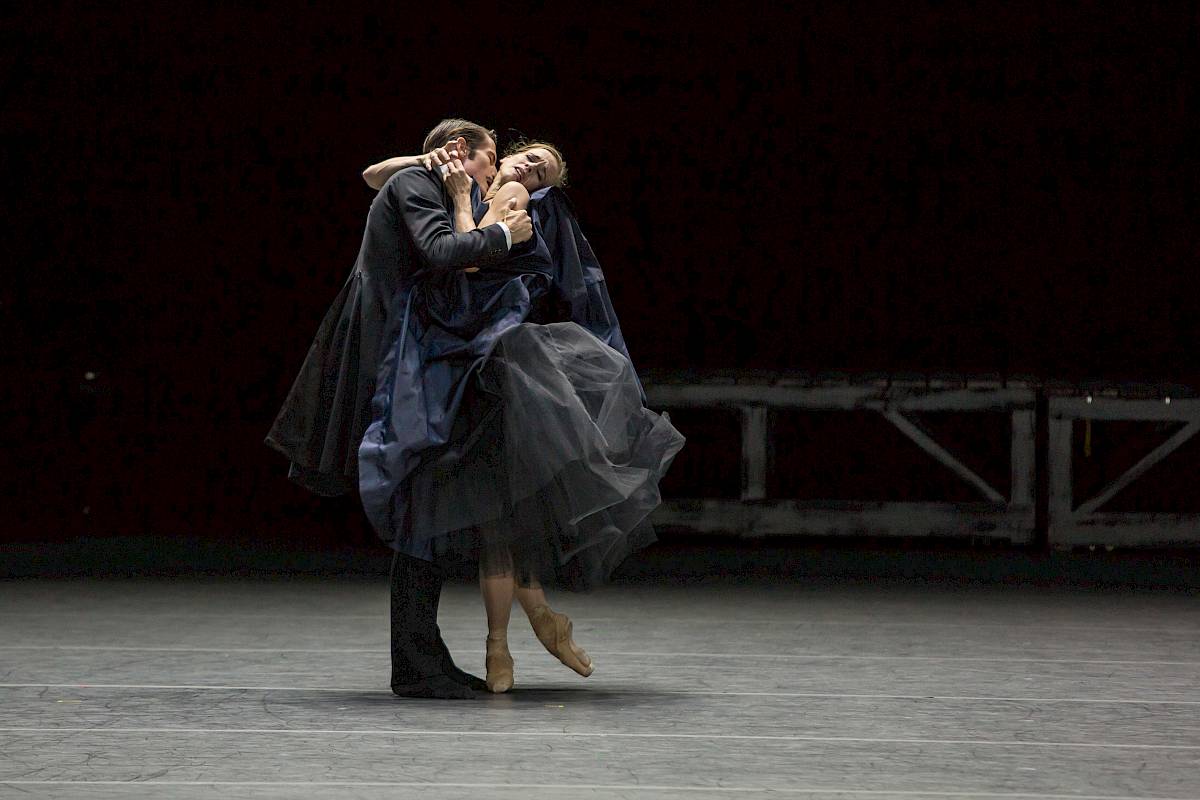
Anna is devastated. She now doubts Vronsky’s faithfulness and tries to numb her pain and jealousy with opium.
Sergei Rachmaninoff (Arr.: Christophe Barwinek):
Uvyal tsvetok o. op. (The flower is withered; Text page 74)


Isolation
While Vronsky is able to continue to take part in public life, Anna is perceived as an adulteress and is shunned by and cut off from society. Even her once friend Betsy turns away from her. Her jealousy and delusions turn obsessive, and she suspects that Princess Sorokina, who Countess Vronskaya has chosen for her son, is a love rival. 
Witold Lutosławski: Novelette for Orchestra, No. 2 First Event
Witold Lutosławski: Novelette for Orchestra, No. 1 Announcement
Sergei Rachmaninoff: Prelude F-sharp minor op. 23 No.1


Loneliness ll/Anna’s death
All relationships and ties have dissolved for Anna, and Vronsky is also no longer a reason for her to stop. She kills herself.
Josef Bardanashvili: Concerto quasi una fantasia, 2. Sostenuto
Sergei Rachmaninoff: Ne poy, krasavitsa! op. 4 No.  4 (Prelude)