





Faust

Opera in five acts by Charles Gounod (1818-1893)
Libretto by Jules Barbier and Michel Carré

From 20. September 2016 until 7. October 2016

  • Duration :
    3 H. 10 Min. Inkl. Pause after 3rd act after approx. 1 H. 45 Min.
  • Language:
    In French with German and English surtitles.
  • More information:
    Introduction 45 min before the performance.

Musical Director:
Philippe Auguin

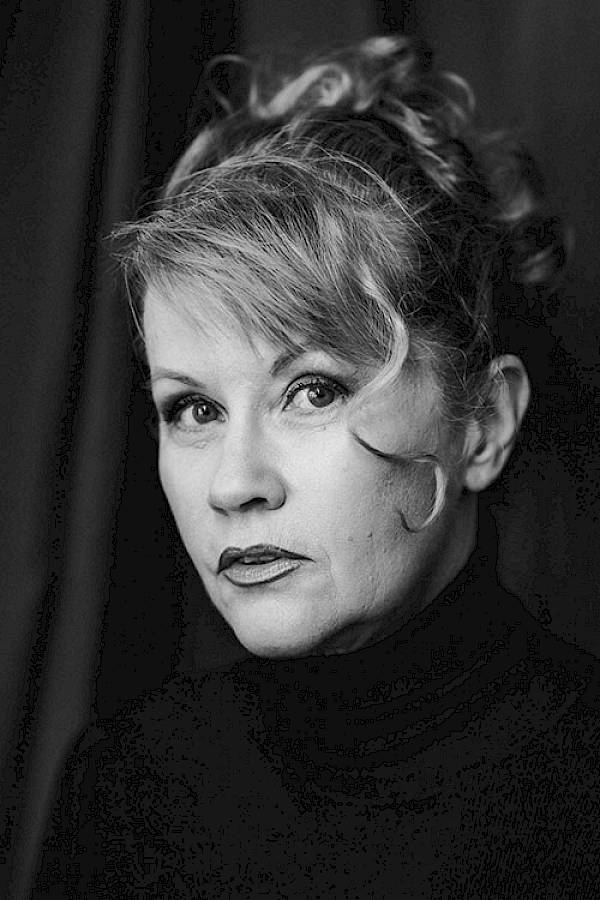
Philippe Auguin

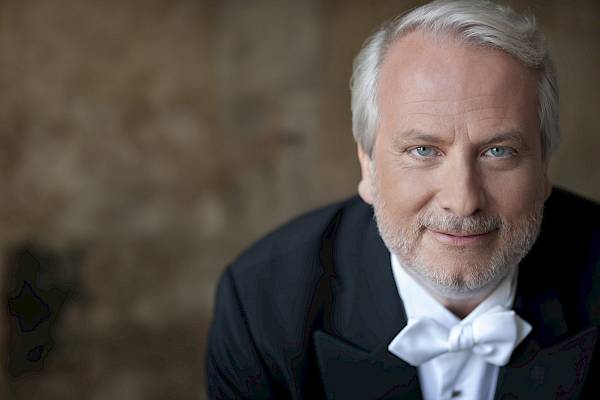
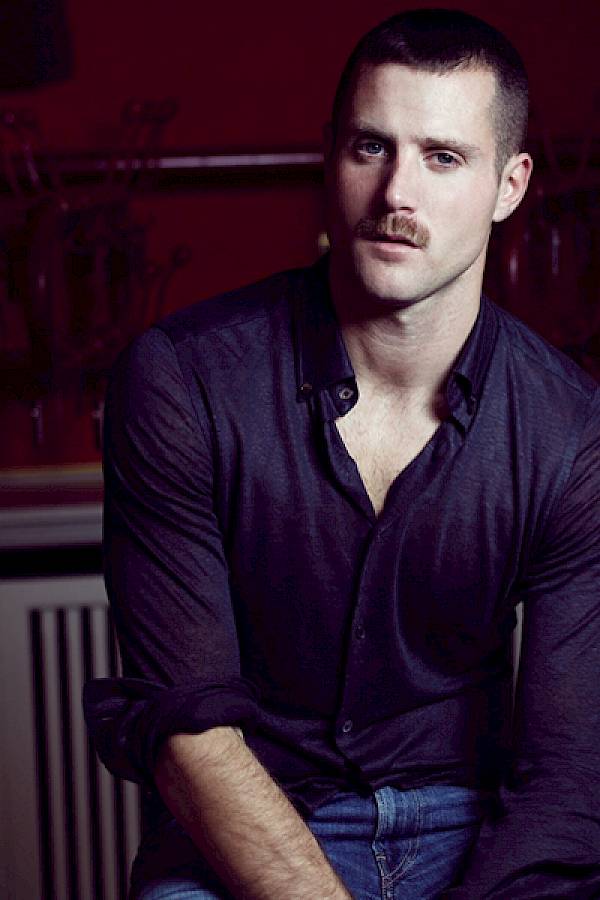
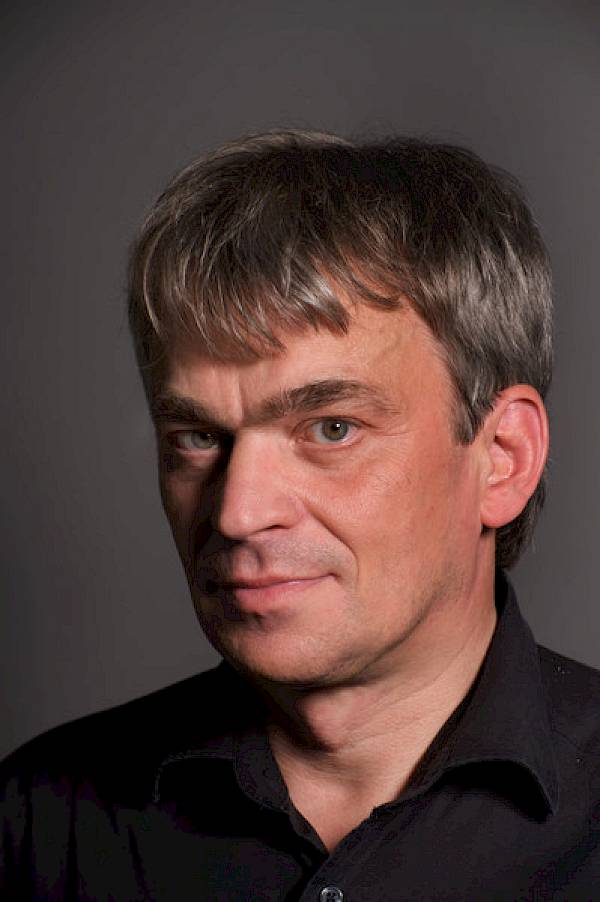
Philippe Auguin ist Music Director der Washington National Opera und des Kennedy Center Opera House Orchestra im John F. Kennedy Center for the Performing Arts. Gastdirigate führen ihn an die grossen Opernhäuser und Festivals weltweit, wie etwa die Salzburger Festspiele, die Mailänder Scala, Covent Garden, die Los Angeles Opera, das Grand Théâtre de Genève und das New National Theatre in Tokyo. Er leitete u.a. Doktor Faust, Die Frau ohne Schatten, La bohème, Lohengrin, Tosca, Madama Butterfly und Arabella an der Metropolitan Opera in New York, Die tote Stadt, La forza del destino, Madama Butterfly, La bohème, Aida, Simon Boccanegra und Tosca an der Wiener Staatsoper, Tannhäuser, Der fliegende Holländer, Aida, Carmen und Fidelio an der Deutschen Oper Berlin sowie Manon am Teatro Colón in Buenos Aires und Mefistofele, Lohengrin, Holländer wie auch Tosca bei den Savonlinna Opernfestspielen. 2005 brachte er Wagners Der Ring des Nibelungen an das International Beijing Music Festival und kehrte 2008 mit Tannhäuser und der Deutschen Staatsoper Berlin dorthin zurück. Philippe Auguins Konzertrepertoire umfasst Werke der Alten Musik bis hin zu Bruckner, Strauss, Bartòk, Peter Maxwell Davies, Aribert Reimann und Pierre Boulez sowie das gesamte sinfonische Schaffen Gustav Mahlers. Nach seinen Studien in Wien und Florenz assistierte Philippe Auguin Herbert von Karajan und später Sir Georg Solti. 2002 wurde Auguin zum Ehrenkonsul der französischen Republik ernannt und 2005 mit dem Bundesverdienstkreuz der Bundesrepublik Deutschland für seinen Beitrag zur deutschen Kultur ausgezeichnet.

Production:
Jan Philipp Gloger

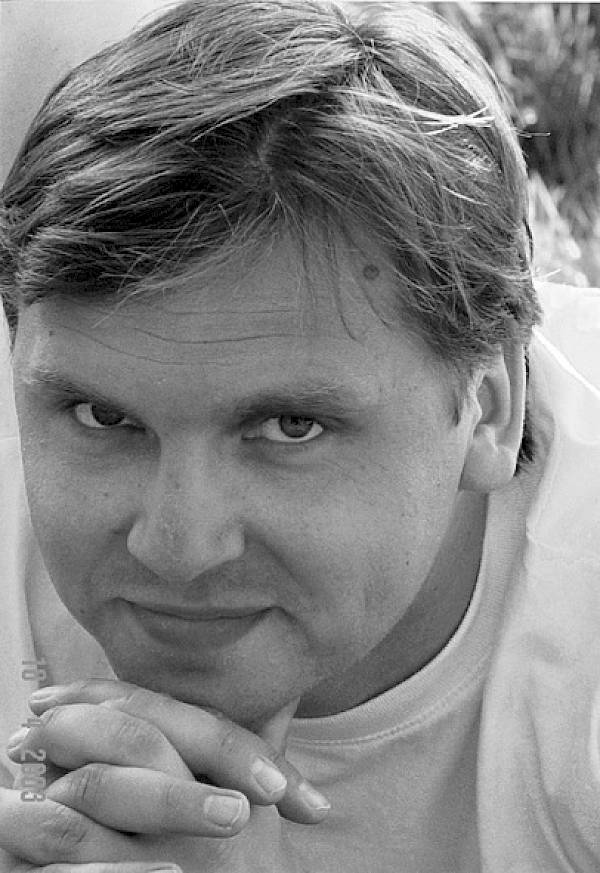
Jan Philipp Gloger

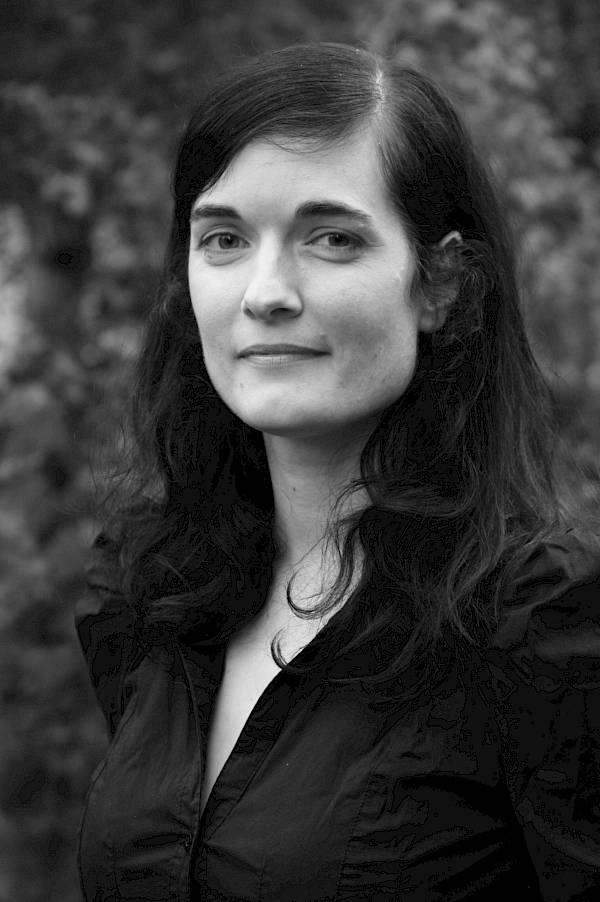
Jan Philipp Gloger studied Applied Theatre Studies at the Justus Liebig University Giessen and directing at the Zurich University of the Arts. From 2007, he worked as a freelance theatre director, including at the Bavarian State Theatre Munich, the Schaubühne and the Deutsches Theater Berlin, the Deutsches Schauspielhaus in Hamburg, and the State Theatre Dresden. He presented productions at the Ruhrtriennale and the Heidelberg Stückemarkt and received the Directing Prize of the Bavarian Theatre Days. From 2011 to 2013, he was Chief Director at the Staatstheater Mainz. In 2010, he staged his first opera, "Le nozze di Figaro," at the Theater Augsburg. This was followed by "Alcina" at the Semperoper Dresden, "The Flying Dutchman" at the Bayreuth Festival in 2012, "Idomeneo" at the Opera Frankfurt in 2013, Gounod’s "Faust" in Zurich, and "Simon Boccanegra" at the Semperoper Dresden in 2014. In recent years, he has directed productions including "Così fan tutte" at the Royal Opera House London and "Faust" at the Kongelige Theater Copenhagen. In 2018, Jan Philipp Gloger became Artistic Director at the Staatstheater Nürnberg, where he most recently staged "La Cenerentola." His productions have been awarded the Audience Prize of the Mülheimer Theatertage, the Directing Prize of the Bavarian Theatre Days, the Nachspiel Prize at the Heidelberg Stückemarkt, and a nomination for the London Olivier Award. In Zurich, he most recently directed "La verità in cimento," "Il turco in Italia," and "Die Csárdásfürstin." Since the 2025/26 season, he has been Intendant of the Volkstheater Vienna.

Le nozze di Figaro24 / 29 Jan / 1 / 5 / 7 / 10 / 14 Feb 2026 / 2 / 6 / 8 / 15 / 19 May 2027
Set Design:
Ben Baur

Ben Baur

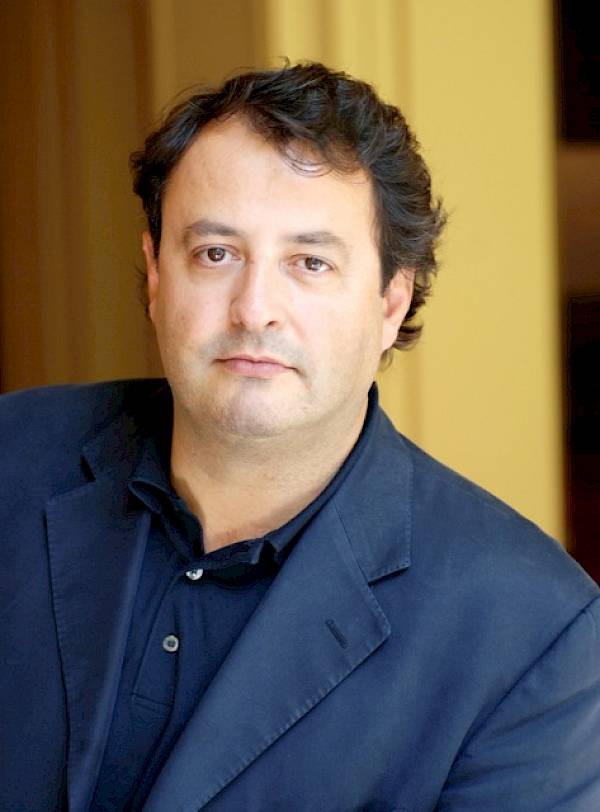
Ben Baur comes from Reinheim in southern Hesse and studied at the Berlin-Weissensee University of the Arts. His work as a stage and costume designer can be seen at major theatres and opera houses across Europe, including the Maxim Gorki Theater and Deutsches Theater in Berlin, the Volkstheater Munich, the Staatstheater Karlsruhe and Staatstheater Saarbrücken, the theatres in Bochum, Zurich, and Frankfurt, the Aalto-Musiktheater Essen, the Stuttgart State Opera, the Zurich Opera House, the Welsh National Opera Cardiff, the Opéra national de Lorraine in Nancy and the Opéra royal du Château de Versailles, the Dutch National Opera Amsterdam, the Hamburg State Opera, the Royal Opera House Covent Garden, and the Burgtheater Vienna. He has a close collaboration with Jetske Mijnssen and Jan Philipp Gloger. In 2014, Ben Baur made his directorial debut at the Staatstheater Saarbrücken with "Lucia di Lammermoor," where he subsequently staged "La traviata" and "Katja Kabanova." His work as a director also includes Hugo von Hofmannsthal's "Elektra" at the Deutsches Theater Göttingen, "Roméo et Juliette" and "Il trovatore" at the Opera Graz, "Don Giovanni" and "Dialogues des Carmélites" at the Musiktheater im Revier Gelsenkirchen, "Il pirata" and "Faust" at the Theater St. Gallen, "La bohème" and "Alcina" at the Staatstheater Braunschweig, as well as August Enna's "Kleopatra" at the Danish National Opera.

Le nozze di Figaro24 / 29 Jan / 1 / 5 / 7 / 10 / 14 Feb 2026 / 2 / 6 / 8 / 15 / 19 May 2027
Costumes:
Karin Jud

Karin Jud

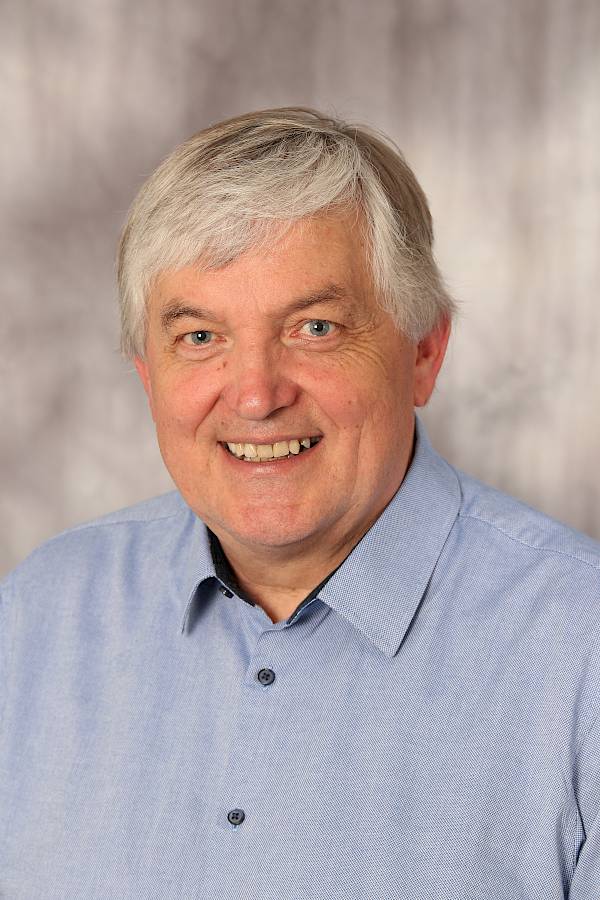
Karin Jud, born in Zurich, studied fashion design from 2000 to 2004 at the Basel School of Design and Art. Afterwards, she worked until 2007 as an assistant costume designer at the Schauspielhaus and the Zurich Opera House, collaborating with directors such as Jan Bosse, Barbara Frey, Jürgen Gosch, Rudi Häusermann, Leiser/Caurier, and Jürgen Flimm. She designed costumes at the Schauspielhaus Zurich, among others, for productions by David Unseld, Luise Helle, Schorsch Kamerun, and Matthias Hartmann. Since 2007, she has worked as a freelance costume designer at, among others, Theater Augsburg, the Bavarian State Theatre Munich, Schauspiel Hannover, Schauspielhaus Graz, Staatstheater Mainz, Volkstheater Vienna, Semperoper Dresden, Deutsches Schauspielhaus Hamburg, and the Schaubühne Berlin. In Hamburg, she designed the premiere of Philipp Löhle's "Das Ding," directed by Jan Philipp Gloger, which won the Audience Prize at the Mülheimer Theatertage in 2012. She has collaborated with directors such as Ingo Berk, Jan Stephan Schmieding, and Barbara-David Brüesch. Recently, in collaboration with Jan Philipp Gloger, she worked on "Idomeneo" at the Opera Frankfurt, "Die Csárdásfürstin," "Le nozze di Figaro," and "Il turco in Italia" at the Zurich Opera House, "Faust" at the Royal Danish Opera, and "Così fan tutte" at the Royal Opera House in London.

Le nozze di Figaro24 / 29 Jan / 1 / 5 / 7 / 10 / 14 Feb 2026 / 2 / 6 / 8 / 15 / 19 May 2027
Lighting Design:
Franck Evin

Franck Evin

Franck Evin, born in Nantes, moved to Paris at the age of 19 to study piano. At night he accompanied singers at the Café-Théâtre Le Connétable and also began to take an interest in lighting. He eventually decided to combine music and technology. Thanks to a scholarship from the French Ministry of Culture, he became assistant to the head of lighting at the Opéra de Lyon in 1983. There he worked with Ken Russell and Robert Wilson, among others. In 1986 he began working as an independent lighting designer at the Düsseldorf Schauspielhaus and obtained his master’s certificate in lighting in 1993. During this time he had a close collaboration with Werner Schröter and the conductor Eberhard Kloke. This was followed by productions in Nantes, Strasbourg, Paris, Lyon, Vienna, Bonn, Brussels and Los Angeles, among other places. From 1995 to 2012 he was Artistic Director of the lighting department at the Komische Oper Berlin, where he was responsible for all new productions. Important artistic partners during this period included Andreas Homoki, Barrie Kosky, Calixto Bieito and Hans Neuenfels. In 2006 Franck Evin was awarded the German Theatre Prize "Opus" in the category of lighting design. From 2012 to 2025 he was Artistic Director of the lighting department at the Zurich Opera House. In addition to his work in Zurich, he continued to work on international productions at opera houses in Oslo, Stockholm, Tokyo, Amsterdam, Munich and Graz, as well as at the Opéra Bastille, Teatro alla Scala, Teatro La Fenice, the Vlaamse Opera and at the Bayreuth Festival.

Carmen18 / 21 / 23 / 27 / 31 Jan 2026 Madama Butterfly30 Dec 2025 / 3 / 9 / 11 / 13 / 16 Jan 2026 Un ballo in Maschera22 / 28 / 31 May / 7 / 13 Jun / 26 / 27 / 29 / 30 Aug 2026 Fidelio3 / 6 / 10 / 14 / 16 May 2026 Così fan tutte3 / 7 / 9 / 12 Jul 2026 Alice im Wunderland8 / 15 / 19 / 21 / 26 / 28 Nov / 6 Dec 2026 / 2 / 7 / 8 / 10 / 17 Jan 2027 Das Rheingold29 Nov / 4 / 12 / 17 Dec 2026 Manon Lescaut11 / 15 / 18 / 22 / 26 Dec 2026 Die Walküre24 / 31 Jan / 3 / 6 Feb 2027 Roméo et Juliette12 / 19 / 21 Feb / 2 / 5 Mar 2027 Don Pasquale23 / 27 / 30 May / 4 / 6 / 11 Jun 2027 La bohème16 / 18 / 23 Jun / 4 / 7 / 10 Jul 2027
Chorus Master:
Ernst Raffelsberger

Ernst Raffelsberger

Ernst Raffelsberger comes from Gmunden, Upper Austria. He studied music education and church music at the University of Music and Performing Arts in Vienna as well as choral conducting at the Mozarteum in Salzburg. From 1983 to 1986 he was Kapellmeister of the Vienna Boys’ Choir. During this time, he led the ensemble in Vienna and on tours through Europe, South Africa, Canada, and the USA. From 1986, Ernst Raffelsberger was choral director and Kapellmeister at the Salzburg State Theatre (participating in the Salzburg Mozart Week and the Salzburg Festival). In 1989 he moved as choral director and Kapellmeister to the theatre in Freiburg/Breisgau. Since autumn 1993, Ernst Raffelsberger has been engaged at the Zurich Opera House as choral director. Here he has since supervised around 150 premieres and countless revivals and worked with many renowned conductors such as Marco Armiliato, Riccardo Chailly, Teodor Currentzis, Christoph von Dohnányi, Sir John Eliot Gardiner, Daniele Gatti, Bernard Haitink, Nikolaus Harnoncourt, Zubin Mehta, Gianandrea Noseda, and Franz Welser-Möst. Guest performances with the Zurich Opera House have taken him to Vienna, London, Paris, and Tokyo. From summer 2012 he additionally began a ten-year activity as choral director of the Vienna State Opera Chorus Association at the Salzburg Festival. There he collaborated successfully with, among others, Riccardo Muti, Mariss Jansons, and Sir Simon Rattle. After Ernst Raffelsberger ended this work with the festival summer 2021, he has since 2025 once again been responsible, at Maestro Muti’s request, for choral preparation for his festival concerts in Salzburg. Numerous CD and DVD recordings document his work in Zurich as well as in Salzburg.

Manon24 / 27 Sept / 3 / 7 / 10 Oct 2025 Tosca28 Sept / 2 / 8 / 11 / 15 / 19 Oct 2025 La clemenza di Tito26 / 29 Apr / 3 / 8 / 15 / 17 / 20 / 25 May 2026 Madama Butterfly30 Dec 2025 / 3 / 9 / 11 / 13 / 16 Jan 2026 Le nozze di Figaro24 / 29 Jan / 1 / 5 / 7 / 10 / 14 Feb 2026 Die Fledermaus7 / 10 / 12 / 14 / 18 / 26 / 28 / 31 Dec 2025 / 2 / 4 / 6 / 10 Jan 2026 Messa da Requiem20 / 22 / 28 Feb / 1 / 5 / 7 Mar / 6 Apr 2026 Arabella14 / 18 / 22 / 25 / 28 Apr 2026
Choreography and assistant direction:
Ramses Sigl

Ramses Sigl

Ramses Sigl has been a lecturer in dance and choreography in the Musical Theatre program at the Bayerische Theaterakademie “August Everding” since 1996. For the academy, he has choreographed, among others, Leonard Bernstein’s "On the Town", Kurt Weill’s "Street Scene", the Weill revue "Ladies in the Light", and Benjamin Britten’s "A Midsummer Night’s Dream". He also worked there with Claus Guth for the first time on "King Arthur". This was followed by "Le nozze di Figaro", "Don Giovanni", and "Così fan tutte" at the Salzburg Festival, the world premiere of "Aschenmond" at the Staatsoper Berlin, as well as Handel’s "Messiah" and "Saul" at the Theater an der Wien. He collaborated with Jens-Daniel Herzog on "Les Pêcheurs de perles" and "Rinaldo" in Zurich and on the world premiere of "A Harlot’s Progress" at the Theater an der Wien. In Zurich, he was responsible for the choreography of the world premiere of "Die Stadt der Blinden", directed by Stephan Müller. He worked with Dieter Dorn at the Salzburg Festival on "Orphée et Eurydice". For the Bayerische Staatsoper, he created choreographies for "Medusa" (director: Aron Stiehl) and "Rinaldo". For the Schauburg Munich, he directed and choreographed productions such as "Welcome to My World" and "Klasse, Klasse", and he was also the initiator and choreographer of the charity series rosablassblau for the AIDS-Hilfe. In addition, he created choreographies for the theatres in Düsseldorf, Bochum, Klagenfurt, and Mannheim. He has also worked for film and television (including "Im Winter ein Jahr" by Caroline Link). As an educator, he teaches not only at the Bayerische Theaterakademie but also at the Iwanson School, Schauspiel München, and the Royal Swedish Ballet Academy.

Die Fledermaus7 / 10 / 12 / 14 / 18 / 26 / 28 / 31 Dec 2025 / 2 / 4 / 6 / 10 Jan / 29 Sept / 8 / 17 / 23 / 25 Oct 2026
Dramaturgy:
Werner Hintze

Werner Hintze

The author and dramaturg Werner Hintze studied theatre studies at Humboldt University in Berlin. Following an initial appointment at the Landestheater Halle, he worked at the Semperoper Dresden before moving to the Hans-Otto-Theater in Potsdam as chief dramaturg. From 2002 to 2012, he was chief dramaturg at the Komische Oper Berlin. Since 2012, he has lived in Berlin as a freelance dramaturg, author and university lecturer. He worked closely for many years with directors such as Peter Konwitschny, Andreas Homoki and Andreas Baumann, and served as a guest dramaturg at opera houses in Munich, Hamburg, Dresden, Zurich and Essen, amongst others. Since 1985, he has produced more than 30 German-language librettos for operas, mostly in collaboration with Bettina Bartz, as commissioned works for the Komische Oper and other theatres. In addition to his work in theatre, Werner Hintze teaches students of directing, set design and theatre studies at various universities. At the Zurich Opera House, he most recently supervised Andreas Homoki’s sensational new production of "Der Ring des Nibelungen".

Fidelio3 / 6 / 10 / 14 / 16 May 2026 Das Rheingold29 Nov / 4 / 12 / 17 Dec 2026 Die Walküre24 / 31 Jan / 3 / 6 Feb 2027

Cast


Faust Charles Castronovo 20 Sept / 02 Oct


Faust Pavol Breslik 23, 25 Sept


Faust Sergey Romanovsky 07 Oct


Méphistophélès Kyle Ketelsen


Valentin Brian Mulligan


Marguerite Anita Hartig


Siébel Lilly Jørstad


Marthe Liliana Nikiteanu


Wagner Valeriy Murga

Charles Castronovo

The American tenor Charles Castronovo studied classical singing at California State University. His career began as a member of the ensemble at the Los Angeles Opera before he was accepted into the Lindemann Young Artist Development Program of the Metropolitan Opera, where he made his debut in 1999 as Beppe in "Pagliacci". Since then, he has appeared at the world’s leading opera houses, including the Royal Opera House Covent Garden, the Vienna State Opera, the Opéra national de Paris, the Berlin State Opera and the Bavarian State Opera, the Metropolitan Opera, and the Teatro Real Madrid. His repertoire ranges from major Mozart roles to Edgardo in "Lucia di Lammermoor", Alfredo in "La traviata", Nemorino in "L’elisir d’amore", and Rodolfo in "La bohème", as well as Faust, Roméo, and Don José in "Carmen". He sang the title role in the world premiere of Daniel Catán’s "Il Postino" at the Los Angeles Opera alongside Plácido Domingo. His recent role debuts include Riccardo in "Un ballo in maschera" and Mario Cavaradossi in "Tosca". In the 2024/25 season, he appeared as Riccardo at the Bavarian State Opera and the Zurich Opera House, as Don Carlos at the Opéra national de Paris, and as Don José at the Royal Opera House. His discography includes, among others, "Noble Renegades: Verdi Scenes & Arias" and "Puccini / I canti" from 2024.

Tosca11 / 14 / 17 / 21 / 24 Apr 2027

Pavol Breslik

The Slovak tenor Pavol Breslik was a member of the ensemble of the Berlin State Opera from 2003 to 2006 and was named Young Singer of the Year by the magazine "Opernwelt" in 2005. Since 2006, he has been a regular guest at the major European opera houses. At the Vienna State Opera, he sang Lenski in "Eugen Onegin", Nemorino in "L’elisir d’amore", Don Ottavio in "Don Giovanni", and Alfredo in "La traviata". At the Bavarian State Opera, he made his debut as Gennaro in "Lucrezia Borgia" alongside Edita Gruberová, as well as Edgardo in "Lucia di Lammermoor" with Diana Damrau. At the Royal Opera House, he appeared as Lenski, Ferrando in "Così fan tutte", Don Ottavio, and Tamino in "Die Zauberflöte". At the National Theatre Prague, he made his debut as the Prince in "Rusalka". Further guest engagements have taken him to the Opéra national de Paris, the Liceu Barcelona, La Monnaie in Brussels, the Berlin State Opera, to the Salzburg Festival, to the Festival d’Aix-en-Provence, to the Theater an der Wien, the Semperoper Dresden, and the Grand Théâtre de Genève. From 2012 to 2018, Pavol Breslik was a member of the ensemble at the Zurich Opera House, where he sang, among others, Števa in "Jenůfa", Don Ottavio, Nadir in "Les pêcheurs de perles", Peter Quint in "The Turn of the Screw", and Leicester in "Maria Stuarda". In 2021, he was awarded the honorary title of Bavarian Kammersänger.

Arabella14 / 18 / 22 / 25 / 28 Apr 2026 Die lustige Witwe27 / 31 Dec 2026 / 3 / 7 / 10 / 13 Jan 2027

Sergey Romanovsky

Der russische Tenor Sergey Romanovsky studierte am Moskauer Tschaikowski- Konservatorium, an der dortigen Academy of Choral Arts und im Young Artists Programme des Bolschoi-Theaters. Er gewann zahlreiche Wettbewerbe, darunter die Moskauer International Bella Voce Competition im Jahr 2005. Engagements führten ihn u.a. an das Royal Opera House, Covent Garden (Alfredo in La traviata), Teatro alla Scala (Libenskof in Il viaggio a Reims), Opernhaus Zürich (Titelrolle in Gounods Faust und Nadir in Les pêcheurs de perles), die Dutch National Opera (Rodolfo in La bohème), Opéra Royal de Wallonie, Liège (Rodrigo in La donna del lago und Almaviva in Il barbiere di Siviglia), Götheborg Opera (Don Ramiro in La Cenerentola), Wexford Festival Opera (Giasone in Medea), Den Norske Opera, Oslo (Ernesto in Don Pas­quale), Opéra National de Lyon (Antenore in Zelmira sowie die Titelrolle in Don Carlos), das La Monnaie, Brüssel (Marzio in Mitridate, re di Ponto), die Moscow State Philharmonic Society (Tebaldo in I Capuleti e i Montecchi), Opéra de Lille (Lenski in Eugen Onegin), das Landestheater Salzburg (Tito in La clemenza di Tito), das Mariinski-Theater, St. Petersburg (Nemorino in L’elisir d’amore), Bolschoi-Theater (Belfiore in Il viaggio a Reims, Duca in Rigoletto und Italienischer Tenor in Der Rosenkavalier) sowie zu den Bregenzer Festspielen (Duca in Rigoletto) und dem Rossini Opera Festival, Pesaro (Néoclès in Le siège de Corinthe und Agorante in Ric­ciardo e Zoraide). Im Konzert trat er u.a. bereits mit den Berliner Philharmonikern (Verdis Requiem) sowie im Concertgebouw in Amsterdam mit Mascagnis Messa di Gloria auf.

Kyle Ketelsen

Der amerikanische Bassbariton Kyle Ketelsen wurde in Clinton/Iowa geboren und studierte an den Universitäten von Iowa und Indiana. Er sang an zahlreichen Häusern der USA und konzertierte u.a. mit dem Chicago Symphony Orchestra. Gastverträge führten ihn an bedeutende Opernhäuser, darunter die Metropolitan Opera New York, das Londoner Royal Opera House Covent Garden, das Gran Teatre de Liceu in Barcelona, die Hamburgische Staatsoper sowie zum Festival von Aix-en-Provence. Sein Repertoire umfasst Partien wie Enrico VIII (Anna Bolena), Basilio (Il barbiere di Siviglia), Don Fernando (Fidelio), Nick Shadow (The Rake‘s Progress), Mr. Flint (Billy Budd), die Titelpartie in Le nozze di Figaro und Méphistophélès (Faust). Besondere Beachtung fand seine Interpretation des Escamillo (Carmen), mit der er u.a. in London, Washington, Orlando, Madrid, New York und Amsterdam zu erleben war. Ausserdem trat er als Leporello (Don Giovanni) in Produktionen der Houston Grand Opera, des Teatro Real Madrid, beim Festival von Aix-en-Provence, an der Bayerischen Staatsoper München, an der Canadian Opera Toronto sowie 2018 in Dallas und Lyon hervor. In der Saison 2018/19 sang er an der Met in New York Escamillo und Golaud (Pelléas et Mélisande), an der Lyric Opera of Chicago den King of Scotland (Ariodante) sowie an der San Francisco Opera Escamillo. Am Opernhaus Zürich war Kyle Ketelsen zuletzt als Golaud in Pelléas et Mélisande, als Méphistophélès in Gounods Faust und als Graf Rodolfo in der konzertanten Aufführung von La sonnambula zu erleben.

Brian Mulligan

The Irish-American baritone Brian Mulligan studied at Yale University and at the Juilliard School. He regularly works with leading opera houses and orchestras worldwide. Highlights of the 2024/25 season included the title role in "The Flying Dutchman" at the Concertgebouw Amsterdam under Jaap van Zweden, Don Pizarro in "Fidelio" at the Lyric Opera of Chicago, his role debut as the Wanderer in "Siegfried" in Hangzhou, and as Alberich in "Das Rheingold" at the Opéra national de Paris. He also sang Jochanaan in "Salome" in Naples and Florence, Kurwenal in "Tristan and Isolde" with the Philadelphia Orchestra, and Shostakovich’s "The Execution of Stepan Razin" with the MDR in Leipzig. He opened the 2025/26 season as Amfortas in "Parsifal" at the San Francisco Opera. He also performs the title role in Dallapiccola’s "Il prigioniero" with the Czech Philharmonic under Antonio Pappano, Alberich in "Siegfried" at the Opéra national de Paris under Pablo Heras-Casado, and the Wanderer with the Rotterdam Philharmonic Orchestra under Yannick Nézet-Séguin in Paris and Baden-Baden. At the Concertgebouw Amsterdam he sings Balstrode in "Peter Grimes" under Karina Canellakis, and at the Festival d’Aix-en-Provence 2026 he performs Barak in Barrie Kosky’s new production of "Die Frau ohne Schatten" under Klaus Mäkelä. Brian Mulligan is a regular guest at major opera stages such as the Metropolitan Opera New York and the Zurich Opera House, as well as at festivals including the Salzburg Festival and the Vienna Festival Weeks. His solo albums have been released by Naxos and include the song repertoire of the 20th and 21st centuries.

Fidelio3 / 6 / 10 / 14 / 16 May 2026

Anita Hartig

Anita Hartig, geboren in Rumänien, studierte Gesang an der Musikakademie in Cluj-Napoca. Ihr Bühnendebüt gab sie als Mimì (La bohème) am dortigen Opernhaus. Von 2009 bis 2014 war sie Ensemblemitglied der Wiener Staatsoper, wo sie u.a. als Musetta und Mimì, Zerlina (Don Giovanni), Despina (Così fan tutte), Micaëla (Carmen), Pamina (Die Zauberflöte), Susanna (Le nozze di Figaro) und Zdenka (Arabella) zu erleben war. Die Partie der Mimì interpretierte Anita Hartig zudem am Théâtre Royal de la Monnaie in Brüssel, in Cardiff, an der Mailänder Scala, am Royal Opera House Covent Garden, an der Hamburgischen Staatsoper, der Deutschen Oper Berlin, an der Metropolitan Opera, der Opéra National de Paris, an der Bayerischen Staatsoper in München und an der Semperoper Dresden. Weitere Gastengagements führten sie u.a. an das Gran Teatre del Liceu in Barcelona als Violetta (La traviata), an das Théâtre du Capitole in Toulouse und an die Staatsoper Hamburg in der Rolle der Marguerite (Faust) sowie erneut nach München (Susanna, Liù) und New York (Micaëla, Liù, Susanna). Jüngst gab sie ihr Debüt an der Staatsoper Unter den Linden in Berlin als Mimì, sang Mimì, Antonia / Stella (Les Contes d’Hoffmann), Violetta und die Gräfin Almaviva (Le nozze di Figaro) an der Met in New York und Liú in einer Neuproduktion von Turandot am Gran Teatre del Liceu in Barcelona. Ausserdem sang sie in der Spielzeit 2021/22 Mimì an der Met und beim Lincoln Center Festival in New York sowie am Gran Teatre del Liceu in Barcelona, Donna Elvira am Opernhaus Zürich und an der Semperoper Dresden und die Gräfin Almaviva (Le nozze di Figaro) ebenfalls in Zürich.

Lilly Jørstad

Die norwegische Mezzosopranistin Lilly Jørstad wurde in Astrachan/Russland geboren. Sie studierte Gesang am dortigen Konservatorium sowie ab 2010 an der Universität Tromsø und besuchte Meisterklassen bei Luciana Serra, Renato Bruson, Leo Nucci und Ruggero Raimondi. 2012 nahm Lilly Jørstad an der Accademia Rossiniana in Pesaro teil, wo sie als Marchesa Melibea/Modestina (Il viaggio a Reims) unter Alberto Zedda zu hören war. 2013 wechselte sie ans Conservatorio Luigi Cherubini und gewann beim Concorso Lirico Città di Ferrara die Rolle der Angelina in Rossinis La Cenerentola, in der sie im darauffolgenden Jahr am Teatro Comunale di Ferrara debütierte. Nach einem 3. Preis beim Concorso Internazionale di Canto Lirico Giacinto Prandelli und ihrer Interpretation der Rosina (Il barbiere di Siviglia) im Castello Estense in Ferrara unter Mauro Perissinotto wurde Lilly Jørstad Mitglied in der Accademia der Mailänder Scala. Dort war sie bisher als Angelina in einer Cenerentola-Produktion für Kinder und als Rosina in der historischen Ponnelle-Inszenierung neben Leo Nucci als Figaro und Ruggero Raimondi als Don Basilio zu erleben. Erst kürzlich sang sie Rosina zudem beim Bergen International Festival sowie an der Oper Tromsø. Geplant sind u.a. Mrs. Meg Page (Falstaff) in einer Neuproduktion der Wiener Staatsoper mit Zubin Mehta, mit dem sie ausserdem Beethovens Neunte Sinfonie in Mailand und Brüssel singen wird, sowie Smeton (Anna Bolena) in Lissabon und Rosina an der Bayerischen Staatsoper in München.

Liliana Nikiteanu

Liliana Nikiteanu studied at the Conservatory in Bucharest. She received her first permanent engagement in 1986 at the Musiktheater Galati. She has won numerous awards, and in 2000, Opernwelt named her "Best Young Singer of the Year." Her repertoire includes over 80 roles, which she has performed in Zurich, where she has been an ensemble member since 1991, as well as in other opera houses, including Octavian ("Der Rosenkavalier") at the Bastille, the Vienna and Hamburg State Operas, Ježibaba ("Rusalka") in Montreal, Sesto ("La clemenza di Tito") in Dresden, Rosina ("Il barbiere di Siviglia") in Vienna and Munich, Dorabella ("Così fan tutte") in Dresden, Munich, Salzburg, and Aix-en-Provence, Fjodor ("Boris Godunow") in Salzburg, Margarethe ("La damnation de Faust") in Brussels, and Dulcinée ("Don Quichotte") at Theater an der Wien. In Zurich, she has performed all Mozart roles of her fach as well as roles such as Ljubascha ("Die Zarenbraut"), Nurse (Dukas’ "Ariane et Barbe-Bleue"), and Fricka ("Das Rheingold"). As a concert singer, her repertoire ranges from Bach to Berio. In Bamberg, she sang Berenice by Haydn under Adam Fischer, in Paris Berlioz’ "Les nuits d’été" under Heinz Holliger, in Copenhagen Verdi’s Requiem, and in Tel Aviv and Haifa Bruckner’s Te Deum under Zubin Mehta. Conductors who have shaped her include Nikolaus Harnoncourt, Claudio Abbado, Fabio Luisi, Franz Welser-Möst, John Eliot Gardiner, René Jacobs, and Philippe Jordan. Most recently, in Zurich, she has performed roles including Tisbe ("La Cenerentola"), Praškowia ("Die lustige Witwe"), Mama ("Wir pfeifen auf den Gurkenkönig"), Sir Pumpkin ("In 80 Tagen um die Welt"), as well as in the music-theater evening created for her, "Wie du warst! Wie du bist!"

Le nozze di Figaro24 / 29 Jan / 1 / 5 / 7 / 10 / 14 Feb 2026 Wie du warst! Wie du bist!20 / 21 / 25 Sept / 2 / 3 Oct 2025 / 4 / 5 / 10 Jul 2026 La traviata20 / 23 / 29 Dec 2026 / 1 / 3 / 6 / 9 / 12 / 15 / 19 / 23 Jan 2027 Herr der Diebe2 / 4 / 6 / 10 Mar 2027

Valeriy Murga

Bass Valeriy Murga studied at the National Music Academy of Ukraine in Kyiv. He was a finalist at both the 41st International Singing Competition in Toulouse (1996) and the 7th Julian Gayarre Competition in Pamplona (1998). In 1997, he won second prize at the Maria Callas Grand Prix in Athens and participated in the Cardiff Singer of the World competition in 1999. From 1997 to 1999, he was a soloist at the Ukrainian National Opera in Kyiv, where he performed roles including Figaro (“Le nozze di Figaro”), Escamillo (“Carmen”), Schaunard (“La bohème”), and the title roles in “Eugene Onegin,” “Don Giovanni,” and “Prince Igor.” His repertoire also includes the roles of Marchese di Posa (“Don Carlo”) and Shaklovity (“Khovanshchina”). At the Zürich Opera House, Valeriy Murga was initially a member of the International Opera Studio and during this time performed, among others, Sciarrone and the Jailor (“Tosca”) as well as Monterone (“Rigoletto”). Since the 2000/01 season, he has been a permanent ensemble member at the Zürich Opera House, where he has performed roles such as Prince Yeletsky (“The Queen of Spades”), Moralès (“Carmen”), Second Soldier (“Salome”), Alessio (“La sonnambula”), Ali (“L’italiana in Algeri”), Wagner (“Faust”), Sacristan (“Tosca”), Butler (“La rondine”), and Bogdanovich (“The Merry Widow”), as well as in family operas including “The Canterville Ghost,” “Robin Hood,” “The Enchanted Pig,” “Jim Knopf,” and “Wir pfeiffen auf den Gurkenkönig” He has also appeared as a guest in Eugen d’Albert’s “Tiefland” at the Liceu in Barcelona and in “L’italiana in Algeri” at the Staatsoper Unter den Linden in Berlin.

Manon24 / 27 Sept / 3 / 7 / 10 Oct 2025 Tosca28 Sept / 2 / 8 / 11 / 15 / 19 Oct 2025 / 11 / 14 / 17 / 21 / 24 Apr / 13 / 17 May 2027 Werther14 / 19 Jun / 1 / 4 / 10 Jul 2026 Hänsel und Gretel20 / 23 Nov / 2 / 16 / 18 Dec 2025 / 2 / 24 / 25 / 31 Jan 2026 La rondine24 / 27 Sept / 1 / 10 / 15 Oct 2026 Alice im Wunderland8 / 15 / 19 / 28 Nov 2026 / 2 / 8 / 17 Jan 2027 Elektra22 / 26 Nov / 2 / 5 / 10 / 13 / 16 Dec 2026 La bohème16 / 18 / 23 Jun / 4 / 7 / 10 Jul 2027 Herr der Diebe27 Feb / 2 / 4 / 6 / 7 / 9 / 10 / 11 Mar 2027
Show full cast Show less

Philharmonia Zürich

1985 entstand in Folge der Trennung des traditionsreichen Tonhalle- und Theaterorchesters das Orchester der Oper Zürich. 2012, mit Beginn der Intendanz von Andreas Homoki und dem Amtsantritt des neuen Generalmusikdirektors Fabio Luisi, wird das Orchester der Oper Zürich zur Philharmonia Zürich. Pro Saison ist das Orchester in rund 250 Opern- und Ballettvorstellungen des Opernhauses Zürich zu hören. Als Podium für das Konzertrepertoire werden zusätzlich die Philharmonischen Konzerte veranstaltet. Soiréen und Kammermusikmatinéen ergänzen das künstlerische Spektrum des Orchesters. Bevor Fabio Luisi mit der Saison 2012/13 als Generalmusikdirektor die künstlerische Leitung des Orchesters übernommen hat, haben u. a. Franz Welser-Möst (1995-2008, ab 2005 als Generalmusikdirektor) und zuletzt Daniele Gatti als Chefdirigent (2009-2012) das Orchester geleitet. 2000/01 fanden die Beständigkeit der Leistungen des Orchesters der Oper Zürich und die Breite seines Könnens mit der Wahl zum «Orchester des Jahres» in der Umfrage der Zeitschrift «Opernwelt» weit verbreitete internationale Anerkennung.

Mehr Informationen zur Philharmonia Zürich finden Sie hier

La traviata20 / 23 / 29 Dec 2026 / 1 / 3 / 6 / 9 / 12 / 15 / 19 / 23 Jan 2027 Die lustige Witwe27 / 31 Dec 2026 / 3 / 7 / 10 / 13 Jan 2027

Chor der Oper Zürich

Der Chor der Oper Zürich bildet mit seinen 60 festangestellten Mitgliedern und der Mitwirkung von bis zu 160 Vorstellungen pro Saison einen wesentlichen Eckpfeiler des künstlerischen Ensembles am Opernhaus Zürich. Er vereinigt unter dem Dach des traditionsreichsten schweizerischen Opernhauses Sängerinnen und Sänger auf höchstem professionellen Niveau, deren musikalische und stilistische Versiertheit sich mit darstellerischer Gestaltungskraft und spontaner Spielfreude verbinden. Regelmässig stellen seine Mitglieder auch als Solisten ihr künstlerisches Format unter Beweis. Der Chor spiegelt in seiner internationalen Zusammensetzung den Anspruch und die Strahlkraft der Oper Zürich wieder, die sich durch zahlreiche DVD-Aufnahmen erwiesen haben und 2104 mit dem Preis der «Opera Company of the Year» ausgezeichnet wurden. Wichtige musikalische Impulse erhielten die Chormitglieder durch die Arbeit mit Dirigenten wie Nello Santi, Nikolaus Harnoncourt, Franz Welser-Möst, Bernard Haitink, Riccardo Chailly, Valery Gergiev, Daniele Gatti, Zubin Mehta und Fabio Luisi. Ihre schauspielerischen Fähigkeiten entwickelten sie im Dialog mit Regisseuren wie David Pountney, Robert Wilson, Harry Kupfer, Peter Stein, Peter Konwitschny oder Andreas Homoki. Gastspiele führten den Chor nach Tokio (Der Rosenkavalier und La traviata), London (Die Meistersinger von Nürnberg, Tannhäuser, Der fliegende Holländer), Paris (La cenerentola, Fierrabras), Athen (Carmen, Idomeneo) oder nach Rom, wo er anässlich einer Papstmesse zur Feier des 500-jährigen Bestehens der Schweizer Garde Mozarts Krönungsmesse aufführte. Als «International Chamber Vocalists» wirkte der Chor der Oper Zürich in der 2014 mit einem Echo-Preis ausgezeichneten Neueinspielung von Vincenzo Bellinis Norma mit.

Der Rosenkavalier21 / 26 Sept / 1 / 5 / 14 / 17 / 21 / 26 Oct 2025 Manon24 / 27 Sept / 3 / 7 / 10 Oct 2025 Tosca28 Sept / 2 / 8 / 11 / 15 / 19 Oct 2025 / 11 / 14 / 17 / 21 / 24 Apr / 13 / 17 May 2027 La clemenza di Tito26 / 29 Apr / 3 / 8 / 15 / 17 / 20 / 25 May 2026 / 7 / 10 / 12 / 16 / 18 / 21 Mar 2027 Tannhäuser21 / 24 / 27 Jun / 2 / 5 / 8 / 11 Jul / 26 Sept / 4 / 9 / 13 Oct 2026 Cardillac15 / 18 / 21 / 25 Feb / 1 / 6 / 10 Mar 2026 La Damnation de Faust10 / 14 / 17 May 2026 Carmen18 / 21 / 23 / 27 / 31 Jan 2026 Madama Butterfly30 Dec 2025 / 3 / 9 / 11 / 13 / 16 Jan 2026 Un ballo in Maschera22 / 28 / 31 May / 7 / 13 Jun / 26 / 27 / 29 / 30 Aug 2026 La forza del destino2 / 7 / 12 / 15 / 18 / 21 / 26 / 29 Nov / 17 / 21 Dec 2025 Rigoletto20 / 23 / 27 Dec 2025 / 1 / 4 Jan 2026 Le nozze di Figaro24 / 29 Jan / 1 / 5 / 7 / 10 / 14 Feb 2026 Fidelio3 / 6 / 10 / 14 / 16 May 2026 Così fan tutte3 / 7 / 9 / 12 Jul 2026 Macbeth8 / 11 / 14 / 19 / 22 / 30 Nov 2025 Die Fledermaus7 / 10 / 12 / 14 / 18 / 26 / 28 / 31 Dec 2025 / 2 / 4 / 6 / 10 Jan / 29 Sept / 8 / 17 / 23 / 25 Oct 2026 Messa da Requiem20 / 22 / 28 Feb / 1 / 5 / 7 Mar / 6 Apr 2026 Arabella14 / 18 / 22 / 25 / 28 Apr 2026 Europa-Tournee 2026 «Messa da Requiem»22 / 23 / 25 / 26 / 29 / 31 Mar 2026 Die Zauberflöte20 / 25 Sept / 6 / 18 / 21 / 24 / 30 Oct 2026 / 2 / 8 / 18 / 20 / 23 Apr 2027 La rondine24 / 27 Sept / 1 / 10 / 15 Oct 2026 Rachmaninov – Die drei Opern1 / 4 / 8 / 15 / 18 / 21 / 28 Nov 2026 Manon Lescaut11 / 15 / 18 / 22 / 26 Dec 2026 La traviata20 / 23 / 29 Dec 2026 / 1 / 3 / 6 / 9 / 12 / 15 / 19 / 23 Jan 2027 Die lustige Witwe27 / 31 Dec 2026 / 3 / 7 / 10 / 13 Jan 2027 Doctor Atomic7 / 11 / 14 / 20 / 24 / 28 Feb 2027 Roméo et Juliette12 / 19 / 21 Feb / 2 / 5 Mar 2027 La fanciulla del west25 / 28 Feb / 3 / 7 Mar / 4 / 7 / 10 / 16 Apr 2027 L'elisir d'amore25 / 27 / 29 Apr / 2 / 6 / 9 / 12 / 14 / 17 / 21 May 2027 Requiem pour Ophélie4 / 7 / 9 May 2027 Don Pasquale23 / 27 / 30 May / 4 / 6 / 11 Jun 2027 Samson et Dalila13 / 17 / 20 / 24 / 27 / 30 Jun / 2 / 9 Jul 2027 La bohème16 / 18 / 23 Jun / 4 / 7 / 10 Jul 2027 Don Carlo1 / 6 / 8 / 11 Jul 2027

Statistenverein am Opernhaus Zürich

Der Statistenverein am Opernhaus Zürich wurde im Jahr 1900 gegründet und dürfte damit einer der traditionsreichsten Vereine auf dem Kulturplatz Zürich sein. Rund hundert Frauen und Männer im Alter von 16 bis 70 Jahren bereichern das Bühnengeschehen in zahlreichen Inszenierungen.Statisten, früher auch als Figuranten bezeichnet, haben generell nicht sprechende Rollen. Ihre Einsätze am Opernhaus Zürich fallen je nach Inszenierung unterschiedlich umfangreich aus. Während früher Massenszenen im Vordergrund standen, sind die Statistinnen und Statisten seit der Ära Pereira und der Intendanz von Andreas Homoki zunehmend auch für aufwändigere Einzelauftritte sowie für anspruchsvolle technische Einsätze gefragt. Die Mitglieder des Statistenvereins üben ihre Einsätze in der Freizeit und ohne finanzielle Interessen aus. Sie bringen Begeisterung für Musik und Theater mit.

Manon24 / 27 Sept / 3 / 7 / 10 Oct 2025 La scala di seta25 / 28 Sept / 19 / 24 Oct 2025 Tosca28 Sept / 2 / 8 / 11 / 15 / 19 Oct 2025 / 11 / 14 / 17 / 21 / 24 Apr / 13 / 17 May 2027 Madama Butterfly30 Dec 2025 / 3 / 9 / 11 / 13 / 16 Jan 2026 Rigoletto20 / 23 / 27 Dec 2025 / 1 / 4 Jan 2026 Le nozze di Figaro24 / 29 Jan / 1 / 5 / 7 / 10 / 14 Feb 2026 / 2 / 6 / 8 / 15 / 19 May 2027 Werther14 / 19 Jun / 1 / 4 / 10 Jul 2026 Così fan tutte3 / 7 / 9 / 12 Jul 2026 Macbeth8 / 11 / 14 / 19 / 22 / 30 Nov 2025 Arabella14 / 18 / 22 / 25 / 28 Apr 2026 Der Rosenkavalier21 / 26 Sept / 1 / 5 / 14 / 17 / 21 / 26 Oct 2025 La clemenza di Tito26 / 29 Apr / 3 / 8 / 15 / 17 / 20 / 25 May 2026 Cardillac15 / 18 / 21 / 25 Feb / 1 / 6 / 10 Mar 2026 Hänsel und Gretel16 / 20 / 23 / 28 / 30 Nov / 2 / 4 / 11 / 16 / 18 / 21 Dec 2025 / 2 / 24 / 25 / 31 Jan 2026 Carmen18 / 21 / 23 / 27 / 31 Jan 2026 Un ballo in Maschera22 / 28 / 31 May / 7 / 13 Jun 2026 Die Fledermaus7 / 10 / 12 / 14 / 18 / 26 / 28 / 31 Dec 2025 / 2 / 4 / 6 / 10 Jan / 29 Sept / 8 / 17 / 23 / 25 Oct 2026 Giulio Cesare in Egitto11 / 13 / 15 / 17 / 21 / 25 / 28 Mar 2026 Scylla et Glaucus27 / 29 / 31 Mar / 2 / 6 / 30 Apr / 2 May 2026 La forza del destino2 / 7 / 12 / 15 / 18 / 21 / 26 / 29 Nov / 17 / 21 Dec 2025 Sillons de Mémoires5 / 6 / 7 Feb 2026 Gianni Schicchi2 / 6 / 8 / 10 / 13 May 2026 Monster's Paradise8 / 14 / 18 Mar / 10 / 12 Apr 2026 Alice im Wunderland8 / 15 / 19 / 21 / 26 / 28 Nov / 6 Dec 2026 / 2 / 7 / 8 / 10 / 17 Jan 2027 Manon Lescaut11 / 15 / 18 / 22 / 26 Dec 2026 Die lustige Witwe27 / 31 Dec 2026 / 3 / 7 / 10 / 13 Jan 2027 Die Walküre24 / 31 Jan / 3 / 6 Feb 2027 Roméo et Juliette12 / 19 / 21 Feb / 2 / 5 Mar 2027 La bohème16 / 18 / 23 Jun / 4 / 7 / 10 Jul 2027 Don Carlo1 / 6 / 8 / 11 Jul 2027 La fanciulla del west25 / 28 Feb / 3 / 7 Mar / 4 / 7 / 10 / 16 Apr 2027 Elektra22 / 26 Nov / 2 / 5 / 10 / 13 / 16 Dec 2026 Rinaldo22 / 24 / 26 / 28 Feb / 14 / 19 / 23 / 25 / 27 / 29 Mar 2027 Samson et Dalila13 / 17 / 20 / 24 / 27 / 30 Jun / 2 / 9 Jul 2027 Tannhäuser26 Sept / 4 / 9 / 13 Oct 2026 Doctor Atomic7 / 11 / 14 / 20 / 24 / 28 Feb 2027

Abstract

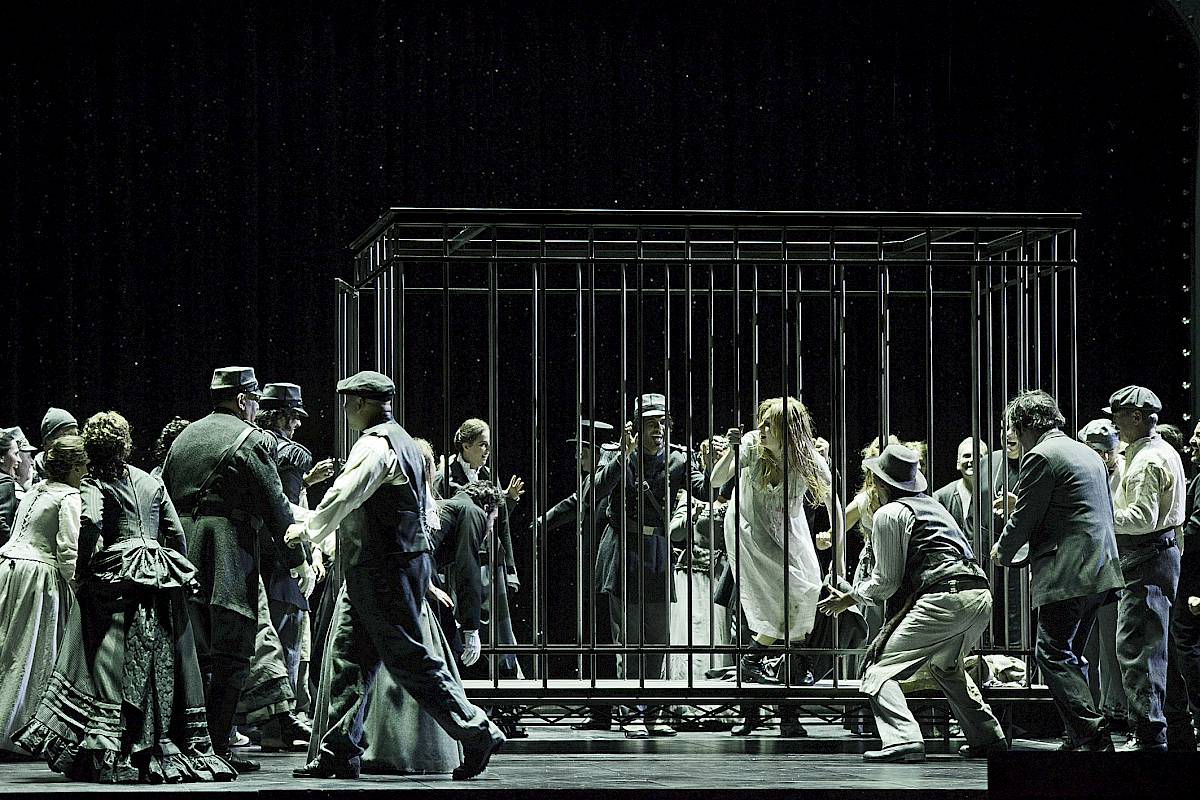
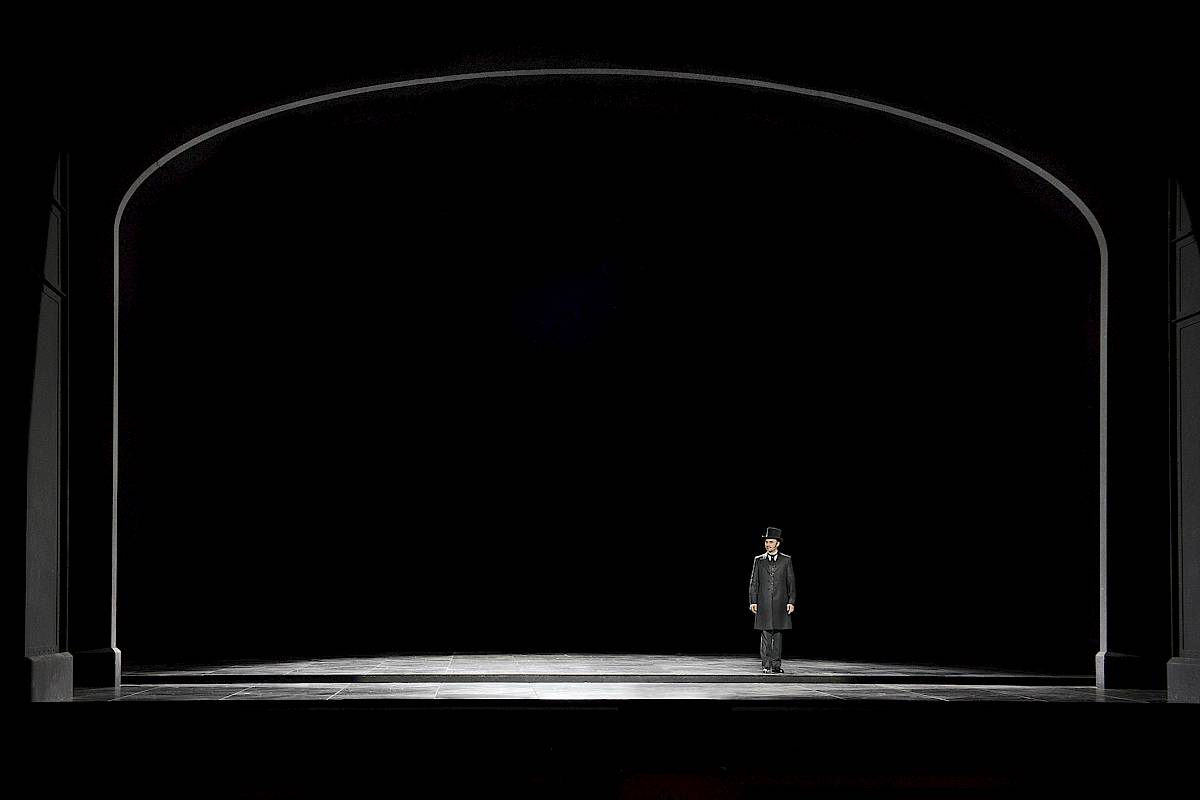
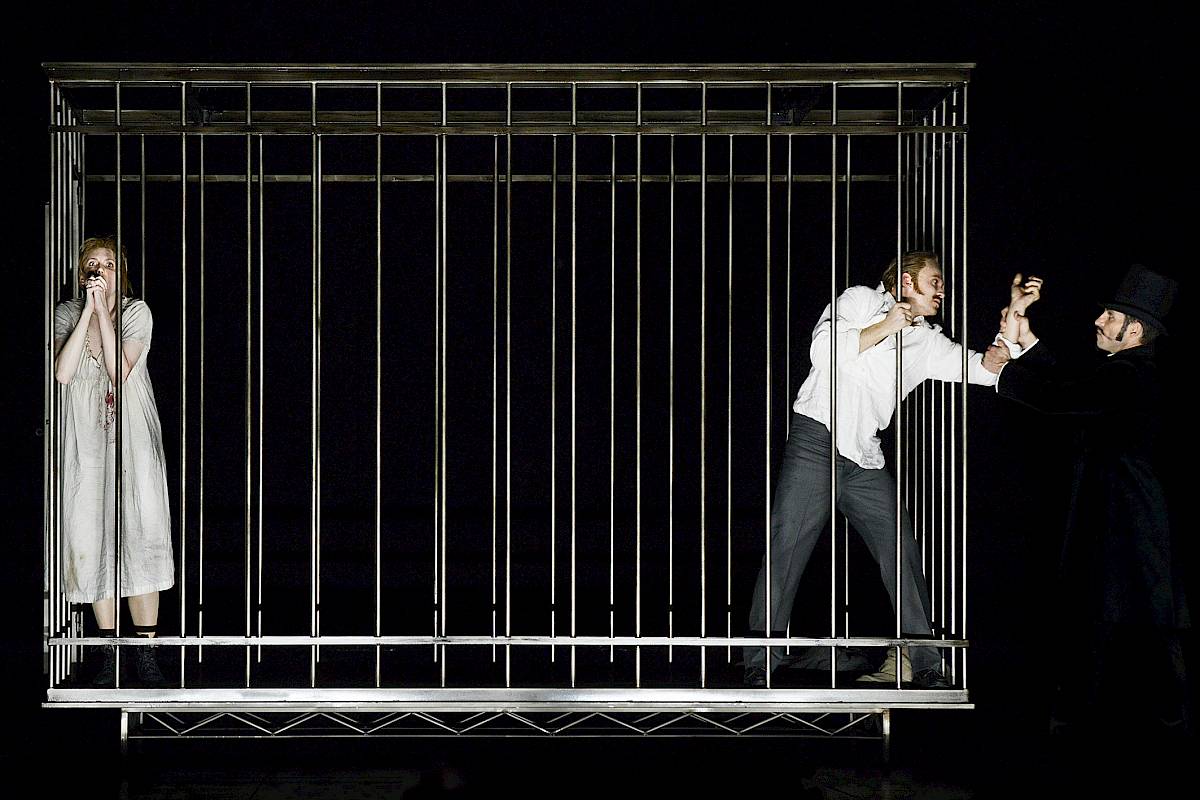
To be given another chance, to be young again, to abandon oneself to pleasure once more! That is Faust’s greatest wish. The devil appears to him and promises to give him all of this on the condition that Faust leave him his soul. The pact is made, and Faust launches into a passionate affair with Marguerite, whose innocence and naïveté attract him as much as her lower-class background, which he finds exotic. However, when she becomes pregnant, he prefers to abandon her. The deserted girl kills her baby and is executed.

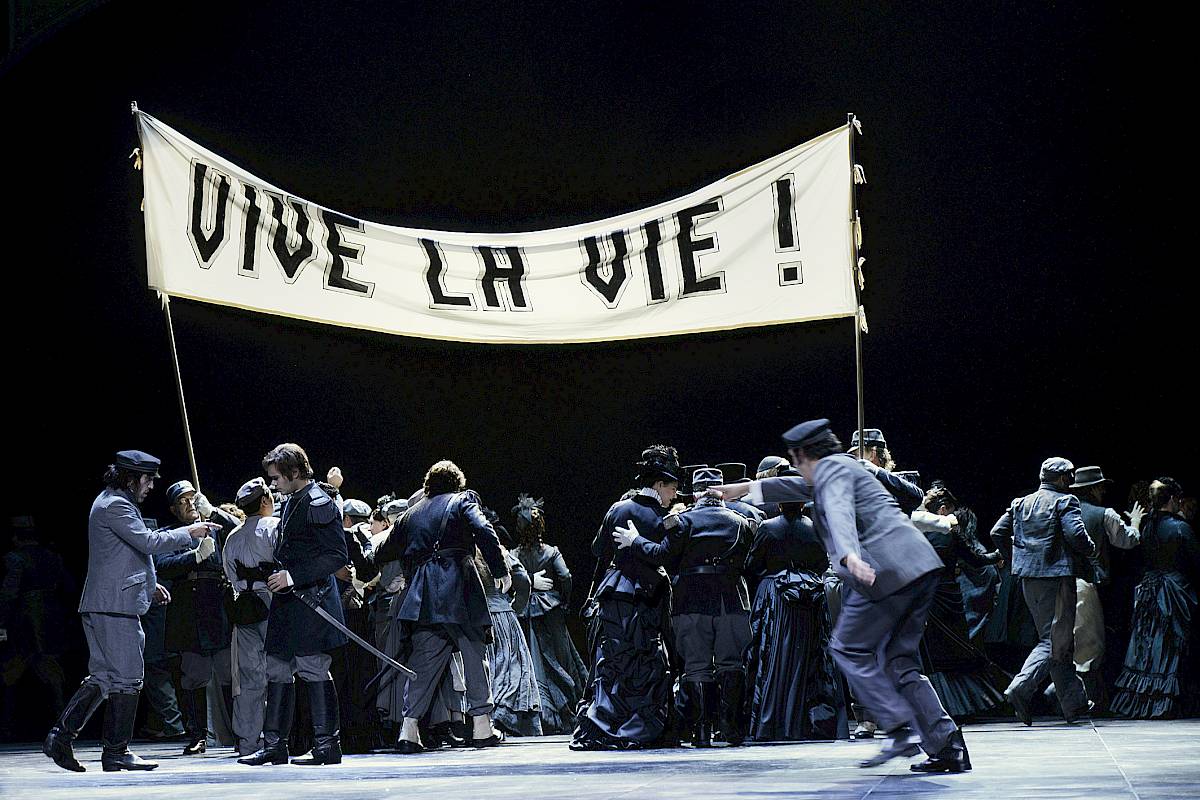
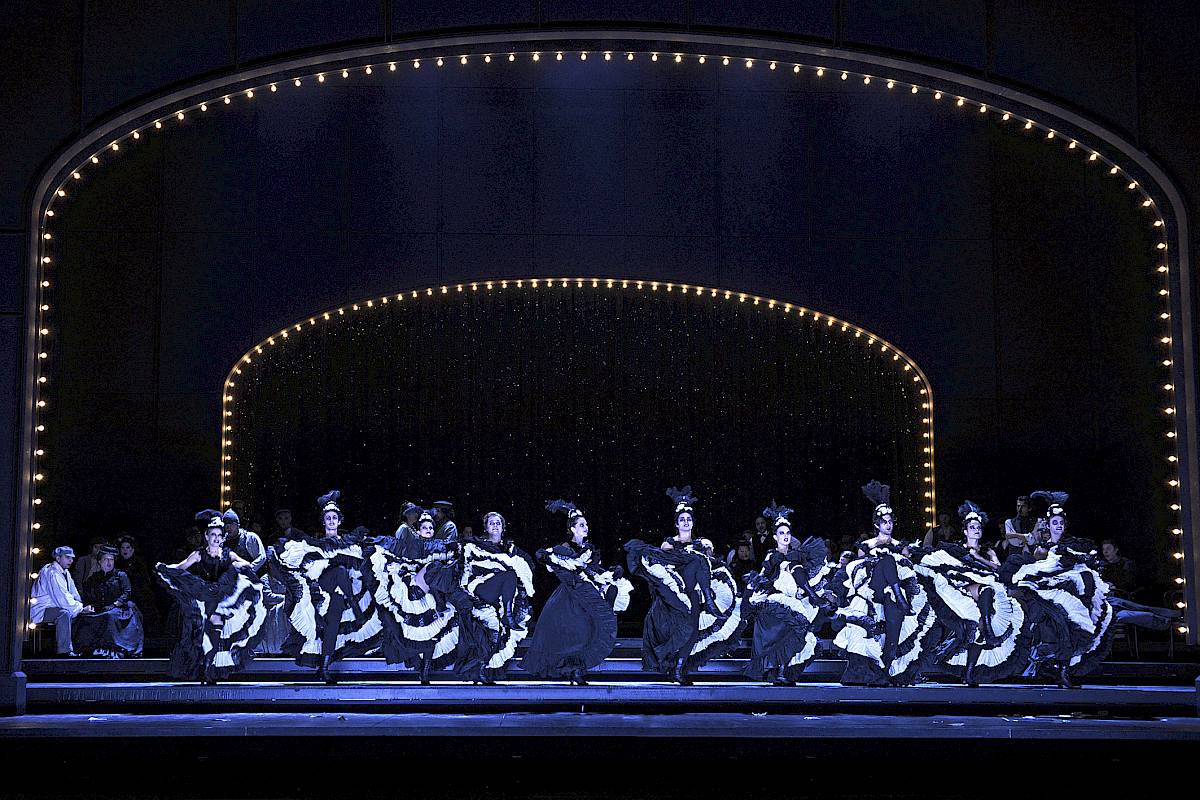
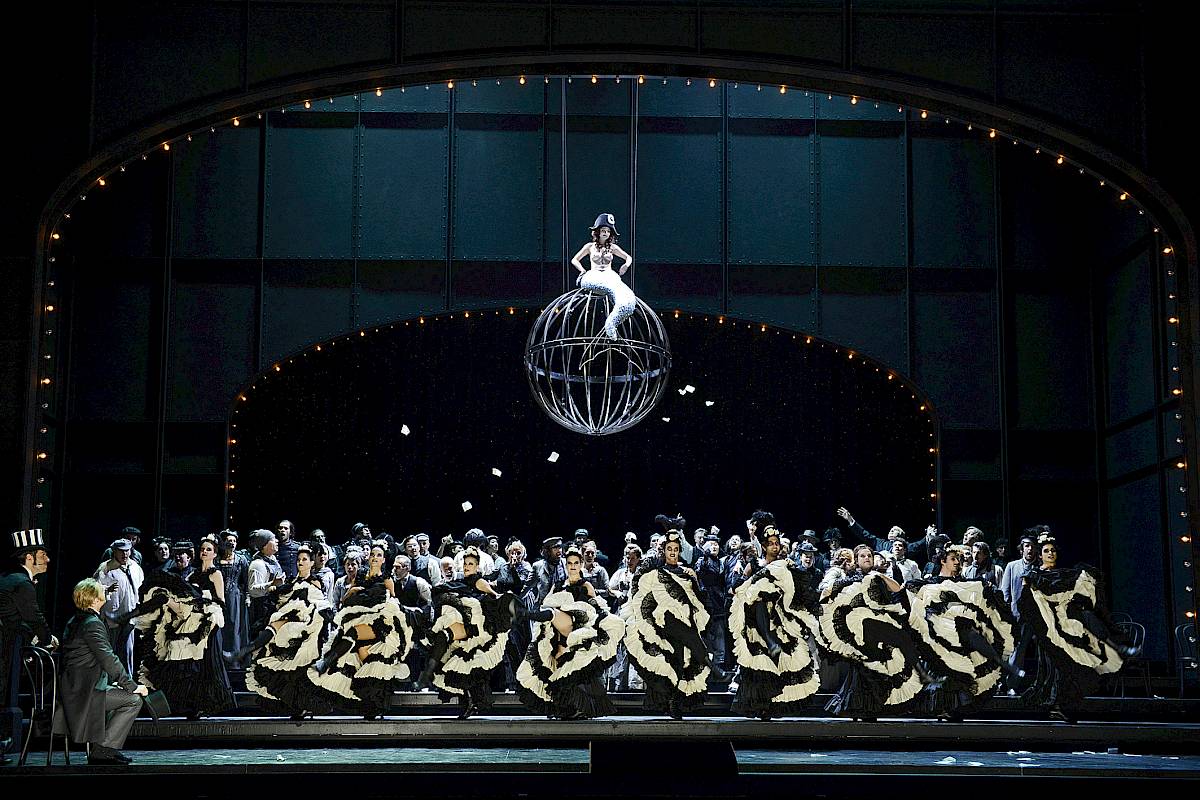
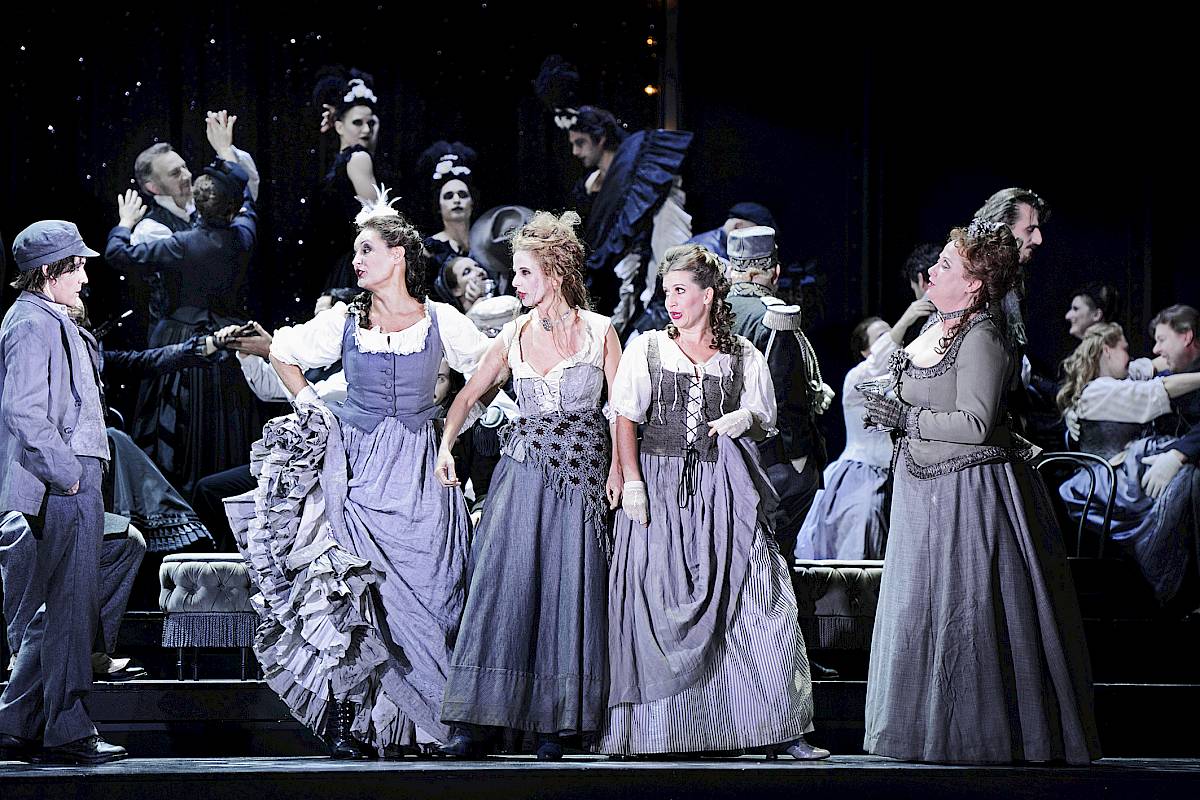
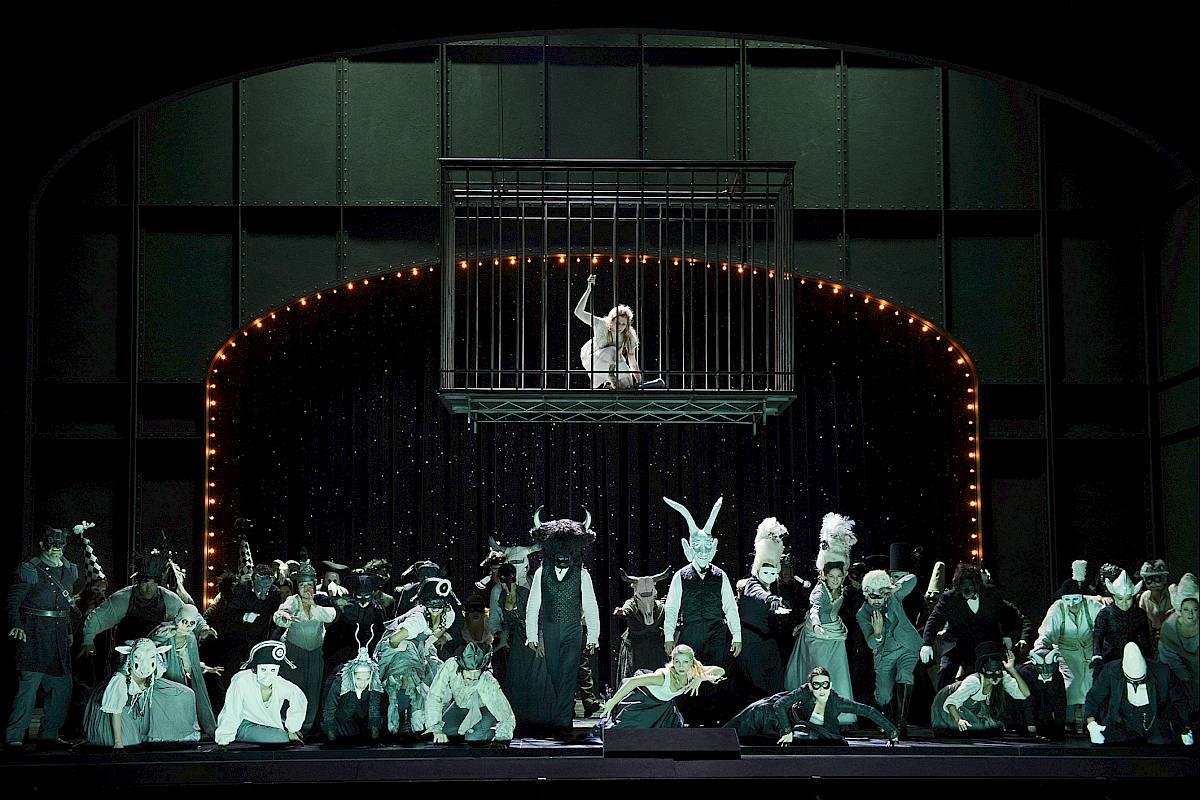
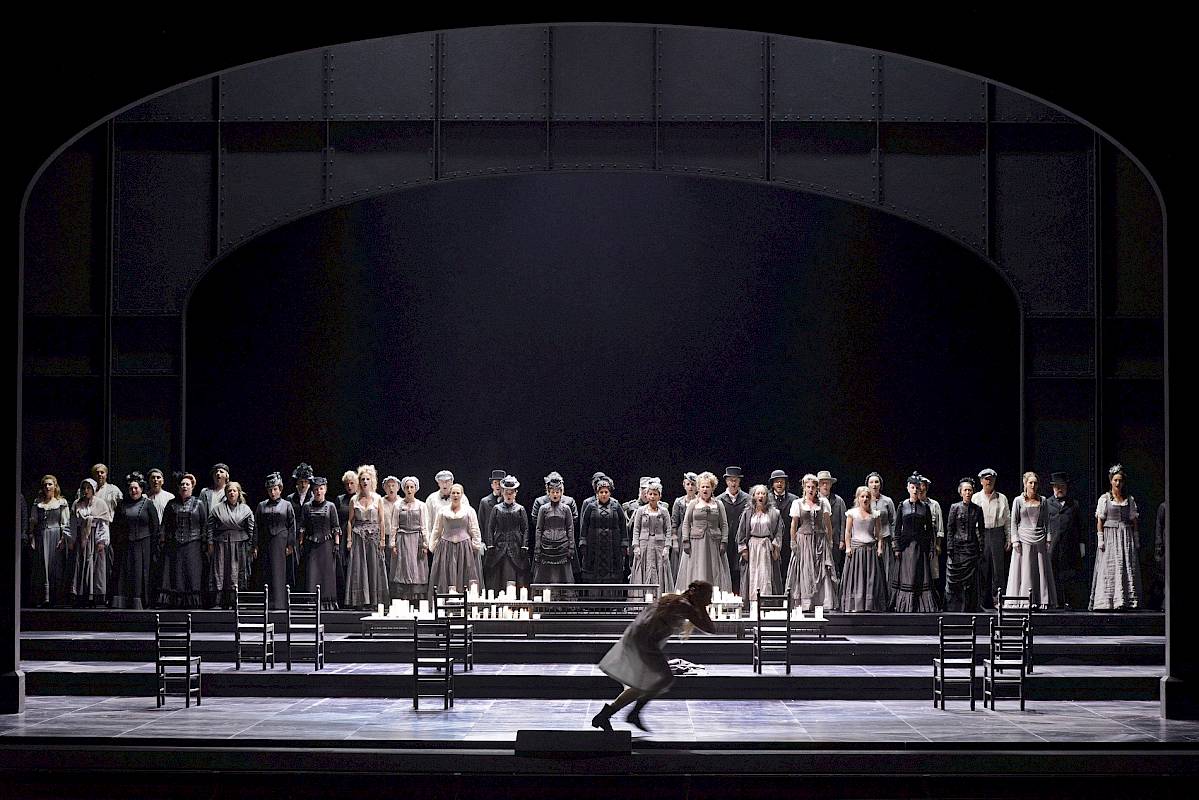
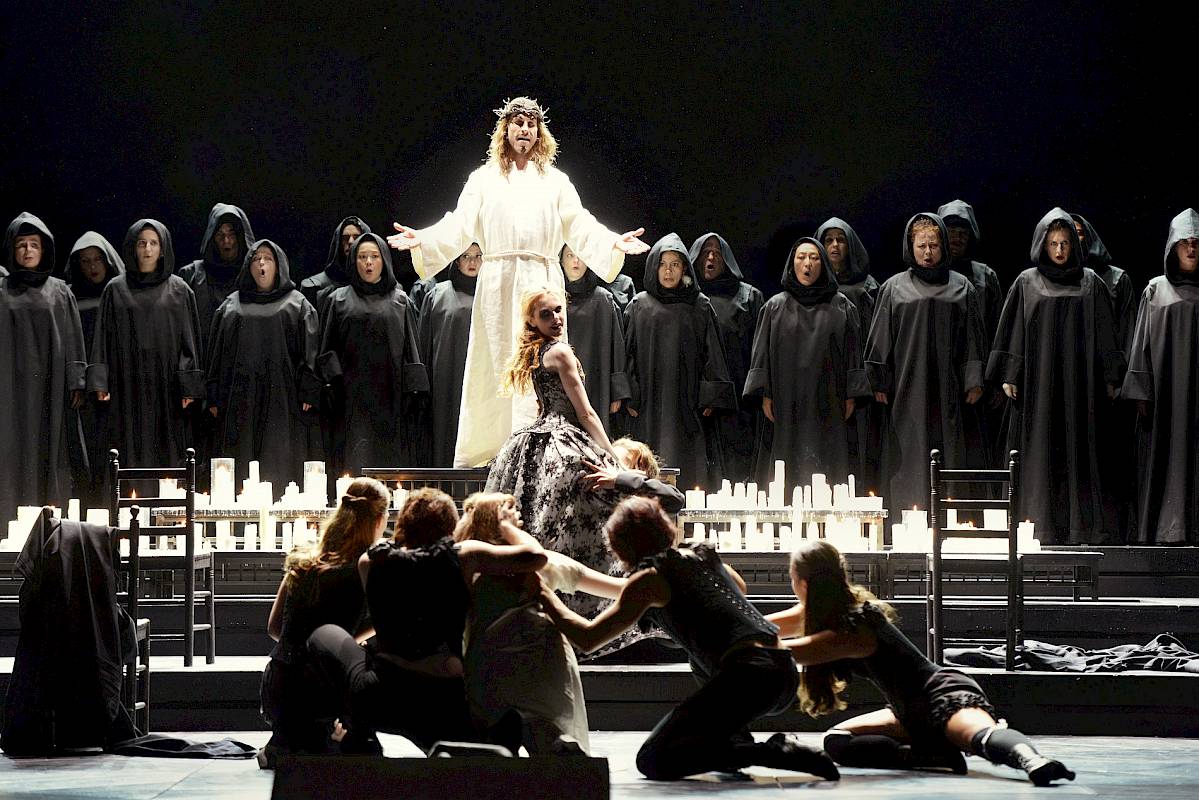
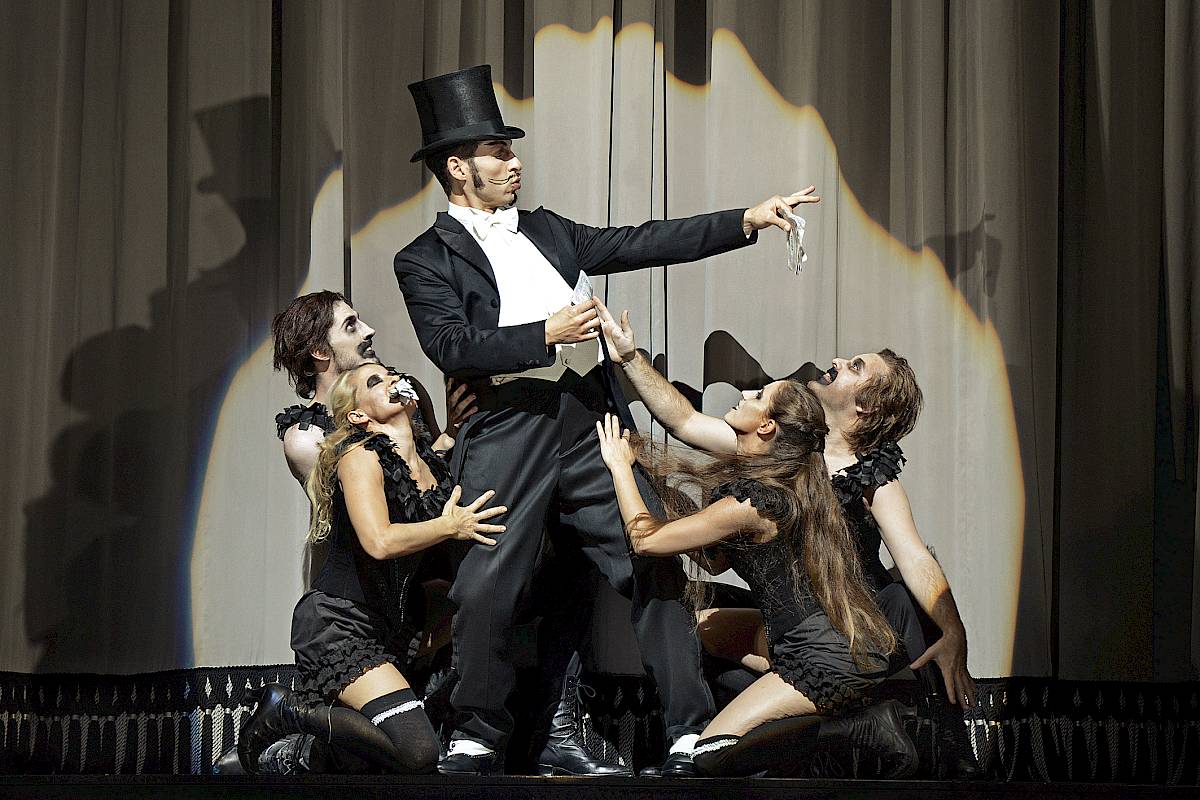
Charles Gounod had contemplated making an opera out of Goethe’s Faust since his youth. However, the French Faust has little in common with his German namesake. Gounod uses the Gretchen tragedy, which he treats very freely, to paint a precise portrait of the society of his day – the Second Empire, with its unscrupulously hedonistic attitudes. A portrait that in many ways bears an astonishingly similarity with the present day. Seen from this perspective, Gounod’s most successful opera has considerably more to offer than a trivial, sentimental love story: it is an enlightening and alarming look in the mirror. In this revival, Michael Fabiano, who débuted at Zurich Opera House as Rodolfo in La bohème, sings the title role, his antagonist Mephistophélès will be performed – as at the première – by Kyle Ketelsen, and the soprano Anita Hartig can be heard in Zurich for the first time in the role of Marguerite. Faust will be conducted by Philippe Auguin, Music Director of Washington National Opera, who is a specialist in the French repertoire.
Read more Show less


Good to know

Audio-Einführung

Program book

Synopsis

Faust is in despair: he has achieved everything, yet nonetheless believes he has missed out on life. He wants to start all over again, and summons the devil to help him. The devil offers him a contract: in this world, he will be Faust’s servant, in the next, his master. Faust signs and embarks on a new life.

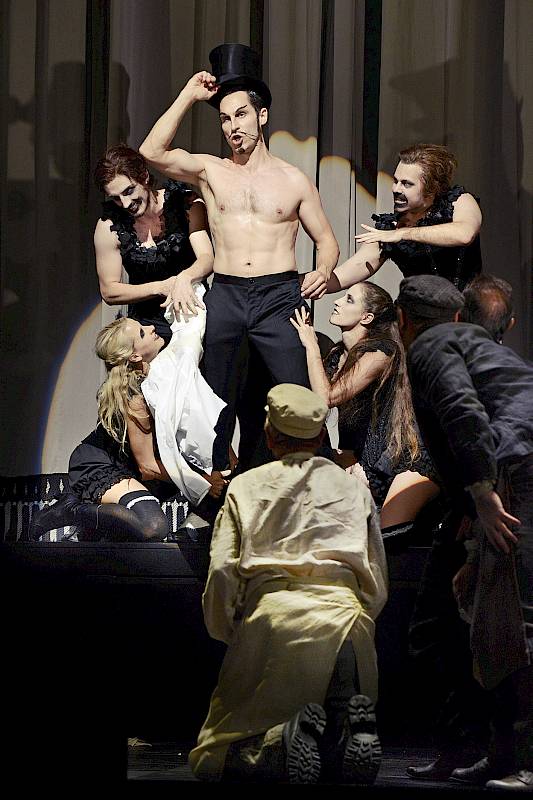
At a party he accosts a young woman, Marguerite, but she gives him short shrift. Faust is enraptured by her beauty and naïveté. The devil wards off a rival, Siébel, whom he terrifies with the prophecy that any flower he touches will wither.

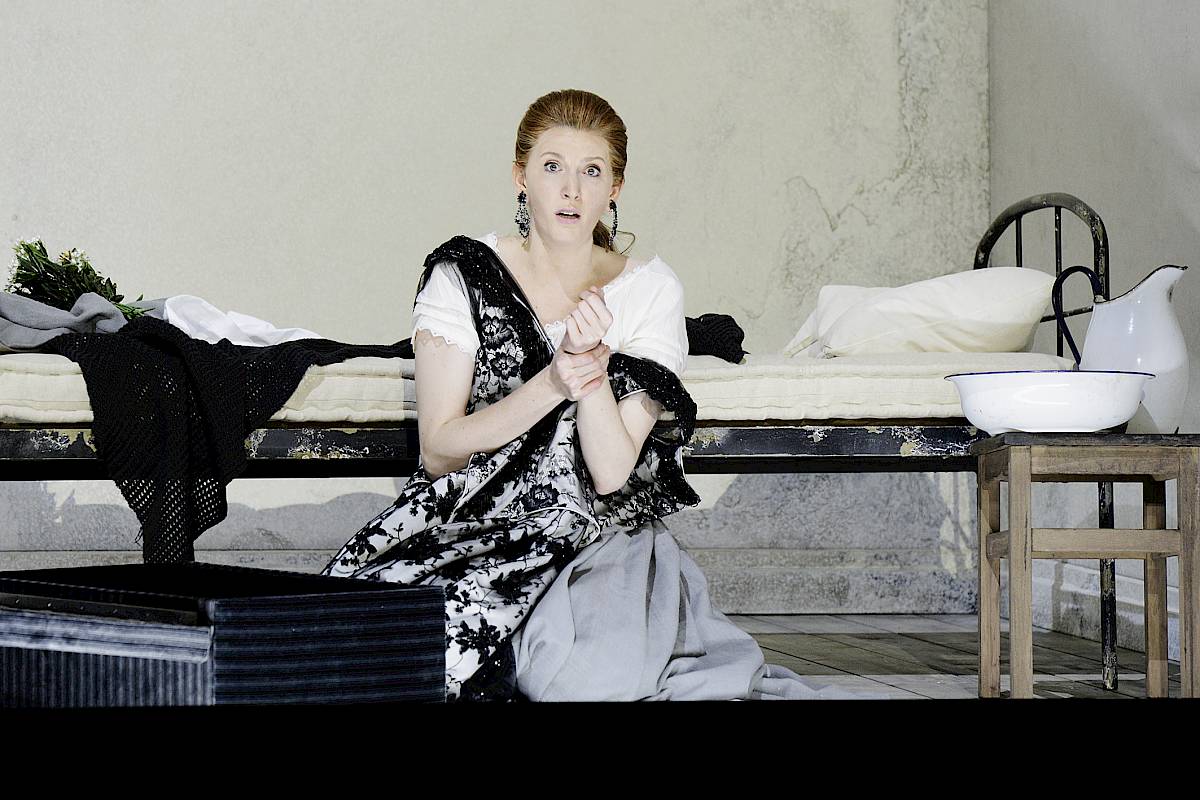
Siébel wants to bring a bouquet of flowers to Marguerite’s room, but it withers in his hand. He realises what is happening and understands who the strange man at the party was. Siébel decides to tell Marguerite everything.

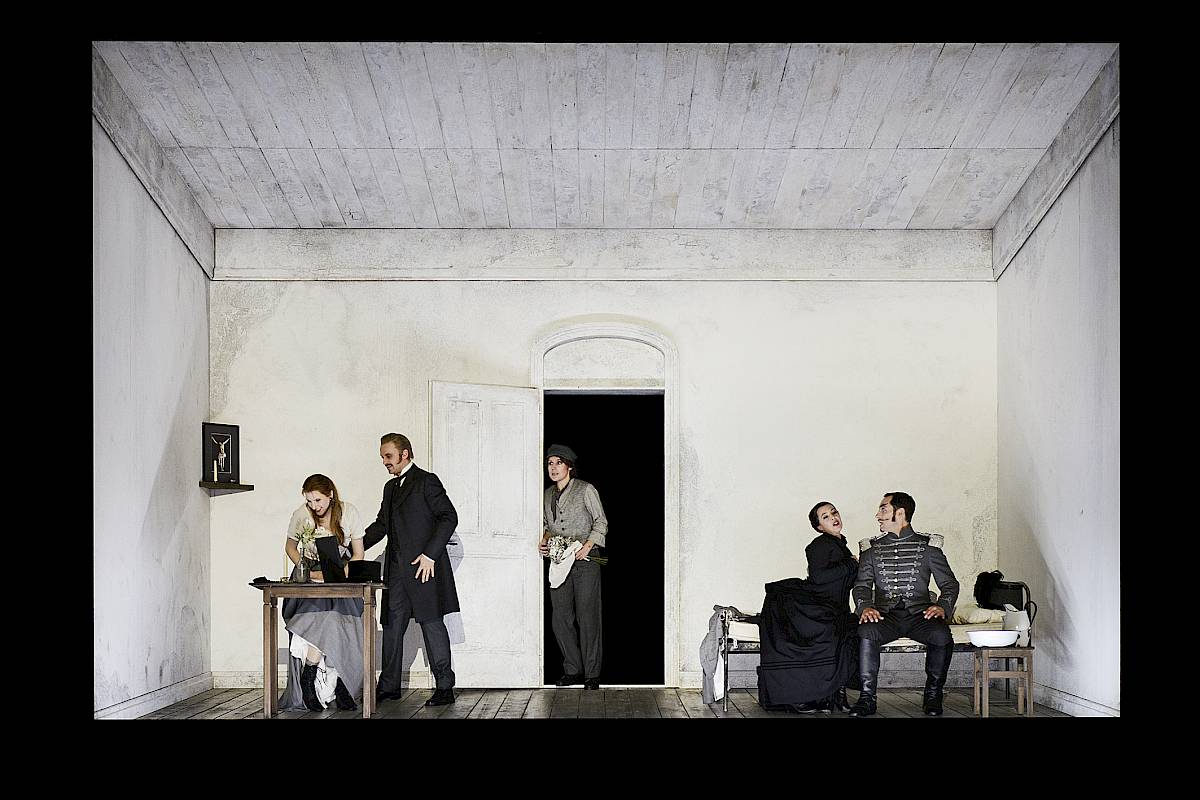
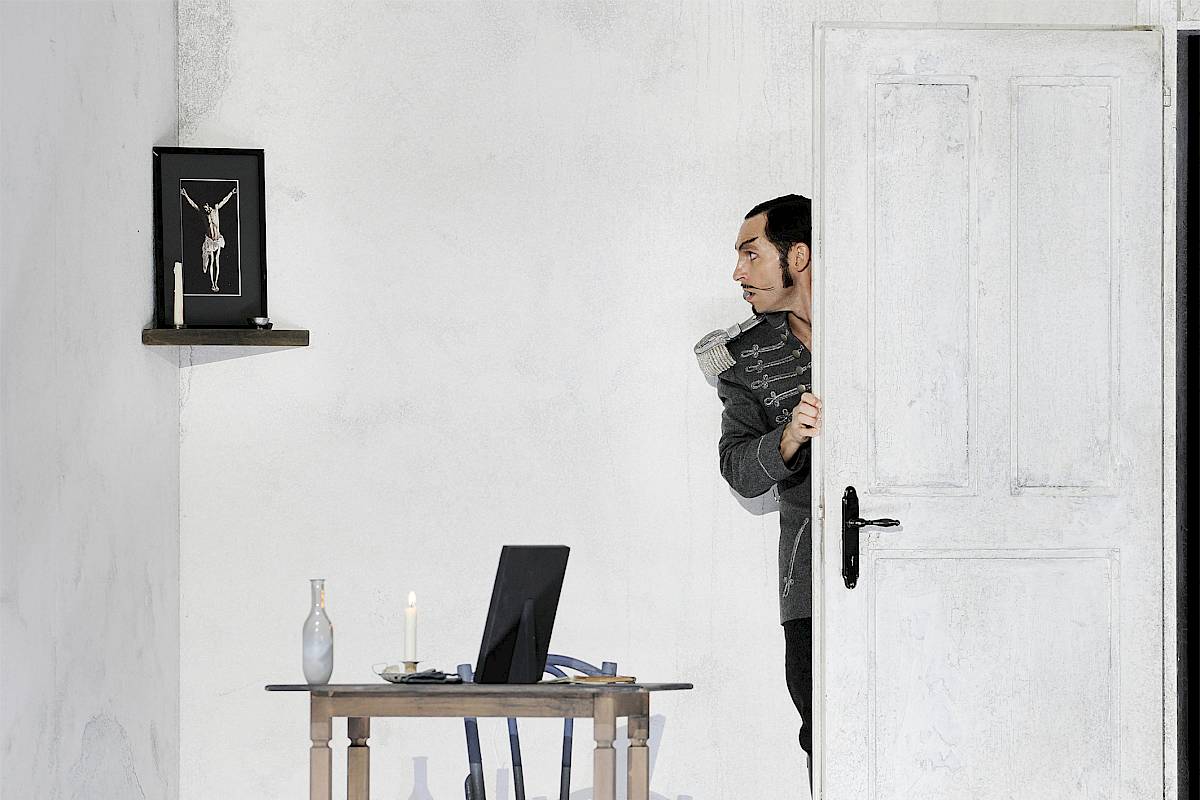
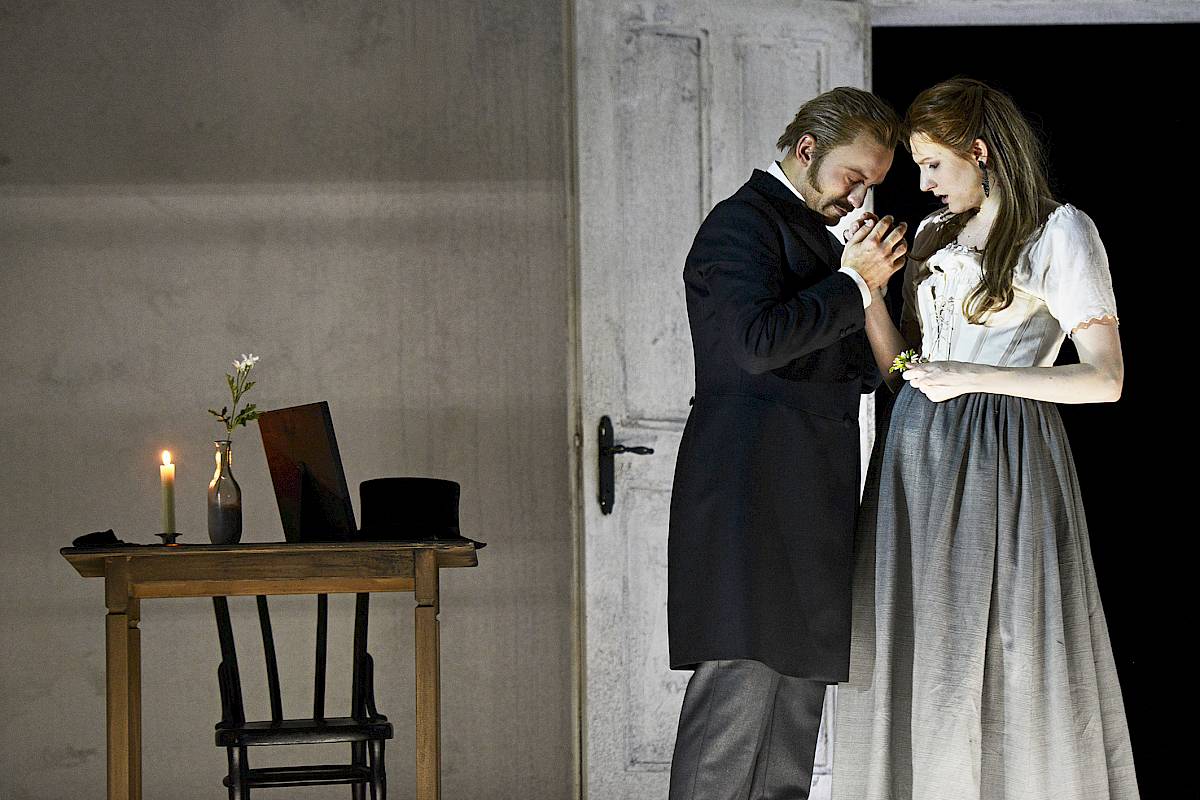
With the help of the devil, Faust has found his way into Marguerite’s apartment. While the devil procures a gift for Faust’s beloved, the latter immerses himself enthusiastically in her world, in whose poverty he believes to have found true riches.

Marguerite cannot free herself of the thought of the good-looking and presumably wealthy young man who approached her so unexpectedly. She discovers the diabolical present that Faust has left her, puts on the sparkling jewels and enjoys her apparent transformation into a rich woman.

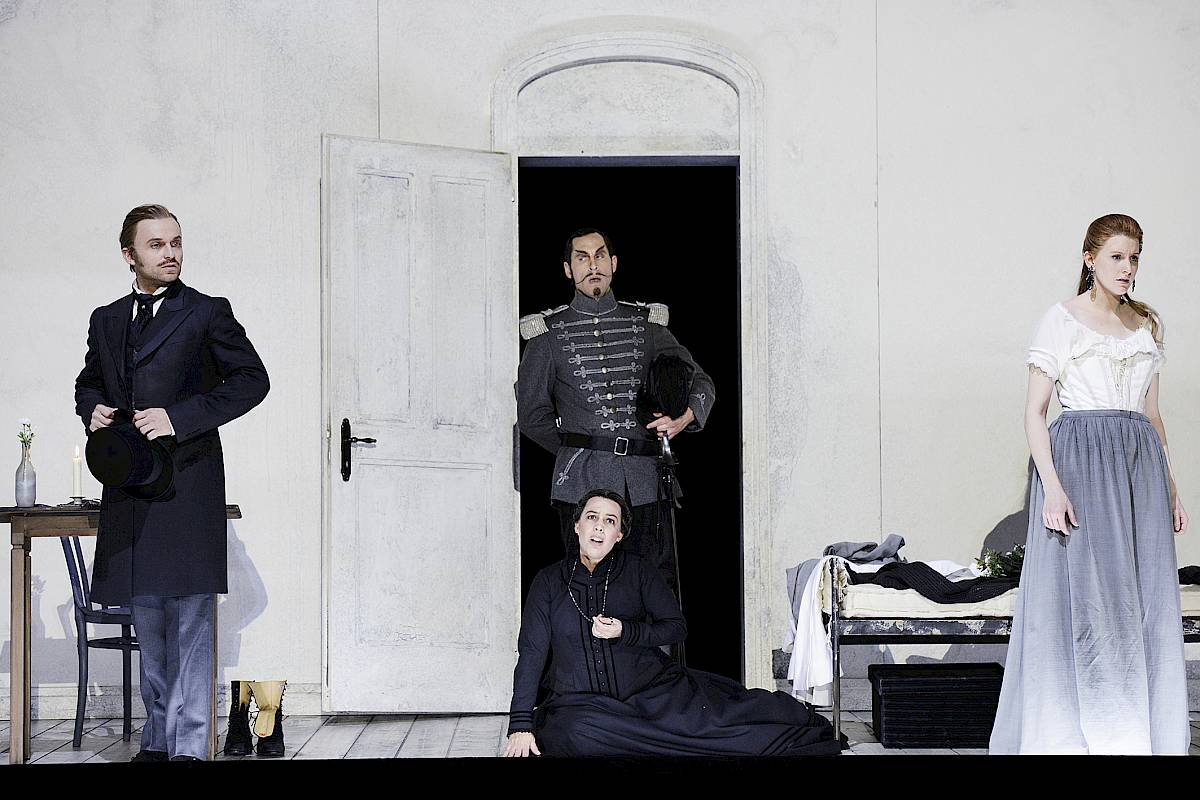
Marguerite’s neighbour, Marthe, is about to take her to task about the surprisingly precious gift when the news of her husband’s death reaches her. The shock is short-lived; the widow soon takes a shine to the attractive messenger. To ensure that Faust and Marguerite come closer, the devil engages in a flirtation with the older woman. Siébel makes several attempts to tell Marguerite about his experiences, but does not achieve his objective.

Faust and Marguerite profess their love. After protracted, fearful hesitation, she finally yields to his urging. The devil is triumphant.

Marguerite is carrying Faust’s child. He has abandoned her. She is ostracised in the town, and even Siébel can no longer help her.

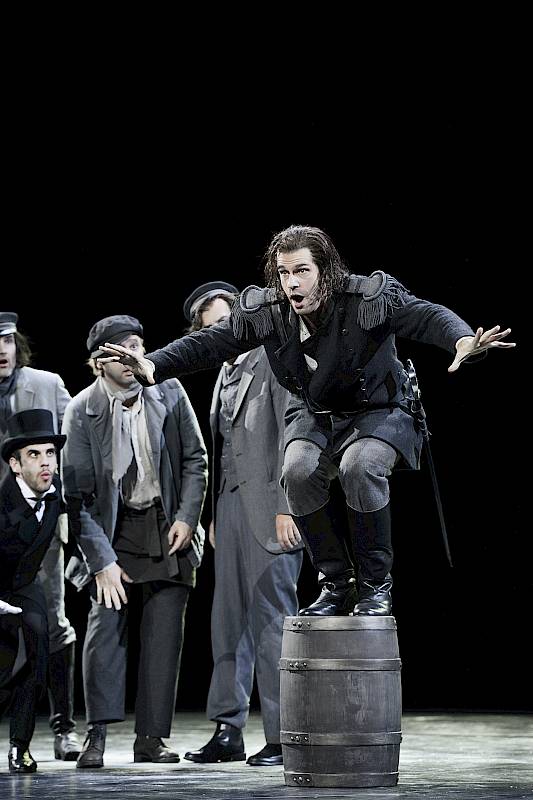
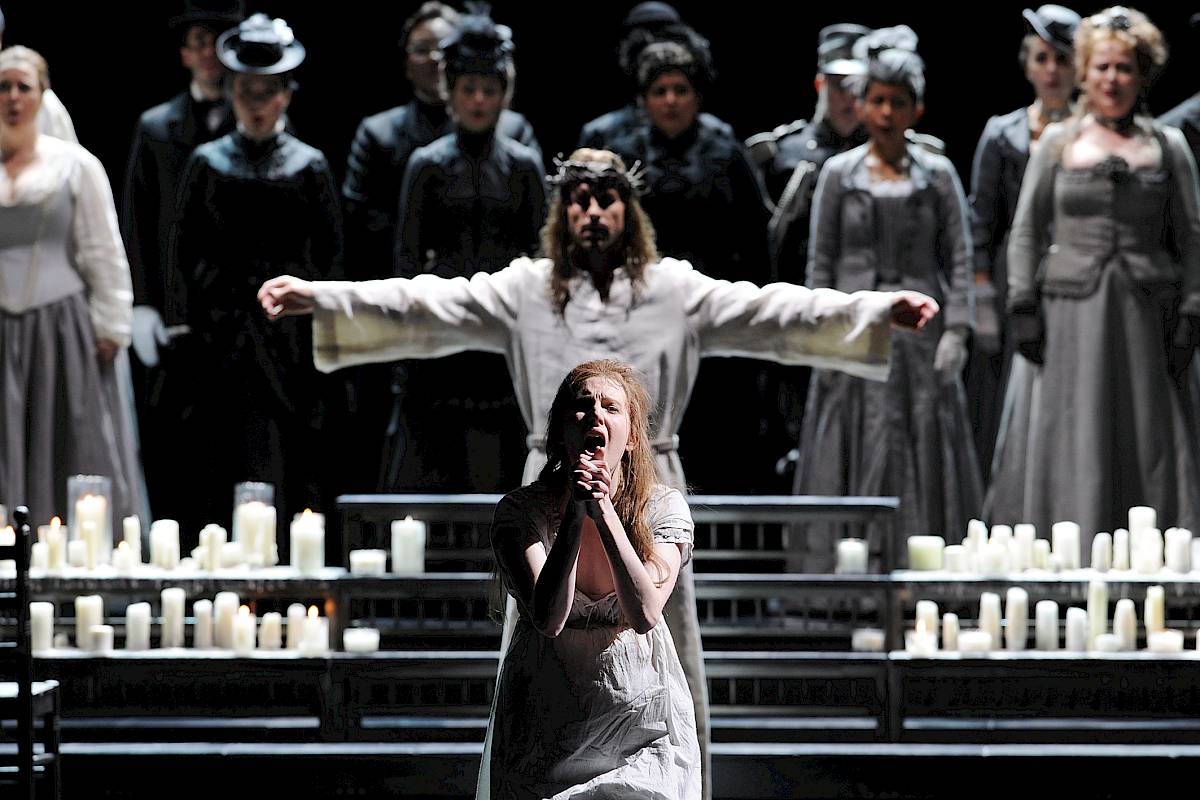
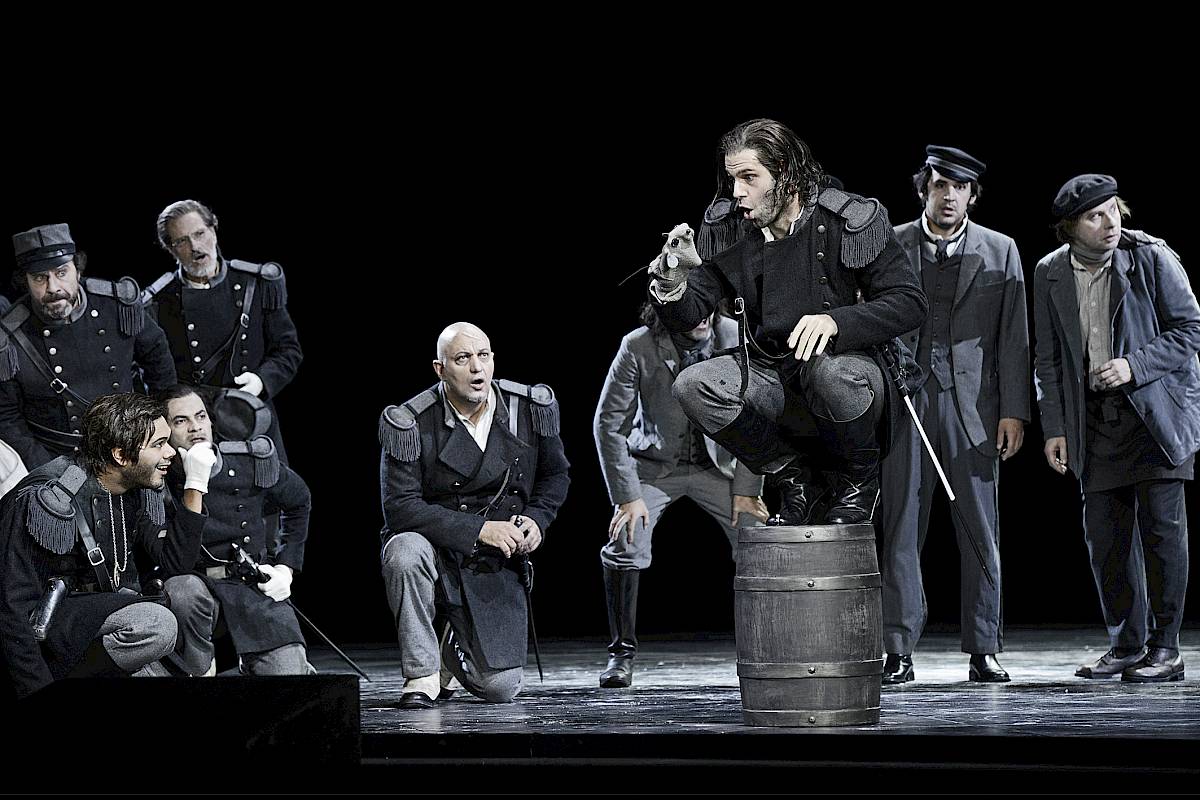
Soldiers are returning from the war, among them Valentin, Marguerite’s brother. Marguerite seeks protection and consolation in the house of God, but only the devil answers her prayers – with the threat of hell’s eternal torments.

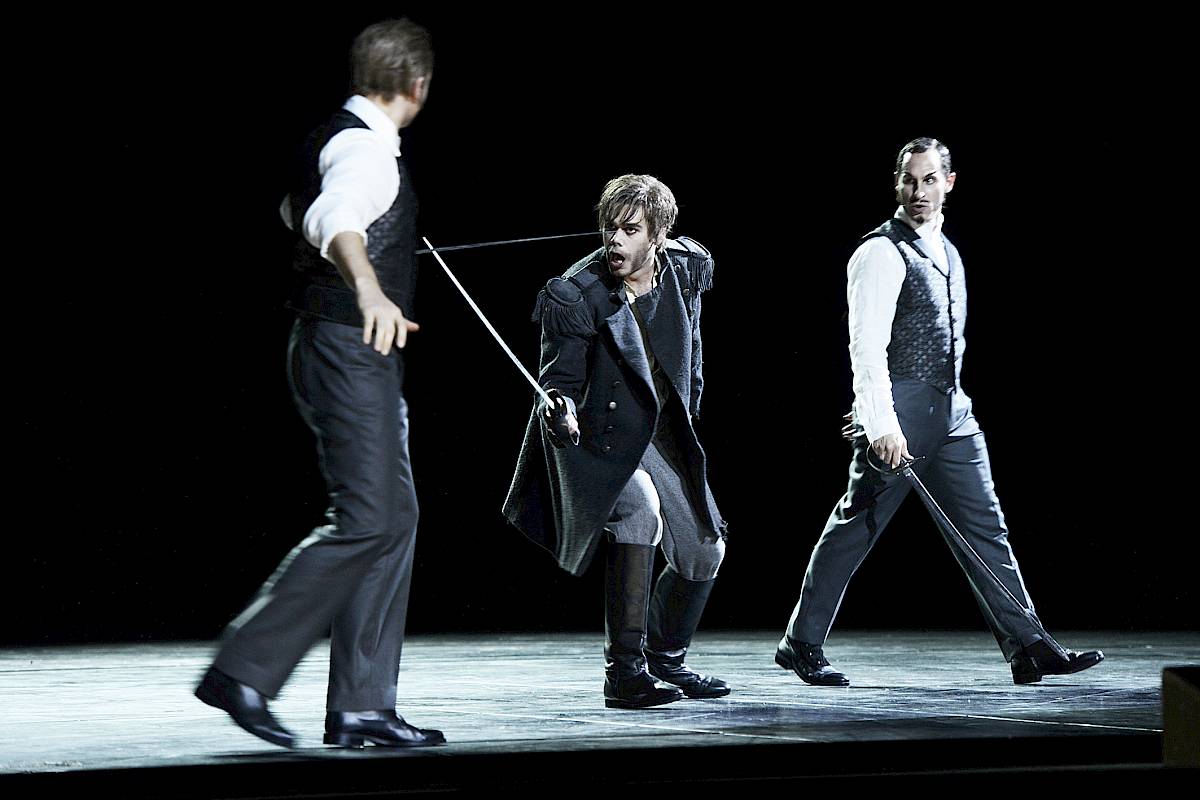
Faust’s guilty conscience drives him to Marguerite’s house. The devil provokes Valentin into fighting a duel with the man who has dishonoured his sister, and conducts the struggle in such a way as to make Faust a murderer.

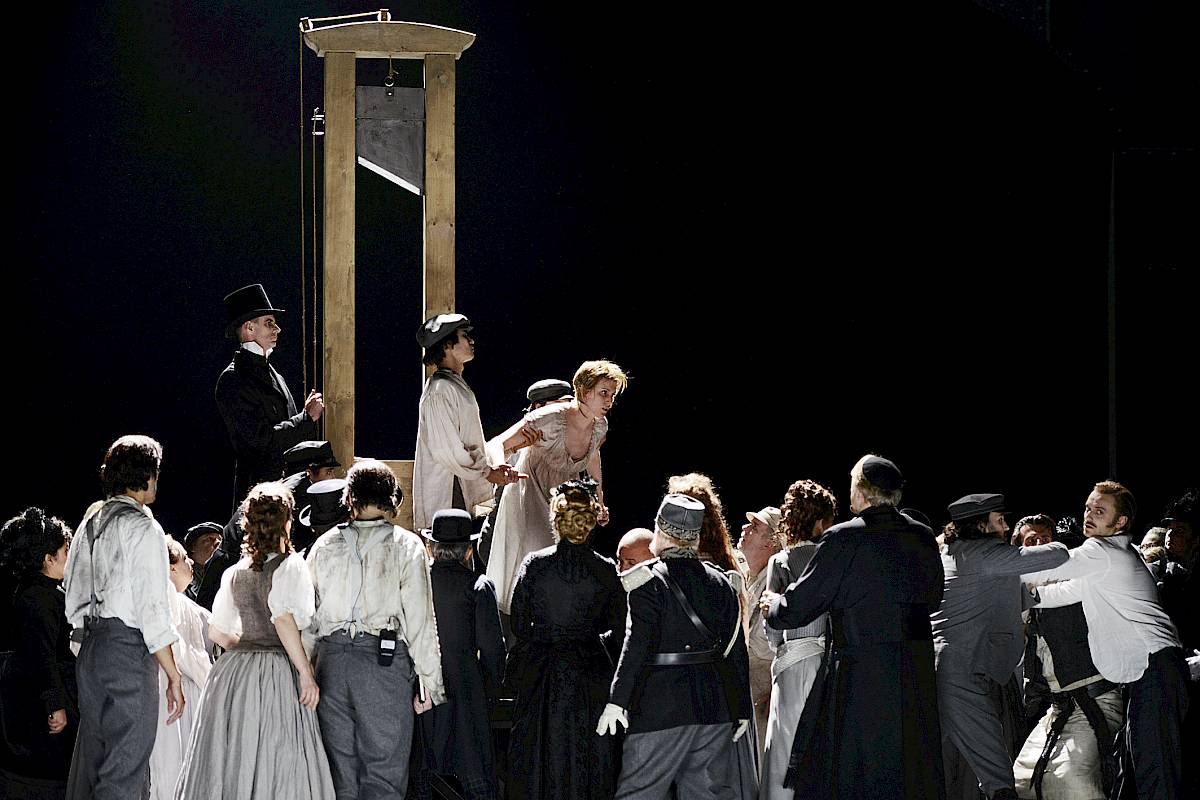
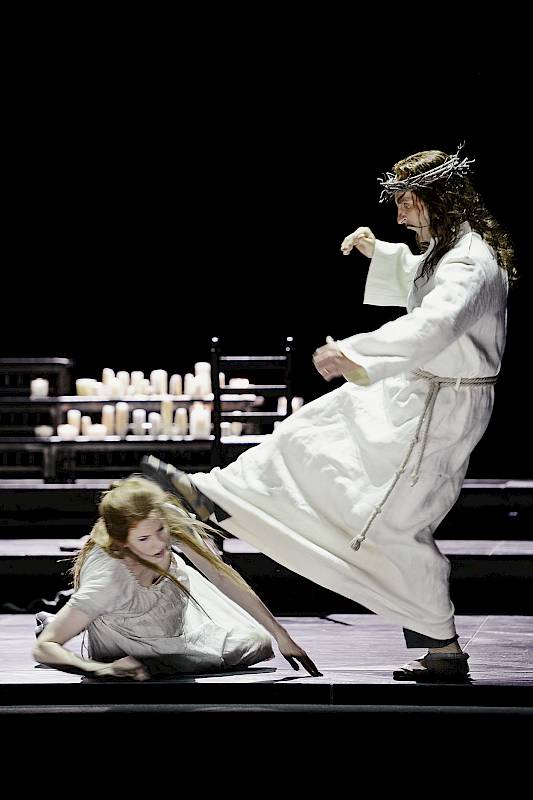
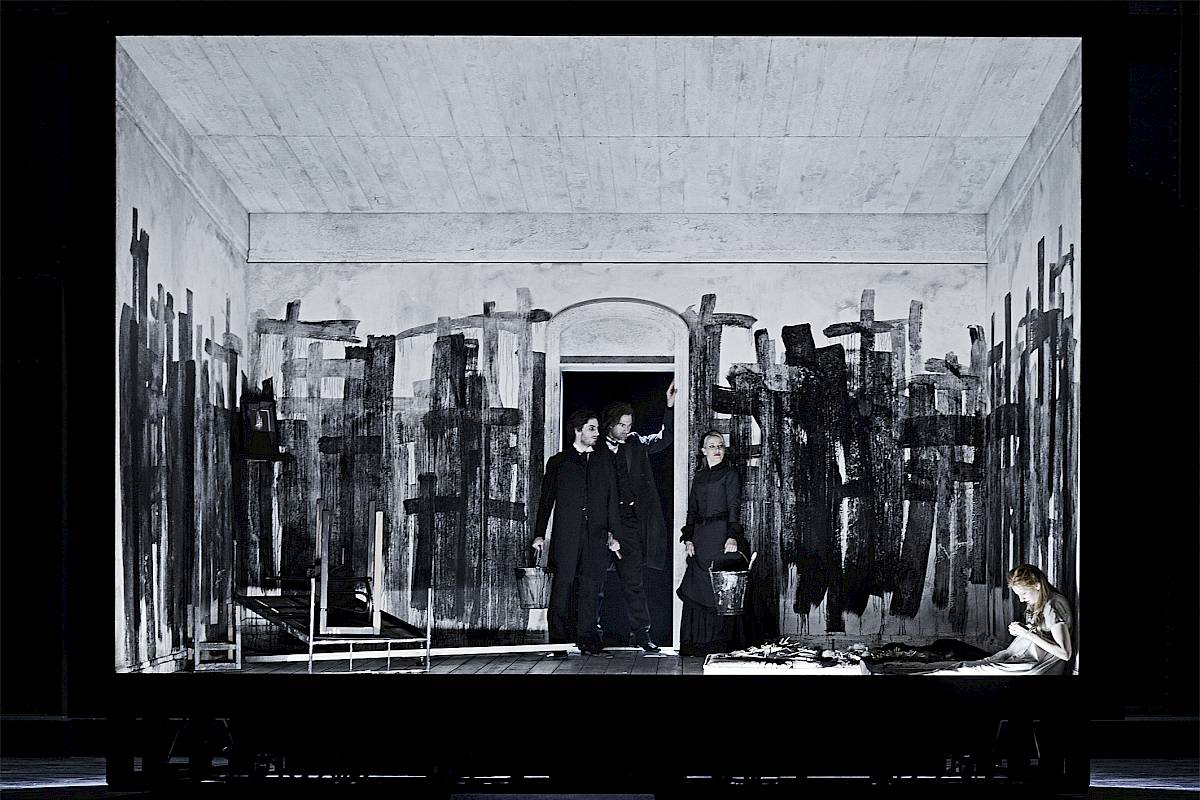
Marguerite has killed her child and is awaiting execution in prison. With the help of the devil, Faust wants to free her, but she refuses him and goes to her death.